
In This Article
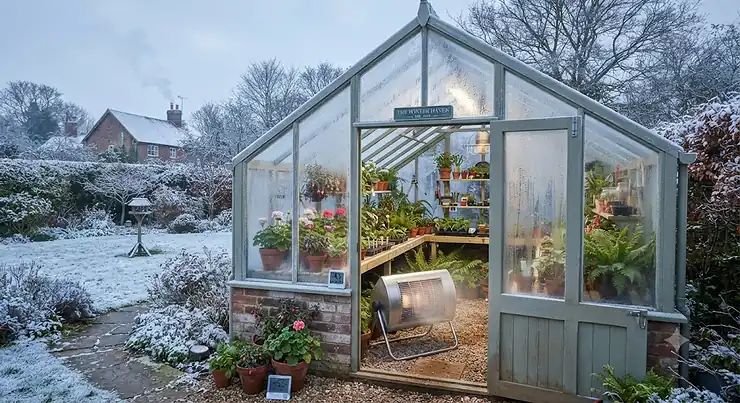
Frost doesn’t knock politely. It slides in overnight, settles on the leaves you fussed over all summer, and by morning your tomatoes look like they’ve been through a wake. That’s the moment most UK gardeners start Googling the best greenhouse heater, usually about three weeks later than they should have. A greenhouse heater is simply an electric, gas, or paraffin-fuelled appliance designed to raise or maintain the internal temperature of a greenhouse, protecting tender plants, seedlings, and overwintering specimens from frost damage and cold-related disease. Some are little more than a low-wattage tube; others are proper fan-forced units that can hold a polytunnel at a stable 10°C through a January gale.
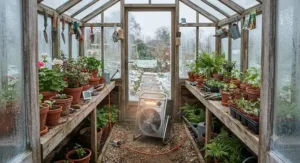
Here’s the thing nobody tells you at the garden centre: the “best” heater isn’t a single product, it’s a match between your greenhouse’s size, your electricity supply, and what you’re actually trying to keep alive. A 6x8ft aluminium lean-to sheltering a few geraniums has wildly different needs from a 12x10ft polycarbonate structure nursing citrus trees through winter. Get the sizing wrong and you’ll either watch your plants shiver or watch your energy bill do something unforgivable.
This guide walks through seven real, currently available heaters spanning tubular frost-protection units, PTC fan heaters, a paraffin option for greenhouses without mains power, and one genuinely industrial-grade unit for larger spaces. We’ve dug into the specs, the aggregated review sentiment, and — because nobody talks about this enough — the actual pence-per-hour cost of running each one. By the end you’ll know not just which heater to buy, but why, and what temperature you’re really aiming for. According to the RHS advice on growing under glass, an unheated greenhouse often isn’t warm enough for tender plants until April, which is exactly the gap a well-chosen heater fills.
Quick Comparison Table
If you’re in a hurry, here’s the shortlist. Full breakdowns, pros, cons, and honest verdicts follow below, but this table gets you 80% of the way to a decision.
| Heater | Type | Power | Best For |
|---|---|---|---|
| Bio Green Palma | Electric fan + digital thermostat | 2kW | Precision temperature control, mid-size greenhouses |
| Dimplex ECOT2FT | Tubular, thermostatic | 80W | Frost-free background heat, tight budgets |
| LightHouse ECOHEAT | Tubular, thermostatic | 80W | Budget alternative to Dimplex |
| VonHaus 2KW Fan Heater | Portable fan heater | 1000W/2000W | Occasional boosts, small structures |
| Prem-I-Air Utility PTC | PTC fan heater | 2kW | Workshops-turned-greenhouses, damp resistance |
| Parasene Superwarm 5 | Paraffin | N/A (fuel-based) | No mains power, small greenhouses |
| Sealey EH3001 | Industrial fan heater | 1.5kW/3kW | Large greenhouses, polytunnels, serious growers |
Looking at the spread here, there’s a clear split between “keep it just above freezing” heaters like the Dimplex ECOT2FT and LightHouse ECOHEAT, and “actually warm the space” heaters like the Sealey EH3001 and Bio Green Palma. The Parasene Superwarm 5 sits in its own category entirely, since it sidesteps the electricity question altogether. Your greenhouse’s square footage and your access to a power supply will do most of the deciding for you before price even comes into it.
💬 Found this comparison useful? A quick share helps other gardeners find it too!😊
Top 7 Greenhouse Heaters: Expert Analysis
Right, let’s get into the detail. Each of these seven has genuine trade-offs — none of them is perfect for everyone, and if a listing tries to convince you otherwise, that’s your cue to keep reading reviews. Prices below are approximate ranges based on research at the time of writing; always check current pricing before buying, as it fluctuates constantly.
1. Bio Green Palma — best precision thermostat control
The standout feature here is the digital thermostat, which is a genuinely different proposition from the rotary dials on most budget heaters. Rather than guessing where “medium” sits on a dial, you set an exact target temperature and the unit holds it. Specced at 2000W with a stainless steel housing and IPX4 splashproof rating, the Palma circulates air at up to 163 m³ per hour and covers spaces up to roughly 12 m² — a solid match for a standard 8x6ft or 10x8ft greenhouse. The thermostat accuracy is rated at around ±2°C, with a working range stretching from deep frost to well above anything a UK greenhouse would ever need.
Based on the spec comparison with the rest of this list, the Palma earns its place through control rather than raw power. What most buyers overlook about digital thermostats is that they don’t just set a temperature — they reduce the number of on/off cycles the heating element goes through, which in turn reduces wear and, over a season, shaves a noticeable amount off running costs compared with a heater that overshoots and undershoots constantly. This is the heater for someone overwintering something genuinely tender — citrus, pelargoniums, young cuttings — where a couple of degrees either way actually matters.
Reviewers consistently report that the build quality feels a step above typical budget tubular or fan heaters, with several long-term owners noting years of reliable service when paired with the digital thermostat accessory. A recurring theme in feedback is that buyers who add the optional digital thermostat controller are considerably happier than those running the basic dial version, since it removes the guesswork and cuts wasted running time.
Pros:
- ✅ Digital thermostat holds temperature within about 2°C
- ✅ Stainless steel build with IPX4 splashproof rating
- ✅ Compact footprint suits smaller greenhouses well
Cons:
- ❌ Costs noticeably more than basic fan or tubular heaters
- ❌ 2kW draw isn’t ideal on a limited household circuit
At around the £120-£180 range depending on whether you buy the digital thermostat bundle, the Bio Green Palma sits at the premium end of this list, but for anyone protecting genuinely tender plants, the temperature accuracy arguably pays for itself in fewer losses.
2. Dimplex ECOT2FT — best low-cost frost protection specialist
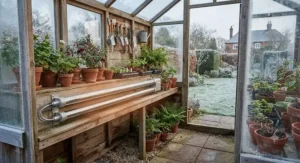
This is the heater equivalent of a seatbelt: unglamorous, cheap, and doing exactly one job very well. The standout feature is the built-in thermostat on an 80W tubular design, drawing so little power that many gardeners leave it running continuously through winter without a second thought about the bill. Wall or floor mounted horizontally, it comes with mounting brackets and a reversible cable entry, and it’s explicitly designed for damp environments like greenhouses, porches, and airing cupboards.
Here’s what the spec sheet won’t tell you outright: 80W isn’t going to warm a greenhouse in any meaningful sense — it’s a frost-prevention tool, not a heating system. Based on the coverage guidance from horticultural retailers, an 80W tube is generally suited to a small greenhouse in the 2.4m x 1.8m range aiming purely to stay above freezing, not to maintain a comfortable growing temperature for tender plants. If you’re overwintering hardy-ish plants that just need to avoid a hard frost, this is close to ideal; if you’re trying to keep citrus happy at 10°C, it won’t get you there alone.
Aggregated customer feedback is broadly positive, with many reviewers specifically praising the gentle, consistent background warmth and ease of installation, particularly in cupboards and enclosed spaces. A recurring criticism from a minority of buyers involves occasional thermal cut-out cycling in early Dimplex/Sunhouse tubular models, though the current ECOT2FT range with its built-in thermostat is generally reported as more consistent.
Pros:
- ✅ Extremely low running cost thanks to 80W draw
- ✅ Built-in thermostat with wall or floor mounting brackets
- ✅ Rated for damp, greenhouse-style environments
Cons:
- ❌ Only suitable for frost protection, not real warmth
- ❌ Must be installed horizontally, limiting placement options
Typically found in the under-£30 range, the Dimplex ECOT2FT is the safe, sensible pick if your only goal is stopping frost from finishing off your plants overnight.
3. LightHouse ECOHEAT — best budget alternative to the Dimplex
If the Dimplex is the seatbelt, the LightHouse ECOHEAT is the own-brand version that still passes crash tests. Its standout feature is near-identical spec to the market leader — 80W, thermostatically controlled, designed specifically for greenhouse and garage frost protection — at a typically lower price point. It’s explicitly marketed as an energy-efficient, anti-frost tube heater, and functionally it occupies the same niche as the Dimplex ECOT2FT.
The real-world meaning of “energy efficient” here is straightforward: at 80W, running this continuously through a cold snap costs pennies rather than pounds, which is precisely why tubular heaters remain popular for unattended greenhouses. What most buyers overlook is that the difference between budget tubular brands and the market leader is usually build longevity rather than day-one performance — both heat similarly on day one, but a slightly heavier-gauge tube and better-sealed thermostat housing (as found in established brands) tend to hold up better over five winters of condensation exposure.
Aggregated review sentiment for this category of tube heater tends to focus on the same points: gardeners appreciate the simplicity and low running cost, and the most common criticism, where it appears, relates to the thermostat dial being slightly imprecise at the low end of its range rather than the heating element itself failing.
Pros:
- ✅ Near-identical spec to premium tubular heaters
- ✅ Genuinely low running cost for continuous use
- ✅ Straightforward installation for garden workshop or garage
Cons:
- ❌ Thermostat precision can feel a little loose at low settings
- ❌ Same fundamental limitation: frost protection only, not warmth
Sitting in a similar under-£30 range to the Dimplex, the LightHouse ECOHEAT is worth cross-shopping if you want the tubular-heater approach without paying a brand premium.
4. VonHaus 2KW Fan Heater — best flexible everyday fan heater
The standout feature of this one is versatility: a genuine 2-in-1 heater and cooling fan with two power settings (1000W and 2000W), designed for year-round use rather than a single winter season. It’s not marketed specifically as a greenhouse product, but its portability, adjustable thermostat dial, carry strap, and overheat protection make it a popular pick for gardeners who want a heater that can also do bedroom or office duty in the off-season.
What the two power settings actually mean in practice is flexibility for different-sized spaces or different levels of cold: the 1000W setting works as a gentler background warmer on a mild frost night, while the full 2000W setting can be reserved for genuinely harsh conditions. Based on the spec comparison with dedicated greenhouse units, this heater lacks any IP rating for splash resistance, which matters more in a greenhouse than in a living room — condensation and watering splashback are simply part of greenhouse life, so placement and ventilation care become more important with this unit than with the Prem-I-Air or Bio Green Palma.
Reviewers consistently note that it heats a small room quickly and that the thermostat and temperature control are “particularly good” for the price point, though some buyers observe that the 2kW output feels “a little ambitious” relative to the compact unit size, suggesting it works best in smaller enclosed spaces rather than larger structures.
Pros:
- ✅ Dual power settings for flexible heat output
- ✅ Doubles as a cooling fan outside winter months
- ✅ Genuinely portable with carry strap and light weight
Cons:
- ❌ No official IP splashproof rating for greenhouse humidity
- ❌ 2kW setting can feel underwhelming in larger spaces
Usually priced under £25, the VonHaus 2KW Fan Heater is a sensible budget-to-mid pick, provided you’re comfortable positioning it away from direct watering splash.
5. Prem-I-Air Utility Warming Fan Heater — best workshop-grade PTC heater
The standout feature is the PTC (Positive Temperature Coefficient) heating element, a self-regulating technology that reduces overheating risk by adjusting its own resistance as it warms, rather than relying purely on an external thermostat cutout. Rated at 2kW, it comes with an adjustable angle bracket for directing airflow, a carry handle, and a design pitched explicitly at workshops, garages, and commercial environments — spaces that, structurally, aren’t so different from a greenhouse in terms of damp, dust, and temperature swings.
Here’s what most buyers overlook about PTC elements specifically: because the ceramic PTC material naturally limits its own maximum temperature, it’s inherently less likely to scorch nearby foliage than an old-style bare-wire fan heater, even before any electronic safety cutout kicks in. Prem-I-Air has manufactured air-treatment products for over 40 years as a UK-based brand, and this particular unit is supplied fully assembled with low noise operation as a stated design priority — genuinely useful if your greenhouse sits close to a bedroom window.
Aggregated feedback on Prem-I-Air’s utility and convector ranges tends to highlight straightforward, no-fuss performance with a fully adjustable thermostat and overheat safety cut-out as standard, positioning it as a dependable mid-range choice rather than a premium one.
Pros:
- ✅ Self-regulating PTC element reduces scorching risk
- ✅ Adjustable angle bracket directs heat precisely
- ✅ Robust design intended for workshop-level damp and dust
Cons:
- ❌ No dedicated greenhouse marketing means no explicit IP rating quoted
- ❌ 2kW draw needs a suitably rated circuit
Generally available in the £25-£40 range, the Prem-I-Air Utility Warming Fan Heater suits gardeners who want workshop-grade robustness without stepping up to a fully industrial unit.
6. Parasene Superwarm 5 — best option with no mains power
The standout feature is obvious from the name: no electricity required at all. This paraffin heater is rated for greenhouses up to around 5 square metres and, on a full tank, is reported to provide up to roughly 3.5 days of continuous heating before needing a refill — genuinely useful for allotment greenhouses or garden buildings without a power supply run to them.
Based on the spec comparison with electric alternatives, the trade-off here is control versus independence. A paraffin heater has no thermostat in the electronic sense; you regulate output by adjusting the wick, and the flame also releases a small amount of CO₂ and moisture as a by-product, which some growers actively welcome for plant growth but which does require decent ventilation to manage condensation. What the spec sheet won’t tell you, but reviewers note repeatedly, is that wick maintenance is the single biggest factor separating a happy paraffin-heater owner from a frustrated one — a poorly trimmed or worn wick is the most common cause of smoking and soot buildup.
Aggregated review sentiment for this category is genuinely mixed in a way the electric heaters above aren’t. A meaningful number of buyers report years of reliable, economical service, particularly for occasional overnight frost protection, while others describe persistent difficulty achieving a smokeless flame and soot residue on greenhouse glass. Honestly reporting this rather than glossing over it: if you’re not prepared to check and trim the wick regularly, this style of heater will likely frustrate you.
Pros:
- ✅ No electricity supply needed at all
- ✅ Long burn time of roughly 3.5 days per fill
- ✅ Genuinely economical fuel cost for occasional use
Cons:
- ❌ No thermostat — manual flame adjustment only
- ❌ Wick maintenance is essential to avoid smoke and soot
Typically priced in the £30-£45 range, the Parasene Superwarm 5 remains the go-to answer for one specific, common problem: a greenhouse with no power point anywhere near it.
7. Sealey EH3001 — best for large greenhouses and polytunnels
The standout feature is sheer heating capacity: a genuinely industrial 3kW output (with a 1.5kW low setting), rated to heat an area of around 60 m³ — several times the capacity of the domestic-focused heaters earlier on this list. Built with a thermostat dial, a fan-only ventilation mode, and a tip-over safety switch, it’s designed for workshops and garages but scales up neatly to larger greenhouses, big polytunnels, or multi-bay structures where a 2kW domestic heater would simply be outgunned.
What “60 m³ heated area” actually means in practice is the difference between a standard 8x6ft greenhouse (roughly 13-15 m³ of air volume) and a genuinely large 16x10ft or commercial-style structure — this unit is built for the latter. Based on the spec comparison with domestic-style heaters, the trade-off is current draw: at 3kW on a 16A supply, this needs a properly rated circuit and, ideally, an outdoor-rated RCD-protected socket, which the RHS guidance on using electricity safely in the garden specifically recommends for any mains equipment used outdoors or in a greenhouse.
Reviewers consistently describe this as producing a “totally dry heat” with reliable thermostat cycling and genuine value for the heat output delivered, positioning it as a workhorse rather than a refined domestic appliance — a totally reasonable trade for anyone heating a genuinely large space.
Pros:
- ✅ Substantial 3kW output covers up to 60 m³
- ✅ Dual heat settings plus fan-only ventilation mode
- ✅ Robust, durable build intended for daily industrial use
Cons:
- ❌ Requires a 16A-rated circuit, not a standard 13A socket
- ❌ Overkill (and needlessly expensive to run) for small greenhouses
Priced around £70-£90, the Sealey EH3001 is the pick for anyone whose “greenhouse” is really more of a small growing facility.
Top 7 Products at a Glance
| Heater | Power Range | Coverage | IP Rating | Best For |
|---|---|---|---|---|
| Bio Green Palma | 2kW | ~12 m² | IPX4 | Precision temperature control |
| Dimplex ECOT2FT | 80W | Small greenhouse | IPX4 | Pure frost protection, low cost |
| LightHouse ECOHEAT | 80W | Small greenhouse | IPX4 | Budget tubular alternative |
| VonHaus 2KW Fan Heater | 1-2kW | Small-medium | Not rated | Flexible year-round use |
| Prem-I-Air Utility PTC | 2kW | Medium | Not rated | Workshop-grade damp resistance |
| Parasene Superwarm 5 | Fuel-based | ~5 m² | N/A | No mains power available |
| Sealey EH3001 | 1.5/3kW | ~60 m³ | IPX4 | Large greenhouses, polytunnels |
Read across this table and a pattern jumps out: the two 80W tubular options are built purely to prevent frost, the 2kW class (Palma, VonHaus, Prem-I-Air) is built to maintain a genuinely comfortable growing temperature in a standard-sized greenhouse, and the Sealey EH3001 exists in its own tier for anyone with real square footage to heat. If your greenhouse doesn’t have a nearby power socket at all, none of the electric options matter, and the Parasene Superwarm 5 becomes the only realistic choice regardless of budget.
Practical Usage Guide: Setting Up and Running Your Greenhouse Heater
Getting a heater home is the easy part; running it well through a UK winter is where most people either save themselves money or quietly waste it. Start by positioning the heater away from direct contact with plants, hosepipes, or watering cans — most manufacturers specify a minimum clearance, typically around 50cm, and ignoring it either scorches leaves or risks water reaching the element. Always plug greenhouse heaters into an RCD-protected socket; the RHS’s own electrical safety guidance is explicit that mains equipment in the garden should always run through a residual current device, whether that’s built into your consumer unit or a plug-in RCD adaptor.
In the first 30 days, the most common mistake is setting the thermostat too high out of anxiety about frost. Remember that most plants don’t need warmth, they need protection from freezing — running a heater at 15°C when your plants would be fine at 3-7°C is the single biggest cause of “why is my bill so high” complaints every spring. Check cable routing so nothing runs across a walkway or through standing water, and if you’re using a paraffin unit, get into the habit of trimming the wick weekly rather than waiting for smoking to start.
A digital max/min thermometer, positioned at plant height rather than near the heater itself, is genuinely the cheapest upgrade you can make. Without one, you’re essentially guessing whether your thermostat setting matches reality, and greenhouse temperatures can vary by several degrees between floor level and the roof.
Real-World Scenarios: Matching the Heater to Your Greenhouse
Picture three different gardeners. First, there’s someone with a small 6x4ft greenhouse on an allotment with no electricity supply, overwintering a handful of dahlia tubers and a few pelargonium cuttings — for them, the Parasene Superwarm 5 solves the actual problem (no power) rather than the imagined one (needing a fancy thermostat). Second, there’s a retired couple with an 8x6ft greenhouse attached to the house, growing tomatoes early and overwintering a lemon tree they’re quietly proud of — here, the Bio Green Palma‘s digital accuracy genuinely earns its higher price, because a lemon tree really does care about the difference between 8°C and 12°C.
Third, picture a serious hobbyist with a 16x10ft polytunnel doubling as a part-time nursery, propagating cuttings for sale and overwintering a substantial plant collection. For them, a domestic 2kW heater simply isn’t rated for the air volume involved, and the Sealey EH3001‘s 60 m³ capacity is the only realistic option on this list. In each case, the “best” heater isn’t determined by budget alone — it’s determined by matching wattage and coverage to genuine square footage, then layering budget considerations on top.
Buyer’s Decision Framework: Which Type Should You Choose?
If you have no mains electricity in your greenhouse, choose paraffin, because it’s the only category that solves that constraint — the Parasene Superwarm 5 is the clear pick. If your greenhouse is small (up to roughly 2.4m x 1.8m) and your only goal is frost prevention, choose an 80W tubular heater like the Dimplex ECOT2FT or LightHouse ECOHEAT, because anything more powerful is genuinely wasted energy for that job.
If you’re overwintering tender or valuable plants that need a consistently maintained temperature above frost-free, choose a thermostatically precise 2kW fan heater like the Bio Green Palma, because accuracy matters more than raw power at this scale. If your greenhouse or polytunnel exceeds roughly 10x8ft, or you’re heating a genuinely large structure, choose an industrial-rated unit like the Sealey EH3001, because domestic 2kW heaters simply aren’t specified for that air volume. And if you want a flexible, portable option that can migrate between the greenhouse and the house depending on the season, the VonHaus 2KW Fan Heater or Prem-I-Air Utility PTC both fit that role comfortably.
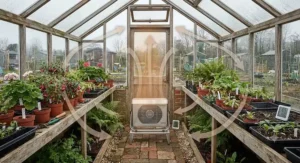
How to Choose the Best Greenhouse Heater
Cutting through the marketing, here’s the actual decision process, step by step:
- Measure your greenhouse’s air volume, not just its footprint — height matters as much as width and depth when calculating heating capacity.
- Confirm whether you have mains electricity running to the structure. If not, your options narrow immediately to paraffin or bottled gas.
- Decide your target temperature based on what you’re actually growing — frost-free (around 2-3°C) versus a genuinely warm environment (7-10°C+) require very different wattages.
- Check the IP rating. Anything without at least IPX4 splash protection is a compromise in a greenhouse environment, however good the price looks.
- Prioritise a thermostat over raw wattage. A well-controlled 1kW heater often outperforms an uncontrolled 2kW heater in both plant welfare and running cost.
- Factor in the circuit you’re plugging into. A 3kW heater on an extension lead shared with other equipment risks tripping breakers or, worse, overheating cables.
- Read aggregated review themes, not star ratings alone — a 4.2-star product with consistent complaints about thermostat drift tells you more than the headline number.
✨ Ready to Warm Up Your Winter Growing?
🔍 Compare current prices and availability on any of the heaters above before the cold snap hits. Getting set up now means one less thing to worry about when the first frost warning comes in.
What Temperature Keeps a Greenhouse Frost-Free?
A frost-free greenhouse temperature typically means maintaining a minimum of around 2-3°C (36-37°F) overnight, which is enough to stop ice crystals forming in plant cells without providing genuine warmth. Many thermostatic heaters include a dedicated “frost-stat” setting specifically for this purpose.
It’s worth being precise about frost-free versus comfortable, because the two get conflated constantly. According to guidance compiled by Two Wests & Elliott’s greenhouse heating experts, a genuinely frost-free target sits around 2°C, while overwintering tender plants comfortably calls for closer to 7°C, and delicate specimens like citrus or bougainvillea want 10°C or above. Reviewers consistently note that running a heater at “comfortable” settings when “frost-free” would suffice is the fastest way to inflate a winter energy bill without any real benefit to hardier plants. The practical upshot: check what your specific plants actually need before setting the thermostat, rather than defaulting to the warmest setting out of caution.
Heating Running Costs Explained
Heating running costs for a greenhouse heater depend almost entirely on wattage and how many hours the thermostat keeps the element active, not the sticker price of the unit itself. As of mid-2026, the Ofgem price cap puts the average electricity unit rate at around 26.11p per kWh for households on a standard variable Direct Debit tariff, which gives a solid baseline for estimating your own costs.
| Heater Setting | Approx. Cost per Hour (at 26.11p/kWh) | Cost for 8 Hours |
|---|---|---|
| 80W tubular (Dimplex/LightHouse) | ~2p | ~17p |
| 1000W (VonHaus low setting) | ~26p | ~£2.09 |
| 2000W (Palma/VonHaus/Prem-I-Air) | ~52p | ~£4.18 |
| 3000W (Sealey EH3001 high) | ~78p | ~£6.27 |
These figures assume the element is running continuously for the full period, which a genuinely well-thermostatted heater rarely does in practice — a properly calibrated Bio Green Palma running frost-stat mode on a mild night might only draw power for a fraction of those hours. This is precisely why thermostat accuracy matters as much as wattage: two 2kW heaters can produce very different actual bills depending on how tightly they cycle. If you’re on a tighter budget, the maths strongly favours pairing a low-wattage tubular heater with good insulation over running a high-wattage fan heater without any supporting measures.
Greenhouse Insulation: Cut Your Heating Bill Before You Buy
Greenhouse insulation, most commonly horticultural bubble wrap fitted to the inside of the glazing, can reduce heat loss by roughly 30-50% depending on the material and how thoroughly it’s fitted, meaning your heater has to work considerably less hard to hold a given temperature. This is genuinely the step most gardeners skip, and it’s the one with the fastest payback.
The mechanism is simple physics rather than marketing: single glazing has a very low insulating value, and every aluminium glazing bar acts as a thermal bridge pulling heat straight back outside. Adding a layer of large-bubble horticultural bubble wrap traps still air against the glass, roughly doubling the insulating value of a single glass pane. Reviewers and greenhouse suppliers alike report measurable overnight temperature differences of 4-5°C between insulated and uninsulated structures under identical frost conditions — which, in practical terms, can be the difference between a 2kW heater running for a few hours a night versus running for most of it. Before you spend money on a bigger, more powerful heater, spending £30-£80 on horticultural bubble wrap is very often the smarter first move, and it works alongside any of the seven heaters above rather than instead of them.
Common Mistakes When Buying a Greenhouse Heater
The single most common mistake is buying purely on wattage without checking coverage area or air volume, leading to either an underpowered heater struggling in a large space or serious overspending on a heater far bigger than the greenhouse needs. A close second is ignoring IP ratings entirely — a heater with no splash protection, positioned near a watering can or a leaky guttering seam, is a genuine safety risk in a greenhouse environment specifically.
Buyers also frequently overlook circuit capacity, plugging a 2-3kW heater into an extension lead already carrying other garden equipment, which risks nuisance tripping at best and overheated cables at worst. Another recurring issue is skipping the RCD question entirely; as covered by RHS guidance on garden electricity, any mains-powered equipment used outdoors or in a greenhouse should run through RCD protection, whether that’s a fixed device in the consumer unit or a plug-in adaptor. Finally, a genuinely common and avoidable error is choosing based on star rating alone rather than reading what the reviews actually say — a product can sit at 4.3 stars while a meaningful minority of reviews describe the exact failure mode (thermostat drift, smoking, cycling) that would matter most to your specific use case.
Electric vs Paraffin Greenhouse Heaters
| Factor | Electric | Paraffin |
|---|---|---|
| Requires mains power | Yes | No |
| Thermostat control | Usually yes | No (manual) |
| Ongoing cost basis | Per kWh, metered | Per litre of fuel |
| Maintenance | Minimal | Wick trimming needed |
| Condensation/moisture | Low | Higher, plus CO₂ by-product |
The honest analysis here is that electric wins decisively on control and convenience, but loses instantly if there’s no power supply to the structure — a factor that makes the comparison almost moot for a meaningful number of allotment and garden-building owners. Paraffin heaters like the Parasene Superwarm 5 trade precision for independence, and the CO₂ released as a by-product is genuinely welcomed by some growers as a minor growth benefit, though it comes bundled with a maintenance commitment that electric heaters simply don’t ask for. If your greenhouse already has a power point, electric heaters are very hard to argue against on almost every practical measure; if it doesn’t, the comparison resolves itself.
Safety, Regulations and Electrical Compliance
Any electric greenhouse heater should be plugged into an RCD-protected socket, ideally rated IPX4 or above for splash protection, and never left running unattended near flammable materials like dry compost bags or fleece. UK wiring regulations under BS 7671 require socket outlets used outdoors, or for equipment used outdoors, to be protected by a 30mA RCD — a requirement that applies whether the socket is a permanent outdoor installation or an indoor socket feeding an extension lead into the greenhouse.
Beyond wiring, check that any heater carries a genuine CE or UKCA mark confirming it meets UK safety standards, and inspect cables periodically for wear, particularly where they pass through doorways or vent openings that get opened and closed repeatedly. For paraffin heaters, ventilation is the safety priority rather than electrics — never run a paraffin heater in a fully sealed greenhouse overnight, since adequate airflow is needed to manage both moisture and combustion by-products safely. None of this is complicated, but it’s the kind of detail that’s easy to skip when you’re just trying to keep your tomatoes alive before the next frost warning.
Greenhouse Heaters for Different Greenhouse Sizes
A small 6x4ft or 6x6ft greenhouse, holding roughly 8-10 m³ of air, is comfortably served by an 80W tubular heater for frost protection, or a 1kW fan heater if you want genuine warmth for tender plants. Step up to a standard 8x6ft structure — the most common size in UK gardens — and a 2kW thermostatic fan heater like the Bio Green Palma or Prem-I-Air Utility PTC becomes the sensible middle ground, offering real heating capacity without excessive running costs.
Beyond that, a 10x8ft greenhouse or a domestic polytunnel starts to strain a single 2kW unit on genuinely cold nights, and anything approaching commercial scale — 12x10ft and up, or multi-bay structures — is where the Sealey EH3001‘s 3kW industrial output earns its keep. As a rough rule of thumb, doubling your greenhouse’s air volume roughly doubles the wattage you should be budgeting for, assuming a comparable target temperature and similar insulation levels throughout.
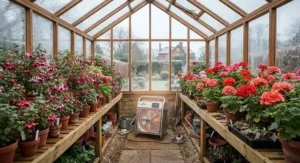
Frequently Asked Questions
❓ What is the cheapest way to heat a greenhouse in the UK?
❓ Do I need a thermostat on a greenhouse heater?
❓ Can I use a normal electric heater in a greenhouse?
❓ How many watts do I need to heat a small greenhouse?
❓ Is paraffin or electric better for a greenhouse heater?
Conclusion
If there’s one takeaway from all this, it’s that “best” depends entirely on what you’re solving for. For most standard-sized UK greenhouses with mains power and genuinely tender plants to protect, the Bio Green Palma earns its higher price through thermostat precision that a cheaper dial-controlled heater simply can’t match. If your only goal is stopping a hard frost from finishing off hardier plants, the Dimplex ECOT2FT or LightHouse ECOHEAT will do that job for pennies a night. No power supply at all? The Parasene Superwarm 5 remains the sensible, if slightly higher-maintenance, answer. And if your greenhouse has genuinely outgrown domestic heaters altogether, the Sealey EH3001 is built for exactly that scale.
Whatever you choose, pair it with proper insulation and a realistic target temperature rather than defaulting to the warmest setting out of anxiety — your plants, and your energy bill, will both thank you for it. Winter in a UK greenhouse doesn’t have to mean watching the thermometer nervously every evening; with the right heater matched honestly to your space, it becomes one less thing to worry about.
✨ Ready to get your greenhouse winter-ready? Check current prices on today’s pick and give your plants the season they deserve. 🌱
Recommended for You
- 7 Cheap Greenhouse Thermometers UK 2026: Ultimate Buyer’s Guide
- Digital Hygrometer for Greenhouse: 7 Top UK Picks for 2026
- Min Max Thermometer for Greenhouse: 7 Picks That Actually Work (2026) Slug
Disclaimer: This article contains affiliate links. As an Amazon Associate, I earn from qualifying purchases. If you purchase products through these links, we may earn a small commission at no additional cost to you.
✨ Found this helpful? Share it with your friends! 💬🤗
