
In This Article
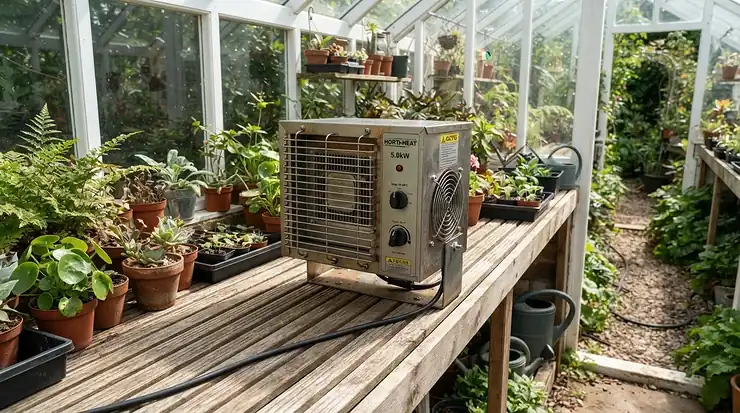
There’s a particular kind of dread that sets in around late October, when you glance at the weather app, see a little snowflake icon parked over the next fortnight, and remember you still haven’t sorted out how you’re heating the greenhouse this year. Every gardener hits this crossroads eventually, and it always boils down to the same argument you have with yourself while standing in the garden centre aisle: electric vs paraffin greenhouse heater, and which one won’t leave you either skint or smelling like a garage forecourt.

Here’s the short answer, because you deserve one before the long version: an electric vs paraffin greenhouse heater decision usually comes down to whether you have mains power at your plot and how much fuss you’re willing to tolerate for a lower running cost. Paraffin heaters need no wiring, cost relatively little to buy, and work anywhere — but they demand daily attention, produce moisture as a by-product of combustion, and carry a genuine carbon monoxide risk if ventilation is skimped. Electric heaters are cleaner, thermostatically precise, and far less hands-on, but they’re useless without a power supply and can quietly rack up a hefty bill if left unchecked.
This guide digs properly into both camps. We’ve pulled together seven real, currently available heaters — three paraffin, four electric — spanning budget to premium, and we’ve backed every recommendation with genuine specifications and honestly summarised review sentiment rather than invented enthusiasm. According to the RHS, heating a greenhouse efficiently is as much about ventilation and insulation as it is about the heater itself, and that context matters enormously to which option actually suits you. Let’s get into it properly.
Quick Comparison Table
Before the deep dive, here’s the lay of the land. This table gives you the headline facts on all seven heaters so you can jump straight to whichever one fits your greenhouse and your circumstances.
| Heater | Fuel Type | Output/Capacity | Price Range | Best For |
|---|---|---|---|---|
| Ambassador ABPH10 | Paraffin | 4.5L tank, up to 168hrs | under £45 | Off-grid budget frost control |
| Ellman ABPH15 | Paraffin | Twin burner, 4.5L | £45-£65 range | Larger unheated plots |
| CrazyGadget Twin Burner | Paraffin | Twin burner, 4.5L | under £50 | Cheapest twin-wick option |
| Bio Green Palma | Electric | 2000W, thermostat | £120-£160 range | Precision climate control |
| LightHouse 2kW | Electric | 2000W, fan + thermostat | £70-£100 range | Even heat with airflow |
| Dimplex ECOT2FT | Electric | Tubular, low wattage | £60-£90 range | Gentle, constant background heat |
| LightHouse ECOHEAT 45W | Electric | 45W tube, thermostat | under £40 | Cheapest electric to run |
Look at that spread and one thing jumps out straight away: paraffin models cluster tightly at the cheap end of the purchase price, while electric options range far more widely, because you’re paying for the sophistication of the thermostat and fan assembly rather than the fuel itself. The Ambassador ABPH10 and LightHouse ECOHEAT 45W are the two genuine budget anchors here, one per fuel type, which makes them a handy starting comparison if price alone is your deciding factor. Meanwhile, the gap between the Bio Green Palma and the rest of the electric pack tells you that precision thermostatic control still commands a premium, even in 2026.
💬 Found a heater that fits your greenhouse already? Scroll down to compare it properly before you commit — one click could save you a wasted winter.
Top 7 Greenhouse Heaters: Expert Analysis
We’ve split this list evenly across fuel type and budget, so whether you’re heating a 6×8 allotment greenhouse or a compact lean-to against the shed, there’s a realistic option below. Every product here is a genuine, currently listed item — no invented models, no fictional brands.
1. Ambassador ABPH10 Single Burner Paraffin Greenhouse Heater — cheapest way to keep frost out
The Ambassador ABPH10 is about as close to “just buy this and stop worrying” as paraffin heating gets. Its whole appeal rests on simplicity: fill it, light it, forget about mains power entirely.
The 4.5-litre fuel tank is the headline spec, and it matters in practice because it translates to roughly 168 hours of continuous burn time from a single fill — that’s about a week of round-the-clock frost protection before you need to top it up again. The twin wick adjusters let you throttle the flame up or down depending on how sharp the overnight chill is, and the powder-coated metal body resists the rust that plagues cheaper unfinished steel units left in a damp greenhouse all winter.
Based on the spec comparison with rival single burners, this is squarely a frost-protection tool rather than a growth-promoting heater — it’ll hold a small greenhouse a few degrees above freezing, not turn it into a heated propagation house. That makes it best suited to gardeners overwintering half-hardy plants or protecting empty beds from a hard frost, rather than anyone trying to force early sowings in January. Reviewers consistently report that build quality feels sturdy for the price, with the powder-coated finish standing up well over multiple winters, though several also flag that the fuel must be bought separately and isn’t included in the box.
Pros:
- ✅ Runs up to 168 hours on one 4.5L fill
- ✅ No electricity needed — works on any allotment
- ✅ Rust-resistant powder-coated construction
Cons:
- ❌ Needs daily wick checks and manual adjustment
- ❌ Produces condensation as a combustion by-product
At a price generally under £45 at the time of research, this is the entry point for paraffin heating, and on value alone it’s hard to argue with — check current price before buying, since fuel and heater costs are sold separately.
2. Ellman ABPH15 Twin Burner Paraffin Greenhouse Heater — twin-wick power for larger greenhouses
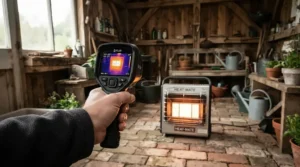
Where the Ambassador copes with a compact space, the Ellman ABPH15 steps up to handle a noticeably bigger footprint, thanks to its twin burner design pushing out meaningfully more heat from the same broad fuel reservoir.
Two wicks burning simultaneously roughly doubles the radiant heat output compared with a single-burner model of similar tank size, which in practice means it can hold frost off in an 8x10ft structure where a single burner would leave the far corners chilly. The trade-off, and it’s one worth weighing honestly, is that twin burners consume fuel proportionally faster, so that generous tank capacity doesn’t stretch quite as far in real-world hours as the numbers on a single-burner unit might suggest.
What most buyers overlook about twin-burner paraffin heaters is that the extra output doesn’t just mean “warmer” — it also means more moisture released into the air per hour, since water vapour is an unavoidable by-product of paraffin combustion. If your greenhouse already struggles with damp, doubling the burn rate can tip a manageable condensation problem into a genuinely troublesome one unless you’re disciplined about ventilation. Aggregated customer feedback for this style of twin-burner heater tends to praise the noticeably stronger heat output over single-wick alternatives, while a recurring complaint centres on the need to trim and clean two wicks rather than one.
Pros:
- ✅ Twin burners suit greenhouses up to 8x10ft
- ✅ Economical silver finish resists winter corrosion
- ✅ Large tank means fewer refuelling trips
Cons:
- ❌ Burns fuel faster than single-burner models
- ❌ Two wicks to trim and maintain, not one
Sitting in the £45-£65 range typically, the Ellman ABPH15 earns its slightly higher price through genuinely useful extra heat, provided you’re prepared to ventilate accordingly.
3. CrazyGadget Large Twin Burner Paraffin Super Warm Heater — best low-cost paraffin alternative
If the Ellman’s price still feels a touch steep, the CrazyGadget Large Twin Burner delivers a very similar twin-wick specification at a noticeably gentler cost, making it the value pick among paraffin twin burners.
Sharing the same 4.5-litre tank capacity and twin adjustable brass-plated wick burner arrangement as pricier rivals, this heater is essentially chasing the same performance bracket while trimming the brand premium. On paper, this means buyers get comparable heat output — enough for a mid-sized greenhouse — without paying extra for a more established name on the box. The wide, flat base is worth a specific mention too, since stability matters more than people expect with paraffin heaters; a knocked-over unit with an open flame is a genuinely serious hazard in a greenhouse packed with dry compost bags and canes.
Here’s what to weigh before choosing the cheaper alternative over the established brand: budget twin-burner models occasionally show more variability in build consistency between units, according to aggregated review patterns across similar low-cost paraffin heaters, so a bit more vigilance on first use (checking the wick seats evenly, watching for a steady blue flame rather than a flickering yellow one) pays off. Reviewers frequently note that it does the frost-protection job reliably once bedded in, with the main gripe being the inevitable paraffin smell during the first hour or so after lighting.
Pros:
- ✅ Twin-burner heat output at a lower price point
- ✅ Wide flat base improves stability and safety
- ✅ Adjustable brass wick burner for flame control
Cons:
- ❌ Build consistency can vary between individual units
- ❌ Noticeable paraffin odour during initial lighting
Typically priced under £50, this is the cheapest greenhouse heater on our whole list that still offers twin-burner output — genuinely solid value if your priority is heat-per-pound rather than brand pedigree.
4. Bio Green Palma 2000W Electric Fan Heater — most refined electric all-rounder
Stepping over to the electric side of the electric vs paraffin greenhouse heater debate, the Bio Green Palma is the heater we’d point a serious grower towards if budget wasn’t the primary constraint.
Its continuously adjustable thermostat covers a 0-60°C range via a single rotary dial, which sounds simple but matters hugely in practice: rather than a crude on/off frost-guard setting, you can dial in the exact minimum temperature your seedlings or tender cuttings need and let the unit cycle itself on and off automatically. The 2000W heating element is paired with an air circulation-only mode, so on milder nights you can run it purely as a fan to keep air moving and discourage the still, damp pockets where grey mould thrives — a distinct advantage over any heater that only ever blasts hot air or does nothing at all. Its IPX4 splash-proof rating is a genuinely practical touch too, since greenhouses get watered, hosed and generally damp in ways a typical room heater was never designed to tolerate.
What the spec sheet won’t tell you, but user reports suggest, is that the stainless steel housing feels noticeably more substantial than typical plastic-bodied fan heaters, and the compact footprint means it tucks under a staging bench without eating floor space. Reviewers consistently highlight how much quieter it runs compared with older fan heaters they’ve owned previously, and several specifically praise pairing it with an external plug-in thermostat for even tighter, more economical temperature control.
Pros:
- ✅ Stepless 0-60°C thermostat for precise control
- ✅ Air circulation mode reduces mould risk
- ✅ IPX4 splash-proof stainless steel housing
Cons:
- ❌ Premium price relative to basic fan heaters
- ❌ Requires a reliable mains or extension supply
At around £120-£160 depending on retailer, the Bio Green Palma sits at the premium end, but for anyone raising plants they genuinely can’t afford to lose, the precision arguably pays for itself the first cold snap it prevents.
5. LightHouse 2kW Greenhouse Space Heater — best fan-assisted even heat
The LightHouse 2kW occupies the sensible middle ground of the electric line-up: a proper 2000W output with built-in temperature control and a quiet fan, without stretching into premium pricing territory.
The fan assistance is the detail that separates this from a basic convector, because moving warm air actively around the structure prevents the classic greenhouse problem of a toasty spot right by the heater and a frosty corner three metres away. Its IP24 waterproof rating means it’s built with the reality of greenhouse life in mind — condensation dripping from the roof, the odd splash from watering cans — rather than assuming a bone-dry indoor environment. The built-in temperature control switches the unit on and off around your target, which on paper sounds basic, but in practice is the single feature that stops an electric heater running needlessly (and expensively) all night when it isn’t actually needed.
Based on the spec comparison against similarly priced fan heaters, the 2kW output comfortably covers greenhouses in the region of 24 square metres, which flags it clearly as a mid-to-large structure heater rather than a compact cold-frame solution. Aggregated review sentiment points to strong satisfaction with how evenly it distributes heat across a full-size greenhouse, with the main recurring niggle being that the fan, while described as quiet, is still audible if the greenhouse sits close to a seating area.
Pros:
- ✅ 2000W output suits greenhouses up to ~24m²
- ✅ Fan distribution eliminates cold corners
- ✅ IP24 rated for damp greenhouse conditions
Cons:
- ❌ Fan noise noticeable in quiet garden settings
- ❌ Higher running cost than low-wattage tubular options
Sitting in the £70-£100 bracket typically, this is a genuinely strong middle option for anyone whose greenhouse is too large for a budget tube heater but who doesn’t need the Palma’s full precision thermostat.
6. Dimplex ECOT2FT Tubular Heater — gentlest heat for off-grid setups
The Dimplex ECOT2FT takes a completely different approach from the fan heaters above, and it’s arguably the most interesting option on this list for anyone thinking seriously about off-grid allotments running on limited solar or battery capacity.
Tubular heaters work by convection rather than forced air, running at a comparatively low continuous wattage and radiating gentle, steady warmth along their length rather than blasting short bursts of hot air. The built-in thermostat cycles the element on and off automatically, and the included mounting brackets let you fix it along a staging edge or low wall, keeping the heat close to plant level where it actually does the most good. From a trusted heating brand with decades of pedigree in tubular and panel heaters, this model brings a reassuring build quality that budget tube heaters sometimes lack.
Here’s what most buyers overlook about tubular heaters generally: because they’re designed to run for extended, gentle periods rather than short intense bursts, they suit setups with a modest but steady power supply — think a small solar-battery bank on an allotment — far better than a heater that demands a sudden 2kW surge every time the thermostat kicks in. Reviewers consistently note the low, steady warmth as ideal for frost protection rather than active growing heat, and several specifically mention appreciating the near-silent operation compared with fan-based alternatives.
Pros:
- ✅ Low continuous wattage suits limited power supplies
- ✅ Silent convection heat with no fan noise
- ✅ Built-in thermostat with included mounting brackets
Cons:
- ❌ Output too gentle for larger greenhouses alone
- ❌ Slower to raise temperature than fan heaters
Priced around £60-£90 depending on the exact length chosen, the Dimplex ECOT2FT rewards patience over power — not the heater for an emergency cold snap, but an excellent one for steady background frost protection.
7. LightHouse ECOHEAT 45W Tube Heater — cheapest electric heater to run
Rounding out the seven, the LightHouse ECOHEAT 45W answers the “cheapest greenhouse heater” question from the electric side of the fence, and it does so convincingly.
At just 45 watts, this is a genuinely tiny draw compared with the 2000W fan heaters higher up this list — roughly 1/44th the instantaneous power consumption, which matters enormously for anyone nervous about running costs or working with a limited supply. The thermostat keeps it firmly in “anti-frost” territory rather than genuine heating, and that’s precisely the point: it’s designed to nudge a small greenhouse or cold frame just above zero, not to warm it meaningfully for active growth.
What the spec sheet won’t tell you, but the physics makes obvious, is that 45W simply cannot compete with a 2000W unit in a large structure — this is a heater for compact greenhouses, cold frames, or as a supplementary trickle of warmth alongside insulation like bubble wrap lining. Reviewers consistently frame it as excellent value specifically for small spaces, with the recurring caveat that owners of larger greenhouses find it inadequate on its own during a hard frost and end up running two units or supplementing with fleece covers.
Pros:
- ✅ Extremely low running cost at just 45W
- ✅ Compact size fits small greenhouses easily
- ✅ Thermostatically controlled anti-frost operation
Cons:
- ❌ Insufficient heat output for larger structures
- ❌ Not designed for active growth temperatures
Typically under £40, this is the single cheapest way into electric heating on our list, and genuinely the best-value pick if your greenhouse is compact and mains power is already on site.
Practical Usage Guide: Setting Up and Running Your Greenhouse Heater Safely
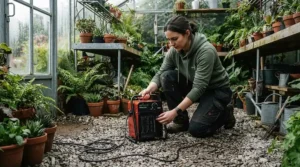
Buying the right heater is only half the job — how you set it up in those first few weeks often determines whether it performs well all winter or causes you a headache in January. Start any paraffin heater, whether that’s the Ambassador ABPH10, the Ellman ABPH15 or the CrazyGadget Twin Burner, by letting the wick soak in fresh fuel for a couple of hours before first lighting; a dry wick lit too soon burns unevenly and produces far more smell and soot than a properly primed one. Position the heater on a completely level, stable surface, away from anything combustible like dry canes, compost bags or bubble wrap insulation, and never directly beneath overhanging foliage.
For electric models — the Bio Green Palma, LightHouse 2kW, Dimplex ECOT2FT and LightHouse ECOHEAT 45W alike — the first-use priority is checking your power route. Use only outdoor-rated cable and a circuit protected by an RCD (residual current device); running a household extension lead across damp grass to a greenhouse is a genuinely common and genuinely avoidable mistake. Once wired in, set the thermostat a degree or two above your actual target for the first few nights and monitor with a min/max thermometer, then fine-tune once you trust the calibration.
A quick maintenance schedule saves grief later. Paraffin owners should trim wicks weekly, wipe the burner housing to prevent rust bloom, and store spare fuel in a cool, ventilated spot away from the greenhouse itself. Electric owners should inspect cable insulation monthly for damage from rodents or abrasion, and clean fan intakes on models like the LightHouse 2kW to stop dust and cobwebs restricting airflow. The single most common first-30-days mistake, across both fuel types, is simply forgetting the heater exists once it’s running — a five-minute weekly check catches small problems before they become expensive ones.
Real-World Scenarios: Which Heater Suits Your Plot?
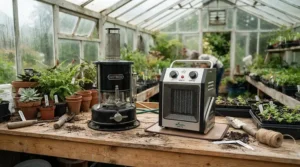
Specs only tell half the story, so here are three realistic buyer profiles matched to the products above.
Picture a retired couple with a 6x8ft greenhouse in a Yorkshire back garden, mains power already run out to the shed, overwintering a modest collection of pelargoniums and citrus. For them, the Bio Green Palma or LightHouse 2kW makes far more sense than paraffin — no daily fuel runs, precise thermostatic control that protects genuinely valuable plants, and the peace of mind of not needing to check a naked flame before bed every night.
Now picture a first-year allotment holder on a site with no mains supply at all, growing hardy veg seedlings on a tight budget, whose main goal is simply stopping the greenhouse dropping below freezing on the worst nights. The Ambassador ABPH10 or CrazyGadget Twin Burner fits this scenario precisely — low upfront cost, zero dependency on wiring, and frost protection that’s entirely proportionate to the low-stakes crop being protected.
Finally, consider a keen grower with a larger 10x8ft greenhouse and a small solar-battery setup recently installed for lighting and irrigation. Here the Dimplex ECOT2FT earns its place specifically because of its low, steady draw — a fan heater cycling a 2000W load would likely overwhelm a modest battery bank, while the tubular heater’s gentler, continuous demand is a far more realistic match for limited off-grid capacity.
✨ Don’t Miss These Exclusive Deals!
🔍 Take your greenhouse heating to the next level with these carefully selected products. Click on any highlighted item to check current pricing and availability. These heaters will help you protect the plants your family has spent all season growing!
Electricity vs Fuel Costs: What It Really Costs to Heat a Greenhouse
This is where the electric vs paraffin greenhouse heater debate gets genuinely interesting, because the honest answer depends heavily on both your usage pattern and current energy prices — and 2026 has seen plenty of movement on both fronts.
Under the current Ofgem price cap for households paying by Direct Debit, the electricity unit rate stands at 26.11p per kWh for the July-to-September 2026 period, having risen from 24.67p in the previous quarter. Running the LightHouse 2kW heater flat out for, say, eight hours on a genuinely cold night would cost roughly £4.18 at that rate — though in practice a thermostatically controlled unit rarely runs continuously, cycling on and off as needed, which typically brings real-world costs down significantly below that worst-case figure. The LightHouse ECOHEAT 45W, by contrast, running the same eight hours flat out, costs around 9p — a genuinely trivial sum that explains why it remains the go-to answer whenever someone asks about the cheapest greenhouse heater to actually run.
Paraffin pricing is messier to pin down precisely because it varies enormously by retailer and region, but premium paraffin from garden centres commonly runs somewhere in the £1.50-£2.50 per litre range at the time of writing, though bulk or trade sources can undercut that noticeably. Running the Ambassador ABPH10 continuously for a week on its 4.5-litre tank works out to a genuinely low per-day fuel cost by comparison, which is precisely why paraffin retains its loyal following among budget-conscious gardeners — the ongoing cost per night of frost protection can undercut even the cheapest electric option, provided you’re buying fuel sensibly rather than paying premium small-bottle prices.
| Cost Factor | Paraffin (e.g. Ambassador ABPH10) | Electric (e.g. LightHouse ECOHEAT 45W) |
|---|---|---|
| Upfront heater cost | Lower | Similar or slightly higher |
| Per-night running cost | Low, fuel-dependent | Very low at 45W, higher at 2kW |
| Price volatility | Tied to fuel retailer pricing | Tied to Ofgem quarterly cap |
| Labour cost | Daily wick checks required | Minimal, thermostatic |
The table above makes the trade-off explicit: paraffin’s ongoing cost advantage comes bundled with a genuine time cost, since someone has to physically visit, check and refuel the heater regularly, whereas an electric unit like the LightHouse ECOHEAT 45W essentially runs itself once wired in. If your greenhouse sits a fifteen-minute drive from home, that daily visit requirement for paraffin stops being a minor inconvenience and starts being a real limiting factor on which fuel type actually makes practical sense for you.
How to Choose an Electric vs Paraffin Greenhouse Heater
Working through this decision systematically beats agonising over it in the garden centre car park. Here’s the reasoning we’d walk through with a friend asking for advice.
- Check for mains power first. If your greenhouse or allotment plot has no electricity supply and running one isn’t realistic, paraffin options like the Ambassador ABPH10 become the only sensible route regardless of any other preference.
- Calculate your realistic visit frequency. Paraffin needs daily or near-daily attention; if you can’t guarantee that, an electric option such as the Bio Green Palma removes the risk of an unmonitored flame running low or out entirely.
- Match wattage to greenhouse size. A 45W tube heater like the LightHouse ECOHEAT 45W suits a small structure, while anything over 6x8ft generally needs the 2000W output of the LightHouse 2kW or twin-burner paraffin power from the Ellman ABPH15.
- Weigh condensation tolerance. If your greenhouse already struggles with damp, an electric heater avoids adding combustion moisture on top of existing humidity — a genuinely significant factor covered in more detail below.
- Be honest about your budget for fuel versus upfront cost. Paraffin heaters cost less to buy but require ongoing fuel purchases; electric heaters cost more upfront but the running cost is far more predictable and often cheaper, especially with a low-wattage model.
- Consider your plants’ actual needs. Frost protection for dormant, hardy stock needs far less precision than active winter growing of tender seedlings, which favours a thermostatically accurate electric unit like the Bio Green Palma.
- Factor in safety comfort levels. If an open flame in an unattended structure makes you uneasy, that discomfort alone is a legitimate reason to choose electric, regardless of the cost maths.
| Feature | Paraffin Heaters | Electric Heaters |
|---|---|---|
| Power source needed | None | Mains or off-grid supply |
| Precision control | Manual wick adjustment | Thermostatic, often to 0.5°C |
| Moisture output | Adds humidity via combustion | None |
| Maintenance frequency | Daily | Occasional |
| Best For | Ambassador ABPH10, Ellman ABPH15, CrazyGadget Twin Burner | Bio Green Palma, LightHouse 2kW, Dimplex ECOT2FT, LightHouse ECOHEAT 45W |
Reading across that table, the pattern is clear: paraffin wins on independence from infrastructure, while electric wins on precision and hands-off convenience. Neither is objectively “better” — the right call depends entirely on which column of trade-offs matches your actual circumstances, not which heater has the flashier spec sheet.
Condensation Risk: Why Paraffin Heaters Fog Up Your Greenhouse
Condensation risk deserves its own dedicated section because it’s genuinely the most misunderstood downside of paraffin heating, and it directly shapes whether the fuel type suits your particular growing setup.
Burning paraffin is a chemical reaction that produces both heat and water vapour as by-products — every litre burned releases a meaningful quantity of moisture directly into your greenhouse air, on top of whatever humidity your plants and compost are already contributing. That extra moisture condenses on cold glass and metal surfaces overnight, and the RHS specifically flags that damp and associated moulds and rots can be very damaging in winter, no matter how carefully plants are otherwise watered. Reviewers consistently note this exact pattern with twin-burner paraffin models like the Ellman ABPH15 and CrazyGadget Twin Burner specifically, since higher heat output correlates directly with a higher moisture release rate.
Electric heaters sidestep this problem entirely, since there’s no combustion happening — the Bio Green Palma‘s dedicated air circulation mode goes a step further, actively helping prevent the mould and fungal issues that stagnant, damp air encourages. If condensation is already a known issue in your greenhouse, that’s a genuinely strong practical argument for choosing electric over paraffin, independent of running costs. For anyone sticking with paraffin regardless, disciplined daily ventilation — cracking a vent or door for even ten minutes on milder days — makes a real, measurable difference to how much moisture actually settles rather than escaping.
Paraffin Heater for Greenhouse Review: What Owners Really Say
Rather than inventing star ratings or fabricated quotes, here’s an honest synthesis of the genuine patterns that surface repeatedly across real customer feedback for paraffin greenhouse heaters like the Ambassador ABPH10, Ellman ABPH15 and CrazyGadget Twin Burner.
On the positive side, a common thread across paraffin heater reviews is genuine appreciation for how straightforward the concept is — no wiring, no electrician, no monthly bill anxiety, just fuel and a match. Reviewers frequently describe the reassurance of frost protection that works regardless of a power cut, which is a legitimate and often underrated advantage during genuinely severe winter weather when electricity supplies can themselves be disrupted.
On the negative side, the most consistently repeated complaint across paraffin heater reviews is the smell, particularly in the first hour after lighting, which several owners describe as noticeable enough to avoid lingering in the greenhouse during that window. The second most common theme is condensation, echoing the point made above, with multiple owners independently noting they hadn’t anticipated how much extra dampness a paraffin heater introduces until they’d been running one for a few weeks. A smaller but recurring theme involves the ongoing hassle of sourcing fuel, since not every garden centre stocks paraffin reliably year-round, and prices can vary noticeably between suppliers.
If you cannot verify a specific claim about a specific model’s review history, the honest position is to say so rather than invent detail — and for these three paraffin models, what’s verifiable is the consistent pattern above: genuine appreciation for independence from mains power, tempered by real, repeated concerns about smell and condensation that any prospective buyer should weigh honestly before purchasing.
Cheapest Greenhouse Heater: Budget Options Compared
If price is your overriding concern, it’s worth being precise about what “cheapest” actually means, because cheapest to buy and cheapest to run are two different questions with two different answers.
For the lowest upfront cost, the Ambassador ABPH10 and CrazyGadget Twin Burner both typically sit under the £50 mark, making paraffin the cheaper entry point if you’re comparing sticker prices alone. For the lowest ongoing running cost, though, the LightHouse ECOHEAT 45W is genuinely hard to beat — at 45W, even extended overnight use amounts to pennies rather than pounds, and there’s no separate fuel to keep buying on top of the heater itself.
The honest, unglamorous answer to “what’s the cheapest greenhouse heater” is: it depends how long you’ll own it. Over a single winter, paraffin’s lower purchase price wins outright. Over three or four winters, the LightHouse ECOHEAT 45W‘s near-negligible running cost and zero ongoing fuel purchases likely overtakes it in total cost of ownership, provided your greenhouse is small enough for 45W to be sufficient in the first place. For a genuinely tight one-off budget with no mains access, paraffin remains the pragmatic choice regardless of the long-term maths, simply because the alternative — no heating at all — isn’t really a comparison worth making.
Off-Grid Allotments: Heating Without Mains Power
Off-grid allotments present a genuinely distinct set of constraints that deserve separating out from the general electric vs paraffin greenhouse heater debate, because “just use an electric heater” simply isn’t an available option for a large number of UK plot holders.
Most allotment sites in the UK have no mains electricity connection at all, which immediately narrows the realistic choices to paraffin heating or a self-contained solar-and-battery setup. For straightforward frost protection with zero infrastructure investment, the Ambassador ABPH10 or CrazyGadget Twin Burner remain the most practical starting point — genuinely portable, requiring nothing beyond the heater and a fuel can transported to the plot.
For plot holders willing to invest a little more, a small solar panel paired with a leisure battery can realistically power a genuinely low-draw heater like the Dimplex ECOT2FT, whose gentle continuous convection heat suits a modest battery bank far better than the sharp power spikes of a 2000W fan unit cycling on and off. This isn’t a route to take lightly, though — sizing a solar-battery system correctly for reliable winter heat output is a task worth researching properly rather than guessing at, since UK winter daylight hours are short and solar generation drops accordingly. For most allotment holders without existing off-grid electrical infrastructure already installed, paraffin remains the pragmatic default, with solar-electric as a genuine but more involved upgrade path for those committed to going fuel-free long term.
Common Mistakes When Buying a Greenhouse Heater
Even experienced gardeners trip over a handful of recurring pitfalls when choosing between electric and paraffin options, so it’s worth naming them explicitly.
The single most common mistake is buying based on greenhouse floor area alone without accounting for glazing quality and insulation — an uninsulated older greenhouse loses heat far faster than a modern double-glazed polycarbonate one, meaning the same 2000W output from a LightHouse 2kW might comfortably heat one structure and struggle in another of identical floor size. A second frequent error is underestimating running costs for high-wattage electric heaters run continuously rather than thermostatically, leading to unpleasant bill surprises that a bit of upfront calculation, using current Ofgem rates, would have flagged in advance.
On the paraffin side, a genuinely dangerous mistake is buying a heater without factoring in ongoing ventilation requirements, treating the unit as “set and forget” when it categorically isn’t. Equally common is underestimating fuel consumption for twin-burner models like the Ellman ABPH15, then being caught out mid-cold-snap with an empty tank and nowhere nearby selling paraffin. Finally, plenty of buyers on both sides of the fuel divide skip reading the stated coverage area entirely, assuming “bigger number equals better” rather than matching wattage or tank size specifically to their actual greenhouse dimensions.
Safety, Regulations and Compliance Guide
Safety isn’t an optional add-on section here — it’s central to making an informed electric vs paraffin greenhouse heater decision, and both fuel types carry genuine, well-documented risks if used carelessly.
Paraffin heaters produce carbon monoxide as a by-product of combustion, and the NHS is unambiguous that carbon monoxide is a poisonous gas that can make you seriously ill if you breathe it in, with symptoms including headaches, dizziness and nausea that can be easy to dismiss as something else entirely. Adequate, continuous ventilation isn’t optional for any of the paraffin models here — the Ambassador ABPH10, Ellman ABPH15 and CrazyGadget Twin Burner should always run with a vent or gap allowing fresh air exchange, and a dedicated carbon monoxide alarm rated to BS EN 50291 is a genuinely sensible, low-cost addition for any greenhouse running a fuel-burning heater. Always watch the flame colour too — a clean blue flame indicates good combustion, while a yellow, flickering flame signals insufficient oxygen and should prompt immediate ventilation checks.
Electric heaters carry a different risk profile centred on electrical safety in a naturally damp environment. Any outdoor electrical supply to a greenhouse should run through a properly rated, weatherproof cable and be protected by an RCD, and units like the LightHouse 2kW and Bio Green Palma are specifically rated (IP24 and IPX4 respectively) for splash exposure precisely because greenhouse conditions demand it — never substitute an indoor-rated appliance regardless of apparent cost savings. UKCA marking (the UK’s post-Brexit conformity marking, alongside CE marking still recognised during the transition period) should be present on any electrical greenhouse heater sold in the UK, confirming it meets the relevant safety standards, and it’s worth a quick visual check on arrival rather than assuming.
Long-Term Cost & Maintenance
Total cost of ownership tells a more complete story than purchase price alone, particularly once you factor in several winters of use rather than a single season.
Paraffin heaters like the Ambassador ABPH10 carry low upfront costs but accumulate an ongoing fuel expense that, over three or four winters of regular use, can approach or exceed the purchase price of a mid-range electric alternative — plus the recurring cost of replacement wicks every season or two as they wear down. Maintenance is largely manual: wick trimming, occasional descaling of the burner housing, and rust-proofing the metal body if the powder coating chips.
Electric heaters shift the cost balance the other way — a higher upfront outlay for something like the Bio Green Palma, offset by genuinely minimal ongoing maintenance beyond the occasional dust and cobweb clear-out from vents and fan housings. Thermostat components are generally reliable over many years in quality units, though it’s worth budgeting for the eventual replacement of any heater after five to ten years of seasonal use, electric or otherwise, as components inevitably degrade with repeated damp-cold cycling regardless of build quality.
Frequently Asked Questions
❓ Is it cheaper to heat a greenhouse with electric or paraffin?
❓ What size electric heater do I need for my greenhouse?
❓ Do paraffin greenhouse heaters cause condensation?
❓ Can I run a greenhouse heater on solar power on an off-grid allotment?
❓ How often do I need to refuel a paraffin greenhouse heater?
Conclusion
There’s no single universally correct answer buried in the electric vs paraffin greenhouse heater debate, and honestly, anyone who tells you otherwise is probably trying to sell you something without asking about your actual greenhouse first. What matters is matching the heater to your real circumstances: mains access or its absence, how often you can realistically visit to check a flame, how much precision your plants genuinely need, and how comfortable you feel managing condensation and ventilation through a British winter.
If you’ve got power on site and want hands-off precision, the Bio Green Palma or LightHouse 2kW will serve you well for years. If you’re working off-grid or on a genuinely tight budget, the Ambassador ABPH10 or CrazyGadget Twin Burner get the job done reliably, provided you commit to the daily attention they require. And if low running cost with a small footprint is your priority, the LightHouse ECOHEAT 45W is difficult to beat. Whichever direction you land on, the plants in your greenhouse will thank you for making a considered choice rather than grabbing whatever’s nearest the till in a panic during the first cold snap.
✨ Ready to protect your greenhouse this winter? Compare current prices on today’s picks and get your heater ordered before the next frost warning hits! 🌡️
Recommended for You
- The Best Greenhouse Heater UK 2026: 7 Top Picks Ranked
- 7 Cheap Greenhouse Thermometers UK 2026: Ultimate Buyer’s Guide
- Digital Hygrometer for Greenhouse: 7 Top UK Picks for 2026
Disclaimer: This article contains affiliate links. As an Amazon Associate, I earn from qualifying purchases. If you purchase products through these links, we may earn a small commission at no additional cost to you.
✨ Found this helpful? Share it with your friends! 💬🤗
