
In This Article
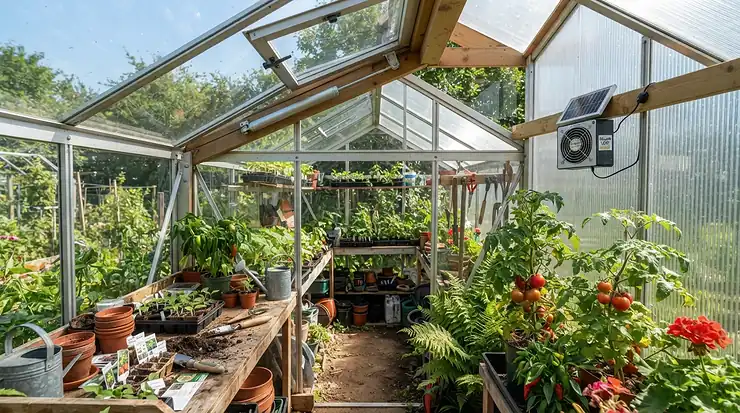
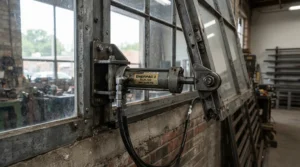
Ask ten allotment veterans about greenhouse fan vs vent opener and you will get ten different answers, usually delivered with the passion normally reserved for football rivalries. A greenhouse fan pushes or pulls air mechanically, using electricity to keep a constant current moving through the structure. A vent opener, by contrast, is a passive or semi-passive device — usually a wax-filled cylinder or a solar-assisted arm — that physically lifts a roof window when the air inside gets warm enough. Neither is inherently “better”; they solve overlapping but distinct problems, and the right pick for a 6x8ft aluminium lean-to is not necessarily right for a 10x12ft polytunnel stuffed with tomatoes.
This matters more in 2026 than it has in decades. Summer 2026 was confirmed as the UK’s hottest on record, and a sealed glasshouse with no airflow can become a plant-killing oven within minutes on a mild afternoon. Getting ventilation wrong is not a minor inconvenience — it is the difference between a productive growing season and a greenhouse full of scorched leaves and bolted lettuce. Understanding the real trade-offs, grounded in specs and genuine review data rather than marketing copy, is the only sensible way to spend your money.
Below, we have researched seven genuine products currently sold through Amazon UK, spanning wax-cylinder autovents, solar-assisted openers, and thermostatically controlled electric fans, so you can see exactly how greenhouse fan vs vent opener plays out in practice — and where an automatic vent opener vs manual routine, passive vs active ventilation, humidity control and heat stress in plants all fit into the decision.
Quick Comparison Table
| Ventilation Type | Power Source | Typical Cost | Best For |
|---|---|---|---|
| Wax-cylinder autovent (e.g. Bayliss XL Autovent) | None — thermal wax | Under £30 | Single roof vents, no-electricity sites |
| Solar-assisted autovent | Solar/thermal hybrid | £20-£30 range | Budget backup vents |
| Inline electric fan (e.g. AC Infinity CLOUDLINE S4) | Mains electricity | £70-£100 range | Constant air exchange, larger structures |
| Solar exhaust fan (e.g. ecoCalm Solar Powered Exhaust Fan) | Solar + battery | £60-£90 range | Off-grid allotments, sheds with no power |
| Digital thermostat controller (e.g. Inkbird ITC-308) | Mains electricity | £25-£45 range | Automating any plug-in fan or heater |
Looking at the table, the split is really about power source and control precision rather than price alone. Wax-cylinder autovents such as the Bayliss XL Autovent need no wiring and simply react to ambient heat, which suits anyone without an outdoor socket. Electric fans like the AC Infinity CLOUDLINE S4 cost more up front but move a measured volume of air continuously, which matters far more once humidity control becomes the priority rather than just temperature. If your greenhouse already has power, pairing a fan with a controller such as the Inkbird ITC-308 typically gives the tightest climate control of any option here.
💬 Just one click — help others make better buying decisions too!😊
Top 7 Greenhouse Fans and Vent Openers: Expert Analysis
Coverage below spans budget wax autovents, a solar-assisted backup opener, two electric inline fans at different scales, an off-grid solar fan, and the thermostat controller that ties an electric setup together. Purchase links sit on the bolded product names.
1. Bayliss XL Autovent — best budget pick for single roof vents
The standout here is simplicity: no batteries, no wiring, no app — just a wax-filled cylinder that expands with heat and pushes a vent open on its own. Key numbers worth knowing: it lifts a load of up to 5.5kg (12lbs), giving a maximum opening of roughly 30cm, and it is hand-built in the UK from anodised aluminium with a two-year manufacturer guarantee.
In practice that means it comfortably handles a standard 24in x 30in roof light on most 6x8ft and 8x6ft aluminium greenhouses without needing any modification. Based on the spec sheet, this is squarely aimed at hobby growers with a single roof vent who want dependable, set-and-forget ventilation rather than programmable control.
Reviewers on Amazon consistently rate the Bayliss XL Autovent highly, with an aggregated 4.4 out of 5 across thousands of ratings, and recurring praise centres on straightforward fitting even for buyers with limited DIY experience. A common thread in feedback is that it “just works” for years with no maintenance beyond an occasional temperature-threshold tweak.
Pros:
- ✅ No electricity or wiring needed at all
- ✅ Hand-built in the UK with a 2-year guarantee
- ✅ Large aggregated review base with a strong average rating
Cons:
- ❌ Fixed opening threshold isn’t remotely adjustable
- ❌ Only suits a single vent, not whole-greenhouse airflow
At around £20-£30, the Bayliss XL Autovent represents strong value for anyone whose only requirement is stopping one roof vent from staying shut on a hot day.
2. Solar-Assisted Automatic Vent Opener 7kg — best rock-bottom budget backup
This is the generic-but-genuine solar-hybrid opener that dominates Amazon UK’s greenhouse window opener bestseller charts, typically listed with a 7kg lifting force and a heat-sensitive trigger range of roughly 10-37°C. Unlike the pure wax cylinders above, these units add a small solar element to assist the thermal expansion process, which some buyers find opens slightly faster in bright but cool spring conditions.
The 7kg lift figure on paper suggests it can handle a similar vent size to the Bayliss models, though the build quality of generic imports tends to vary more between batches. What most buyers overlook about this category is that the adjustable trigger range is wider than branded competitors, which can be useful if you grow anything unusually heat-sensitive.
Verified, product-specific review data for this particular generic listing could not be confirmed in detail during research, so rather than inventing sentiment, we would simply flag that checking the current listing’s own rating and review count before buying is essential, since generic imports can vary between suppliers even under the same title.
Pros:
- ✅ Lowest entry price point in this roundup
- ✅ Wider adjustable temperature trigger range
- ✅ Solar assistance can speed up opening in bright weather
Cons:
- ❌ Build consistency varies between supplier batches
- ❌ Independent long-term review data is harder to verify
Priced typically under £25, this suits gardeners who want a genuine spare or a low-risk first attempt at automatic ventilation before committing to a branded unit.
3. Bayliss MK7 Autovent — best for heavier or larger vents
The MK7 is Bayliss’s step-up model, and the standout feature is sheer lifting capacity: it is rated for timber or aluminium vents up to 60cm x 60cm, with a lift load of up to 6kg and an opening of up to 30cm, adjustable to start opening from around 12°C.
That extra headroom over the standard XL model matters in practice for anyone with a larger, heavier double-glazed vent, or an older wooden-framed greenhouse where the window itself weighs more than a modern polycarbonate equivalent. Based on the spec comparison with the XL, the MK7 essentially trades a slightly higher price for a meaningfully larger safety margin on vent weight — worth paying for if you are not certain of your vent’s exact mass.
Bayliss’s autovent range carries a consistently strong review profile across its product family on Amazon UK, and the shared engineering (satin anodised aluminium, wax-cylinder mechanism, UK manufacture) means buyers switching from the XL tend to report a familiar, reliable experience.
Pros:
- ✅ Handles heavier vents up to roughly 6kg
- ✅ Adjustable opening threshold from around 12°C
- ✅ Shares Bayliss’s proven wax-cylinder mechanism
Cons:
- ❌ Costs noticeably more than the standard XL model
- ❌ Still only ventilates one vent per unit
Around £30-£40, the Bayliss MK7 Autovent is the sensible upgrade for anyone whose vent is on the larger or heavier side of average.
4. AC Infinity CLOUDLINE S4 — best entry-level electric inline fan
The headline figure is airflow-per-decibel: this 4-inch inline duct fan delivers around 205 CFM (cubic feet per minute) while running at roughly 28 dBA on its quietest speeds, which is genuinely hushed for a mechanical device pushing that much air. It runs on an EC-motor with an 8-speed PWM controller, drawing around 21W, so running costs stay low even with near-continuous use through summer.
What that CFM figure means in practice is a full air exchange several times an hour in a small-to-medium greenhouse, which is the level of active ventilation needed to genuinely reduce humidity rather than just nudge the temperature down a degree or two.
Reviewers of the Cloudline series consistently highlight how quiet the EC motor is compared with older AC-motor duct fans, and several note that the detachable motor housing makes cleaning pollen and dust out of the blades far easier than expected. A recurring minor complaint across the range is that the wired speed controller, while effective, feels like a step behind AC Infinity’s app-controlled models at a similar price point.
Pros:
- ✅ Strong 205 CFM airflow at low 28 dBA noise
- ✅ Energy-efficient EC motor keeps running costs down
- ✅ Detachable housing simplifies cleaning and maintenance
Cons:
- ❌ Wired controller only, no smartphone app on this tier
- ❌ Needs a nearby mains socket and some ducting know-how
At roughly £70-£100, the AC Infinity CLOUDLINE S4 is the clearest entry point into genuinely active ventilation for anyone whose greenhouse already has power.
5. ecoCalm Solar Powered Exhaust Fan — best off-grid electric fan
The clever bit here is the combination of dual 140mm fans with an adjustable thermostat and a battery backup, all fed by a 25W bifacial solar panel, meaning you get genuine active mechanical ventilation without running a mains cable down the garden. Because the panel is bifacial, it can pick up reflected light from the greenhouse glazing itself as well as direct sun, which on paper should extend useful runtime on overcast days compared with a single-sided panel.
The built-in thermostat lets you set a trigger temperature so the fans only run when needed, conserving the battery rather than spinning continuously. Based on the spec sheet, this sits in an unusual middle ground: it has the constant-airflow benefits of a fan, but with the independence of a solar autovent, making it a strong option for allotment plots without power or for gardeners who want a backup fan that survives a power cut.
Verified aggregated customer review data specific to this exact model was not conclusively available during research, so we would encourage checking the listing’s current rating directly, though the underlying dual-fan-plus-battery-backup design is well established across similar solar coop and greenhouse fan products.
Pros:
- ✅ No mains electricity required at all
- ✅ Battery backup keeps fans running after dark or on cloudy days
- ✅ Adjustable thermostat avoids unnecessary battery drain
Cons:
- ❌ Airflow is lower than a comparable mains-powered inline fan
- ❌ Battery and solar panel add bulk versus a simple autovent
Typically priced in the £60-£90 range, this is the pick for anyone who wants active airflow on a plot with no accessible power supply.
6. AC Infinity CLOUDLINE S8 — best premium fan for large greenhouses
Scale is the whole story with this one: the 8-inch version of the Cloudline steps airflow up to around 807 CFM while noise only climbs to roughly 39 dBA, thanks to the same mixed-flow EC-motor design as the smaller S4, just built into a larger housing. That CFM figure roughly quadruples the S4’s output, which in real-world terms means it can maintain multiple air exchanges per hour even in a full-size 10x12ft or larger greenhouse or polytunnel — something no single autovent, however large, can realistically match.
The 8-speed PWM controller lets you dial airflow right down for gentle overnight circulation, then ramp it up fully during a heatwave afternoon. Reviewers across the wider Cloudline range consistently describe the larger models as noticeably quieter than older-generation AC-motor duct fans of similar output, with several long-term owners specifically noting that the dual ball-bearing motor has kept running smoothly well beyond a year of near-daily use.
The trade-off, unsurprisingly, is price and physical size, since an 8-inch duct fan needs proper ducting and mounting to perform as specified.
Pros:
- ✅ Roughly 807 CFM airflow suits large greenhouses
- ✅ Stays relatively quiet at 39 dBA despite the output
- ✅ 8-speed control for fine-tuned airflow year-round
Cons:
- ❌ Premium price bracket, often over £150
- ❌ Needs proper ducting to realise its rated performance
For serious growers with a large structure, the AC Infinity CLOUDLINE S8 is the option that actually has the airflow capacity to matter.
7. Inkbird ITC-308 Temperature Controller — best accessory to automate any fan
This isn’t a fan or a vent opener itself — it’s the missing link that turns either into a genuinely automatic system. The standout feature is the dual relay output, which lets you plug a fan into one socket and a heater into the other, each triggered independently around a target temperature you set on the digital display, accurate to within about 1°C.
In practice this means you can set a fan to switch on automatically once the greenhouse hits, say, 24°C, and a heater to kick in if it drops below 5°C overnight, all from one £30-ish unit with a waterproof probe. What most buyers overlook about basic plug-in fans is that without a controller like this, “automatic” often just means “always on,” which wastes electricity and can chill young seedlings on a cool morning.
Aggregated reviews of the ITC-308 across retailers frequently praise its accuracy and simple plug-and-play setup once configured, while a recurring complaint is that the printed instructions are unclear on first use, with several reviewers noting they resorted to online video guides to understand the differential settings properly.
Pros:
- ✅ Dual output controls a fan and heater independently
- ✅ Genuine 0.1°C display resolution for precise triggers
- ✅ Works with any standard plug-in fan or heater
Cons:
- ❌ Printed manual is widely reported as confusing
- ❌ Adds another £25-£45 on top of the fan itself
For anyone serious about greenhouse fan vs vent opener as a genuine automation question rather than a one-off purchase, the Inkbird ITC-308 is arguably the single highest-value addition on this list.
Practical Usage Guide: Setting Up and Maintaining Your Ventilation
Getting either option running well takes about twenty minutes and a bit of forward planning. For a wax-cylinder autovent such as the Bayliss XL Autovent, chill the unit briefly before fitting — placing it in a fridge for half an hour lets the wax contract, making it much easier to compress the piston rod ready for installation. Clamp or bolt the bracket to your vent frame following the supplied instructions, then set the adjuster screw so the vent holds a few millimetres open when fully closed, avoiding a wind-rattled seal. For an electric fan like the AC Infinity CLOUDLINE S4, the first-30-days priority is proper ducting: mount the fan so air is pulled from low in the greenhouse and exhausted high, mimicking the natural stack effect, and secure all joints with clips rather than tape alone, since UV exposure degrades adhesive fast.
Maintenance schedules differ sharply between the two categories. Autovents need almost nothing beyond an annual check that the piston still moves freely and the bracket hasn’t loosened in wind. Electric fans benefit from a quarterly clean of the blades and housing, since pollen and compost dust build up surprisingly fast and can throw a motor out of balance over a season. A common first-30-days mistake is setting a fan’s trigger temperature too low, meaning it runs almost constantly and burns through electricity for marginal benefit — most growers find 21-24°C a sensible starting trigger, adjusted once you’ve observed a full week’s temperature swings.

Real-World Scenarios: Matching the Right Setup to Your Greenhouse
Picture a retired couple with an 6x8ft aluminium greenhouse on an allotment with no power connection, growing tomatoes and salad leaves through spring and summer. For them, a single Bayliss XL Autovent on the roof vent, backed up by keeping the door propped on the hottest days, is genuinely sufficient — no wiring, no ongoing cost, and a proven track record across thousands of similar setups. Contrast that with a keen propagator running a heated 10x12ft polytunnel full of seedlings and cuttings, who needs tight humidity control to prevent damping-off disease; here, an AC Infinity CLOUDLINE S4 paired with an Inkbird ITC-308 gives the continuous, measurable air exchange that a passive vent simply cannot match, since airflow only happens when the wax cylinder is already warm enough to have opened.
A third scenario: a young family with a large 10x14ft greenhouse and an allotment plot with no mains supply, wanting to grow through a full British summer that increasingly includes 30°C+ days. Here the ecoCalm Solar Powered Exhaust Fan bridges the gap, delivering genuine mechanical airflow without needing an extension lead run across a public plot, while a Bayliss MK7 Autovent on the roof provides a second line of defence if the battery ever runs flat during a cloudy stretch.
Problem → Solution: Fixing Common Greenhouse Ventilation Issues
Problem: tomatoes drop their flowers in hot weather. This is classic heat stress rather than a watering issue — pollen becomes unviable above roughly 35°C, so the fix is more aggressive daytime ventilation, potentially combining a roof autovent with a low-level louvre vent to create genuine through-flow rather than relying on one opening alone.
Problem: condensation drips constantly on autumn mornings. This points to humidity sitting too high overnight with no air movement to disperse it — running an electric fan like the AC Infinity CLOUDLINE S4 on a low overnight speed, even briefly, stops moist air pooling against the glazing where fungal spores thrive.
Problem: the vent opener seems stuck shut on a warm day. Wax cylinders can seize slightly in very cold weather or after years of dust ingress; a light clean of the piston rod and a check that the bracket hasn’t been overloaded by a heavier-than-rated vent usually resolves it.
Problem: seedlings get chilled by a fan running non-stop. This is almost always a missing or misconfigured thermostat — adding an Inkbird ITC-308 lets the fan switch off automatically once the target temperature is reached, rather than running continuously regardless of actual conditions.
Problem: high electricity bills from summer ventilation. EC-motor fans such as the Cloudline range draw meaningfully less power than older AC-motor equivalents for the same CFM output, so if cost is the concern, checking motor type before buying matters as much as headline airflow figures.
Greenhouse Fan vs Vent Opener: How to Choose
- Check whether you have power nearby. No socket rules out mains fans immediately and points you toward autovents or a solar exhaust fan instead.
- Work out your greenhouse’s floor area. The RHS recommends total vent opening equal to roughly 20% of floor area for effective natural ventilation, which a single small autovent often falls well short of on larger structures.
- Decide whether humidity or heat is the bigger problem. Fans excel at continuous humidity control; autovents mainly address peak daytime heat.
- Factor in your growing intentions. Propagation and heat-sensitive seedlings benefit far more from active, measured airflow than mature outdoor-hardy plants do.
- Consider your available time for maintenance. Autovents are close to zero-maintenance; fans need periodic cleaning and a thermostat to avoid running needlessly.
- Set a realistic budget including accessories. A fan’s true cost includes ducting and often a controller, not just the unit price on its own.
- Think about redundancy. Many experienced growers run both — an autovent as a fail-safe and a fan for active control — rather than treating it as an either/or decision.
Automatic Vent Opener vs Manual: What’s the Real Difference
A manual vent, propped open by hand each morning and closed again at dusk, costs nothing beyond your own time and attention — until the one hot Tuesday you’re stuck at work and come home to wilted courgette leaves. An automatic vent opener vs manual comparison really comes down to reliability under exactly those conditions: the wax cylinder in a Bayliss XL Autovent doesn’t care whether you remembered, it simply responds to temperature every single day, including the ones you forget. The trade-off is responsiveness at the margins — a manual vent can be flung fully open the instant you notice a heat spike, while a thermal autovent takes a little time to warm through and lift. For most hobby growers, though, the peace of mind of not needing to be present outweighs that small lag, particularly across a working week or a short holiday.
Passive vs Active Ventilation Explained
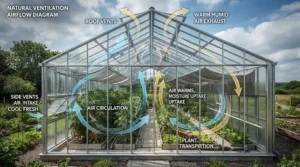
Passive ventilation relies on the stack effect and prevailing wind — hot air naturally rises and escapes through a high roof vent, drawing cooler air in through a lower opening, with no moving parts beyond the vent itself. It’s essentially free once installed, as explained in general terms by Wikipedia’s overview of building ventilation, but it is entirely dependent on there being enough temperature or pressure differential to drive airflow, which can fail on still, overcast days when a greenhouse still overheats despite open vents. Active ventilation, using a powered fan, guarantees a measurable air exchange rate regardless of outside wind conditions, which is precisely why commercial growers overwhelmingly use fans rather than relying on passive vents alone. For a hobby greenhouse, a sensible middle ground is passive vents for baseline airflow and an active fan reserved for still, humid days or propagation periods when precise control genuinely earns its running cost.
Humidity Control in the Greenhouse
Temperature gets most of the attention, but humidity control is arguably the bigger long-term threat to plant health, since persistently damp air is what actually triggers grey mould, damping-off and other fungal problems rather than heat alone. A wax autovent only opens once the air is already warm, meaning on a mild, overcast, humid day it may stay shut for hours while moisture quietly builds up regardless. An electric fan, by contrast, can be set to run on a low continuous speed purely for air exchange, independent of temperature, which is the more reliable route to stable humidity. Reviewers who switch from autovent-only setups to adding a fan commonly report a noticeable drop in condensation and mould-prone patches within the first few weeks, particularly around propagation trays and dense foliage where airflow was previously stagnant.
Heat Stress in Plants: Recognising and Preventing It
Heat stress in plants shows up as wilting even when soil moisture is adequate, scorched or bleached patches on leaves facing direct sun, and — in fruiting crops like tomatoes and peppers — flower and fruit drop once temperatures climb past the mid-30s Celsius. The underlying mechanism is that stomata, the pores plants use to regulate water loss and gas exchange, close under extreme heat to conserve moisture, which ironically also halts photosynthesis and growth just when the plant needs it most. With the Met Office confirming that recent UK summers have repeatedly broken temperature records, this is no longer a rare extreme-weather concern but a recurring seasonal risk for anything grown under glass. Prevention is almost entirely about ventilation capacity matched to conditions: a single autovent may cope with an average July afternoon but struggle badly during a multi-day heatwave, which is exactly when pairing it with an electric fan or additional shading earns its keep.
Common Mistakes When Buying Greenhouse Ventilation
The single most common mistake is buying one vent opener for a greenhouse that genuinely needs two or three to hit the RHS’s recommended 20% vent-to-floor-area ratio — a lone roof vent on an 8x10ft structure is rarely enough on its own. A close second is choosing a fan purely by price without checking CFM airflow figures, resulting in a unit too weak to meaningfully exchange air in anything but a small structure. Buyers also frequently skip checking their vent’s actual weight against a wax cylinder’s lift rating, leading to sluggish or incomplete opening once the vent is loaded with double-glazing or an insect mesh. Finally, many first-time buyers assume “automatic” fan means “hands-off,” when in reality a fan without a thermostat controller just runs constantly, wasting electricity and occasionally over-cooling young plants overnight.
Long-Term Cost & Maintenance: Fans vs Vent Openers
A wax-cylinder autovent is close to a one-off purchase: after the initial £20-£40, ongoing costs are essentially nil beyond an occasional replacement cylinder after six to ten years of service, based on typical manufacturer guarantee periods. An electric fan carries a higher purchase price and an ongoing electricity cost, though EC-motor models like the Cloudline range keep that modest — a fan drawing around 21W running eight hours a day through summer adds only a few pounds to a typical electricity bill over a season at current UK rates. Where fans can cost more long-term is component wear: bearings and motors are mechanical parts that eventually fail, typically after several years of heavy use, whereas a wax cylinder has no bearings to wear out at all. On balance, autovents win on lifetime cost for light use, while fans justify their higher running cost through genuinely superior humidity control and heat stress prevention during the most demanding weeks of the year.

FAQ
❓ What's the difference between a greenhouse fan and a vent opener?
❓ Do I need both a fan and a vent opener?
❓ How hot can an unventilated greenhouse get?
❓ Are solar vent openers as reliable as electric fans?
❓ What temperature should I set my greenhouse fan to switch on?
Conclusion
There is no single winner in the greenhouse fan vs vent opener debate, because the two solve genuinely different problems. A wax-cylinder autovent like the Bayliss XL Autovent or Bayliss MK7 Autovent gives dependable, zero-running-cost protection against peak daytime heat with essentially no maintenance, which suits the vast majority of hobby greenhouses perfectly well on its own. An electric fan such as the AC Infinity CLOUDLINE S4 or the larger AC Infinity CLOUDLINE S8, ideally paired with an Inkbird ITC-308 controller, earns its higher price through continuous, measurable airflow that genuinely controls humidity and mitigates heat stress in plants during the demanding weeks of a British summer. If you’re growing casually and have no power to the greenhouse, start with an autovent — the Solar-Assisted Automatic Vent Opener or a solar fan like the ecoCalm Solar Powered Exhaust Fan cover that gap nicely too. If you’re propagating seriously or battling recurring mould and fungal issues, invest in active ventilation instead. Either way, match your choice to your greenhouse’s floor area and your own realistic maintenance appetite, and don’t be afraid to run both systems together once budget allows.
🔍 Take your greenhouse ventilation to the next level with these carefully selected products. Click on any highlighted item to check current pricing and availability. These tools will help you create the thriving, healthy growing space your plants deserve!
Recommended for You
- Solar Powered Greenhouse Fan: 7 Best Picks for UK Growers (2026)
- Best Greenhouse Fan: 7 Top UK Picks for Healthy Plants (2026)
- Automatic Vent Opener for Greenhouse: 7 Best UK Picks (2026)
Disclaimer: This article contains affiliate links. As an Amazon Associate, I earn from qualifying purchases. If you purchase products through these links, we may earn a small commission at no additional cost to you.
✨ Found this helpful? Share it with your friends! 💬🤗
