
In This Article
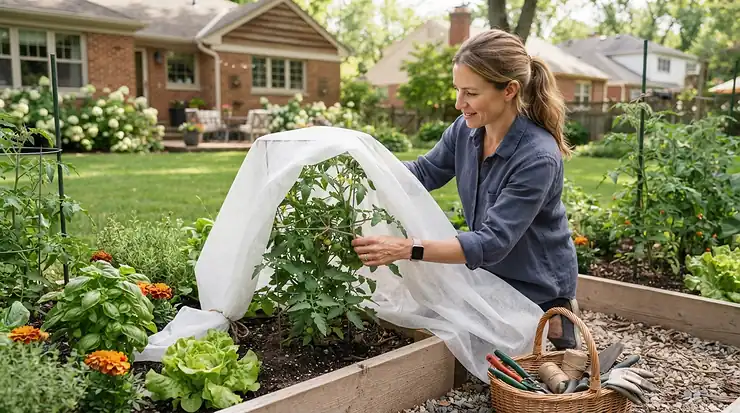
There’s a particular kind of dread that hits every gardener in the UK at roughly the same moment each year: you check the forecast, see a little blue snowflake icon sitting smugly over the next three nights, and remember you’ve got a bed of half-hardened-off dahlias sitting outside with absolutely nothing between them and the sky. This is where the best horticultural fleece earns its keep. It’s not glamorous — nobody photographs a roll of white spun fabric for their Instagram grid — but it’s the difference between waking up to blackened, mushy leaves and waking up to plants that shrugged the frost off entirely.

So, what is horticultural fleece? It’s a lightweight, non-woven polypropylene fabric that drapes over plants to trap the heat radiating from the soil overnight, creating a protective microclimate while still letting light, air and rain through. It doesn’t generate warmth itself; it simply slows the rate at which warmth escapes, which is why weight and coverage matter so much when you’re choosing between products.
Picking the right one isn’t as simple as grabbing whatever’s cheapest on the shelf at the garden centre. Weight ratings, roll size, UV stability, and whether you need a flat sheet or a drawstring jacket all change the calculation depending on what you’re protecting and where. According to the RHS’s guidance on fleece and crop covers, heavier grades of fleece genuinely do offer more frost protection, but they also cut down on light — so the “best” fleece really depends on the job. Below, we’ve dug into seven real, currently available products spanning budget rolls to premium zip-up jackets, compared them properly, and worked out which is genuinely worth your money.
Quick Comparison Table
Before we get into the detail, here’s a snapshot of how the seven products stack up against each other on the things that actually matter: weight, format, and what each one is realistically best suited for.
| Product | GSM Weight | Format | Best For |
|---|---|---|---|
| Yuzet Premium 17gsm Plant Protection Fleece | 17gsm | Roll | Budget all-round crop cover |
| Nutley’s Heavyweight Garden Fleece | ~30gsm | Roll | Small-business quality, reusable coverage |
| BLOSTM 30gsm Garden Fleece | 30gsm | Roll | Cheap heavyweight protection down to -6°C |
| Muzhira 17gsm Heavy Duty Garden Fleece | 17gsm | Roll (compact) | Raised beds and small plots |
| Yuzet 35gsm Plant Warming Fleece Jacket | 35gsm | Drawstring jacket | Individual shrubs and container plants |
| Kwaiyole Zippered Fleece Frost Bags | 80gsm | Zip pot cover | Potted trees needing daily access |
| MIXC 4-Pack Plant Fleece Frost Protection | ~2.1oz (approx. 70gsm) | Zip + drawstring, multi-size | Mixed pots, shrubs and hanging baskets |
A quick read of that table tells you most of what you need to know before you even open your wallet: Yuzet Premium 17gsm Plant Protection Fleece and Muzhira 17gsm Heavy Duty Garden Fleece are the light-duty, wide-coverage options for spring seedlings, while Kwaiyole Zippered Fleece Frost Bags and MIXC 4-Pack Plant Fleece Frost Protection sit at the heavier end for potted specimens that need to survive a proper cold snap. Nutley’s Heavyweight Garden Fleece and BLOSTM 30gsm Garden Fleece occupy the sensible middle ground that most UK gardens actually need most of the time. Format matters as much as weight here — a flat roll is cheaper per square metre, but a zipped jacket saves you re-pegging fabric every time you want to check on a plant.
💬 Just one click — help others make better buying decisions too!😊
Top 7 Best Horticultural Fleece: Expert Analysis
We’ve picked these seven to cover the full spread of what a British garden might need: cheap wide rolls for vegetable beds, mid-weight rolls for general-purpose protection, and jackets for anything growing in a pot. Every product below is a real, currently listed item — no invented models, no fictional brands.
1. Yuzet Premium 17gsm Plant Protection Fleece — best budget all-rounder for wide coverage
If there’s a fleece that most UK gardeners have owned at some point, it’s probably this one. The standout feature here is sheer coverage per pound spent — rolls run from 2m to 4m wide and up to 25m long, so a single purchase can blanket an entire allotment bed. At 17gsm, this is the lightest class of horticultural fleece on the market, made from UV-treated non-woven polypropylene that lets water, air and a good chunk of light straight through. In practice that means around -2°C of protection: enough to save tender seedlings from a light ground frost, but not enough to trust with anything more than a mild dip.
Who’s this for? Vegetable growers who need to cover long rows cheaply, and anyone hardening off spring sowings who wants a barrier against both cold and early flea beetle or carrot fly activity rather than serious winter insulation. Reviewers of this weight class of fleece consistently note that it’s genuinely useful as an insect barrier and does a solid job warming soil in early spring, though several also mention that 17gsm can tear at the pegging points in strong wind if it isn’t anchored properly — something worth budgeting a few pegs for on day one. Based on the spec comparison with heavier rolls further down this list, the trade-off is straightforward: you’re buying light transmission and low cost, not maximum thermal protection.
Pros:
- ✅ Covers large areas cheaply thanks to wide, long rolls
- ✅ High light transmission keeps seedlings growing underneath
- ✅ Doubles as an effective barrier against flying pests
Cons:
- ❌ Limited frost protection compared with 30gsm+ options
- ❌ Thin material can tear at peg points in strong wind
Expect this in the budget end of the market — roughly £6 to £18 depending on roll length — and it represents solid value if you’re covering a large area and only need light frost protection. Check current price and available sizes before buying, as roll length affects the per-metre cost noticeably.
2. Nutley’s Heavyweight Garden Fleece — best British small-business value pick
Nutley’s Kitchen Gardens started as a one-woman operation packing seeds by hand, and its heavyweight fleece carries that same “built to actually work” ethos. The standout feature is right there in the name: this is deliberately pitched heavier than the thin 17gsm rolls that dominate budget listings, aiming to avoid what the brand itself describes as a “tissue paper” feel. It’s supplied at 1.5m width in lengths from 5m up to 15m, made from UV-stabilised non-woven polypropylene that still allows air and water through while adding a meaningful jump in thermal protection over the lightest fleece class.
What most buyers overlook about mid-to-heavy fleece like this is that the UV stabilisation matters more than the GSM figure alone — an unstabilised fleece degrades and goes brittle after a single summer of UV exposure, regardless of its weight. This is squarely aimed at growers who want one purchase to last several seasons rather than needing replacing every autumn, and it works equally well repurposed as grow-tunnel material or wrapped around shrubs in exposed gardens. Aggregated feedback on heavier fleece from small UK suppliers tends to praise the reassurance of a thicker hand-feel versus the flimsiest listings, while a recurring theme across the category is that buyers wish more sellers were upfront about exact GSM figures rather than just saying “heavyweight.”
Pros:
- ✅ Genuinely thicker feel than typical 17gsm budget rolls
- ✅ UV stabilised for multi-season reuse rather than one-off use
- ✅ Versatile — works as ground cover, tunnel material or wrap
Cons:
- ❌ Exact GSM isn’t always stated clearly on the listing
- ❌ Only available in 1.5m width, limiting wide-bed coverage
Priced in the low-to-mid range depending on length chosen — think somewhere in the £10-£25 range for a typical roll — this sits as a sensible mid-tier pick if you want more durability than the cheapest fleece without stepping up to commercial-grade material.
3. BLOSTM 30gsm Garden Fleece — best budget heavyweight for -6°C nights
Here’s where GSM weight ratings really start to earn their keep. The BLOSTM 30gsm Garden Fleece standout feature is the temperature claim printed right on the listing: protection down to -6°C, nearly triple the insulating capacity of the 17gsm rolls covered above. Supplied in a 2m x 10m format, it’s designed to sit directly over crops or be wrapped around individual shrubs, and — like every fleece on this list — it remains porous enough to water plants straight through the fabric without lifting it.
Here’s what the spec sheet won’t tell you outright: no fleece “creates” heat, including this one. What a 30gsm weight actually does is trap more of the warmth radiating up from the soil overnight and slow its escape more effectively than a thinner fabric, which is why the jump from 17gsm to 30gsm roughly doubles or triples your realistic frost-protection ceiling. This makes it a strong pick for gardeners in more exposed or northern parts of the UK who get harder overnight frosts than the -2°C a lightweight fleece is rated for. Reviewers commonly report it holding up across a full winter season when properly pegged down, with the most frequent complaint in this class being reduced light transmission underneath compared with 17gsm — worth bearing in mind if you’re covering anything still actively photosynthesising rather than fully dormant.
Pros:
- ✅ Rated to -6°C — genuine winter-grade frost protection
- ✅ Doubles as bird and insect barrier alongside frost cover
- ✅ Water and air still pass through for in-situ watering
Cons:
- ❌ Reduced light transmission versus lighter 17gsm fleece
- ❌ Roll size (2m x 10m) is fixed, less flexible than variable-length listings
At the budget end of the 30gsm category — typically in the £8-£20 range for this size — it represents strong value if hard frost protection is your priority over light transmission.
4. Muzhira Garden Fleece for Plants (17gsm, 2m x 5m) — best compact size for raised beds
Not every garden needs a 25-metre roll, and that’s precisely the gap the Muzhira Garden Fleece for Plants fills. The standout feature here is the deliberately modest 2m x 5m format — 10 square metres, which is plenty for a couple of raised beds or a run of container-grown vegetables without leaving you storing a huge leftover roll in the shed for three years. It’s built to the same 17gsm heavy-duty non-woven polypropylene spec as the wider rolls on this list, so the thermal performance and light transmission characteristics are broadly comparable to our first pick — around -2°C of protection with high light penetration.
What most buyers overlook with smaller-format fleece is that cost-per-square-metre is often higher than buying a big roll, but you’re paying for convenience and reduced waste rather than raw material. Based on the spec comparison, this is best suited to smaller urban or suburban plots, allotment holders topping up an existing fleece supply, or anyone who wants to test whether fleece suits their growing style before committing to a bulk roll. Aggregated review sentiment across small-format 17gsm covers highlights ease of handling and cutting to size as a consistent positive, with the main criticism being that thinner fleece in this weight class can shift in windy spells if pegs aren’t spaced closely.
Pros:
- ✅ Manageable size — no storing an oversized leftover roll
- ✅ Easy to handle and cut for raised beds or small runs
- ✅ Same 17gsm protection and light transmission as larger rolls
Cons:
- ❌ Higher cost per square metre than buying a bigger roll
- ❌ Limited frost protection ceiling at just 17gsm
Typically priced under £15, this is best thought of as a top-up purchase or a low-commitment way to try horticultural fleece for the first time rather than a serious winter solution on its own.
5. Yuzet Plant Warming Fleece Jacket (35gsm) — best drawstring jacket for shrubs
Rolls are brilliant for beds, but they’re clumsy for a single standalone shrub or a tree fern in a pot — which is exactly the standout feature of the Yuzet Plant Warming Fleece Jacket. Rather than draping and pegging fabric, you pull this cover over the plant and cinch the built-in drawstring around the base, creating an instant, snug microclimate. At 35gsm — heavier than any of the roll-format products above — it’s rated to protect down to around -5°C, and the fabric is still made from the same breathable, UV-treated polypropylene that lets moisture and light through.
The real-world advantage here is speed and reliability of fit. What the spec sheet won’t tell you is how much of a difference a drawstring makes on a genuinely windy night — pegged sheets can work loose exactly when you need them most, whereas a cinched jacket stays put. This makes it a strong pick for container-grown tender specimens, olive trees, bananas, and anything with a defined single “trunk” shape that a flat sheet struggles to wrap neatly. Reviewers of drawstring jacket-style fleece regularly note that doubling up two jackets on the coldest nights is a common trick for genuinely borderline-hardy plants, which tracks with what heavier fleece manufacturers themselves recommend.
Pros:
- ✅ Drawstring base gives a secure fit even in wind
- ✅ 35gsm weight offers meaningfully more protection than sheets
- ✅ Purpose-shaped for individual shrubs and container plants
Cons:
- ❌ Only suits single plants — no use for bed-scale coverage
- ❌ Sizing needs matching carefully to plant height and spread
Priced around £8-£15 depending on size, it’s a genuinely specialised buy rather than a general-purpose one — pair it with a roll-format fleece if you’ve got both beds and pots to protect.

6. Kwaiyole Zippered Fleece Frost Bags (2-Pack) — best zip-access pot cover
For anyone who’s ever had to fully unwrap a plant just to check whether it needs watering, the Kwaiyole Zippered Fleece Frost Bags standout feature — the full-length side zip — solves a genuinely annoying problem. Made from 80g/m² non-woven polypropylene, these are noticeably heavier than anything else on this list bar the MIXC pack below, supplied as a pair of 80cm x 120cm covers designed for potted saplings, palms, fruit trees and multiple small pots grouped together. The zip plus drawstring combination means you can open one side to water or inspect the plant without disturbing the seal at the base.
At 80gsm, the thermal performance edges toward the top of what horticultural fleece typically offers, trading some light transmission for a genuinely tougher barrier against wind, sleet and hard frost. Based on the spec comparison with the lighter jackets above, this is the pick for anyone overwintering a genuinely tender specimen — citrus, tree ferns, young palms — in an exposed spot where daily access matters as much as raw insulation. Aggregated feedback on zip-access fleece bags in this weight class tends to flag the convenience factor heavily, with occasional notes that the heavier fabric is stiffer to handle when brand new and softens with use.
Pros:
- ✅ Full-length zip allows watering without full unwrapping
- ✅ Heavier 80gsm fabric gives stronger cold and wind resistance
- ✅ Pack of two covers multiple pots or a repeat-protection routine
Cons:
- ❌ Reduced light transmission versus lighter-weight fleece
- ❌ Fabric feels stiff until it’s been used a few times
Generally priced in the mid range for a two-pack — think somewhere around £10-£20 depending on promotions — it earns its place for anyone whose “fleece routine” involves checking on plants daily rather than covering and forgetting until spring.
7. MIXC 4-Pack Plant Fleece Frost Protection — best multi-size premium bundle
Rounding out the list, the MIXC 4-Pack Plant Fleece Frost Protection set solves the problem of owning plants in wildly different sizes without buying five separate products. The standout feature is the mixed-size bundle: two covers at 120cm x 180cm and two at 180cm x 210cm, all from an upgraded, thicker non-woven fabric rated around 2.1oz (roughly comparable to 70gsm), with both zippers and drawstrings fitted as standard. That combination — heavier fabric, dual closure system, mixed sizing — puts this at the premium end of the pot-cover category.
What most buyers overlook when comparing fleece jackets on weight alone is how much practical difference the closure system makes over a season of use; a zip plus a drawstring gives you both quick full access and a snug seal, which matters more on taller, top-heavy plants that a single drawstring can’t cinch evenly. Based on the spec comparison with the single-size options above, this is best suited to households protecting a genuine mix of shrubs, small trees and potted specimens rather than a uniform set of identical pots. Reviewers of multi-size fleece bundles in this heavier fabric class commonly report that the light transmission is noticeably lower than thin 17gsm rolls — expected, given the trade-off — but that the trapped warmth and wind resistance are correspondingly better on the coldest nights of the year.
Pros:
- ✅ Mixed sizing covers small and large plants from one purchase
- ✅ Thicker 2.1oz fabric with both zip and drawstring closure
- ✅ Strong wind, hail and frost resistance for genuinely cold nights
Cons:
- ❌ Premium pricing versus single-size or roll-format fleece
- ❌ Reduced light transmission is the trade-off for the thicker fabric
Sitting toward the upper end of the price range covered in this article — commonly in the £20-£35 bracket — it’s the pick for gardeners who want to solve pot protection comprehensively in one purchase rather than piecing it together from multiple cheaper items.
GSM Weight Ratings Explained: How to Choose the Right Fleece
What is GSM in horticultural fleece? GSM stands for grams per square metre — the actual weight of the fabric over a given area. It’s the single most useful number on any fleece listing because it correlates directly with two things that pull in opposite directions: frost protection and light transmission. Here’s how to choose the right weight for your situation, step by step:
- Work out what you’re protecting against. Light seasonal ground frost down to around -2°C needs only a 17gsm fleece; anything forecasting -5°C or below needs 30gsm or heavier.
- Check whether the plant is dormant or actively growing. Dormant shrubs can sit under heavier, lower-light fleece all winter; actively growing seedlings need the lighter, more light-permeable grades so they don’t stall.
- Match the format to the plant shape. Flat rows and beds suit roll-format fleece; single shrubs, trees and pots suit a jacket with a drawstring or zip.
- Factor in UV stabilisation, not just weight. An unstabilised fleece of any GSM will degrade within a season of sun exposure — always check the listing specifies UV treatment if you want multi-year use.
- Consider doubling up rather than buying the heaviest option outright. Layering two sheets of lighter fleece on the coldest nights is a widely used trick that adds flexibility a single heavy fleece can’t match.
- Check the roll width against your bed, not just the length. A cheap long roll that’s too narrow for your bed width means overlapping strips and gaps at the joins.
- Budget for pegs or clips separately. GSM weight is irrelevant if the fleece blows off in the first gust — securing the edges properly is what actually determines whether you get the protection printed on the packet.
| GSM Weight | Typical Frost Protection | Light Transmission | Best Use Case |
|---|---|---|---|
| 17gsm | Down to approx. -2°C | High (70-85%) | Seedlings, insect barrier, spring hardening-off |
| 30-35gsm | Approx. -3°C to -6°C | Moderate | General winter crop and shrub protection |
| 50gsm | Approx. -8°C | Lower | Harsh cold snaps, exposed or coastal sites |
| 70-80gsm+ | Highest insulation in this category | Lowest | Dormant potted specimens, tender exotics |
Reading across that table, the pattern is consistent with everything the seven products above demonstrated in practice: as GSM rises, thermal protection improves but light transmission drops, which is exactly why the BBC’s Gardeners’ World guide to garden fleece recommends heavier 30g fleece specifically for hard frost protection while reserving lighter 17g fleece for general seasonal use. There’s no single “best” weight in isolation — only the right weight for the job in front of you, which is precisely why most experienced growers end up owning more than one type.
Top Rated Garden Fleece vs Cloches and Cold Frames
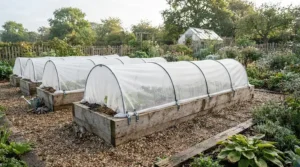
Horticultural fleece isn’t the only frost-defence tool in a UK gardener’s shed, and it’s worth being honest about where it wins and where a cloche or cold frame does a better job instead. A cloche — typically a rigid plastic or glass tunnel — traps more heat than fleece because it creates a genuinely sealed air pocket rather than a permeable barrier, and it protects far better against physical damage from hail or heavy snow load. A cold frame goes further still, functioning almost like a mini unheated greenhouse with a solid frame and a glazed lid, which is why it’s the standard choice for hardening off trays of seedlings rather than protecting them in open ground.
Where fleece wins is flexibility, cost and coverage. You can’t drape a cold frame over an entire row of sweetcorn, and cloches are expensive and fiddly to store once the season’s over, whereas a roll of top rated garden fleece costs a fraction of the price and folds flat into a drawer for the summer. Fleece also breathes — cloches and cold frames need active venting on sunny days or they’ll cook whatever’s inside them, while fleece simply lets excess heat and moisture escape on its own.
| Factor | Horticultural Fleece | Cloche | Cold Frame |
|---|---|---|---|
| Cost | Low | Medium | Medium-High |
| Coverage | Excellent for rows and beds | Good for individual rows | Best for trays and small groups |
| Frost protection | Moderate (varies by GSM) | Good | Very good |
| Ventilation needed | No — breathable | Sometimes | Yes, daily |
| Storage | Folds flat | Bulky | Bulky, often permanent |
Looking at the comparison above, the honest conclusion is that these tools solve overlapping but different problems rather than competing directly. If you’re protecting a long vegetable row from a light frost while it keeps growing, top rated garden fleece is the more practical and economical choice; if you’re hardening off trays of seedlings or protecting a genuinely tender specimen from a hard freeze, a cold frame or cloche earns its higher price and storage demands. Most established UK growers end up using fleece as their everyday, low-effort tool and reserve cloches and cold frames for the jobs fleece genuinely can’t do as well.
Frost Protection Fabric: What to Expect in Real-World Performance
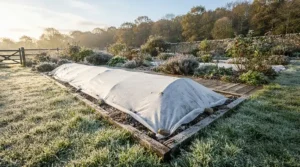
Specs on a packet only tell half the story, so here’s what actually happens when frost protection fabric goes to work in a real UK garden overnight. As the air temperature drops after sunset, the soil — which has absorbed heat all day — starts radiating that warmth back upward. Without any cover, that heat escapes freely into the cold night air, and the plant’s leaf surface can drop below the surrounding air temperature through radiative cooling, which is often the actual mechanism behind “frost damage” rather than the ambient temperature alone. A layer of fleece traps a thin cushion of that rising warm air right at plant level, slowing its escape and keeping leaf-surface temperatures a few crucial degrees higher than they’d otherwise be.
What this means in practice is that fleece performance is highly dependent on how it’s used, not just what GSM it’s rated. A sheet draped loosely with an air gap above the plant traps more warmth than fleece pulled taut directly against the leaves, because contact points can still transfer cold through the fabric. On a genuinely hard frost night, doubling a lighter fleece — or switching to a heavier single layer — buys a further couple of degrees of protection, but nothing sold as “frost protection fabric” will save a tender plant from a severe hard frost of -10°C or below; that’s a job for bringing pots indoors or under proper cover, not fleece of any weight. Reviewers across the products in this guide are broadly consistent on this point: fleece is described as reliable for the borderline, unpredictable frosts that catch gardeners out in April and October, rather than for deep midwinter cold snaps.
The other real-world factor worth flagging is moisture. Fleece left in place for weeks at a time in damp UK weather can trap humidity against leaves, which occasionally encourages fungal issues like botrytis if plants are never given a chance to dry out. The practical fix — venting fleece on milder, drier days rather than leaving it sealed for the entire cold season — comes up repeatedly in expert advice, and it’s a habit worth building regardless of which product from this list you end up using.
Spring Frost Dates Across the UK: When to Cover and When to Uncover
Understanding your local spring frost dates is arguably more useful than owning the “best” fleece on paper, because timing determines whether you need it at all on a given night. The UK’s last spring frost date varies enormously by region and even by microclimate within the same town — coastal and southern areas typically clear frost risk by mid-to-late March, the Midlands and much of England by late April, while parts of Scotland, upland areas and inland valleys can see frost risk stretch into May or even early June.
It’s tempting to assume that a warming climate has made this less of a concern, but that’s not quite right. As the Met Office has explained, average last-frost dates have shifted earlier over recent decades, yet frost remains entirely possible well into what feels like settled spring weather, particularly overnight in rural, elevated, or sheltered spots where the urban heat island effect that protects town gardens doesn’t apply. A run of mild days in April is not a reliable signal that the frost risk has passed for the season.
The practical takeaway is to treat your region’s average last frost date as a guide rather than a guarantee, and to keep fleece within easy reach through the entire “risk tail” of spring rather than packing it away the moment daffodils appear. A simple rule many experienced growers follow: don’t plant out tender crops like tomatoes, courgettes and dahlias until at least two weeks after your area’s average last frost date, and keep a roll of fleece on standby for any surprise cold snap forecast within that window. The same logic applies in reverse each autumn — the first frost date marks when it’s worth starting to cover tender plants again, rather than waiting for a hard freeze to catch you out.
Practical Usage Guide: Setup, First 30 Days and Maintenance
Getting the most out of horticultural fleece isn’t complicated, but a handful of habits make a genuine difference to how well it performs and how long it lasts. Before first use, unroll the fleece fully and let any creases relax for a few hours — fabric folded tightly in packaging can trap moisture in the folds if draped straight over damp ground. When covering a bed, leave a little slack rather than pulling the fabric drum-tight; slack allows an insulating air pocket to form above the plants and gives room for growth without straining the material.
Securing the edges properly in the first week matters more than almost anything else. Use dedicated ground pegs, landscape staples, or simply bury the fabric edges in a shallow slit trench and backfill with soil — bricks or loose stones work in a pinch but shift more easily in wind. In the first 30 days, check the covered area every few days for two things: signs of pest activity that’s been sealed in rather than kept out (slugs and snails particularly enjoy the shelter fleece provides), and any tearing at peg points, which is the most common early failure across every weight of fleece reviewed for this guide.
For ongoing maintenance, vent the fleece on mild, dry days by lifting one edge for a few hours rather than leaving it sealed continuously — this reduces the risk of trapped humidity encouraging fungal problems and gives pollinating insects access to flowering crops when needed. At the end of the season, wash lighter fleece by hand or on a gentle “wool” cycle if the label allows it, let it dry fully before folding, and store it away from direct sunlight and rodents. A fleece that’s properly UV-stabilised and cared for this way commonly lasts three to five seasons rather than the single use that poor storage habits tend to produce. Common first-time mistakes worth avoiding: leaving fleece on permanently through a mild spell (it can cause soft, weak growth), securing only the corners rather than the full edge, and choosing a weight based on price alone rather than the actual temperature you’re protecting against.
Real-World Scenarios: Which Fleece Suits Your Garden
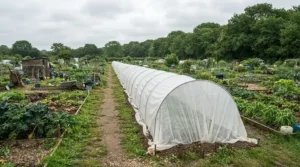
The allotment vegetable grower. Picture someone with a 10-metre run of overwintering broad beans and early potatoes on an exposed plot, checking the forecast weekly through a British winter. Wide coverage at low cost matters most here, which points toward the Yuzet Premium 17gsm Plant Protection Fleece for general seasonal cover, stepping up to BLOSTM 30gsm Garden Fleece specifically for the harder frost warnings that pop up a handful of times each winter.
The suburban gardener with a handful of pots. This is someone overwintering two or three specimen plants on a patio — perhaps an olive tree, a citrus, and a tender fuchsia — in a modest budget bracket and without the storage space for bulky cloches. A single Yuzet 35gsm Plant Warming Fleece Jacket or two handles the smaller specimens neatly, while the Kwaiyole Zippered Fleece Frost Bags earn their place for the plant that needs regular watering access through winter without a full unwrap each time.
The keen collector with a genuinely mixed garden. Someone growing everything from tender exotics in large pots to hardy shrubs that just need a helping hand on the coldest nights, with a reasonable budget and a preference for solving the whole problem in one purchase. The MIXC 4-Pack Plant Fleece Frost Protection bundle is built precisely for this scenario, covering both smaller and larger specimens from mixed sizing in one order, while Nutley’s Heavyweight Garden Fleece provides flexible roll-format backup for anything that doesn’t fit a pre-shaped jacket.
Whichever scenario sounds most like your own garden, the underlying principle stays the same: match the fleece format to the plant’s shape and the GSM weight to the actual cold you’re expecting, rather than defaulting to whatever’s cheapest or heaviest on the shelf.
Common Mistakes When Buying Horticultural Fleece
The single most common mistake is buying on price alone without checking the GSM figure at all — a suspiciously cheap “heavy duty” fleece with no stated weight is a red flag, since “heavy duty” is marketing language rather than a defined specification. Always cross-reference the actual gsm figure in the listing details, not just the headline description.
A second frequent error is buying a single fleece and expecting it to handle every job in the garden. As this guide has shown, a 17gsm roll and an 80gsm zip jacket solve genuinely different problems; owning one of each, rather than compromising on a single mid-weight option, generally serves a mixed UK garden better.
Third, many first-time buyers overlook width entirely and focus only on length, then discover their bed is wider than the roll and needs an awkward overlapping second strip. Measure the bed first, then shop for a matching width — it sounds obvious, but it’s a recurring theme in aggregated buyer feedback across multiple listings covered in this research.
Finally, skipping UV stabilisation information is a false economy. An unstabilised fleece can degrade within a single summer of sun exposure regardless of how thick it feels off the roll, turning what looked like a bargain into a one-season disposable product. Checking for this single spec line before buying is the cheapest insurance policy in this entire guide.
Features That Actually Matter (And Those That Don’t)
Cutting through the marketing language on fleece listings, a few features genuinely earn their place. UV stabilisation matters enormously — it’s the difference between multi-season use and a fleece that shreds after one summer, regardless of GSM. Accurate, stated GSM weight matters, because it’s the only reliable predictor of frost protection versus light transmission trade-offs. And closure type — drawstring, zip, or plain sheet — matters practically for how easily you can access plants without undoing the whole setup each time.
Features that matter far less than their marketing suggests include colour (green fleece looks less obtrusive in a garden but performs identically to white of the same GSM) and claims of “eco-friendly” material where the fabric is still standard non-woven polypropylene — a claim usually referring to the absence of chemical pesticides needed when fleece is used as a pest barrier, not to the plastic content of the fabric itself, which is worth understanding honestly rather than assuming. Similarly, precise temperature claims printed on packaging (such as “protects to -6°C”) should be read as an upper-bound estimate under ideal conditions — properly pegged, with an air gap, on a single cold night — rather than a guarantee under every wind and moisture condition a British winter can produce.
Long-Term Cost & Maintenance: Getting Real Value
Judged purely on upfront price, the lightest 17gsm rolls look like the obvious winner — often available for well under £15 for a substantial length. But cost-per-use tells a more complete story. A properly UV-stabilised, correctly stored fleece can realistically last three to five seasons, which means a £15 roll used every winter for four years works out to roughly £3.75 a year, while a cheaper, unstabilised equivalent that shreds after a single season effectively costs four times as much across the same period, even if the sticker price looked lower on day one.
Heavier, jacket-style products like the Kwaiyole Zippered Fleece Frost Bags or the MIXC 4-Pack Plant Fleece Frost Protection carry a higher upfront cost but are typically handled more carefully precisely because they’re used repeatedly on the same specific pots each year, which tends to extend their working life relative to flat sheets that get cut, re-cut and repurposed. The real long-term cost driver isn’t the weight of the fabric at all — it’s storage and care between seasons. Washing lightly soiled fleece, drying it fully, and keeping it out of direct sunlight when not in use consistently extends working life across every weight class covered in this guide, which makes basic end-of-season maintenance the single highest-leverage thing a buyer can do to improve their actual return on investment.
Frequently Asked Questions
❓ What is the best horticultural fleece for UK winters?
❓ Does horticultural fleece actually stop frost damage?
❓ How many times can you reuse garden fleece?
❓ What GSM fleece do I need for vegetables?
❓ Can you leave horticultural fleece on all winter?
Conclusion
There’s no single “best horticultural fleece” that suits every garden, and honestly, anyone claiming otherwise is oversimplifying a decision that genuinely depends on what you’re growing and where. What the research behind this guide does show clearly is that GSM weight ratings are the single most useful number on any listing — light 17gsm fabric for wide, cheap, light-permeable coverage; 30-35gsm for genuine winter-grade frost protection; and heavier zip or drawstring jackets for potted specimens that need daily access alongside serious insulation.
If you’re covering vegetable beds or a long row of overwintering crops, the Yuzet Premium 17gsm Plant Protection Fleece or BLOSTM 30gsm Garden Fleece will serve you well depending on how hard your frosts typically bite. If you’re protecting individual pots and shrubs, the Yuzet 35gsm Plant Warming Fleece Jacket and Kwaiyole Zippered Fleece Frost Bags solve that job properly, while the MIXC 4-Pack Plant Fleece Frost Protection bundle is worth the premium if you want mixed sizing sorted in one purchase. Whatever you choose, remember that GSM weight, UV stabilisation and proper edge-securing matter more to real-world performance than any single brand name — spend your money on getting those fundamentals right, and your plants will thank you through every frosty morning ahead.
Recommended for You
- Greenhouse Fan vs Vent Opener: 7 Top Picks to Beat Heat (2026)
- Solar Powered Greenhouse Fan: 7 Best Picks for UK Growers (2026)
- Best Greenhouse Fan: 7 Top UK Picks for Healthy Plants (2026)
Disclaimer: This article contains affiliate links. As an Amazon Associate, I earn from qualifying purchases. If you purchase products through these links, we may earn a small commission at no additional cost to you.
✨ Found this helpful? Share it with your friends! 💬🤗
