
In This Article
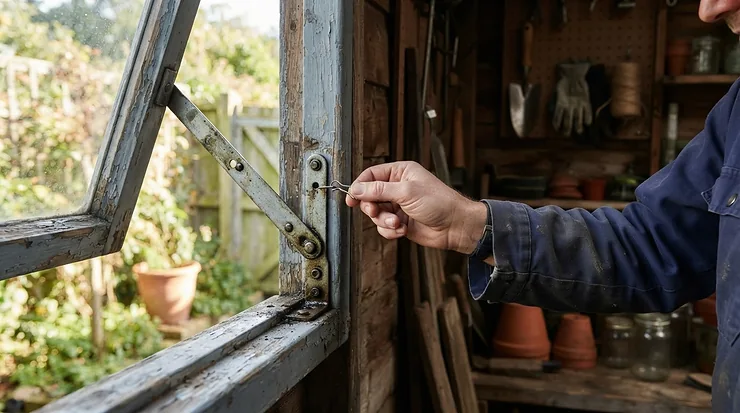
Here’s a scene every UK gardener knows too well: Tuesday morning, blue sky, you head off to work, and by lunchtime your greenhouse has quietly turned into a pizza oven. You come home to crispy tomato leaves and compost that’s baked dry. It happens fast — a closed glasshouse can climb 15-20°C above the outside air in a couple of hours of unbroken sun. An automatic vent opener for greenhouse use solves exactly this problem, and it does it without a single watt of electricity.
These little devices are almost comically simple, which is part of why they’ve barely changed in fifty years. A sealed cylinder of wax sits behind the vent, the wax expands as the greenhouse heats up, and that expansion pushes a piston that lifts the window open. As things cool in the evening, the wax contracts and a spring pulls the vent shut again. No batteries, no wiring, no app — just physics quietly doing the job while you’re at work, asleep, or away for the weekend.
This guide walks through seven genuinely available UK models, spanning budget wax-cylinder units under £30 through to hand-built British premium openers, plus the comparison tables, buying logic, and troubleshooting you’ll actually need. As the RHS notes in its own ventilation and shading guidance, fitting an automatic vent opener is one of the standard recommendations for keeping a greenhouse survivable through a British summer — so this isn’t a fringe gadget, it’s fairly mainstream horticultural common sense.
What is an automatic vent opener for greenhouse use? It’s a temperature-activated mechanism, usually a wax-filled cylinder and spring, that fits to a roof or louvre vent and opens it automatically once the greenhouse reaches a set temperature (typically 12-25°C), then closes it again as temperatures drop — all without electricity, batteries, or manual intervention.
Quick Comparison Table
| Product | Type | Opening Range | Best For |
|---|---|---|---|
| Bayliss XL Autovent | Wax cylinder, roof vent | Up to 30cm | Best overall / most trusted |
| Bayliss Mk7 Autovent | Wax cylinder, roof vent | Up to 30cm | Widest temperature adjustment |
| Elite Automatic Louvre Vent Opener | Wax cylinder, louvre vent | N/A (rotational) | Elite-branded louvre vents |
| Vitavia Automatic Roof Vent Opener | Wax cylinder, roof vent | Manufacturer spec | Vitavia-branded greenhouses |
| Palram Canopia Automatic Vent Opener | Wax cylinder, roof vent | Up to 30cm | Palram/Canopia polycarbonate models |
| Univent (Dancover) | Double-spring wax cylinder | Up to 45cm | Heavier vents, more lift |
| ANLEOLIFE Solar Automatic Vent Opener | Budget wax cylinder | Up to 45cm | Cheapest genuine wax-cylinder entry point |
Looking across the table, the split isn’t really “good vs bad” — it’s brand compatibility versus universal fit. Bayliss XL Autovent and Bayliss Mk7 Autovent are the two most widely fitted units in the UK precisely because they’ll clamp onto almost any aluminium frame, whereas Vitavia Automatic Roof Vent Opener, Elite Automatic Louvre Vent Opener and Palram Canopia Automatic Vent Opener are built to match a specific manufacturer’s vent geometry. If you already own one of those branded greenhouses, buying the matching opener saves you a fiddly retrofit; if you don’t, the universal Bayliss and budget options below are the safer bet.
💬 Found this comparison useful? A quick share helps other greenhouse owners find it too!
Top 7 Automatic Vent Openers for Greenhouses: Expert Analysis
1. Bayliss XL Autovent — the UK’s benchmark wax-cylinder opener
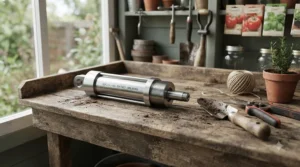
The Bayliss XL Autovent is the model most British greenhouse retailers quietly recommend as their default, and once you look at the build, it’s easy to see why. It’s hand-built in the UK from a satin-anodised aluminium cylinder roughly 28cm long, which matters more than it sounds — anodising resists the pitting corrosion that plain aluminium suffers from years of condensation and rain. The unit exerts a lift of around 5.5kg (roughly 12lb) and will hoist a vent weighing up to about 10kg, opening to a maximum of around 30cm, with the start-opening temperature adjustable between roughly 12-18°C.
Based on the spec comparison with cheaper imports, what stands out is the fixing flexibility: it clamps directly onto aluminium greenhouse frames with no drilling required, or can be bolted on for a more permanent fit, and it sits flush enough that you won’t crack your skull on it while tending seedlings. Reviewers consistently report multi-year reliability, with several long-time owners noting their original unit lasted six to ten years before the cylinder needed replacing — a genuinely long service life for a sub-£100 mechanical part. It suits anyone who wants a “fit once, forget about it” opener rather than a bargain-bin unit they’ll be troubleshooting every other summer.
Pros:
- ✅ Hand-built in the UK with a proper 2-year guarantee
- ✅ No-drill clamp fitting suits most aluminium greenhouses
- ✅ Long real-world service life reported by owners
Cons:
- ❌ Some older Halls and Robinsons models need extra fixings
- ❌ Costs more upfront than generic import openers
At around £50-£65, the Bayliss XL Autovent sits mid-to-premium in this line-up, and honestly earns it — if you want the “buy once” option, this is it. Check current price and stock before ordering, as availability shifts between sellers.
2. Bayliss Mk7 Autovent — best for a wider adjustable temperature range
The Bayliss Mk7 Autovent is the sibling model built specifically for compatibility with Elite greenhouses, but it’s frequently fitted elsewhere too, and its standout feature is range. Where many wax-cylinder openers max out their adjustment around 18-20°C, the Mk7 can be set to begin opening anywhere between roughly 12°C and 25°C, giving you a genuinely wide window for fine-tuning against your specific greenhouse’s sun exposure.
That extra adjustment headroom matters more than it might seem on paper. A greenhouse tucked in a shaded corner of a north-facing garden behaves very differently from one baking on an open, south-facing plot, and being able to nudge the trigger point up towards 25°C stops the vent opening prematurely on a merely mild spring day. What most buyers overlook about this model is that it’s supplied with a full fixing kit, which shaves a genuinely annoying trip to the hardware shop off installation day. Aggregated UK retailer reviews describe it as straightforward to fit and reliable in day-to-day use, with the British-made build quality carrying the same reputation as its XL sibling.
Pros:
- ✅ Widest trigger-temperature adjustment in this round-up
- ✅ Supplied with a complete fixing kit
- ✅ Lifts up to roughly 6kg, suiting heavier wooden-framed vents
Cons:
- ❌ Primarily marketed for Elite greenhouse compatibility
- ❌ Similar price point to the XL without extra opening distance
Priced broadly in the same £50-£60 bracket as the XL, the Bayliss Mk7 Autovent is the pick for anyone whose greenhouse sits somewhere unusually hot or shady and needs finer control over when ventilation kicks in.
3. Elite Automatic Louvre Vent Opener — best for louvre-style side vents
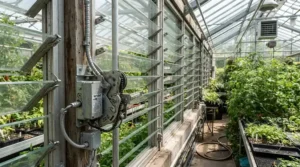
Most of this list covers roof vents, but the Elite Automatic Louvre Vent Opener solves a different problem entirely: automating the low-level louvre vents that many greenhouses use for intake air. It’s built to fit both 5-blade and 10-blade louvre assemblies and, like the roof-vent units, relies on a wax-filled cylinder that expands with heat to rotate the louvre blades open, then contracts to let a return spring close them again.
Here’s what the spec sheet won’t spell out clearly: louvre vents matter because hot air needs somewhere to escape from and somewhere for cooler air to enter from, and as the RHS points out, side ventilation via louvres is less effective on its own than roof ventilation but works well as a complementary intake point. Pairing an automated louvre with an automated roof vent gives you genuine cross-ventilation without touching either one manually. Reviewers of Elite’s wider automatic-opener range describe the mechanism as low-fuss and consistent once correctly set, though a few installation notes mention that getting the blade linkage aligned on first fit takes a bit more patience than a straightforward roof-vent clamp.
Pros:
- ✅ Purpose-built for both 5-blade and 10-blade louvre vents
- ✅ Enables proper cross-ventilation alongside a roof opener
- ✅ No electricity or batteries required, same as roof units
Cons:
- ❌ Only suits louvre-style vents, not standard roof windows
- ❌ Initial blade alignment is fiddlier than a clamp-on roof unit
At around £55-£65, the Elite Automatic Louvre Vent Opener is a smart second purchase for anyone who already has a roof-vent opener and wants proper two-way airflow rather than a single escape point.
4. Vitavia Automatic Roof Vent Opener — best for Vitavia-branded greenhouses
If you own one of Vitavia’s popular greenhouse ranges — the Apollo, Venus, Neptune, Jupiter and similar models — the Vitavia Automatic Roof Vent Opener is the manufacturer-matched fit, designed to slot directly into Vitavia’s existing roof vent frames without adaptation. It uses the standard wax-cylinder mechanism, opening and closing the roof vent in response to the external temperature swing, and needs no batteries or wiring to do it.
The honest analytical takeaway here is that brand-specific openers like this one earn their slightly narrower use case through fit precision rather than raw performance. Because it’s engineered against Vitavia’s own frame tolerances, you avoid the small gaps, uneven pressure, or slightly-off alignment that can creep in when a universal clamp-on unit meets a frame it wasn’t quite designed for — over years of thermal expansion and contraction, that precision reduces wear on both the vent hinge and the opener itself. One unit is needed per roof vent, so a greenhouse with two roof vents will need two openers, which is worth budgeting for before you order.
Pros:
- ✅ Purpose-matched fit for Vitavia roof vent frames
- ✅ No drilling or adaptation needed on genuine Vitavia frames
- ✅ Simple wax-cylinder mechanism, no power required
Cons:
- ❌ Not designed for use on non-Vitavia greenhouses
- ❌ Needs one unit per vent, which adds up on multi-vent models
Typically priced around £40-£50 per unit, the Vitavia Automatic Roof Vent Opener is the sensible default if your greenhouse badge already says Vitavia — don’t be tempted into a cheaper universal unit just to save a few pounds on a frame it wasn’t built for.
5. Palram Canopia Automatic Vent Opener — best for polycarbonate Palram greenhouses
Palram’s Canopia range dominates the mid-market polycarbonate greenhouse segment in the UK, and the Palram Canopia Automatic Vent Opener is the official accessory built to match its roof vent design. Like its rivals it’s a solar-powered (meaning heat-activated, not photovoltaic) wax-cylinder mechanism, with a start-opening point set around 12-15°C and a maximum vent lift of roughly 30cm.
What most buyers overlook when shopping for polycarbonate greenhouse accessories is that vent hinge tolerances differ meaningfully from aluminium-and-glass structures — polycarbonate panel frames flex slightly more, and a generic clamp designed for a rigid glass-vent lip can sit loose or strain the plastic moulding over a season of use. Because this unit is designed specifically against Canopia’s own vent hardware, it avoids that mismatch. Aggregated customer feedback on Palram’s own accessory listings runs strongly positive, averaging close to five stars across dozens of reviews, though a handful of buyers note it took some care to get the bracket sitting level and square on first installation.
Pros:
- ✅ Purpose-built for Palram Canopia polycarbonate vent hardware
- ✅ Strong aggregated review scores from verified buyers
- ✅ Lower trigger temperature (12-15°C) than several rivals
Cons:
- ❌ Only compatible with Palram – Canopia greenhouse models
- ❌ A few buyers report a fiddly first-time levelling process
Expect to pay in the region of £90-£120 for the genuine Canopia unit, noticeably more than a universal Bayliss opener — but if you own a Canopia greenhouse, the guaranteed fit and official warranty support are usually worth the premium over a generic alternative that may not sit flush.
6. Univent (Dancover) — best for heavier vents needing extra lift
The Univent (Dancover) takes a slightly different mechanical approach: a double-spring system paired with the standard wax cylinder, which the manufacturer says gives it a lifting capacity of up to 7kg and an opening distance of up to 45cm — noticeably more than most of the roof-vent openers on this list. It starts opening around 15-25°C and closes fully again as the greenhouse drops back towards roughly 15°C.
On paper this means the Univent (Dancover) is the one to reach for if your greenhouse has an unusually large or heavy vent panel, or a wooden-framed vent that simply weighs more than the aluminium equivalents most budget openers are calibrated for. The “Easy-Clip-System” fitting is designed to skip drilling altogether on compatible frames, which keeps installation genuinely beginner-friendly. Because this is a continental European brand sold into the UK market rather than a domestic staple like Bayliss, verified review volume specifically from UK buyers is thinner than for the home-grown options — worth factoring in if you’re weighing brand track record heavily in your decision.
Pros:
- ✅ Higher lift capacity (7kg) than most rivals here
- ✅ Wider maximum opening distance of up to 45cm
- ✅ Clip-fit installation with no drilling on compatible frames
Cons:
- ❌ Smaller pool of UK-specific verified reviews than Bayliss models
- ❌ Compatibility should be double-checked against non-standard vent lips
Priced roughly in the £45-£60 range, the Univent (Dancover) is worth shortlisting specifically for heavier or oversized vents where lighter-duty openers might struggle to fully lift the panel on a hot day.
7. ANLEOLIFE Solar Automatic Vent Opener — best cheap automatic greenhouse vent opener
If budget is the deciding factor, the ANLEOLIFE Solar Automatic Vent Opener is a genuinely functional entry point rather than a compromise on the core mechanism. It uses the same fundamental wax-cylinder-and-piston principle as the premium British units, built into a dual-spring aluminium and stainless-steel assembly rated to lift up to roughly 30lb (about 13.6kg), opening the vent up to around 45cm once the internal temperature hits its trigger point (commonly factory-set near 30°C on budget units of this type, though this varies by listing).
Here’s the honest trade-off: at a fraction of the price of a Bayliss XL Autovent, you’re getting a comparable core mechanism but typically a shorter component lifespan, less refined anodising against corrosion, and — going by aggregated buyer sentiment on marketplace listings — a wider spread of experiences, with some owners reporting years of trouble-free use and others noting the cylinder needed replacing sooner than a premium equivalent. For a first greenhouse, a cold frame, or anyone testing whether an automatic opener suits their setup before committing to a pricier unit, that trade-off is entirely reasonable. It is not, and shouldn’t be marketed as, a direct swap-in equivalent for a decade-rated Bayliss unit.
Pros:
- ✅ Lowest entry price point of any wax-cylinder opener here
- ✅ Same core heat-expansion mechanism as premium models
- ✅ Higher rated lift capacity (up to 30lb) than several pricier rivals
Cons:
- ❌ Build quality and longevity reports are more inconsistent
- ❌ Less established UK-specific warranty and support network
Typically found in the £15-£30 range, the ANLEOLIFE Solar Automatic Vent Opener is the pragmatic pick for anyone who wants to trial automatic ventilation without the outlay of the premium British-made options.
Practical Usage Guide: Fitting and Living With an Automatic Vent Opener
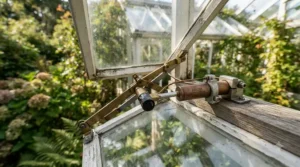
Getting the most from any of these units comes down to installation care and a light annual maintenance routine, not luck. First, mount the opener before the growing season really gets going — ideally in early spring, so it’s calibrated and tested well before the first proper heat spike arrives. Clamp-fit models like the Bayliss XL Autovent need the frame surfaces clean and free of old paint flakes or rust for a secure grip; a loose clamp is the single most common cause of an opener that “doesn’t seem to be lifting the vent properly” in the first month.
Second, set your trigger temperature deliberately rather than leaving it on the factory default. A shaded, north-facing greenhouse can run its threshold up near 20-25°C, while a south-facing glasshouse in full sun often benefits from a lower 12-15°C setting so the vent starts working before the space overheats. Third, build in a light annual check: in early spring, work the piston by hand a few times to confirm it moves freely, wipe down the cylinder, and inspect the spring for corrosion. The most common first-30-days mistake isn’t a faulty unit at all — it’s forgetting to remove the transit clip or packaging insert that some openers ship with to protect the piston in transit, which physically prevents the mechanism from moving until it’s removed.
Finally, don’t mix and match brackets between brands unless the listing explicitly confirms compatibility. A Vitavia Automatic Roof Vent Opener bracket forced onto a non-Vitavia frame, for instance, can sit at a slight angle that puts uneven strain on both the vent hinge and the cylinder housing over a season.
Real-World Scenarios: Which Vent Opener Suits Your Situation
The weekday commuter with a single greenhouse. If you’re out of the house 9am-6pm most days and grow a modest run of tomatoes and salad in a standard 6x8ft aluminium greenhouse, a single roof-vent opener is usually enough. The Bayliss XL Autovent is the obvious default here: universal fit, long service life, and one unit handles a typical single roof vent without fuss.
The allotment grower who’s away most weekends. For plots visited only a few times a week, redundancy matters more than premium branding. Pairing a roof opener with the Elite Automatic Louvre Vent Opener on a side vent creates genuine cross-ventilation, so even a heatwave weekend without a visit doesn’t cook the crop — this is the two-vent setup worth the extra £50-£60 outlay for anyone growing anything genuinely valuable, like early chilli or aubergine crops.
The budget-first first-time greenhouse owner. If you’ve just put up your first small greenhouse and aren’t sure automatic ventilation is worth the spend yet, the ANLEOLIFE Solar Automatic Vent Opener lets you test the concept for well under £30 before deciding whether to upgrade to a premium unit the following season.
Overheating Prevention: How Hot Does a UK Greenhouse Actually Get?
It’s worth being blunt about the numbers here, because they’re more alarming than most first-time growers expect. On a sunny UK day with an outside temperature of around 25°C, an unventilated greenhouse can climb to 35-45°C within a few hours, and plant tissue starts to genuinely suffer once internal temperatures pass roughly 27°C. Push past 35°C and tomato pollen becomes non-viable, which halts fruit set outright even if the plant itself looks otherwise healthy. The Met Office’s own heatwave records confirm that official UK heatwave thresholds — the point at which a location records three consecutive days of exceptional maximum temperatures — sit as low as 25-28°C depending on region, which underlines just how easily an unventilated glasshouse can spiral well past safe growing temperatures on what counts, officially, as merely a warm day rather than an extreme one.
This is precisely why automatic vent openers matter more in a UK context than the mild “nice to have” framing they sometimes get. The RHS’s own guidance recommends total vent opening equal to roughly 20% of a greenhouse’s floor area for effective ventilation, and most stock hobby greenhouses ship with considerably less than that as standard — an automatic opener doesn’t increase your vent area, but it does guarantee that whatever vents you do have are actually working for you every single hot day, rather than only the days you remember to check.
How to Choose an Automatic Vent Opener for Greenhouse Use
Before you even get to the opener itself, it’s worth sense-checking the greenhouse it’s going on — Which?’s own buying guidance on greenhouses is a useful independent reality check on materials, glazing and overall build quality if you’re weighing up a new structure alongside your ventilation upgrade.
- Check your vent type first. Roof vents, louvre vents and door vents all need mechanically different openers — buying a roof-vent unit for a louvre frame simply won’t fit.
- Match the brand where possible. Vitavia, Elite and Palram-Canopia greenhouses all have manufacturer-specific openers that fit more precisely than universal units.
- Weigh your vent panel. Heavier wooden-framed vents need a higher lift rating (6-7kg) than lightweight aluminium panels.
- Consider your greenhouse’s aspect. South-facing, full-sun greenhouses benefit from a lower trigger temperature (12-15°C); shaded plots can run higher (20-25°C).
- Decide on single vs cross-ventilation. One roof opener handles basic overheating; pairing it with a louvre or side-vent opener gives genuine airflow.
- Budget for the whole vent count, not one unit. Multi-vent greenhouses need one opener per vent, which changes the real cost comparison fast.
- Factor in expected lifespan. Premium British-made units commonly run 6-10 years; budget imports are more variable, so price-per-year of service is often more useful than price alone.
Common Mistakes When Buying an Automatic Vent Opener for Greenhouse Use
Buyers regularly assume every opener fits every greenhouse, which — as the branded models on this list make clear — simply isn’t true; always cross-check frame compatibility against the listing before ordering. A second frequent error is fitting only one opener to a multi-vent greenhouse and assuming the rest of the space will follow suit through convection alone; in practice, unopened vents nearby stay largely sealed and hot pockets persist. A third mistake is setting the trigger temperature too high “to be safe” against wind-driven heat loss — this defeats the purpose entirely, since the vent then only opens once the greenhouse is already well into the danger zone for plant tissue. Finally, plenty of buyers skip the annual maintenance check, then wrongly assume a stiff or slow-opening unit is faulty when it usually just needs the piston freed up and the mechanism cleaned.
Wax-Cylinder Vent Openers vs Manual Ventilation: What the Difference Actually Means
On paper, manual ventilation costs nothing beyond your own time — you simply open the vent by hand in the morning and close it in the evening. In practice, that’s the entire problem: it only works on days you’re physically present to do it. Wax-cylinder vent openers cost £15-£120 depending on the model, but they run every single day, including the one weekday you’re stuck in back-to-back meetings and the weekend you’re away visiting family, which is precisely when unattended greenhouses cook.
Reviewers who’ve used both approaches consistently describe the switch to automatic openers as removing a low-grade daily anxiety rather than delivering some dramatic yield transformation — you simply stop needing to think about the greenhouse door on a hot morning. The trade-off is response speed: a wax cylinder reacts to the ambient temperature it sits in, which means there’s a short lag (typically 15-30 minutes) between the greenhouse heating up and the vent fully opening, whereas a human with a thermometer can, in theory, react instantly. For the vast majority of home growers, that lag is a non-issue; for anyone raising genuinely heat-sensitive seedlings or propagating delicate cuttings, it’s worth knowing about.
Long-Term Cost & Maintenance: What You’re Really Paying For
Spread across a typical 6-10 year service life, a Bayliss XL Autovent at roughly £55-£65 works out to well under £10 a year — cheaper, over time, than most gardeners would guess. Budget units like the ANLEOLIFE Solar Automatic Vent Opener cost far less upfront but, based on aggregated buyer reports of shorter component lifespans, may need replacing every 2-4 years, which can bring the annual cost closer to parity with the premium option once you factor in the hassle of reordering and refitting.
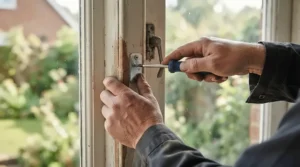
Ongoing maintenance for any wax-cylinder opener is genuinely minimal: an annual wipe-down, a check that the piston still moves freely, and an eye on the spring for rust are usually the whole job. Replacement cylinders are widely available for the major UK brands, which means a tired opener doesn’t necessarily mean buying a whole new unit — often just the cylinder itself needs swapping, extending the working bracket and spring assembly’s life considerably.
Safety, Overheating Prevention and Disease Risk
Beyond direct heat damage, poor greenhouse ventilation drives a second, quieter problem: fungal disease. Humid, still air inside a poorly ventilated greenhouse is exactly the environment that grey mould (Botrytis cinerea) thrives in, and the RHS’s own disease guidance lists improving ventilation as one of its core recommendations for reducing outbreaks, alongside removing dead plant material promptly and avoiding overcrowding. An automatic vent opener that reliably triggers on hot, humid days is therefore doing double duty — protecting against both direct heat stress and the secondary disease risk that stagnant, moist air creates.
From a physical safety standpoint, always follow the manufacturer’s weight rating rather than guessing — an opener rated to lift 5.5kg strained against a heavier wooden vent panel can fail prematurely or, in a worst case, allow a vent to slam in high wind if the spring can’t fully control the heavier panel’s return swing. If you’re unsure of your vent’s weight, a kitchen or luggage scale on the removed panel takes thirty seconds and avoids the guesswork entirely.
Cheap Automatic Greenhouse Vent Opener: Is Budget Worth It?
The honest answer is: usually yes, with realistic expectations set from the start. A cheap automatic greenhouse vent opener like the ANLEOLIFE Solar Automatic Vent Opener uses the identical wax-expansion principle as a £65 Bayliss XL Autovent — the physics doesn’t get cheaper, only the materials and finishing do. What you’re trading away at the budget end is typically corrosion resistance over many winters, the tightness of the piston seal after repeated heat cycles, and — going by the spread of aggregated review sentiment — more variability between individual units.
For a first greenhouse, a cold frame, a low-value crop, or simply testing whether automatic ventilation suits your routine, that trade-off is entirely sensible. Where it stops making sense is on a greenhouse you’re relying on for a serious harvest, or in a coastal or particularly damp UK location where corrosion resistance genuinely determines how many seasons a unit survives — there, the extra £30-£40 for a Bayliss XL Autovent or Bayliss Mk7 Autovent buys real, measurable extra service life rather than just brand reassurance.
✨ Don’t miss these greenhouse essentials!
🌱 Whichever vent opener suits your setup, click through to check current pricing and availability before your next heatwave arrives — a few minutes now could save your whole tomato crop later!
Greenhouse Roof Vents: Getting the Coverage Right Before You Automate
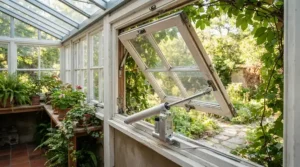
An automatic vent opener can only work with the roof vent it’s attached to — it can’t create ventilation capacity that isn’t already built into your greenhouse. This is worth checking before you buy: measure your existing roof vent (or vents) as a proportion of your total floor area, and compare it against the RHS’s recommended 20% target mentioned earlier. Plenty of budget hobby greenhouses ship with a single roof vent covering well under 10% of floor area, which means even a perfectly functioning automatic opener is working against a structural handicap.
If your greenhouse is under-vented, retrofitting an additional roof vent or a louvre vent before adding automation is usually the higher-value upgrade, and it’s exactly the gap products like the Elite Automatic Louvre Vent Opener are designed to fill on Elite-brand structures. For most standard UK aluminium and polycarbonate greenhouses sold in the last decade, however, factory-fitted roof vent coverage is reasonably close to adequate, and simply automating the existing vent (or vents) with one of the openers above delivers the bulk of the benefit without any structural changes.
Frequently Asked Questions
❓ Do automatic greenhouse vent openers need electricity?
❓ What temperature do automatic vent openers start opening at?
❓ How long do wax-cylinder vent openers last?
❓ Can I fit an automatic vent opener to any greenhouse?
❓ Do I need one opener per vent?
Conclusion
An automatic vent opener for greenhouse use is one of the rare gardening purchases that genuinely pays for itself in prevented disasters rather than incremental improvement — you’re not chasing a slightly bigger tomato, you’re avoiding the specific Tuesday where a heatwave wipes out a season’s growing in an afternoon. Across this round-up, the Bayliss XL Autovent remains the sensible universal default for most UK aluminium greenhouses, the branded Vitavia, Elite and Palram Canopia units are worth the premium if you own a matching greenhouse, the Univent (Dancover) earns its place for heavier vent panels, and the ANLEOLIFE Solar Automatic Vent Opener is a perfectly reasonable way to trial the whole concept without a big outlay.
Whichever unit you land on, the core logic doesn’t change: match it to your vent type and greenhouse brand, weigh your vent panel before assuming a lift rating will cope, and set the trigger temperature deliberately rather than leaving it on a factory default that may not suit your garden’s aspect. Do that, and you’ll spend a great deal less time worrying about Tuesday afternoons.
✨ Ready to stop worrying about heatwave damage? Check current prices on the models above and get one fitted before the next warm spell catches your greenhouse off guard.
Recommended for You
- Small Greenhouse Heater for Allotment: 7 Top UK Picks (2026)
- Electric Greenhouse Heater For Winter: 7 Proven Picks (2026)
- Electric vs Paraffin Greenhouse Heater: 7 Best Picks (2026)
Disclaimer: This article contains affiliate links. As an Amazon Associate, I earn from qualifying purchases. If you purchase products through these links, we may earn a small commission at no additional cost to you.
✨ Found this helpful? Share it with your friends! 💬🤗
