In This Article
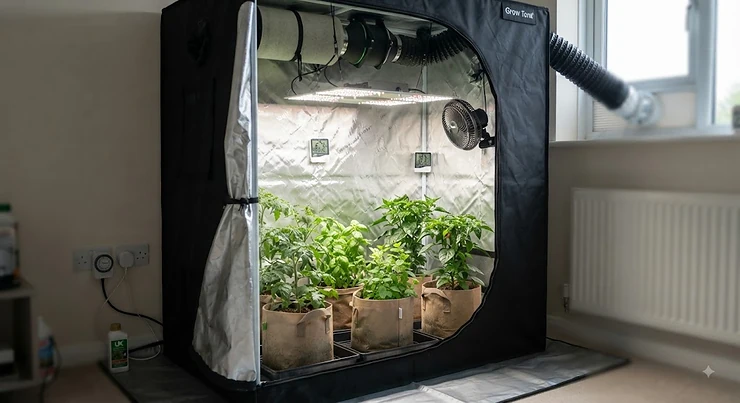
Somewhere between a windowsill propagator and a full-blown grow room sits the awkward middle child of indoor gardening: the best medium grow tent. Too big for a spare shelf, too small to call a “room,” and — if you get the size wrong — either a cramped disappointment or a monument to wasted floor space. A medium grow tent typically covers a footprint of around 0.6m² to 1.5m² (think 80x80cm up to 120x120cm), tall enough at 160-200cm to stand a plant through a full vegetative stretch, and roomy enough to hang a proper light without singeing the canopy. Get the dimensions right and you’ve got a self-contained little ecosystem — light-sealed, ventilated, humidity-controlled — that behaves nothing like the room it’s sitting in.
This guide leans on real specifications pulled from current UK listings, genuine aggregated review sentiment, and honest comparative reasoning rather than recycled marketing copy. We’re not going to pretend we’ve personally grown a season of tomatoes in every tent below — what follows instead is a spec-literate, review-informed breakdown of what each tent actually does well, and for whom. If you want a technical primer on how light intensity and photoperiod interact indoors, RHS’s guide to artificial lighting for plants is a genuinely useful starting point before you even open your wallet.
What is a medium grow tent? It’s a light-proof, reflective-lined fabric enclosure — typically 80x80cm to 120x120cm at the base and 160-200cm tall — sized for two to six mature plants or a denser veg-stage layout, striking the balance between a beginner’s small tent and a commercial-scale room. Below, we’ve broken down seven real tents currently sold to UK buyers, spanning budget, mid-range and premium price bands, followed by the sizing, airflow and layout advice that actually determines whether your medium tent thrives or just sits there looking expensive.
Quick Comparison Table
| Category | Pick | Footprint | Best For |
|---|---|---|---|
| Best Overall | VIVOSUN S448 | 120x120x200cm | First-time growers wanting reliability |
| Best Budget | Growerz TNT 100 | 100x100x200cm | Tight budgets, still a true medium size |
| Most Compact | SunStream 80×80 | 80x80x160cm | Cupboards, box rooms, tight corners |
| Best Reflectivity | Mars Hydro 120×120 | 120x120x200cm | Maximising light-per-watt |
| Toughest Build | Spider Farmer 120×120 | 120x120x200cm | Growers who are hard on kit |
| Best Narrow Fit | AC Infinity CLOUDLAB 642 | 120x60x180cm | Alcoves, wardrobes, awkward rooms |
| Tallest / Adjustable | Gorilla Grow Tent 4×4 | ~122x122x211-241cm | Vegetables that stretch tall in veg |
A glance at that table tells you most of what you need before diving deeper: the Gorilla Grow Tent 4×4 is the only one built to grow taller with you, while the AC Infinity CLOUDLAB 642 trades footprint width for the ability to squeeze into a narrow alcove that a square 120x120cm tent simply won’t fit into. Budget and mid-range options cluster tightly on price, but the real differentiator — as you’ll see below — is build quality under the reflective lining, not the lining itself, since almost every tent on the market now claims “98% reflective mylar.”
💬 Just one click — help others make better buying decisions too!😊
Top 7 Medium Grow Tents: Expert Analysis
1. VIVOSUN S448 — best all-rounder for first-time growers
The VIVOSUN S448 has become something of a default recommendation in UK grow-tent forums, and the 120x120x200cm footprint is exactly why: it’s the sweet spot for a single decent-sized LED without crowding the canopy against the walls.
Underneath the marketing, the specs that matter are the frame gauge and the zip quality — VIVOSUN uses a robust steel pole system with metal corner connectors rather than the plastic clips found on cheaper imports, and the double-stitched seams keep light leakage to a minimum even after repeated folding and storage between grows. The observation window is a genuinely practical touch that budget alternatives often skip entirely.
Based on the spec sheet, this tent suits anyone stepping up from a small 60x60cm propagation tent into their first proper multi-plant setup — the removable floor tray and heavy-duty zippers mean it tolerates the inevitable spilled water and knocked-over pots of a learning curve. Reviewers consistently report that assembly takes under thirty minutes solo, and that the interior mylar stays taut rather than sagging after a few months, which is a common complaint levelled at cheaper competitors.
Pros:
- ✅ Robust steel frame with metal corner brackets
- ✅ Easy-view observation window for daily checks
- ✅ Compatible with VIVOSUN’s VS1000/VS2000 light ecosystem
Cons:
- ❌ 120x120cm footprint needs a genuinely spare room corner
- ❌ Included floor tray is shallower than some rivals’
Typically found in the £90-£130 range on amazon.co.uk at the time of research, the VIVOSUN S448 represents strong value for a first medium tent — you’re paying for frame rigidity and zip longevity rather than flashy extras, which is exactly where the money should go.
2. SunStream 80x80x160cm — most compact footprint for tight spaces
If your available floor space is a box room, an under-stairs cupboard, or a corner of a bedroom that a partner has grudgingly allowed you, the SunStream 80x80x160cm is the medium tent that actually fits. At 0.64m², it’s the smallest tent on this list that still qualifies as “medium” rather than a propagation box.
The 600D Oxford fabric shell is noticeably heavier-duty than the thinner canvas used on some ultra-budget tents, and the multiple mesh-covered vents with drawstring cinches give reasonable passive airflow even before you add an extraction fan. At 160cm tall, headroom above the canopy is tighter than the 200cm tents on this list, which matters if you’re growing anything that stretches — more on that in the height section below.
Aggregated user feedback highlights straightforward assembly and describes the tool-free connectors as genuinely tool-free, though several reviewers note the included instructions are thin and that fitting the outer cover in a low-ceilinged room can be fiddly for one person. What most buyers overlook about this size is that a smaller footprint means your light needs less coverage area too, so you can run a lower-wattage (and lower-cost) LED and still hit good coverage.
Pros:
- ✅ Genuinely fits in tight rooms and cupboards
- ✅ Heavy-duty 600D waterproof Oxford fabric
- ✅ Multiple ventilation points for passive airflow
Cons:
- ❌ 160cm height limits tall or stretchy veg stages
- ❌ Instructions are sparse for first-time assemblers
Priced typically in the £60-£90 bracket, the SunStream 80x80x160cm is the tent to pick when the room dictates the size, not the ambition.
3. Growerz TNT 100 — cheapest true medium tent on the market
The Growerz TNT 100 occupies an interesting niche: a genuine 100x100x200cm footprint at a price point that undercuts most 120x120cm rivals by a meaningful margin. For growers who want the full 200cm of vertical headroom without paying premium prices for it, this is the pragmatic choice.
Build quality is where the savings show, though not in a way that’s necessarily disqualifying — the alloy steel frame is thinner-gauge than the VIVOSUN or Spider Farmer options, so it copes fine with a light and a small fan but isn’t rated for hanging heavy carbon filters without extra support strapping. The mylar interior does the job of reflecting light evenly, and the double-ventilation setup with cable ports covers the essentials.
What the spec sheet won’t tell you, but reviewer patterns suggest, is that this sits firmly in the “does what it says” category rather than the “built to last a decade” category — a common theme in aggregated feedback is satisfaction with initial value paired with mild concern about longevity under heavy use. For a first tent, or a second tent for a veg-only space, that trade-off is entirely reasonable.
Pros:
- ✅ Full 200cm height at a genuinely low price
- ✅ 1m² footprint suits 4-6 plants comfortably
- ✅ Simple double-ventilation and cable port layout
Cons:
- ❌ Thinner frame gauge than premium alternatives
- ❌ Not rated for heavy accessory loads without support
At roughly £85-£110, the Growerz TNT 100 is the tent to recommend to anyone asking “what’s the cheapest way into a proper medium grow tent” — and a genuinely honest answer, rather than a race-to-the-bottom compromise.
4. Mars Hydro 120x120x200cm — best light reflectivity for the money
Mars Hydro built its reputation on lighting, and it shows in this tent: the 1680D canvas with a high-density reflective mylar lining is engineered specifically to complement the brand’s own TSW and SP-series lights, though it performs just as well paired with any other manufacturer’s fixture.
The thicker 1680D fabric (denier is a measure of fabric fibre density — higher generally means tougher and more light-tight) resists sagging and holds its shape noticeably better than entry-level 600D tents over repeated use. Combined with the diamond-pattern mylar interior, light distribution across the canopy is more even than in flatter, glossier linings, which in practice means fewer dim corners and less need to rotate your pots.
Reviewers consistently praise the sturdiness of the frame and the tightness of the seams, with a recurring theme being how little light escapes even in a fully lit room at night — a detail that matters more than most buyers realise until they’re standing in a dark hallway spotting a bright seam. Based on the spec comparison against the VIVOSUN S448, the Mars Hydro tent edges ahead specifically on fabric density and reflectivity, while running close on price.
Pros:
- ✅ 1680D canvas resists sagging over time
- ✅ Diamond mylar improves light evenness
- ✅ Near-total light-sealing reported by reviewers
Cons:
- ❌ Slightly heavier to transport or store folded
- ❌ Marginally pricier than base-tier 120×120 rivals
Sitting around £140-£170, the Mars Hydro 120x120x200cm is the pick for growers who’ve already invested in a decent light and don’t want the tent to be the weak link in their setup.
5. Spider Farmer 120x120x200cm — toughest double-thick canvas build
Spider Farmer has quietly become one of the most trusted mid-range names in UK indoor growing, and this 120x120x200cm tent leans into that reputation with a double-thickness mylar lining — effectively two reflective layers rather than one, aimed squarely at growers who plan to keep the tent up and running for multiple seasons rather than a single trial run.
The observation window is generously sized compared to some rivals, and the removable floor tray is deep enough to catch a genuinely sloppy watering mistake without it pooling onto the carpet beneath. Reinforced corner joints on the steel frame handle the weight of a hung light, an oscillating fan and a small carbon filter simultaneously — a combination that causes visible frame flex on cheaper tents.
A common thread in aggregated review sentiment is durability under repeated setup and teardown, with growers who move house or store the tent seasonally reporting the fabric holds its shape and the poles don’t bend at the joints the way thinner-gauge alternatives sometimes do. Here’s what to weigh: you’re paying a small premium over the Mars Hydro tent specifically for that structural robustness, not for extra floor space, since the footprint is identical.
Pros:
- ✅ Double-thick mylar for durability and reflectivity
- ✅ Reinforced frame joints handle heavier accessory loads
- ✅ Large observation window and deep floor tray
Cons:
- ❌ Premium over otherwise near-identical 120×120 tents
- ❌ Overkill if you’re only running a single light and fan
Expect to pay in the £150-£190 range, positioning the Spider Farmer 120x120x200cm as the mid-to-premium choice for growers who value longevity over shaving a few pounds off the initial spend.
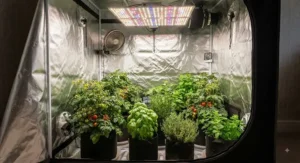
6. AC Infinity CLOUDLAB 642 — best narrow-footprint premium option
Where the previous five tents are all roughly square, the AC Infinity CLOUDLAB 642 breaks the mould with a 120x60x180cm footprint — a rectangular “4×2” shape designed for exactly the kind of narrow alcove, boxroom or wardrobe space that a 120x120cm square tent physically cannot occupy.
The engineering here justifies the higher price tag: 2.5cm-thick poles (noticeably chunkier than the roughly 1.6-2cm poles on most rivals), 2000D canvas rated among the densest on the market, and a dedicated controller mount plate that neatly solves the “where do I put the fan speed controller” problem every grower eventually faces. The largest zipper window on this list makes daily inspection easier without fully opening the tent and disturbing the internal climate.
Reviewers rate this tent highly for reflectivity, engineering precision and the sheer overkill of the pole strength — a recurring comment is that it feels closer to scaffolding than fabric-tent poles, which for anyone who’s had a cheap frame buckle under a heavy light is a meaningful reassurance. Based on the spec comparison, this is less about growing more plants and more about growing confidently in a footprint no other medium tent on this list can match.
Pros:
- ✅ Fits narrow spaces a square tent physically can’t
- ✅ Exceptionally thick 2.5cm poles and 2000D canvas
- ✅ Built-in controller mount plate for fan/light hubs
Cons:
- ❌ Narrower depth (60cm) limits multi-row plant layouts
- ❌ Sits at the top of the medium-tent price bracket
Priced typically around £180-£220, the AC Infinity CLOUDLAB 642 earns its premium tag through engineering rather than gimmicks, and it’s the clear pick when your room’s shape — not your ambition — is the limiting factor.
7. Gorilla Grow Tent 4×4 — tallest height-adjustable frame for veg stretch
The Gorilla Grow Tent 4×4 solves a problem none of the other six tents on this list can: what happens when your plant simply outgrows the fixed 200cm ceiling. Its height-adjustable frame extends from roughly 211cm up to 241cm with the included one-foot extension kit (and further still with an optional two-foot kit sold separately), giving genuinely tall vegetative growth room without needing to top or train plants earlier than you’d like.
Beyond the height trick, the double-thick industrial canvas and interlocking steel pole system are rated to support serious hanging weight — Gorilla states up to roughly 135kg (300lb) — which comfortably covers a full lighting rig, multiple fans, a carbon filter and trellis netting all at once without frame stress. The wide zip openings, light-tight zipper covers and 360-degree access make daily maintenance noticeably less fiddly than tents with a single front-facing door.
Aggregated customer feedback is consistently strong on build quality and design thoughtfulness, though a fair few reviewers note the price premium is real and that the height extension kits, sold separately, add further cost on top of an already premium tent. For growers serious enough about vegetables or flowering plants that height genuinely constrains yield, that extra spend tends to be viewed as justified rather than excessive.
Pros:
- ✅ Height-adjustable frame up to roughly 241cm+
- ✅ Rated to support around 135kg of hanging equipment
- ✅ 360-degree access and light-tight zip covers
Cons:
- ❌ Among the most expensive tents in the medium category
- ❌ Extension kits for extra height cost more on top
Typically priced from around £210 upwards depending on configuration, the Gorilla Grow Tent 4×4 is the tent for growers who’ve outgrown “good enough” and want headroom, literally and figuratively, to keep scaling up.
Practical Usage Guide: Setting Up Your Medium Grow Tent
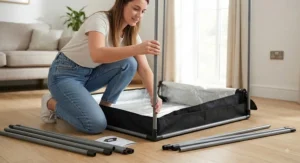
Getting a medium grow tent from flat-packed box to functioning ecosystem is where most first-timers either build good habits or bake in bad ones. Start by choosing your location before you unbox anything — you need clearance for the door to open fully, at least 15-20cm of gap behind the tent for airflow and cable routing, and proximity to a socket that doesn’t require an extension lead snaking across a doorway.
Assemble the frame fully before fitting the fabric cover; forcing a half-built frame into the cover is the single most common cause of bent poles in the first thirty days. Once the cover’s on, fit your light first, then your extraction fan and ducting, then any oscillating fan last — working top to bottom avoids you having to reach past hanging equipment. A common early mistake is running the extraction fan at full speed from day one; start low and increase gradually while watching leaf movement, since too much airflow directly on young seedlings causes windburn just as surely as too little causes stagnant, humid air.
Build a simple maintenance rhythm: check zips and seams weekly for wear, empty and rinse the floor tray between grows, and wipe down the interior mylar every few months to keep reflectivity high, since dust genuinely does dull light bounce over time. Reviewers across every tent on this list flag the same optimisation trick — hanging your light and fan from adjustable ratchet straps rather than fixed cord, so you can raise fixtures as plants grow without re-tying knots each time.
Real-World Scenarios: Which Medium Grow Tent Suits You
The renting hobbyist. If you’re in a flat, budget is tight, and you might move within a year or two, the Growerz TNT 100 or SunStream 80x80x160cm make the most sense — both fold down small for transport, neither represents a huge sunk cost if plans change, and the modest footprint means you’re not negotiating floor space with flatmates.
The vegetable grower going all-in. Someone dedicating a spare room corner permanently to chillies, dwarf tomatoes or leafy greens, with the budget to match their commitment, is better served by the Mars Hydro or Spider Farmer 120x120cm tents — the extra floor space supports a proper multi-plant layout (see the dedicated section below), and the sturdier frames tolerate the fans, filters and trellis netting that a serious vegetable setup accumulates over a season.
The awkward-room grower. If your available space is a narrow alcove, understairs nook or a slice of a box room rather than an open corner, the AC Infinity CLOUDLAB 642‘s rectangular footprint is worth the premium specifically because a square tent simply won’t fit — no amount of budget-friendliness elsewhere compensates for a tent that physically doesn’t stand up in your room.
How to Choose the Best Medium Grow Tent
Choosing well comes down to working through a short list of decisions in the right order, rather than starting with brand names.
- Measure your space first, not your ambition. Note the exact width, depth and — critically — ceiling height available, including clearance for a hung light and ducting.
- Decide footprint shape before size. A square 100x100cm or 120x120cm suits open corners; a rectangular 120x60cm suits alcoves and narrow rooms.
- Match height to your crop. Vegetables that stretch (tomatoes, some peppers) need 200cm+ or an adjustable frame; low, bushy crops manage fine at 160cm.
- Check fabric density, not just reflectivity claims. Nearly every tent claims 95-98% reflective mylar; the denier rating (600D vs 1680D vs 2000D) is the real durability signal.
- Confirm port and vent count matches your equipment. You’ll typically need one port for intake, one for extraction, and spare cable ports for lights and sensors.
- Factor in frame load rating if you’re hanging heavy kit. A carbon filter plus light plus fan adds up fast — check the tent’s rated hanging weight before committing.
- Price against denier and frame gauge, not size alone. Two 120x120cm tents can differ by £80 purely on build quality; that gap is rarely wasted money.
80×80 vs 100×100 vs 120×120: Which Medium Grow Tent Size Wins
The honest answer is that none of these sizes “wins” outright — each solves a different space problem, and the 80×80 grow tent reviews you’ll find online consistently frame it as a space-constrained choice rather than a compromise choice. The SunStream 80x80x160cm covers roughly 0.64m² and suits two to four smaller plants or a dense veg-stage cluster; it’s the right call when your room, not your budget, sets the ceiling.
Step up to a 100×100 grow tent like the Growerz TNT 100 and you gain a genuinely useful 0.36m² of extra floor space — enough for a proper multi-plant grid rather than a tight cluster — while the frame and price stay close to the smaller option. This is arguably the most underrated size bracket in the medium category: big enough to feel like a real growing space, small enough to still fit a typical spare bedroom corner.
Move to 120x120cm, as with the VIVOSUN S448, Mars Hydro or Spider Farmer tents, and you’re looking at 1.44m² — around double the 80×80 tent’s footprint — which comfortably supports six or more plants in a proper layout, a larger single light, and enough spare room for a filter and oscillating fan without everything touching. Reviewers moving up from an 80×80 or 100×100 tent almost universally describe the 120×120 jump as the point where growing stops feeling cramped, though it does demand a genuinely spare corner of a room rather than a converted cupboard.
| Size | Footprint | Best Plant Count | Best For |
|---|---|---|---|
| 80x80cm | 0.64m² | 2-4 plants | Tight rooms, cupboards |
| 100x100cm | 1.0m² | 4-6 plants | Best value floor space |
| 120x120cm | 1.44m² | 6-9 plants | Serious multi-plant setups |
Reading across that table, the jump from 100×100 to 120×120 delivers proportionally more usable growing area than the jump from 80×80 to 100×100 does, simply because area scales with the square of the side length. Practically speaking, if you can physically fit a 120x120cm footprint plus clearance, it’s rarely regretted; if you can’t, the 100x100cm bracket is the better-value fallback rather than the 80x80cm one.
✨ Don’t Miss These Exclusive Deals!
🔍 Take your indoor growing to the next level with these carefully selected tents. Click on any highlighted product to check current pricing and availability. The right medium grow tent will help you build a genuinely productive growing space your family will enjoy the results of!
Medium Grow Tent for Vegetables: What Changes
Vegetables place different demands on a medium tent than ornamental or flowering setups, and it’s worth being specific about why. Leafy crops like lettuce and spinach are comparatively forgiving on height and light intensity, making even the SunStream 80x80x160cm perfectly workable. Fruiting vegetables — tomatoes, peppers, chillies, cucumbers — behave very differently: they stretch considerably during veg, then need sustained, even light through flowering and fruit-set, which is where the taller and better-reflective tents on this list genuinely earn their keep.
Airflow matters more for vegetables than for many ornamentals too, since fruiting plants are more prone to fungal issues like powdery mildew in stagnant, humid air — a tent with generous mesh venting and a properly sized extraction fan (see the calculation below) isn’t optional here, it’s load-bearing for a successful harvest. If you want the underlying science of why controlled root-zone conditions accelerate growth versus soil alone, the Wikipedia overview of hydroponics is a solid, neutral primer, even if you’re growing in soil or coco rather than a hydroponic system yourself.
Reflectivity also has an outsized effect on vegetable yield specifically, since fruiting plants respond to total light integral over the whole cycle rather than a single peak intensity — this is precisely why the double-thick mylar in the Spider Farmer 120x120x200cm or the diamond-pattern lining in the Mars Hydro 120x120x200cm translate into a genuine practical advantage for vegetable growers, not just a spec-sheet boast.
Multi-Plant Layout Planning Inside a Medium Tent
Cramming plants into a medium tent without a layout plan is the fastest way to end up with a leggy, light-starved centre and healthy edges — the opposite of what you want. Start by mapping your footprint on paper before a single pot goes in: a 120x120cm tent comfortably supports a 3×3 grid of smaller pots or a looser 2×3 arrangement of larger containers, while a 100x100cm tent suits a tighter 2×2 or 2×3 grid depending on pot size.
Leave genuine gaps between plants rather than maximising density — airflow between canopies matters as much as light does, and a common beginner mistake is packing pots edge-to-edge, which traps humidity and invites the fungal issues mentioned above. In a rectangular tent like the AC Infinity CLOUDLAB 642, plan a single row rather than forcing a grid; the 60cm depth suits one line of plants positioned to catch even light rather than a cramped double row.
Rotate pot positions weekly if your light doesn’t have even edge-to-edge coverage — corner and edge positions in any tent typically receive 10-20% less light than the centre, and a simple rotation schedule evens out growth across the whole layout without needing to buy a second light. For taller crops, plan your layout around eventual height too: position what will become your tallest plants centrally under the strongest light, with shorter or bushier plants around the perimeter where light intensity naturally tapers off.
Grow Tent Height for the Veg Stage
Vegetative-stage height requirements are the single most underestimated factor in medium tent buying, and it’s a genuinely common regret among first-time buyers who chose a 160cm tent and then watched a tomato plant hit the ceiling mid-veg. As a rough planning rule, budget for roughly 60-90cm of clear space between your light and the tent’s inner ceiling (for heat and mounting hardware), then whatever height your plant will reach during veg, plus canopy clearance beneath the light itself.
For genuinely compact crops — herbs, lettuce, most leafy greens — the 160cm height of the SunStream 80x80x160cm is entirely sufficient, since these plants rarely exceed 40-50cm even at maturity. For anything that stretches meaningfully during veg — tomatoes, chillies, taller pepper varieties — the standard 200cm height found on the VIVOSUN S448, Growerz TNT 100, Mars Hydro and Spider Farmer tents gives considerably more margin, though even 200cm can feel tight if you let veg run long before switching to flower.
This is precisely the gap the Gorilla Grow Tent 4×4‘s adjustable frame closes — rather than training or topping a plant earlier than ideal purely to fit the tent, you extend the frame instead. Here’s what to weigh: if you consistently find yourself training plants down earlier than you’d like just to fit a fixed-height tent, that’s the clearest signal that height-adjustability is worth paying for rather than a nice-to-have.
Airflow Calculation: Sizing Your Fan and Filter
Getting airflow right is arguably more consequential to plant health than any other single decision in a medium tent, and it comes down to one calculation: tent volume, in litres, divided by your target air exchange rate. Multiply your tent’s length, width and height in metres to get volume in cubic metres, then multiply by 1,000 to convert to litres — a 120x120x200cm tent, for example, works out to 1.2 × 1.2 × 2.0 = 2.88m³, or 2,880 litres.
A commonly used benchmark is exchanging that full volume of air roughly once every one to three minutes, adjusted down (faster exchange) for hotter rooms or more lights, and up (slower exchange) for cooler ambient conditions. Taking the middle ground of a two-minute exchange, that 2,880-litre tent needs a fan rated at roughly 1,440 litres per minute, then reduced somewhat to account for ducting length, bends and any carbon filter resistance — as a rule of thumb, knock 20-30% off the fan’s rated output for real-world ducted performance.
Undersized fans are the more common mistake, leading to heat build-up and the humid, stagnant conditions vegetable growers particularly need to avoid, but oversized fans running full-tilt constantly can dry out young plants and stress delicate seedlings, so a fan with adjustable speed control is worth the small extra spend regardless of tent size. For the underlying reasoning behind exchange rates and why stale, humid air causes problems even outside a tent context, HSE’s ventilation guidance — written for workplaces rather than grow tents, but grounded in the same fresh-air principles — is a useful general reference.
| Tent Footprint | Approx. Volume | Suggested Fan CFM/L-min Range |
|---|---|---|
| 80x80x160cm | ~1,024L | 300-500 L/min |
| 100x100x200cm | ~2,000L | 600-900 L/min |
| 120x120x200cm | ~2,880L | 850-1,300 L/min |
The pattern in that table is straightforward once you see it laid out: fan requirements scale roughly with volume, not floor area alone, which is why the taller Gorilla Grow Tent 4×4 at its maximum extended height needs a noticeably beefier fan than a standard 200cm tent of the same footprint. Undersizing a fan to save £15-£20 on a cheaper unit is one of the most common false economies in this hobby.
Common Mistakes When Buying a Medium Grow Tent
The single most frequent mistake is buying on footprint alone and ignoring ceiling height until the plant is already stretching — as covered above, this is entirely avoidable with ten minutes of planning before purchase. A close second is underestimating denier and frame gauge, chasing the cheapest 120x120cm tent available without checking whether the fabric and poles can actually support the fan, filter and light you intend to hang inside it.
Buyers also commonly overlook port count and placement, only realising after setup that there’s no convenient hole for a second cable or that the intake and extraction ports are positioned awkwardly close together, undermining proper cross-ventilation. Finally, a surprisingly common mistake is treating the tent as the whole budget rather than one line item in a system — a brilliant tent paired with an underpowered light or an undersized fan performs worse overall than a modest tent with well-matched equipment.
Long-Term Cost & Maintenance
A medium grow tent itself is a largely fixed cost after purchase — barring accidental zip damage or a torn seam, there’s little ongoing spend on the tent alone. The real total cost of ownership sits in the equipment running inside it: LED lighting typically draws 100-300W for a medium tent depending on coverage needs, an extraction fan a modest 15-40W, and a small oscillating fan negligibly more, which at UK electricity prices adds up to a running cost worth budgeting for across an 18-hour veg photoperiod rather than an afterthought.
Zips are the most common failure point across every tent on this list, and the fix is prevention rather than repair — keeping the zip track free of soil and mylar debris, and not forcing a stuck zip, extends lifespan considerably. Reflective interiors gradually dull with dust accumulation over a season or two; a wipe-down every few months maintains the reflectivity you paid for rather than letting it silently degrade. Frame poles on the sturdier tents (Mars Hydro, Spider Farmer, AC Infinity CLOUDLAB 642, Gorilla Grow Tent 4×4) genuinely outlast the fabric cover in most cases, meaning a replacement cover — sold separately by most of these brands — can extend a tent’s usable life by several more seasons rather than needing a full replacement purchase.
Safety, Regulations & Compliance Guide
Grow tents concentrate several electrical devices — lights, fans, humidity controllers, sometimes heaters — into a small enclosed space, which makes basic electrical safety non-negotiable rather than optional. Every device should run from a properly rated UK 3-pin socket or a single good-quality extension lead rated for the combined load; daisy-chaining extension leads together, a genuinely common shortcut when a tent ends up far from the nearest socket, is explicitly flagged as a fire risk by Electrical Safety First’s guidance on extensions and leads, and it’s worth taking that seriously given how many hours a day grow-tent equipment typically runs.
Beyond electrics, ventilation isn’t just a growth-rate consideration but a genuine damp and mould risk if neglected — a sealed, humid tent in a poorly ventilated room can contribute to condensation and mould in the surrounding space over time, particularly in colder months when the temperature differential between tent and room is largest. Positioning the tent away from soft furnishings and ensuring the room itself gets some general air exchange addresses most of this risk. If you’re growing produce intended for the table, basic food-safety common sense applies too — clean hands, clean tools, and avoiding pesticide products not labelled for edible crops.
Features That Actually Matter (And Those That Don’t)
Denier rating and frame pole gauge matter enormously and are worth prioritising in your budget — they’re the difference between a tent that lasts three seasons and one that lasts eight. Port count and placement matter more than most buyers expect going in, since retrofitting a cable hole in fabric that wasn’t designed for it is a genuinely awkward DIY job. Zipper quality matters too, more than most spec sheets emphasise it, since it’s the single most common point of failure across every tent reviewed here.
What matters considerably less than the marketing suggests: the precise reflectivity percentage claimed (95% vs 98% mylar makes a negligible practical difference once you’re above roughly 90%), and cosmetic extras like tool pouches or branded carry bags, which are pleasant but not worth paying a meaningful premium for. Colour-coded cable management and similar small conveniences are genuinely nice to have but shouldn’t move the needle on which tent you choose over a rival with better fundamentals.
FAQ
❓ What size is considered a medium grow tent?
❓ Can I grow vegetables in a medium grow tent?
❓ How many plants fit in a 100x100 grow tent?
❓ How much airflow does a medium grow tent need?
❓ Do medium grow tents use a lot of electricity?
Conclusion
Picking the best medium grow tent isn’t really about finding a single “winner” — it’s about matching footprint, height and build quality to the space you actually have and the plants you actually want to grow. The VIVOSUN S448 earns its all-rounder reputation fairly, the SunStream 80x80x160cm and Growerz TNT 100 solve real budget and space constraints without pretending to be something they’re not, and the Mars Hydro and Spider Farmer 120x120cm tents reward growers ready to commit to a proper multi-plant setup. At the premium end, the AC Infinity CLOUDLAB 642 answers an awkward-room problem that square tents simply can’t, while the Gorilla Grow Tent 4×4 solves the height ceiling that eventually frustrates every serious vegetable grower.
Work through the sizing, airflow and layout planning covered above before you buy, not after, and whichever tent you land on is far more likely to feel like the right one twelve months from now. Genuine research beats guesswork here — and hopefully this breakdown has given you the specifics to make that call with confidence rather than a coin toss between near-identical product photos.
✨ Ready to Set Up Your Own Growing Space?
🔍 Take your indoor vegetable growing to the next level with the tents compared above. Click through to check current pricing and availability before you commit. A well-matched medium grow tent is the foundation every good harvest is built on!
Recommended for You
- Best 60×60 Grow Tent UK 2026: 7 Top Picks
- Grow Tent for Beginners: 7 Real Picks
- Best Grow Tent 2026: 7 Top Picks
Disclaimer: This article contains affiliate links. As an Amazon Associate, I earn from qualifying purchases. If you purchase products through these links, we may earn a small commission at no additional cost to you.
✨ Found this helpful? Share it with your friends! 💬🤗
