
In This Article
The forecast says -2°C, the light is going, and your prized cordyline is still standing in its pot like a lamb at a lion’s tea party. A decent frost protection cover for plants is the difference between a sad brown collapse in spring and a shrug at the weather. The fix also costs less than replacing one garden-centre specimen.
This guide covers seven real products that UK gardeners can buy on Amazon UK, from rolls you cut to size to zip-up jackets. It explains what each one does in practice, not just what the listing claims. I haven’t personally tested any of them, so everything here comes from published specs, independent editorial tests and honest reasoning. Where I couldn’t verify something, I say so.
Some expectations first. Fleece is not a heater. It’s a duvet, slowing heat loss rather than creating warmth. The RHS puts heavier grades of fleece at about 2°C of protection, which is plenty for a light frost and useless in a deep freeze.
Along the way we’ll cover cheap frost protection fleece (and where cheap turns false economy), individual plant covers for pots and specimens, tender plant care through the coldest months, and how to act on overnight frost warnings before the temperature drops.
Quick Comparison: Frost Protection Cover for Plants at a Glance
| Product | Format & size | Fabric weight | Price range | Best for |
|---|---|---|---|---|
| DazSpirit 120x180cm Plant Fleece | Zip-and-drawstring jacket, 120x180cm | Not clearly stated | Around £13 | Budget shrubs and small trees |
| BLOSTM Garden Fleece | Roll, 2m x 10m | 30gsm | £10-£12 range | Cheap frost protection fleece for beds |
| Haxnicks Easy Fleece Jacket (Large, 2-pack) | Drawstring jackets, 120x180cm | 35gsm | Roughly £15-£25 | Pots, cordylines, palms |
| Jordbrux 70gsm Plant Fleece Covers | Drawstring bags, 60x80cm | 70gsm | Under £10 | Individual plant covers for small pots |
| OAHAO Garden Fleece | Roll, 2m x 5m | 40gsm | Under £20 | Raised beds, cut-to-fit covers |
| Thboxes Plant Fleece Frost Protection (2-pack) | Zip-and-drawstring jackets, 120x80cm | Not stated (described as thicker) | Under £20 | Roses, saplings, medium shrubs |
| MIXC Plant Fleece Covers (2-pack) | Zip-and-drawstring jackets, 120x180cm | About 60gsm (1.77 oz/sq yd) | Mid-£20s | Larger tender shrubs and small trees |
Prices are indicative and were gathered at the time of research. Check current price before buying, as prices may vary.
The table shows two camps. Rolls (BLOSTM Garden Fleece, OAHAO Garden Fleece) give the most fabric per pound and suit beds and DIY wraps. Jackets (Haxnicks Easy Fleece Jacket, MIXC Plant Fleece Covers) cost more per square metre but save fiddling with string on a cold evening. If one pick has to cover most of your garden, the OAHAO roll is the flexible generalist, while MIXC is the one to buy for a single precious tender shrub.
💬 Just one click — help others make better buying decisions too!😊
Top 7 Frost Protection Cover for Plants: Expert Analysis
Each pick below is assessed on what its specs mean in practice, who it suits, and what published tests and retailer descriptions suggest. I couldn’t verify Amazon star ratings or review counts reliably, so I haven’t quoted any. Where I cite sentiment, it comes from named editorial roundups and retailer feedback.
1. DazSpirit 120x180cm Plant Fleece — best budget zip-up jacket
The real hook here is that a proper jacket, with zip and drawstring, costs about the same as a roll of loose fleece. Posh Living Magazine’s roundup named it its Budget Pick.
At 120x180cm, it slides over a shrub or small tree up to roughly head height. The zip means you can water or check the plant without stripping the whole thing off. The drawstring closes the base, which matters because wind getting underneath is how covers fail.
The fabric weight isn’t clearly stated in the sources I reviewed, so check the listing before buying. If it turns out to be light, doubling up on hard-frost nights is the sensible workaround. DazSpirit suits renters, first-timers and anyone protecting a few tender plants without a big outlay.
The Posh roundup praised the zip-and-drawstring combination, breathability and easy storage. That is editorial testing, not a pile of customer reviews, so treat it as a positive signal, not proof.
Pros:
- ✅ Zip access without removing the cover
- ✅ Drawstring seals out wind at the base
- ✅ Very low cost for a jacket-style cover
Cons:
- ❌ Fabric weight not clearly published
- ❌ Single layer offers modest protection in hard frosts
Around £13 at the time of research: strong value if the fabric is decent.

2. BLOSTM Garden Fleece — the cheap frost protection fleece roll that does everything
You get 10 metres at 2m wide for roughly £10-£12, which is about £1 per metre. That makes it the best cheap frost protection fleece here for anyone with more than one job to do.
It’s 30gsm spun-bonded polypropylene. BBC Gardeners’ World puts 30g fleece at around -3°C, so it’s a proper frost layer, not a token gesture. Being a roll, you can cut jackets for pots, wrap trunks or drape a raised bed.
The trade-off is that a roll has no closures. You’ll need twine, pegs or weights, and unsecured fleece will flap or blow off on a windy night. The listing’s other uses, such as covering newly sown grass seed against birds, are useful in spring.
Posh Living Magazine listed it as its most versatile pick, praising its tear resistance and easy folding for storage. I couldn’t verify a review count.
Pros:
- ✅ Roughly £1 per metre for real 30gsm fleece
- ✅ Cut to fit pots, beds and trunks
- ✅ Doubles as bird and insect barrier
Cons:
- ❌ No zips or drawstrings, so you must secure it
- ❌ Lighter weight needs layering in hard frosts
Around £10-£12: unbeatable per metre.
3. Haxnicks Easy Fleece Jacket (Large, 2-pack) — British-brand jacket built for container plants
Haxnicks is a long-established British plant-protection brand, and this large jacket is one of the most recognisable individual plant covers on the market.
It’s 35gsm UV-stabilised polypropylene, 120cm wide by 180cm tall, with an integral drawstring. UV stabilisation matters because sunlight slowly degrades cheap plastic-based fabric, so a stabilised jacket should last more seasons. The brand’s own hint is to use two jackets over tender plants in very cold conditions, an honest admission that one layer has limits.
It’s aimed at palms, cordylines and large pots. Drawstring-only means no zip access, so treat it as a fit-and-forget cover for plants you’ll leave alone for a spell.
Retailer descriptions consistently emphasise how quick it is to fit compared with wrestling loose fleece. I couldn’t verify Amazon review sentiment, so I’m not quoting ratings.
Pros:
- ✅ UV-stabilised 35gsm fabric lasts multiple seasons
- ✅ Fits in seconds with the drawstring
- ✅ Established British brand with UK support
Cons:
- ❌ No zip for quick plant access
- ❌ Costs more per cover than a fleece roll
Roughly £15-£25 for the twin pack, depending on retailer. Good value if you’ll reuse it for years.
4. Jordbrux 70gsm Plant Fleece Covers — best small individual plant covers on a budget
At 70gsm, these are the heaviest fabric on this list, in 60x80cm bags sized for small pots. That combination makes them the best pick here for individual plant covers on a tight budget.
Heavy fleece traps more air and resists wind better, but 70gsm also blocks more light. That’s fine on a frosty week, less fine on a mild sunny spell. The drawstring closes around the pot rim or stem, so use them for tender plants you can lift onto a sheltered patio.
Aggregated feedback from a UK buyer’s guide suggests the covers cope with typical British winters but struggle in extreme cold. That fits the fleece-weight physics: no single thin layer beats a deep freeze.
Size is the limit. These suit herbs, small shrubs and young plants, not large specimens.
Pros:
- ✅ Heavy 70gsm fabric for the price
- ✅ Simple drawstring closure
- ✅ Folds small for storage
Cons:
- ❌ Only suits small potted plants
- ❌ Heavy fabric cuts light on mild days
Under £10 at the time of research: the cheapest way to shield a few pots.
5. OAHAO Garden Fleece — 40gsm roll for raised beds and DIY covers
The standout is the middle-of-the-road 40gsm weight in a 2m x 5m roll, giving more insulation than the 30gsm rolls without the bulk of a jacket. Posh Living Magazine named it runner-up, praising its coverage and year-round versatility.
The 40gsm fabric sits between the light and heavy ends of the scale. Cut a 2m x 5m sheet into a few pieces and you have covers for pots, herbs and strawberries. The listing also highlights protection from birds, insects and strong sun, so it earns its keep outside winter.
The catch is fixing. You’ll need canes, pegs or weights, and the 5m length is tight for a large plot. It’s the best all-rounder for a small kitchen garden.
Editorial testing reported the fabric kept its shape through frost and rain, and it dried and stored compactly. As always, that’s a single roundup, not verified consumer data.
Pros:
- ✅ Mid-weight 40gsm balances warmth and light
- ✅ Cut to fit pots, beds or frames
- ✅ Useful in summer as pest cover
Cons:
- ❌ Needs pegs, canes or weights
- ❌ 5m length limits larger projects
Under £20 at the time of research; solid value for the versatility.
6. Thboxes Plant Fleece Frost Protection (2-pack) — zip-up jackets aimed at durability
This twin pack of 120x80cm jackets was Posh Living Magazine’s pick for most durable. It has both a side zip and a bottom drawstring.
The dimensions suit roses, saplings and medium shrubs better than tall specimens. The zip lets you check on the plant or trim it without removing the cover, and the drawstring seals the base. Posh described the fabric as noticeably thicker than standard covers, but the sources don’t give a gsm figure. Ask before assuming it beats 40gsm.
I’d pick this for gardeners who protect the same handful of plants every winter and want jackets that survive repeated fitting.
The roundup reported no tearing or thinning after several uses. That’s a promising durability note, though it comes from one test.
Pros:
- ✅ Zip plus drawstring for easy access
- ✅ Two covers per pack
- ✅ Described as thicker and reusable
Cons:
- ❌ Fabric weight not published in sources reviewed
- ❌ Too small for tall shrubs or trees
Under £20 at the time of research; a sensible middle option.
7. MIXC Plant Fleece Covers (2-pack) — heaviest large jacket for tender shrubs
MIXC was Posh Living Magazine’s Editor’s Pick. The 1.77 oz/sq yd fabric works out at roughly 60gsm, thick enough to matter for larger tender plants.
The jackets are 120x180cm with zip and drawstring. The roundup credits them with a 2-4°C buffer and 40-60% light transmission, though those are the reviewer’s figures, not lab data. In line with RHS guidance, treat anything near 2°C as the realistic ceiling.
Weight cuts both ways. Thick fabric insulates better but blocks more light, so lift or vent it on mild days. The roundup noted two people make fitting easier on taller trees, and citrus and bay stayed healthy in its testing.
For tender plant care on valuable specimens such as citrus, olive or a large fatsia, this is the sturdiest pick here.
Pros:
- ✅ Roughly 60gsm for stronger insulation
- ✅ Zip and drawstring closure
- ✅ Held shape for reuse in editorial testing
Cons:
- ❌ Costs the most on this list
- ❌ Taller trees need two people to fit
Mid-£20s at the time of research: worth it for one plant you’d hate to lose.
How to Fit a Frost Protection Cover for Plants: A Step-by-Step Guide
Buying the cover is half the job. Fitting it well is the other half, and it’s where Amazon listings say the least.
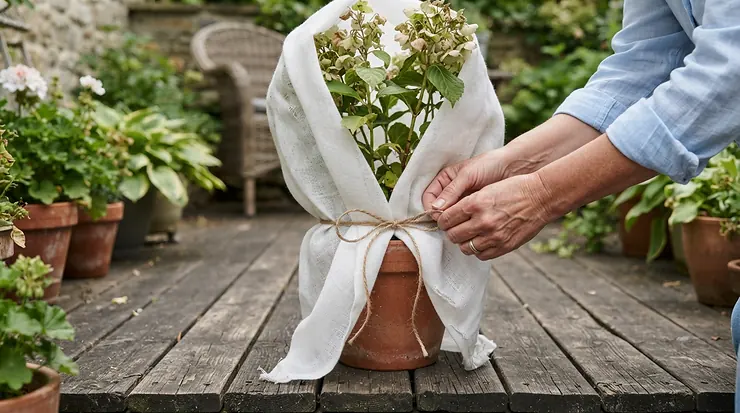
- Water first, in the morning. Damp soil holds heat better than dry, so water a day ahead and never on the evening of a frost.
- Cover in late afternoon. Fit the cover while the air still holds some warmth, so you trap it rather than the cold.
- Drape to the ground. Heat rises from the soil, so fleece that stops short of the ground leaks the warmth you’re trying to keep.
- Secure the base. Use the drawstring, pegs or stones so wind can’t lift the edge. A loose cover flaps, tears and lets in cold air.
- Support tall plants. Push a few canes around delicate stems so fabric doesn’t crush foliage. The RHS notes fleece is usually used without hoops, but soft new growth is an exception.
For maintenance, shake off leaves after each use and let fabric dry fully before folding, because damp fleece stored in a shed goes mouldy. Wash when needed and store dry.
The most common first-month mistakes are leaving covers on for days without ventilation, pegging fleece too tightly so it tears, and forgetting to remove it once the frost has passed. Build a routine and covers last several winters.
Overnight Frost Warnings: A Sundown Routine That Works
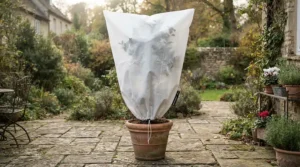
Overnight frost warnings are only useful if you act before dark. The trouble is that most of us glance at the forecast, think “I’ll do it later,” and wake to blackened leaves.
Start by understanding what the forecast number means. Which? explains that a ground frost can occur even when the forecast air temperature is up to 2°C, so a “+1°C” night isn’t necessarily safe for tender plants. An air frost, at 0°C or below, is the one that ruptures leaf cells and freezes soil.
A practical routine looks like this:
- Check the forecast at lunchtime. If it shows 2°C or below overnight, plan to cover.
- Do the covering in late afternoon. Jackets go on pots and specimens first, rolls on beds after.
- Keep spare covers by the door. The fastest response comes from having covers to hand, not buried in a shed.
- Remove mid-morning. Which? notes that thawing can damage flower buds as much as the freeze, so shade early-flowering shrubs such as camellias from early sun.
The problem this solves is the panic scramble. A tidy stack of ready covers by the back door means overnight frost warnings become a five-minute job.
Real-World Scenarios: Matching the Right Cover to Your Garden
Three quick profiles show how the choice plays out.
The patio potter. You have a dozen pots of herbs and small shrubs on a sheltered terrace, and about £15 to spend. Jordbrux 70gsm Plant Fleece Covers handle the small pots, while a BLOSTM Garden Fleece roll covers oddly shaped ones. Use them only on frost nights, so a few minutes’ effort on maybe 15-20 evenings a winter.
The tender-shrub guardian. You’ve got a big-leaved fatsia, a cordyline and a young olive in an exposed garden, and you’re happy to spend up to £50. MIXC Plant Fleece Covers go on the olive and the most exposed shrub, and Haxnicks Easy Fleece Jacket on the cordyline. Doubling up in the worst weeks costs nothing extra.
The allotment grower. You need early seedbeds protected across a large area. The OAHAO Garden Fleece roll and BLOSTM Garden Fleece give the coverage, weighted down with stones and cut to fit. Use them from March through to the last frost, which Which? says usually falls between mid-April and mid-May in central England.
What Is a Frost Protection Cover for Plants?
A frost protection cover for plants is a breathable layer, usually non-woven polypropylene horticultural fleece sold as a roll or a pre-sewn jacket, that traps a thin pocket of warmer air around foliage, stems or pots on cold nights. It doesn’t generate heat; it slows heat loss, typically buying a couple of degrees of protection.
The distinction matters because covers are often mistaken for a cure-all. They protect against light air frosts and ground frosts, but not a severe frost below -5°C, which the RHS defines separately. In those conditions, move pots into a shed or greenhouse.
Fleece is also different from polythene. The RHS notes its porosity makes it far less prone to overheating and wet conditions. Which?’s crop-cover test backs this up: the one cover that didn’t let rain through needed extra watering and offered poor frost protection.
How to Choose a Frost Protection Cover for Plants
Work through these six criteria in order and the right pick usually becomes obvious.
- Decide roll or jacket. Rolls give flexibility and cost less per metre. Jackets are quicker to fit and suit individual plant covers on specimens.
- Match fabric weight to your winters. BBC Gardeners’ World puts 30g fleece at around -3°C and 17g at just below freezing. Go heavier only if you’re in a cold, exposed spot.
- Check the size against the plant. The jacket should reach the soil or pot base with room to spare. Too tight crushes foliage.
- Look for closures. A zip or drawstring is worth a few pounds, especially in wind.
- Consider UV stabilisation. Cheap unstabilised fabric can degrade in a season, which undermines any saving.
- Plan for light. Thicker fleece blocks more light, so budget time to remove it on mild days.
If you only follow two rules, pick a weight that suits your local winters and a size that reaches the ground.
Individual Plant Covers vs Fleece Rolls: Which Wins?
Neither wins outright. The real question is whether you’re protecting a few valued plants or a whole bed.
| Factor | Individual plant covers | Fleece rolls |
|---|---|---|
| Speed of fitting | Very fast (seconds) | Slower (cut, drape, secure) |
| Cost per square metre | Higher | Lower |
| Wind resistance | Better with drawstring | Needs pegs or weights |
| Best for | Haxnicks Easy Fleece Jacket, MIXC Plant Fleece Covers | BLOSTM Garden Fleece, OAHAO Garden Fleece |
Individual plant covers win on convenience: a jacket on a cordyline takes seconds and stays put. Rolls win on economy and adaptability, since one roll can cover a bed, wrap a trunk and shield seedlings. For most gardens, the smart answer is a mix of two or three jackets for key specimens plus one roll for everything else.

Cheap Frost Protection Fleece: Where Savings Are Real (and Where They Aren’t)
Cheap frost protection fleece is a genuine bargain in the right place. A 30gsm roll such as BLOSTM Garden Fleece costs about £1 per metre and protects to roughly -3°C according to BBC Gardeners’ World. For beds, borders and general draping, that’s excellent value.
The false economy starts at the thin end. Very light fleece around 17gsm gives protection only to just below freezing, and in one editorial roundup a 17gsm 4m-wide fleece was marked down for flimsiness, tearing and awkward sizing. Fabric that shreds in one windy night is dearer than fabric that lasts three winters.
Three checks before buying cheap:
- Look for a stated gsm. No figure usually means a thin fabric.
- Prefer UV-stabilised. It’s worth a small premium.
- Check the width and length. A “4m wide” fleece sold in awkward folded sections is a nuisance to use.
If a low price also brings a clear weight, decent width and sensible reviews, it’s a good buy. If it brings vague specs, walk on.
Tender Plant Care: What Actually Deserves a Cover
Good tender plant care starts with knowing which plants really need cover. Not everything does, and over-wrapping can cause rot.
The plants that benefit most are the “big exotics” and Mediterranean species. Tropical-looking plants such as cordylines, palms, tree ferns and bananas are at increased risk, as are figs and citrus trees. The RHS also lists Pittosporum tobira and Cestrum as shrubs that may need wrapping, and borderline hardy plants such as Callistemon in cold or exposed spots.
For borderline plants, use the strongest cover you can and wrap the pot too, since frozen roots are a major cause of plant death. Container plants can also be clustered together against a sheltered wall.
Flower buds are the other vulnerable group. Late frosts can wreck fruit and flower displays, so cover early-blooming shrubs and fruit blossom on cold nights.
When spring returns, don’t whip covers off in one go. The RHS’s guidance on wrapping tender plants recommends removing wrappings in stages or on a dull day, so plants can acclimatise.
Common Mistakes When Buying a Frost Protection Cover for Plants
Most disappointment comes from a handful of avoidable errors.
Buying too thin. A cover marketed as “frost protection” but with no stated weight may be very light. Check gsm.
Buying too small. A jacket that doesn’t reach the ground leaves the plant’s base exposed, and too-tight covers crush growth.
Ignoring closures. A cover that blows off at 2am is no protection at all. Drawstrings, zips, pegs and weights are not optional extras.
Leaving covers on too long. Fleece traps moisture, so remove it during mild spells to avoid rot. It’s a shield for the coldest nights, not a permanent coat.
Expecting miracles. Fleece buys a couple of degrees, not a tropical climate. In a severe frost, move plants under cover.
Skipping storage. Damp fleece folded into a shed is mouldy fleece by spring. Dry it fully first.
Avoid these and even a modest cover performs well. Make two or three and you’ll wonder why your plants look sickly.
Long-Term Cost & Maintenance: What You’ll Really Spend
Fleece is cheap, but the sums are worth doing. The cost of a cover is small next to the cost of losing a mature tender plant, and covers reuse well if cared for.
| Price band | Example products | What it gets you | Value verdict |
|---|---|---|---|
| Under £10 | Jordbrux 70gsm Plant Fleece Covers | Small heavy individual covers | Best for a few pots |
| £10-£12 | BLOSTM Garden Fleece | 10m of 30gsm fleece | Best value per metre |
| £13-£20 | DazSpirit 120x180cm Plant Fleece, OAHAO Garden Fleece, Thboxes Plant Fleece Frost Protection | Jackets or a mid-weight roll | Best all-round mix |
| £15-£25+ | Haxnicks Easy Fleece Jacket, MIXC Plant Fleece Covers | Twin-pack jackets, heavier fabric | Best for valuable specimens |
The table shows value isn’t just about the lowest price. A £12 roll can serve you for years if UV-stabilised and stored well, while a cheap unstabilised cover might not survive one season. Spread over three winters, even a mid-£20s twin pack such as MIXC works out to pennies per frost night.
For maintenance, dry covers fully, fold rather than stuff, and repair small tears early. A small tear in a roll becomes a large one on the first windy night.

FAQ
❓ How much does a frost protection cover for plants cost in the UK?
❓ Can I leave a frost protection cover for plants on all winter?
❓ Is cheap frost protection fleece good enough for tender plants?
❓ Do individual plant covers work on potted plants?
❓ At what temperature should I use a frost protection cover for plants?
Conclusion
The best frost protection cover for plants is the one that suits your plants, your winters and your patience. For most UK gardeners that means a small, sensible mix: a 30gsm roll like BLOSTM Garden Fleece for beds, plus a couple of jackets for the plants you’d hate to lose.
If you’re watching pennies, DazSpirit 120x180cm Plant Fleece and Jordbrux 70gsm Plant Fleece Covers cover the essentials. For mid-range flexibility, OAHAO Garden Fleece and Thboxes Plant Fleece Frost Protection are sensible all-rounders. For your most valuable tender plants, Haxnicks Easy Fleece Jacket and MIXC Plant Fleece Covers offer the sturdiest protection here.
Whichever you choose, the routine matters as much as the fabric: water in the morning, cover in the late afternoon, secure the base and remove the cover once the frost has lifted. Act on overnight frost warnings before dark and your tender plants have a fighting chance. Use the checklist in this guide and you’ll get through the winter with your favourites intact.
✨ Don’t Wait for the First Frost to Find Out You’re Unprepared!
🔍 Choose your frost protection cover for plants today, click any highlighted product name to check current pricing and availability, and get your garden ready before the temperature drops.
Recommended for You
- Shade Netting for Greenhouse: 7 Best Picks to Beat Scorch (2026)
- Best Horticultural Fleece: 7 Top Rated Picks for UK Gardens (2026)
- Greenhouse Fan vs Vent Opener: 7 Top Picks to Beat Heat (2026)
Disclaimer: This article contains affiliate links. As an Amazon Associate, I earn from qualifying purchases. If you purchase products through these links, we may earn a small commission at no additional cost to you.
✨ Found this helpful? Share it with your friends! 💬🤗
