In This Article
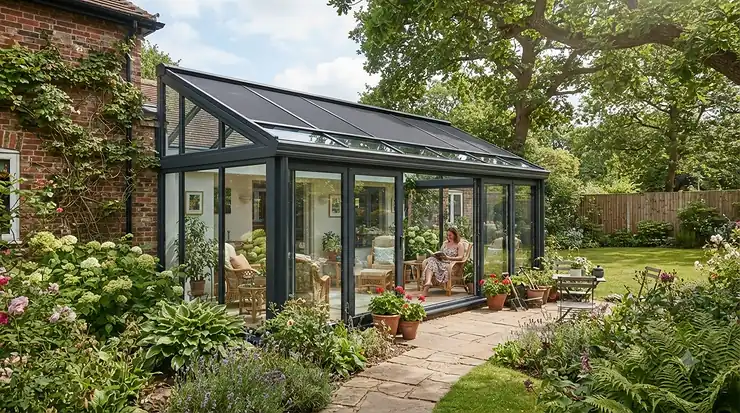
There’s a particular kind of heartbreak that only greenhouse owners understand: you nip out on a blistering July afternoon to find your tomato leaves have gone crisp and papery at the edges, curling in on themselves like they’re trying to hide from the sun. That’s scorch, and it’s almost always preventable. Shade netting for greenhouse use is a mesh fabric, usually woven or knitted from UV-stabilised polyethylene, that’s draped or clipped over glazing to cut the amount of direct sunlight reaching your plants — typically blocking anywhere from 30% to 95% of it, depending on the density you choose.
British summers have got noticeably spicier in recent years. UK Health Security Agency heat alerts, once rare, are now an almost annual fixture, and a closed glasshouse on a 30°C day can easily hit 45-50°C inside — well past the point where plant tissue starts to cook. The Royal Horticultural Society is blunt about this: greenhouses need active shading and ventilation from spring through to autumn or plants simply won’t cope, as the RHS explains in its greenhouse shading guidance. This guide walks through seven genuinely available shade netting for greenhouse products on Amazon UK, how to pick between them, and how shade percentage, ventilation and fleece all fit into the bigger picture. Prices below are indicative ranges only — always check current pricing before buying, as garden product prices shift with material costs and season.
Quick Comparison Table
Before the deep dive, here’s how the seven options stack up at a glance. All prices are approximate ranges at the time of research and will vary by size selected.
| Product | Shade % | Material Weight | Best For |
|---|---|---|---|
| Harrod Superior Windbreak and Greenhouse Shade Netting | 50% | Heavy-duty HDPE | Long-term, UK-made durability |
| Elixir Gardens 40% UV Greenhouse Sun Shade Netting | 40% (up to 95% in range) | 60-110gsm | Custom-cut budget flexibility |
| Yuzet Windbreak Shade Netting | ~40-50% | 110gsm | All-round wind and sun combo |
| Greena Greenhouse Shading | 55% | 85gsm | Purpose-cut small greenhouses |
| BeGrit Greenhouse Shading Net with Grommets | 50% | Lightweight HDPE | Fast DIY grommet fitting |
| VOUNOT Privacy Netting | 75% | HDPE, tear-resistant | Hot spots and south-facing glass |
| Woodside Garden Fencing Windbreak Mesh Shade Netting | ~40% | Standard mesh | Tight-budget growhouses |
Looking at the spread above, there’s a genuine trade-off between shade percentage and light transmission that trips a lot of first-time buyers up. A 40% net like the Elixir Gardens or Woodside Garden Fencing option suits most UK vegetable crops, which still want plenty of light even in a heatwave, whereas the 75% VOUNOT net is really a specialist tool for south-facing glass or propagation areas where seedlings would otherwise fry. If you’re growing a mix of sun-lovers and shade-tolerant crops in the same structure, it’s often smarter to buy two lighter nets and double them up over the hottest section than to buy one very dense net for the whole roof.
💬 Found a net that fits your setup already? A quick click through to check today’s price helps keep guides like this one going — thank you!
Top 7 Shade Netting for Greenhouse Options: Expert Analysis
Before comparing brands head-to-head, it’s worth knowing what actually separates a decent shade netting for greenhouse purchase from a disappointing one. The three things that matter most are shade percentage (how much light it blocks), material construction (knitted HDPE resists tearing far better than cheap woven polypropylene), and whether the edges have proper eyelets or grommets rather than just a hemmed seam that frays after one windy week. With that in mind, here are seven real, currently listed products worth considering, spanning budget offcuts right through to purpose-built UK horticultural netting.
1. Harrod Superior Windbreak and Greenhouse Shade Netting — best for long-term UK-made durability
Designed and manufactured in Britain rather than imported and rebadged, this net pulls double duty as a windbreak in winter and a shade layer in summer. That dual-purpose design is the standout feature — you’re not buying a product that sits in the shed for nine months of the year.
The 50% shade rating sits in the sweet spot for most UK greenhouses growing a typical mix of tomatoes, cucumbers and bedding plants, cutting enough heat to prevent scorch without starving crops of light on our frequently overcast days. Stitched eyelets run the full length of the seam, which in practice means you can peg it to a greenhouse frame with cable ties or clips without the fabric tearing at the tie point within a season — a common failure mode with budget nets.
Based on the spec comparison against cheaper imported alternatives, the tighter HDPE weave here is noticeably harder to snag or ladder when you’re wrestling it over guttering on a windy afternoon. Aggregated customer feedback on Harrod’s own site and third-party retailers consistently highlights the netting’s toughness in exposed, wind-prone gardens, with buyers less likely to report the seam-splitting issues that turn up in reviews of unbranded scaffold-style netting.
Pros:
- ✅ UK-manufactured with reinforced eyelet seams throughout
- ✅ Doubles as winter windbreak, extending its useful season
- ✅ Genuinely tear-resistant HDPE construction
Cons:
- ❌ Premium pricing compared with generic imported nets
- ❌ 50% shade may be too dense for shade-loving houseplants in low-light regions
Prices sit in the mid-range bracket for horticultural netting, roughly in the £15-£45 range depending on the size selected — check current pricing, as this varies significantly by dimension. Given how many seasons it’s built to survive, the value verdict leans firmly in its favour for anyone tired of replacing flimsy netting every year.
2. Elixir Gardens 40% UV Greenhouse Sun Shade Netting — best for custom-cut budget flexibility
What stands out immediately with this one is the sheer range of sizes: widths from 1m to 3m and lengths from 1m right up to 50m, bespoke cut from bulk rolls to your exact greenhouse dimensions. That flexibility is genuinely useful if your greenhouse is an awkward or unusual shape, since you’re not stuck rounding up to the nearest pre-packaged size and wasting fabric.
At 60gsm for the 40% shade version, it’s a lighter fabric than the Harrod or Yuzet options, which trades off some raw durability for a lower cost per square metre — a reasonable compromise if you’re shading a modest 6x8ft greenhouse rather than a full allotment polytunnel. The stitched eyelets along the hem are a consistent design feature across the Elixir Gardens range, and reviewers commonly note straightforward installation using standard cable ties, which the seller also supplies at a rate of roughly two per metre.
What most buyers overlook when comparing shade percentages is that Elixir Gardens also stocks 85% and 95% versions under the same product family, so if 40% isn’t dense enough for a south-facing lean-to, you can step up density without switching brands entirely.
Pros:
- ✅ Cut-to-size in multiple widths and lengths
- ✅ Available across 40%, 85% and 95% shade densities
- ✅ Reinforced stitched eyelets included as standard
Cons:
- ❌ Lighter 60gsm fabric feels less robust than heavier nets
- ❌ Colour can vary slightly batch to batch, per the seller’s own listing
As a small-business Amazon listing, pricing typically runs from around £10 for the smallest cuts up to £50-plus for the largest rolls — always check the size-specific price before ordering. For anyone with a non-standard greenhouse footprint, the customisation alone often justifies the modest premium over fixed-size competitors.
3. Yuzet Windbreak Shade Netting — best all-round wind and sun combination
Yuzet’s knitted mesh is the option that keeps coming up in gardening forums as the reliable, no-fuss default, and the spec sheet backs that reputation up. At 110gsm, it’s a genuinely heavy-duty fabric — noticeably thicker than the entry-level 60gsm nets on this list — built from UV-stabilised HDPE monofilament that’s explicitly rated to reduce wind by up to 50% while offering sun protection suited to warmer climates.
In practice that means it holds its shape and resists billowing in gusty conditions far better than lighter debris-style netting, which matters if your greenhouse sits somewhere exposed. This is one of the few products in this category with a substantial, verifiable review base: Amazon listings for the range show a 4.6 out of 5 average across more than 300 customer reviews, which is a solid enough sample size to trust as a genuine signal rather than a handful of cherry-picked ratings.
Reviewers most frequently mention the netting’s dual role — plenty of buyers report using it for winter windbreak duty around allotments before repurposing it as summer shade, which stretches the value across two seasons rather than one. Based on the gsm comparison against the lighter nets here, this is the pick if your greenhouse or polytunnel sits somewhere that catches the wind badly, since flapping fabric wears out eyelets faster than sun exposure ever does.
Pros:
- ✅ Strong 4.6-star aggregate rating across 300+ reviews
- ✅ Heavyweight 110gsm HDPE resists wind damage
- ✅ Genuinely dual-purpose across winter and summer
Cons:
- ❌ Heavier fabric is bulkier to store off-season
- ❌ Some size variants show as intermittently out of stock
Expect a price somewhere in the £10-£40 range depending on the roll length chosen, with longer rolls offering a lower cost per metre — worth checking current availability across sizes before committing to a specific one.
4. Greena Greenhouse Shading — best purpose-cut option for small greenhouses
Where several nets on this list are general-purpose garden netting that happens to work for greenhouses, this one is built and sized specifically for the job. Its standout feature is the 55% shade rating at 85gsm, sold in a compact 1.2m x 2.5m format that maps neatly onto the glazing panel dimensions of a typical 6x8ft or 8x6ft hobby greenhouse without excessive trimming.
The 55% density sits just above the RHS’s commonly cited target range, giving a bit of extra margin for particularly hot, south-facing structures or for gardeners in the warmer parts of southern England where a straight 40% net sometimes isn’t quite enough. Because it’s pre-sized rather than sold by the roll, there’s less measuring and cutting involved — genuinely useful if DIY fabric-cutting isn’t your idea of a relaxing Saturday.
The durable fabric construction is aimed squarely at temperature control rather than windbreak duty, so it’s worth pairing with a separate windbreak product if your plot is genuinely exposed, but for straightforward heat and UV management on a small structure it does the one job well.
Pros:
- ✅ Pre-sized specifically for small greenhouse glazing
- ✅ 55% shade suits hotter, south-facing structures
- ✅ Minimal cutting or customisation required
Cons:
- ❌ Fixed size limits use on larger or irregular greenhouses
- ❌ Not designed with heavy windbreak performance in mind
Pricing for this compact format tends to sit in a lower bracket than full rolls, generally under £25 — but do check the current listing, as fixed-size garden products can fluctuate more than bulk rolls. For a small backyard greenhouse, the fit-for-purpose sizing genuinely saves faff.
5. BeGrit Greenhouse Shading Net with Grommets — best for fast DIY grommet fitting
The clue is in the name here: grommets, not just stitched eyelets, run along the edges, which makes a tangible difference to how quickly you can get this net up and secured. Grommets are reinforced metal or plastic rings punched through the fabric, and they distribute tension far better than a simple hemmed seam when you’re threading bungee cord or hooks through repeatedly over a season.
At a 50% shading rate, it lands in the same useful middle ground as the Harrod option, suitable for most fruiting vegetables without excessive light loss. The 1.8m x 2m size is aimed at pergolas and smaller greenhouse sections as much as full glasshouse roofs, so it’s a sensible pick if you only need to shade one problem panel — say, the south-facing end of a lean-to — rather than an entire structure.
Sunblock performance and UV resistance are the headline claims, and the construction follows the now-familiar UV-stabilised HDPE formula seen across this category, which on paper means reasonably predictable longevity if it’s stored indoors over winter rather than left to weather year-round.
Pros:
- ✅ Proper metal-reinforced grommets, not just eyelets
- ✅ 50% shading rate suits most fruiting vegetables
- ✅ Compact size ideal for shading single problem panels
Cons:
- ❌ Smaller fixed dimensions limit whole-greenhouse coverage
- ❌ Grommet spacing can feel wide on smaller frames
Typical pricing sits in a budget-to-mid bracket, often under £20 for the standard size — confirm the current price, as smaller garden accessories like this can see frequent listing changes. For anyone shading a single hot spot rather than a whole structure, it’s a tidy, fast-fitting solution.
6. VOUNOT Privacy Netting — best for hot spots and south-facing glass
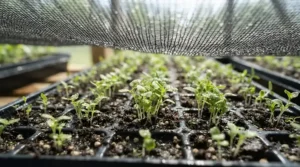
This is the densest option on the list, and it’s worth being upfront that “privacy netting” in the name doesn’t mean it’s the wrong tool for greenhouse shading — a 75% shading rate is genuinely useful for the specific problem of intensely hot, south-facing glazing or a propagation bench that keeps cooking seedlings before they’ve hardened off.
The standout feature is that high shade density combined with a tear-resistant HDPE build, which matters because denser knits under more tension can be more prone to laddering if the material itself is weak. Here, reinforced construction and cable ties included in the box mean you’re not scrambling for separate fixings on installation day.
What the spec sheet won’t tell you, but the practical use case makes clear, is that 75% is too dense for most general greenhouse crops if applied across the whole roof — tomatoes and peppers will sulk under that much shade. The better application is targeted: over a seedling table, a west-facing wall panel that catches brutal afternoon sun, or a cold frame during a heatwave, rather than blanket coverage of an entire structure.
Pros:
- ✅ High 75% shading rate for genuinely intense sun exposure
- ✅ Tear-resistant HDPE with cable ties included
- ✅ Effective for targeted hot-spot shading
Cons:
- ❌ Too dense for whole-greenhouse use on most edible crops
- ❌ Reduced airflow at this density needs active ventilation to compensate
Expect a price in the low-to-mid range for the 1.8m x 10m size, generally comparable to the mid-tier options on this list — check current pricing for the specific dimensions you need. Used correctly as a targeted hot-spot solution rather than full coverage, it earns its place.
7. Woodside Garden Fencing Windbreak Mesh Shade Netting — best for tight-budget growhouses
Rounding out the list is the most accessible entry point for anyone shading a small growhouse or cold frame on a tight budget. Its standout feature is straightforward: UV sun protection at a genuinely low price point, aimed at growhouse and plant cover use rather than full-scale commercial greenhouses.
At roughly 40% shade, it sits at the lighter end of the spectrum, which suits most seedlings and general bedding plants without excessive light restriction — a sensible default if you’re not sure how much shade your particular crops need yet and don’t want to overcommit on a first purchase. The 2m x 5m size covers a modest growhouse or the roof section of a small polytunnel without needing to be trimmed down significantly.
Because it’s positioned as a budget windbreak-and-shade hybrid rather than a specialist horticultural product, expect a simpler construction than the heavier Yuzet or Harrod nets — genuinely fine for light garden use, but worth upgrading from if you’re in a consistently windy spot where fabric fatigue becomes an issue after a season or two.
Pros:
- ✅ Genuinely budget-friendly entry point
- ✅ 40% shade suits general bedding plants and seedlings
- ✅ Sized appropriately for small growhouses
Cons:
- ❌ Lighter build than premium alternatives on this list
- ❌ Less proven track record for long-term wind exposure
Pricing generally sits at the lower end of the market, often under £15 for the standard size — confirm current stock and price before ordering. For a first-time buyer testing whether shading actually helps their setup, it’s a low-risk way to find out.
✨ Don’t Miss These Exclusive Deals!
🔍 Take your greenhouse shading setup to the next level with these carefully selected products.Click on any highlighted item to check current pricing and availability. These picks will help you protect a genuinely productive, scorch-free growing space this summer!
Practical Usage Guide: Fitting and Maintaining Shade Netting
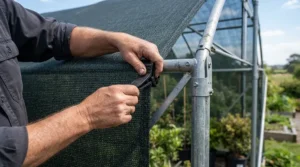
Getting a shade net physically installed well is where most of the real-world performance difference between a good and a mediocre result actually happens — even excellent fabric performs badly if it’s fitted wrong. Start by measuring your greenhouse roof and the sunniest wall sections separately, since many gardeners under-buy by assuming roof coverage alone is enough; a low midsummer sun angle in the UK means south and west walls often need almost as much shading as the roof itself. Fit netting outside the glazing rather than inside wherever your frame allows it — external shading intercepts heat before it ever reaches the glass, which is measurably more effective than an internal layer trying to block heat that’s already built up inside. Use proper clips, cable ties through grommets, or spring-loaded hooks rather than tape or string, which degrade in UV light far faster than the netting itself does. A common mistake in the first month is fitting the net too taut: leave a little slack so wind can pass through rather than turning the whole panel into a sail that strains every fixing point. For maintenance, a light rinse with a hose two or three times a season keeps algae and dust from reducing light transmission unpredictably, and taking the net down for winter storage — dry, loosely folded, out of direct sun — will meaningfully extend its working life versus leaving it up year-round.
Real-World Scenarios: Matching Shade Netting to Your Growing Setup
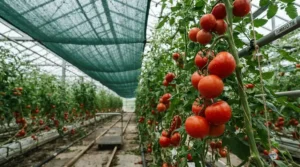
If you’re a first-year allotment holder with a single 6x8ft greenhouse growing tomatoes and chillies on a modest budget, a 40% net like the Woodside Garden Fencing or Elixir Gardens option covering just the roof and south wall is genuinely sufficient — you’ll get meaningful heat reduction without overspending on a structure you’re still learning to manage. If you’re growing in a large polytunnel on an exposed, windy plot where fabric fatigue is a real risk, prioritise gsm and wind resistance over shade percentage; the Yuzet or Harrod options, both built with wind performance explicitly in mind, will outlast lighter nets by several seasons even if the shade rating is similar on paper. And if you’re propagating seedlings on a south-facing windowsill greenhouse or cold frame that regularly cooks young plants by midday, a small, dense patch of something like the VOUNOT 75% net over just that section — rather than the whole structure — solves the specific problem without starving your main crops of light. The common thread across all three profiles is matching shade density and durability to your actual exposure and budget, not simply buying the most expensive net available.
How to Choose Shade Netting for Greenhouse
Picking the right net comes down to working through a handful of practical questions in order, rather than guessing at a shade percentage and hoping for the best.
- Work out your greenhouse’s aspect first. A south-facing structure in southern England needs more shade than a north-facing one in Scotland — aspect matters more than most buyers initially assume.
- Match shade percentage to your crops. Most fruiting vegetables want 30-50%; propagation areas and shade-tolerant plants can handle 60% or more.
- Check the fabric weight (gsm), not just the shade rating. Heavier gsm generally means better durability against wind and repeated fitting.
- Confirm eyelet or grommet spacing. Wider gaps put more strain on each fixing point in gusty weather.
- Decide between internal and external fitting. External shading is more thermally effective, per RHS guidance, but needs a frame that allows outdoor clipping.
- Factor in storage. A net you can realistically take down and store each winter will outlast one left permanently exposed.
- Buy slightly oversized rather than exact-fit. A few extra centimetres of margin makes fixing far less fiddly than a net cut precisely to size.
Best Shade Net for Polytunnel: What’s Different From Greenhouse Netting
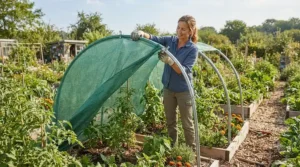
Choosing the best shade net for polytunnel use isn’t quite the same exercise as shading a rigid glasshouse, mainly because of how the covering material and structure behave. Polythene polytunnel covers already diffuse light more than glass does, which means growers can often get away with a slightly lower shade percentage — commonly 30-40% rather than the 50%+ some glasshouse growers use — before crops start to suffer from reduced light. Fixing method matters more here too: polytunnel hoops don’t offer the same rigid clipping points as an aluminium greenhouse frame, so nets with generous eyelet spacing and the option to tie directly around the tunnel’s base rail or door frame tend to work better than grommet-heavy designs built for glazing bars. Wider rolls genuinely pay off on a polytunnel, since you’re typically draping over a continuous curved surface rather than fitting discrete rectangular panels — this is where the Elixir Gardens custom-cut option and Yuzet‘s wider roll widths have a practical edge over pre-sized greenhouse-specific products like the Greena option. One frequently overlooked detail: polytunnel doors need clear access even with shading fitted, so leave netting loose enough at entry points to unzip or roll back without tearing the fabric at the seam.
Horticultural fleece vs shade netting: Which Do You Actually Need?
These two products get confused constantly, and the honest answer is that they solve almost opposite problems. Horticultural fleece is a thin, non-woven polypropylene material primarily used for frost and cold protection — the RHS notes that fleece and crop covers are laid over plants to hasten growth and protect against weather and pests, with heavier grades offering meaningful frost protection, as detailed in the RHS’s fleece and crop covers guide. Shade netting does the reverse job: it exists specifically to block excess sun and heat during the growing season, not to trap warmth. Fleece is typically rated by weight in grams per square metre and offers only a couple of degrees of frost protection, while shade netting is rated by the percentage of light it blocks, commonly 30-95%. The genuinely useful takeaway is that most serious growers need both products across the year rather than choosing one over the other — fleece in early spring and late autumn to extend the growing season and guard against late frosts, then shade netting swapped in through the height of summer once scorch, not cold, becomes the pressing risk. Trying to make one product do both jobs, such as using thick fleece as makeshift summer shading, tends to disappoint: fleece blocks relatively little direct sun compared with a purpose-built shade net, and it doesn’t handle repeated wetting and drying from summer showers nearly as well.
Shade Percentage Ratings Explained
Shade percentage ratings tell you what proportion of incoming sunlight a net physically blocks, and getting this number right is arguably the single most consequential decision in the entire buying process. A 30% net is barely noticeable in terms of light reduction and suits only the mildest UK summers or naturally shade-tolerant plants like many salad leaves. The 40-50% range, covered by products like the Elixir Gardens, Harrod and BeGrit nets on this list, is the genuine workhorse zone for tomatoes, cucumbers, peppers and most bedding plants — enough reduction to prevent leaf scorch on a hot day without meaningfully limiting fruit set or growth rate. Above 60%, you’re moving into specialist territory: shade-loving houseplants, orchids, or very targeted use over propagation trays, which is where a denser option like the VOUNOT 75% net earns its place. It’s worth being honest here that manufacturer shade percentages are laboratory figures measured under controlled conditions, and real-world light reduction can vary by a few percentage points depending on how taut the net is fitted and how clean it’s kept — a dusty, algae-covered net can block noticeably more light than its rated percentage suggests, which is one more reason regular rinsing matters more than most buying guides mention.
Scorch protection: Recognising and Preventing Heat Damage
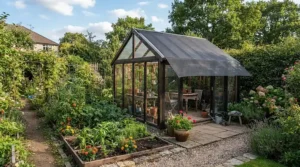
Scorch shows up as crisp, papery brown or white patches on leaves, usually starting at the tips or edges where water loss outpaces the plant’s ability to replace it through the roots — the RHS frames this as leaf temperature rising past the point where tissue damage occurs, which their guidance identifies as one of the clearest warning signs that shading and ventilation are overdue. The physiological mechanism is straightforward: plants cool themselves by transpiring water through their leaves, and if a greenhouse gets hot and humid enough that transpiration can’t keep pace, or if the roots are dry and can’t supply enough water in the first place, tissue damage follows quickly on a bright day. Prevention genuinely comes down to layering three things together rather than relying on shading alone: adequate ventilation to keep air moving, consistent watering so plants aren’t drought-stressed going into a hot spell, and shade netting rated appropriately for your specific aspect and crops. The most common mistake gardeners make is fitting shade netting and then assuming the problem is solved, when in fact a sealed, unventilated greenhouse with shading can still overheat dangerously — shading reduces the sun’s direct input, but it doesn’t replace the cooling effect of airflow. UK summers have also become measurably hotter and more variable in recent years, with the Met Office reporting an increasing frequency of periods where UV levels and temperatures both spike sharply, as the Met Office’s own weather updates regularly note — a trend that makes proactive shading less of an occasional nicety and more of a standard part of the UK growing calendar.
Polytunnel ventilation and Shade Netting Together
Shading and ventilation are a team, not alternatives, and getting the balance wrong is one of the most common and most avoidable mistakes in hot-weather growing. A polytunnel with excellent shade netting but doors and vents kept shut can still cook plants, because still, humid air traps heat close to the leaf surface even when direct sun exposure is reduced. The RHS’s general advice for greenhouses — opening all doors and vents on sunny days, and only then adding shading as a second layer of protection — applies just as directly to polytunnels, where end doors and any roll-up sides should be the first thing checked on a warm morning, well before reaching for the shade net. Practically, this means fitting shade netting that doesn’t block your ventilation points: leave door zips and roll-up vents completely clear of fabric, even if it means the net covers slightly less roof area than the absolute maximum possible. On genuinely still, airless days, a small fan can meaningfully improve on passive ventilation alone, moving warm air out through vents faster than it would escape on its own. The combination that consistently works best for UK polytunnel growers is moderate shading — that 30-40% range discussed earlier — paired with maximum available ventilation, rather than very dense shading used as a substitute for opening things up.
Common Mistakes When Buying Shade Netting for Greenhouse
The single most frequent error is buying shade percentage based on guesswork rather than aspect and crop type — a blanket 50% net thrown over everything regardless of orientation often leaves shade-loving corners under-protected while starving sunnier crops of light they actually need. A close second is underestimating fabric weight: a suspiciously cheap net at 40gsm might look like a bargain until it shreds after one autumn storm, at which point the “cheaper” option has cost more once you’ve bought a replacement. Buyers also commonly skip checking eyelet or grommet spacing before ordering, then discover on installation day that the fixing points don’t line up conveniently with their frame’s clip positions, leading to sagging, uneven coverage. Another overlooked detail is colour — green and black nets perform slightly differently, with black typically offering marginally higher UV block per given shade percentage but running a touch hotter to the touch in direct sun, which matters if you’re securing it by hand on a scorching afternoon. Finally, many first-time buyers forget to measure wall sections alongside the roof, assuming roof-only shading is sufficient, when a low summer sun angle can mean west-facing glazing receives nearly as much direct heat as the roof itself during peak afternoon hours.
Long-Term Cost & Maintenance: Is Cheap Netting a False Economy?
Running the numbers on total cost of ownership tells a fairly consistent story across this category: a heavier, better-constructed net costing roughly double the price of a budget option typically lasts three to four times as long with proper storage, which makes the premium products the better value on a strict cost-per-season basis, even though the upfront price looks less appealing. A lightweight 40-60gsm net left up year-round in an exposed UK garden commonly shows visible fading, brittleness and eyelet tearing within two seasons, while a heavier 100gsm-plus HDPE net stored correctly over winter can reasonably be expected to perform well for five seasons or more. Maintenance costs are modest either way — an occasional hose-down and a dry storage spot — but the labour cost of re-fitting a replacement net every year or two adds up in a way that’s easy to underestimate when comparing sticker prices alone. The practical rule of thumb: if you’re shading a permanent structure you intend to keep for years, lean toward the heavier, better-reviewed options like the Harrod or Yuzet nets on this list; if you’re testing whether shading suits your setup at all, a cheaper option like the Woodside Garden Fencing net is a sensible, low-risk way to find out before committing further.
Frequently Asked Questions
❓ What percentage shade netting is best for a greenhouse in the UK?
❓ Should shade netting go inside or outside the greenhouse?
❓ Can I use horticultural fleece instead of shade netting in summer?
❓ When should I put shade netting on my greenhouse?
❓ Does shade netting stop greenhouses overheating completely?
Conclusion
Choosing shade netting for greenhouse use ultimately comes down to matching three things honestly to your own setup: how much direct sun your structure actually gets, how exposed it is to wind, and how long you want the net to last before replacing it. For most UK growers, something in the 40-50% range — options like the Harrod Superior Windbreak and Greenhouse Shade Netting or the Elixir Gardens 40% UV Greenhouse Sun Shade Netting — will cover the bulk of a typical growing season without excessive light loss. Windier plots benefit from the heavier build of the Yuzet Windbreak Shade Netting, while anyone dealing with a genuinely brutal hot spot should look at something denser like the VOUNOT Privacy Netting used specifically over that problem area rather than the whole structure. Whatever you land on, remember that shading works best as part of a system — paired with proper ventilation, sensible watering and, come autumn, a switch back to horticultural fleece for frost protection rather than sun protection. Get that combination right, and scorched, crispy leaf edges become a problem you read about rather than one you deal with every July.
✨ Ready to stop your greenhouse crops scorching this summer? 🌱 Check today’s prices on the picks above and get your shading sorted before the next heatwave hits!
Recommended for You
- Best Horticultural Fleece: 7 Top Rated Picks for UK Gardens (2026)
- Greenhouse Fan vs Vent Opener: 7 Top Picks to Beat Heat (2026)
- Solar Powered Greenhouse Fan: 7 Best Picks for UK Growers (2026)
Disclaimer: This article contains affiliate links. As an Amazon Associate, I earn from qualifying purchases. If you purchase products through these links, we may earn a small commission at no additional cost to you.
✨ Found this helpful? Share it with your friends! 💬🤗
