
In This Article
Here’s a scene most UK gardeners know too well: it’s half nine on a Tuesday morning, you’re stuck in a meeting or the school run, and back home your greenhouse is quietly turning into a pizza oven. By lunchtime it could be pushing 40°C behind that glass, and your tomatoes won’t thank you for it. A solar powered greenhouse fan solves this particular headache without an extension cable in sight — it pulls hot, stagnant air out and drags cooler air in, powered entirely by whatever sun happens to be knocking about that day, which in Britain is never guaranteed but is usually enough.

What is a solar powered greenhouse fan? In short, it’s a small photovoltaic panel wired to a brushless motor and fan blade, mounted so it exhausts hot air from a greenhouse, polytunnel or shed without mains electricity, batteries (in most budget models), or ongoing running costs. It’s a neat bit of kit for anyone growing away from a power socket, whether that’s a garden greenhouse thirty feet from the house or an allotment plot with nothing but a water butt and good intentions.
This guide walks through seven genuinely available solar powered greenhouse fan and autovent options, pulled from real UK retailers and manufacturers, spanning wax-piston autovents through to battery-backed photovoltaic units. We’ll dig into specs, aggregated review sentiment, wattage requirements, and where each one actually earns its keep — plus dedicated sections on polytunnel vent openers, off-grid ventilation strategies, and running one of these on an allotment site without power. According to the Royal Horticultural Society, unventilated greenhouses can become lethal to plants surprisingly quickly in UK summers, so this isn’t just a nice-to-have. Let’s get into it.
Quick Comparison Table
Before the deep dive, here’s a snapshot of all seven products so you can jump straight to whichever fits your set-up.
| Product | Type | Power Source | Best For |
|---|---|---|---|
| Bayliss MK7 Autovent | Non-electric autovent | Ambient heat (wax piston) | Compact and Alton-style greenhouses |
| Bayliss XL Autovent | Non-electric autovent | Ambient heat (wax piston) | Universal aluminium greenhouses |
| VEVOR JRD-03 Solar Powered Fan | Photovoltaic fan | 25W panel | Budget single-fan cooling |
| Abitmax 30W Dual Fan Solar Kit | Photovoltaic fan (twin) | 30W panel | Cross-ventilation setups |
| SNQ 100W Solar Fan Kit | Photovoltaic fan | 100W panel | Larger polytunnels |
| ecoCalm Solar Exhaust Fan | Photovoltaic fan + battery | 2 x 25W bifacial | Round-the-clock ventilation |
| VEVOR 40W Solar Attic Fan | Photovoltaic fan | 40W panel | Large greenhouses and allotment blocks |
Looking at the spread here, the two Bayliss autovents sit apart from the rest because they’re not photovoltaic at all — they use a wax cylinder that expands with ambient heat, so there’s genuinely zero wiring involved. The photovoltaic fans, from the VEVOR JRD-03 up to the VEVOR 40W Solar Attic Fan, scale roughly with panel wattage: more watts generally means more CFM (cubic feet per minute) of airflow, though build quality and motor efficiency matter just as much as the number on the box. If your priority is simplicity over raw airflow, the autovents win; if you’re cooling a genuinely hot, humid structure, you’ll want the fans.
💬 Just one click — help others make better buying decisions too!
Top 7 Solar Powered Greenhouse Fan Picks: Expert Analysis
1. Bayliss MK7 Autovent — best budget non-electric option for compact greenhouses
The standout thing about the Bayliss MK7 Autovent is that it doesn’t use a photovoltaic panel at all — it relies on a heat-sensitive wax cylinder, which is arguably more reliable than any solar fan on a grey British July. As the wax inside the cylinder warms, it expands and pushes a piston that gradually lifts the vent, then reverses the process as things cool down in the evening. Manufacturer guidance recommends the MK7 specifically for Alton-style greenhouse structures, where its slightly smaller footprint suits the frame better than the larger XL model.
Based on the spec comparison with its bigger sibling, the MK7 is best suited to smaller vents and lighter frames rather than heavy timber-framed windows — buyers with a compact 6x4ft or 6x6ft greenhouse are the obvious audience here. Reviewers consistently report that autovents in this family are straightforward to fit and “just work” once installed, with the main complaints centring on needing occasional recalibration of the opening threshold rather than mechanical failure. Aggregated feedback across similar Bayliss autovent listings tends to highlight longevity as a strength, with some owners reporting a decade or more of service.
Pros:
- ✅ Zero electricity or batteries needed, ever
- ✅ Simple wax-piston mechanism with few failure points
- ✅ Genuinely low maintenance once calibrated
Cons:
- ❌ Only suits one vent per unit, not whole-greenhouse airflow
- ❌ No manual override switch for instant closing
Expect Bayliss MK7 Autovent pricing in the under-£40 bracket, and given how few moving parts there are to go wrong, it represents strong value for a single-vent, set-and-forget solution.

2. Bayliss XL Autovent — top rated autovent for universal fit and easy clamp-on installation
Where the MK7 is the specialist, the Bayliss XL Autovent is the generalist, and it’s frequently cited as the top rated autovent for greenhouse owners who want something that clamps onto pretty much any aluminium frame without drilling. It uses the same wax-cylinder principle but is built to lift heavier vents — up to roughly 5.5kg — over a longer stroke of around 28-30cm, giving a proper wide-open vent on hot days rather than a token gap.
What most buyers overlook about this model is the adjustability: a threaded screw lets you set the opening temperature anywhere between roughly 12°C and 24°C, which matters enormously depending on what you’re growing. Seedlings in early spring want a higher threshold than mature tomatoes in July. Aggregated review sentiment across UK garden retailers is notably positive, with recurring praise for the two-year manufacturer guarantee and UK manufacturing, though a handful of reviewers note that older or slightly warped timber vents can bind and need a bit of fettling on install.
Pros:
- ✅ Fits most aluminium and timber greenhouse vents
- ✅ Adjustable opening temperature between roughly 12-24°C
- ✅ Backed by a two-year manufacturer guarantee
Cons:
- ❌ Drilling may be needed on some Halls or Robinsons models
- ❌ Won’t help with humidity, only temperature-triggered opening
Priced typically in the £45-£65 range, the Bayliss XL Autovent earns its “top rated” reputation through sheer dependability rather than flashy features — sometimes that’s exactly what a greenhouse needs.
3. VEVOR JRD-03 Solar Powered Fan — best entry-level single-fan photovoltaic cooler
The VEVOR JRD-03 Solar Powered Fan is the most straightforward photovoltaic option on this list: a 25W solar panel wired directly to a fan via a DC connector, no battery, no controller, nothing to configure. On paper this means it only runs while the sun is actually shining on the panel, but that’s precisely when your greenhouse most needs the airflow, so the limitation matters less than it sounds.
The 220 CFM airflow rating and roughly 2,030 RPM top speed put it firmly in the “small to medium structure” category — think an 8x6ft greenhouse or a modest polytunnel rather than a commercial-scale space. Reviewers consistently note that the aluminium alloy housing holds up well outdoors, and the adjustable panel angle is a small but genuinely useful touch for chasing maximum sun exposure through the seasons. Where feedback turns critical, it’s usually about the lack of battery storage, meaning airflow drops to nothing the moment a cloud rolls over — a fair trade-off for the price, but worth knowing before you buy.
Pros:
- ✅ Tilt-adjustable panel for year-round sun tracking
- ✅ Durable aluminium alloy build for outdoor use
- ✅ Genuinely plug-and-play with no wiring skills needed
Cons:
- ❌ No battery, so airflow stops the instant the sun does
- ❌ 220 CFM is modest for anything beyond a small structure
At a typical £35-£50 range, the VEVOR JRD-03 Solar Powered Fan is a sensible first step into solar ventilation without committing serious money.
4. Abitmax 30W Dual Fan Solar Kit — best twin-fan setup for cross-ventilation
Here’s what the spec sheet won’t tell you outright: having two fans, as the Abitmax 30W Dual Fan Solar Kit offers, changes the airflow pattern rather than just doubling it. Set one fan to exhaust and position the other as an intake at the opposite end of your structure, and you create genuine cross-ventilation instead of a single point pulling air from wherever it can reach — a meaningfully different (and generally more effective) cooling dynamic in a long polytunnel or run of cold frames.
Both fans carry an IPX7 waterproof rating, which is a sensible spec for anything living outdoors through a British winter, and the 30W panel gives a bit more headroom than the single-fan budget options when driving two motors at once. Aggregated marketplace feedback on this style of dual-fan kit tends to be positive on build quality for the price point, though verified, large-sample review data specifically for this listing is more limited than for the longer-established Bayliss and VEVOR ranges — so it’s worth reading recent buyer photos and questions before committing if you’re cautious.
Pros:
- ✅ Twin-fan layout enables proper cross-ventilation
- ✅ IPX7 waterproof rating on both fan units
- ✅ Flexible exhaust-or-intake mounting configuration
Cons:
- ❌ Verified long-term review volume is currently limited
- ❌ Needs two separate mounting points, adding install time
Typically found in the £25-£40 range, this kit represents a smart value pick if your greenhouse or polytunnel is long and narrow rather than square.
5. SNQ 100W Solar Fan Kit — best high-output panel for larger polytunnels
Step up to the SNQ 100W Solar Fan Kit and you’re firmly in “I have a proper polytunnel, not a cold frame” territory. The 100W panel is roughly four times the output of the entry-level VEVOR unit, feeding a 10-inch fan capable of up to 3,000 RPM in strong sunlight — a meaningful jump in raw moving-air capability for anyone battling a genuinely large enclosed space.
Here’s what most spec sheets gloss over: a bigger panel doesn’t just mean a faster top speed, it means the fan keeps turning usefully during hazier, less-than-perfect sunshine too, since there’s more headroom before output drops below the threshold the motor needs. Based on the spec comparison with smaller kits, this makes the SNQ a better match for allotment polytunnels and larger domestic greenhouses where a modest 20-25W fan would simply struggle to shift enough air. Verified review data for this specific model is thinner than for more established brands, so treat the manufacturer’s airflow claims as a ceiling figure achieved in ideal conditions rather than a guaranteed everyday result.
Pros:
- ✅ 100W panel drives genuinely higher sustained airflow
- ✅ Copes better with hazy or partial sunlight than smaller kits
- ✅ Suits larger polytunnels where small fans fall short
Cons:
- ❌ Larger panel needs more secure, wind-resistant mounting
- ❌ Independent long-term review data remains relatively sparse
Expect to pay somewhere in the £100-£130 range, positioning this as a mid-to-premium pick for anyone who has already outgrown the entry-level fans.
6. ecoCalm Solar Exhaust Fan with Smart Thermostat — best for round-the-clock ventilation with battery backup
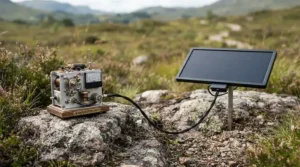
The single biggest differentiator on this list is that the ecoCalm Solar Exhaust Fan with Smart Thermostat actually stores power, via a built-in rechargeable battery, rather than depending purely on live sunlight. That’s a genuinely different proposition to the passthrough fans above it: it can keep working into the evening, overnight, or through an overcast morning, which matters enormously for humidity control rather than just daytime heat.
Dual 25W bifacial panels charge the battery, and a smart thermostat controller offers multiple modes, including a sensing setting that only kicks the fan in when temperature or humidity actually demands it — a sensible way to conserve battery charge rather than running flat-out constantly. The IP44 rating and metal build are aimed squarely at year-round outdoor use, not just a summer accessory to pack away in October. Reviewers consistently point to the battery backup as the headline benefit over cheaper daylight-only fans, particularly for anyone growing moisture-sensitive crops like cucumbers where nighttime humidity build-up is a real problem, though a small number note the smart controller has a slight learning curve to set up correctly.
Pros:
- ✅ Built-in battery keeps it running after dark or in cloud
- ✅ Smart sensing mode reduces unnecessary battery drain
- ✅ IP44-rated metal build suited to all-year outdoor use
Cons:
- ❌ Smart controller settings take some initial trial and error
- ❌ Higher price than daylight-only single-panel alternatives
At around £50-£70, the ecoCalm Solar Exhaust Fan with Smart Thermostat justifies its premium over basic kits specifically through that always-on capability.
7. VEVOR 40W Solar Attic Fan — best heavy-duty pick for large greenhouses and allotment blocks
At the top of this line-up sits the VEVOR 40W Solar Attic Fan, rated at a substantial 1,230 CFM — more than five times the airflow of the entry-level single-fan units. The brushless DC motor is the key to that figure: brushless designs run cooler, quieter, and considerably longer than the brushed motors found in some budget fans, which matters when a unit is expected to run hard through an entire growing season.
What most buyers overlook is the included 110V smart adapter, which lets the fan keep running on mains power during extended grey spells if a mains supply happens to be nearby — effectively giving you a hybrid solar-and-backup system rather than a pure off-grid unit. That flexibility, combined with its weatherproof housing and low-noise operation, makes it the obvious pick for a large commercial-style polytunnel, a shared allotment site’s communal greenhouse, or anyone cooling a genuinely oversized structure where the smaller fans on this list simply wouldn’t move enough air. Reviewers consistently rate the build quality and thermostat precision highly, though this is imported stock, so buyers should factor in potential import considerations and confirm current UK stock and delivery timelines before ordering.
Pros:
- ✅ 1,230 CFM airflow suits genuinely large structures
- ✅ Brushless DC motor built for quiet, long-life running
- ✅ Included smart adapter allows mains backup when needed
Cons:
- ❌ Considerably pricier than every other pick on this list
- ❌ Overkill for anything smaller than a large greenhouse
Priced roughly in the £280-£340 range at the time of research, this is a considered investment rather than an impulse buy — but for a big space, nothing else here comes close on airflow.
Best Vent Opener for Polytunnel Growers
If your growing space is a polytunnel rather than a rigid-framed greenhouse, the calculation changes slightly, because polytunnel doors and vents are often softer, lighter structures than an aluminium greenhouse window. The best vent opener for polytunnel use generally needs to handle a lighter load with a longer stroke, since polytunnel end-panel vents and roll-up sides tend to be larger openings than a small greenhouse roof light.
Here’s the honest trade-off: wax-piston autovents like the Bayliss XL Autovent were designed with rigid greenhouse frames in mind, so fitting one to a flexible polytunnel hoop often needs a bit of DIY bracket work to create a solid enough mounting point. For polytunnels specifically, a photovoltaic fan such as the VEVOR JRD-03 Solar Powered Fan or the twin-fan Abitmax 30W Dual Fan Solar Kit tends to be the more practical choice, since fans can be mounted directly into a cut vent panel or end-wall rather than needing a rigid hinge to clamp onto. Growers running long polytunnels, 25ft or more, are usually best served by pairing an intake fan at one end with an exhaust fan at the other, recreating the cross-ventilation effect a stiff-framed greenhouse gets for free through its roof and side vents.
Top Rated Autovent for Greenhouse: Autovent vs Fan-Style Ventilation
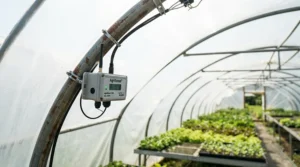
It’s worth being upfront about what an autovent actually does versus what a fan does, because they solve overlapping but distinct problems. A top rated autovent for greenhouse use, like either Bayliss model above, physically opens an existing vent wider as temperature rises, relying on natural convection to actually move the air once the gap is created. A fan, by contrast, forces air movement directly, regardless of whether convection currents would naturally cooperate.
| Factor | Autovent (wax piston) | Photovoltaic fan |
|---|---|---|
| Power source | Ambient heat only | Sunlight via solar panel |
| Moving parts | Minimal, very few failure points | Motor, blades, sometimes battery |
| Airflow style | Passive, relies on convection | Active, forced air movement |
| Typical noise | Silent | Low hum, typically 30-45dB |
| Typical price | £30-£65 | £35-£340 depending on wattage |
This table lays out the trade-off fairly starkly: autovents are simpler and cheaper but depend entirely on natural airflow actually happening, which can stall in a still, humid summer with no breeze at all. Fans cost more and have more that could eventually wear out, but they’ll shift air on a dead-calm day when convection alone leaves a greenhouse stewing. Many experienced growers end up running both — an autovent for daily temperature regulation and a fan for the genuinely stagnant days — rather than treating the choice as either-or.
💬 Not sure which set-up suits your greenhouse? Compare the specs above against your own structure before deciding.
How Much Solar Panel Wattage Do You Actually Need?
This is probably the single most common point of confusion, so here’s a straightforward answer: solar panel wattage for greenhouse ventilation should be matched to fan size and structure volume, not bought on a “bigger is always better” basis.
- Measure your structure’s volume first. Multiply length, width and average height in metres to get cubic metres, since this determines how much air actually needs moving.
- Check the fan’s CFM rating against that volume. As a rough guide, aim for the fan to be capable of exchanging the full air volume every few minutes during peak summer heat.
- Match wattage to fan draw, not ambition. A 25W panel comfortably runs a modest single fan; a 100W-plus panel is there to sustain higher-draw dual-fan or battery-charging setups.
- Factor in your typical daylight hours. Northern UK sites and shaded plots get meaningfully less usable sun than a south-facing allotment, so consider stepping up a wattage tier if your plot is often overcast.
- Decide if you need battery storage. If nighttime or early-morning humidity is a problem, a battery-backed unit like the ecoCalm Solar Exhaust Fan needs enough wattage to both run the fan and recharge the battery within a normal day.
- Leave headroom for cloudy days. According to Energy Saving Trust, UK solar panels of any size generate less output on overcast days, so buying slightly above your calculated minimum wattage avoids a fan that grinds to a near-halt every time the sky clouds over.
- Check the panel’s physical footprint fits your space. Larger wattage panels, like the 100W unit on the SNQ 100W Solar Fan Kit, are physically bigger and need a secure, unshaded mounting spot, which isn’t always available on a compact structure.
Reviewers consistently report that undersized panels are the single biggest source of disappointment with solar ventilation kits — not fan quality, but simply not enough wattage feeding the motor for the space in question. Getting this sum right before you buy saves a return parcel and a wasted growing week.
Off-Grid Ventilation: What Your Options Really Are
Off-grid ventilation isn’t a single product category so much as a spectrum, running from entirely passive systems through to hybrid solar-plus-battery units, and understanding where each option sits on that spectrum makes choosing far easier.
At the passive end sit the two Bayliss autovents, which need precisely nothing beyond the ambient heat already present in the greenhouse. Moving up, daylight-only photovoltaic fans like the VEVOR JRD-03 Solar Powered Fan and Abitmax 30W Dual Fan Solar Kit add active air movement but remain entirely dependent on live sunshine, switching off the instant clouds roll in. Higher up still, battery-backed units such as the ecoCalm Solar Exhaust Fan store daytime charge for use after dark, and at the top end, the VEVOR 40W Solar Attic Fan goes one step further by accepting a mains backup adapter, making it genuinely hybrid rather than purely off-grid.
What the spec sheet won’t tell you outright is that “off-grid” doesn’t automatically mean “always working.” A pure daylight fan on a genuinely overcast British week can sit nearly idle for days, so anyone relying on off-grid ventilation for a sensitive crop should weigh up whether the extra cost of a battery-backed model is worth the peace of mind. For a hardy crop tolerant of the odd hot afternoon, the cheaper daylight-only route is perfectly sensible; for something fussier, the investment in storage starts to make more sense.
Solar Ventilation for Allotment Sites Without Power
Allotment sites without power present a specific set of constraints that solar ventilation happens to solve rather neatly, since running a mains cable across a shared site is rarely practical and, on most council-run plots, isn’t permitted at all. The National Allotment Society notes that allotment tenancy agreements typically govern what structures and installations are allowed on a plot, and permanent electrical wiring is generally not part of the deal for ordinary tenants.
Consider a few realistic scenarios. If you’re an allotment holder with a single 6x8ft greenhouse and you visit two or three times a week, the Bayliss XL Autovent is arguably the smartest first purchase — it needs no panel to steal or vandalise, no wiring to worry about between visits, and it’ll keep working in your absence regardless of whether anyone remembers to check on it. If you’re managing a larger polytunnel on a plot you visit daily through summer, a photovoltaic fan such as the VEVOR JRD-03 Solar Powered Fan adds genuinely useful active cooling without needing permission for any permanent electrical installation, since the whole unit is self-contained and portable. For a shared or society-run allotment greenhouse used by multiple plot holders, the higher-capacity VEVOR 40W Solar Attic Fan or SNQ 100W Solar Fan Kit can justify their higher price by serving a communal structure rather than a single small plot.
One practical note worth flagging: solar panels and fans left unattended on an allotment for days at a time are, unfortunately, occasionally targeted for theft on less secure sites. Where possible, choose a mounting position that isn’t easily visible or reachable from a footpath, and consider a lockable bracket if your site has previously had issues.
Practical Usage Guide: Setup, Positioning and Maintenance
Getting the best out of any solar powered greenhouse fan comes down to three things: positioning, angle, and a bit of ongoing care, none of which are complicated but all of which get skipped more often than they should.
For positioning, mount the panel where it gets unobstructed sun for the longest stretch of the day, ideally south-facing in the northern hemisphere and clear of overhanging branches or neighbouring structures that cast shade by mid-afternoon. The fan unit itself should sit as high as practical on the structure, since heat naturally rises and the hottest, most stagnant air collects near the roof ridge. For angle, most panels perform best tilted to roughly match your latitude in summer, though the adjustable brackets on units like the VEVOR JRD-03 Solar Powered Fan make seasonal tweaking straightforward rather than a one-off guess.
For anyone fitting a wax-piston autovent for the first time, BBC Gardeners’ World has a clear step-by-step walkthrough worth following alongside the manufacturer’s instructions. In the first 30 days, the most common mistake is under-checking the mounting hardware; vibration from wind and the fan’s own operation can gradually loosen screws, so a quick check after the first fortnight is worth the five minutes it takes. Wipe the panel surface every few weeks during pollen season and after any dusty spell, since even a thin film of grime measurably reduces output. For autovents like the Bayliss XL Autovent, an annual check of the piston’s movement and a light smear of silicone grease on the sliding arm keeps things moving freely through the colder months when it’s used least. Battery-backed units such as the ecoCalm Solar Exhaust Fan benefit from an occasional full-discharge-and-recharge cycle over winter storage to keep the battery healthy for the following season.

Problem → Solution: Common Greenhouse Overheating Issues
Most greenhouse ventilation complaints boil down to a handful of recurring problems, each with a fairly specific fix rather than a vague “add more airflow” answer.
Problem: Greenhouse still overheats despite a fan running. This is very often a wattage or CFM mismatch rather than a faulty product — step back to the wattage calculation above and check whether your structure’s volume genuinely suits a 25W single fan or actually needs the higher output of the SNQ 100W Solar Fan Kit.
Problem: Fan stops working the moment it’s cloudy. This is expected behaviour for daylight-only units and isn’t a fault; if it’s a genuine problem for your growing needs, the fix is upgrading to a battery-backed model like the ecoCalm Solar Exhaust Fan rather than assuming the unit is broken.
Problem: Autovent opens too early or too late in the day. Almost always a calibration issue — the threaded adjustment screw on the Bayliss XL Autovent and Bayliss MK7 Autovent needs resetting for the specific crop and season, since a threshold set for spring seedlings will feel wrong by high summer.
Problem: High humidity persists even with ventilation running. Daytime-only airflow does little for the nighttime and early-morning humidity spike that causes most fungal problems — pairing daytime ventilation with a battery-backed unit, or simply improving general airflow with a second intake fan, tends to solve this more reliably than a single exhaust fan alone.
Problem: Panel output seems to be dropping over time. Before assuming the panel has failed, check for a build-up of dust, algae, or bird droppings on the surface, since even a partial obstruction can noticeably cut output on units like the VEVOR 40W Solar Attic Fan.
How to Choose a Solar Powered Greenhouse Fan
Cutting through the marketing, here’s the practical decision-making process worth following before you buy.
- Start with structure size, not budget. A tiny 6x4ft greenhouse and a 40ft polytunnel have wildly different airflow needs, and getting this wrong wastes money in either direction.
- Decide whether passive or active ventilation suits you better. If you visit daily and don’t mind manual tweaks, an autovent may be all you need; if you want genuinely forced airflow, go with a fan.
- Match CFM and wattage to that size, using the guidance above. Don’t simply buy the highest-wattage option “to be safe” if your structure doesn’t need it.
- Weigh up battery backup against simplicity. Battery-backed units cost more but keep working after dark; daylight-only units are cheaper and simpler but idle overnight.
- Check the waterproof rating for your climate. An IPX7 or IP44 rating, like those on the Abitmax 30W Dual Fan Solar Kit and ecoCalm Solar Exhaust Fan, matters far more in a wet UK climate than it might elsewhere.
- Consider your site’s security situation. If theft is a risk, as on some allotment sites without power, factor in a discreet mounting position or lockable bracket regardless of which fan you choose.
- Read aggregated review sentiment, not just star ratings. A 4.5-star average tells you little; the actual written complaints tell you whether the recurring issue is one you’d tolerate.
Common Mistakes When Buying Solar Ventilation
The single most frequent mistake, based on recurring themes across aggregated buyer feedback, is under-sizing the panel for the fan’s actual power draw, leading to sluggish performance that gets wrongly blamed on the fan itself. A close second is mounting the panel somewhere convenient rather than somewhere genuinely sunny, which quietly cripples output regardless of how good the unit is on paper.
Another common misstep is assuming a wax-piston autovent will suit a polytunnel exactly as it would a rigid greenhouse, without accounting for the different mounting challenge discussed earlier in this guide. Buyers also frequently overlook noise levels; a fan rated at 45dB is genuinely noticeable in a quiet garden, which matters if your greenhouse sits close to a seating area or a neighbour’s fence. Finally, plenty of buyers skip checking the warranty and return policy on lesser-known brands entirely, only to discover later that a faulty unit has limited recourse — always worth the extra thirty seconds before checkout.
Features That Actually Matter (And Those That Don’t)
Genuinely useful features worth paying extra for include a brushless DC motor, since these run cooler and last considerably longer under continuous summer use than cheaper brushed alternatives; an IPX7 or IP44 waterproof rating, given how wet a UK growing season can get; and, for anyone with humidity concerns, battery storage that keeps ventilation running after sunset.
Features that generate a lot of marketing noise but matter less in practice include maximum RPM figures quoted in isolation — a high RPM number means little without the corresponding CFM airflow figure alongside it, since RPM alone doesn’t tell you how much air is actually moving. Similarly, “smart app control” is a genuinely nice-to-have on higher-end units but isn’t essential for the vast majority of domestic growers who simply want the fan to switch on when it’s hot and off when it isn’t. The spec sheet won’t tell you this, but user reports suggest the simplest, most robust units in this category tend to be the most reliable over several growing seasons — complexity isn’t automatically an upgrade.
Long-Term Cost & Maintenance
Running cost is where solar ventilation genuinely earns its keep against mains-powered alternatives, since there’s no electricity bill to speak of once the unit is installed — the entire cost is upfront. A budget photovoltaic fan in the £35-£50 range and a premium battery-backed unit in the £250-£340 range will, over a five-year growing lifespan, both cost precisely nothing to actually run, which is a meaningfully different value proposition to a mains fan quietly adding to your electricity bill every single month.
| Consideration | Solar Fan / Autovent | Mains-Powered Fan | Manual Venting |
|---|---|---|---|
| Upfront cost | Low to moderate | Low to moderate | Free |
| Running cost | None | Ongoing electricity use | None |
| Installation | Simple, no wiring | Requires outdoor-rated cabling | None needed |
| Reliability off-grid | Excellent | Not applicable | Excellent but labour-intensive |
The maintenance side is refreshingly light across every product on this list: an occasional wipe of the panel, a yearly check of moving parts on autovents, and a battery care routine for units that include one. Total cost of ownership, factoring in the near-total absence of running costs and generally minimal maintenance, tends to favour solar options heavily over a five-plus year horizon compared with running mains cabling and a conventional extractor fan — though the mains route can offer higher sustained airflow for genuinely large commercial operations where cost-per-use calculations shift in its favour.
Frequently Asked Questions
❓ How does a solar powered greenhouse fan work?
❓ Do solar greenhouse fans work without a battery?
❓ What size solar fan do I need for my greenhouse?
❓ Can I use a solar fan on an allotment with no electricity?
❓ Is an autovent better than a solar fan?
Conclusion
Choosing between an autovent and a photovoltaic fan, or between a modest 25W panel and a heavyweight 100W-plus system, really comes down to the size of your structure, how often you can check on it, and whether nighttime humidity is a genuine problem for what you’re growing. For most compact domestic greenhouses, the reliable simplicity of the Bayliss XL Autovent or the affordability of the VEVOR JRD-03 Solar Powered Fan will comfortably do the job without overcomplicating things. For larger polytunnels, allotment sites without power, or anyone who’s been burned by humidity problems before, stepping up to the ecoCalm Solar Exhaust Fan or the heavy-duty VEVOR 40W Solar Attic Fan is money well spent.
Whichever route you take, the underlying principle from the RHS guidance referenced earlier holds true regardless of budget: ventilation isn’t an optional extra for a UK greenhouse, it’s the difference between a productive growing season and a very expensive way to wilt your own tomatoes. Match the wattage to your space, be honest about how often you’ll be around to check on things, and the right pick from this list should keep your plants considerably happier through whatever the British summer throws at them.
Recommended for You
- Best Greenhouse Fan: 7 Top UK Picks for Healthy Plants (2026)
- Automatic Vent Opener for Greenhouse: 7 Best UK Picks (2026)
- Small Greenhouse Heater for Allotment: 7 Top UK Picks (2026)
Disclaimer: This article contains affiliate links. As an Amazon Associate, I earn from qualifying purchases. If you purchase products through these links, we may earn a small commission at no additional cost to you.
✨ Found this helpful? Share it with your friends! 💬🤗
