
In This Article
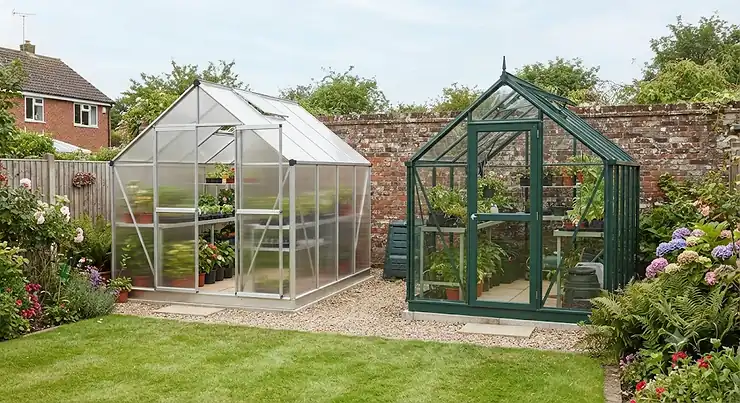
Somewhere between the garden centre aisle and your own back fence, the polycarbonate vs glass greenhouse question turns every mild-mannered gardener into a debate club president. A polycarbonate vs glass greenhouse decision sounds simple until you’re standing in front of two structures that look almost identical and cost wildly different amounts. So let’s settle it properly, with real numbers instead of vibes.
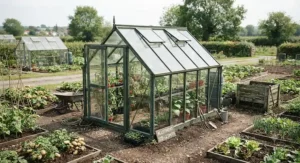
A polycarbonate vs glass greenhouse comparison, in short: polycarbonate is a twin-wall or multi-wall plastic glazing that insulates well, resists impact and costs less, while glass offers unmatched clarity and up to 90% light transmission but breaks easier and demands a bigger budget. Neither one is universally “better” — it depends on your wind exposure, your growing goals and how much you enjoy sweeping up glass shards after a hailstorm.
This guide walks through seven real, currently available greenhouses — a mix of polycarbonate and glass structures from budget to premium — with honest analysis of the specs, the aggregated review sentiment, and where each one genuinely earns its keep. We’ll dig into light transmission comparison figures side by side, stress-test greenhouse panel durability claims against what actually happens in a British storm, and work out the long-term cost of ownership once you factor in heating bills, breakages and how long each glazing type actually lasts. By the end, you should know exactly which type suits your garden — not just which one has the prettiest brochure photo.
What Is a Polycarbonate vs Glass Greenhouse? Quick Comparison Table
Before you commit to a size, a colour, or a base, the glazing material decides almost everything else about how your greenhouse behaves day to day. Here’s the short version, stripped of marketing gloss.
| Factor | Polycarbonate | Glass |
|---|---|---|
| Light transmission | ~70-82% (twin-wall), diffused | ~90%, direct |
| Impact resistance | High — resists hail, footballs, branches | Low-moderate (higher if toughened) |
| Insulation (R-value) | Roughly double single-pane glass | Lower unless double-glazed |
| Typical price range | Around £250-£950 for 6×4 to 6×8 models | Around £350-£1,800+ for comparable sizes |
| Best for | Windy sites, budget builds, seedlings | Display gardens, mild climates, purists |
Reading this table properly matters more than reading it quickly. The light transmission gap looks decisive on paper — glass wins by 10-20 percentage points — but that raw number hides the fact that diffused polycarbonate light spreads more evenly across your plants’ lower leaves, while glass’s laser-direct sunlight can create scorching hot spots on a sunny April afternoon. Price-wise, polycarbonate’s advantage shrinks once you go big: an 8x12ft glass structure and an equivalent premium polycarbonate one can land in a similar bracket, because at that scale the frame and base cost more than the glazing itself.
💬 Found this comparison useful already? A quick share helps other gardeners avoid an expensive mistake.
Top 7 Polycarbonate and Glass Greenhouses: Expert Analysis
We’ve picked seven real, currently sold UK models spanning budget cabin-style starters through to handmade premium structures — covering both glazing types so you can compare like for like. Coverage below includes true entry-level options, mid-range hybrids, and top-tier builds, plus the variants (sizes, frame colours) worth knowing about.
1. Palram Canopia Mythos 6×4 — cheapest genuine walk-in polycarbonate option
The Mythos earns its spot as the entry point into proper, walk-in polycarbonate growing space rather than a glorified cold frame. Its aluminium frame keeps rust at bay through wet British winters, and the roof uses 4mm twin-wall panels rated at around 70% light transmission — respectable for a budget model, though noticeably dimmer than glass on an overcast Tyneside morning. Based on the spec comparison with pricier siblings in the same range, the Mythos skips extras like rain gutters and multiple roof vents, which is exactly where the savings come from. Reviewers consistently note that assembly takes a weekend with two people and a fair bit of patience with the sliding panel system, and that the single roof vent struggles to keep things cool once summer properly arrives — a fan-assisted vent is a sensible early upgrade. This is the model for someone testing whether they even enjoy greenhouse growing before spending serious money.
Pros:
- ✅ Genuinely affordable entry into walk-in growing space
- ✅ Rust-proof aluminium frame suits damp UK gardens
- ✅ Panels resist impact far better than any glass equivalent
Cons:
- ❌ Single roof vent struggles in summer heat
- ❌ 70% light transmission trails behind glass rivals
At around £250-£350 depending on the retailer, the Palram Canopia Mythos 6×4 represents solid value for anyone dipping a toe into growing rather than committing to a serious setup.
2. Vitavia Venus 2500 6×4 — smartest glass pick for a tight plot
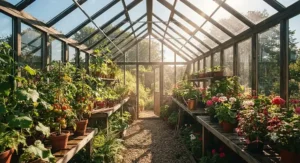
The Venus 2500 targets exactly the buyer the Mythos doesn’t: someone who wants that crisp, traditional glasshouse look in a footprint under 3 metres wide. Its toughened glass panels transmit close to 90% of available light, which the Royal Horticultural Society confirms is the ceiling figure for glass glazing generally, and that clarity genuinely does show — tomatoes and chillies grown under it colour up noticeably faster in early summer than under diffused polycarbonate. What most buyers overlook about this model is that toughened glass, while stronger than standard horticultural glass, is still glass — a stray branch in a gale can still crack a pane, and the smaller footprint means less structural bracing than its bigger siblings offer. Aggregated review sentiment points to straightforward aluminium-frame assembly, though several owners flag that base anchoring is essential on anything but a fully sheltered plot. It’s the honest choice for a compact garden where display matters as much as yield.
Pros:
- ✅ Near 90% light transmission for vivid plant colour
- ✅ Compact 6×4 footprint suits smaller gardens
- ✅ Toughened glass reduces shatter risk versus standard panes
Cons:
- ❌ Still more breakable than any polycarbonate model here
- ❌ Needs solid anchoring in exposed or windy sites
Expect a price in the £300-£450 range at the time of research, putting the Vitavia Venus 2500 6×4 roughly level with budget polycarbonate options despite the glazing upgrade.
3. Palram Canopia Hybrid 6×8 — the sensible middle-ground all-rounder
The Hybrid line sits deliberately between spartan budget kits and full premium builds, and the name is apt: it pairs a light-diffusing twin-wall polycarbonate roof with clear polycarbonate side panels, aiming for a compromise between visibility and even light spread. Here’s what to weigh: the roof handles the harshest, most direct sun exposure with diffusion that prevents leaf scorch, while the clearer sides let you actually see your seedlings from across the garden — a small but genuinely useful design choice. Reviewers consistently report assembly taking around four to five hours for two people, longer than the Mythos but manageable without specialist tools, and note the included roof vent and hinged door as sensible standard inclusions rather than paid extras. The spec sheet won’t tell you this, but user reports suggest the resin-and-aluminium hybrid frame handles coastal salt air noticeably better than steel-framed rivals at a similar price.
Pros:
- ✅ Diffused roof plus clear sides balances light and visibility
- ✅ Roof vent and hinged door included as standard
- ✅ Frame resists coastal corrosion better than steel alternatives
Cons:
- ❌ Assembly takes longer than simpler budget kits
- ❌ Sizing jumps (6×4 to 6×10) leave few in-between options
Pricing typically sits in the £360-£480 range across retailers, making the Palram Canopia Hybrid 6×8 a genuinely strong mid-range all-rounder for a family-sized plot.
4. Elite Classique 12×10 — premium glass with proper ventilation
Once you move into the Elite range, you’re paying for glazing quality and ventilation design rather than just extra floor space. The Classique uses 3mm toughened safety glazing throughout, paired with louvre vents along the sides — a detail that matters more than it sounds, since louvres allow fine-grained airflow control without swinging a whole panel open to the weather. Based on the spec comparison with basic glass models, the louvre system plus a wider roof vent gives this structure meaningfully better climate control through a British summer, reducing the risk of the classic glasshouse problem: a scorching midday spike followed by a damp, humid evening. Aggregated customer sentiment around Elite’s product range consistently highlights build rigidity and glazing quality as standout strengths compared with cheaper glass competitors, though a 12ft-wide structure this is not a weekend one-person job — professional installation is worth budgeting for. Suited to a serious hobbyist with the space and budget to match.
Pros:
- ✅ Louvre vents give genuinely fine climate control
- ✅ 3mm toughened glazing throughout for durability
- ✅ Wide 12ft footprint suits serious growing ambitions
Cons:
- ❌ Large footprint demands proper site preparation
- ❌ Two-person or professional installation strongly recommended
At an estimated £900-£1,200 for the 12×10 size — always confirm current pricing before ordering — the Elite Classique 12×10 sits firmly in premium glass territory.
5. Palram Canopia Rion EcoGrow 2 6×8 — toughest polycarbonate for exposed gardens
If your garden catches the worst of the weather off open fields or coastal wind, the EcoGrow 2 is built with exactly that scenario in mind. Independent testing cited by the manufacturer shows the structure withstanding winds up to 56mph and snow loads of roughly 15lb per square foot — figures that matter enormously if you’ve ever watched a cheaper greenhouse shed roof panels in a January gale. The 4mm twin-wall roof and thicker 6mm twin-wall side panels combine for around 82% light transmission, genuinely competitive with entry-level glass while keeping the impact resistance polycarbonate is known for. What most buyers overlook about this model is that “maintenance-free” claims mostly refer to the frame rather than the panels themselves — twin-wall polycarbonate still benefits from an occasional clean to stop algae building up between the wall channels. Reviewers report the pin-and-lock assembly system as notably quicker than bolt-together rivals, with most owners finishing solo in a day.
Pros:
- ✅ Wind-tested to 56mph and rated for real snow loads
- ✅ 82% light transmission rivals many glass models
- ✅ Pin-and-lock assembly is faster than bolted alternatives
Cons:
- ❌ Twin-wall channels need occasional cleaning against algae
- ❌ Green resin frame colour won’t suit every garden aesthetic
Typical pricing runs around £700-£950 depending on retailer stock levels, and the Palram Canopia Rion EcoGrow 2 6×8 earns that outlay through genuine weather resilience rather than flashy extras.
6. Rhino Classic 8×12 — 25-year glass structure built for the long haul
Rhino has built a loyal following among serious UK growers, and the Classic 8×12 shows why: a plain aluminium frame backed by a 25-year structural guarantee, glazed with toughened glass and fitted with automatic roof vents as standard. On paper this means Rhino is betting on longevity over flash, and aggregated reviews back that read — owners frequently mention the frame’s rigidity and precise glass fit years after installation, though a recurring theme in real customer feedback is that the instructions and glazing process are genuinely fiddly, with several buyers recommending a second pair of hands purely for manoeuvring the large glass panes into place. Here’s what to weigh: automatic roof vents reduce daily maintenance faff considerably, opening and closing in response to temperature without you remembering to do it each morning, but they’re a mechanical part that eventually needs occasional lubrication or replacement. For a family that wants one greenhouse to outlast several house moves, this is a legitimate long-term investment.
Pros:
- ✅ 25-year structural guarantee signals serious build confidence
- ✅ Automatic roof vents cut daily maintenance effort
- ✅ Toughened glass fit reported as excellent years on
Cons:
- ❌ Assembly and glazing widely reported as fiddly
- ❌ Large glass panes genuinely need two people to fit safely
Expect to budget in the region of £1,400-£1,800 at current typical pricing, positioning the Rhino Classic 8×12 as a serious long-term commitment rather than a casual purchase.
7. Swallow Kingfisher 6×8 — handmade Yorkshire timber-and-glass showpiece
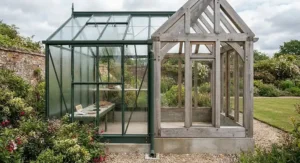
At the very top of this list sits a genuinely different proposition: a hand-built timber-framed greenhouse constructed in Yorkshire from rot-resistant ThermoWood, glazed throughout with 4mm toughened glass and finished with a locking door, automatic roof vents and integrated staging as standard. The spec sheet won’t tell you this, but the real draw here isn’t any single number — it’s that free professional installation is included in the price, removing the single biggest headache associated with premium glass structures (the assembly). Based on the spec comparison with aluminium-framed rivals, ThermoWood’s dimensional stability under UK humidity swings genuinely does outperform standard softwood, though timber will always demand more upkeep over a decade than aluminium ever will — periodic resealing and hinge checks are part of the deal. Reviewers and owners consistently describe this as a “garden centrepiece” rather than a purely functional structure, which tracks with the price tag; this is a purchase driven as much by aesthetics and craftsmanship as by growing capacity.
Pros:
- ✅ Handmade ThermoWood frame resists rot better than softwood
- ✅ Free professional installation included as standard
- ✅ Automatic vents and staging included, not paid extras
Cons:
- ❌ Timber requires more long-term upkeep than aluminium
- ❌ Significant price premium over aluminium-framed equivalents
Prices typically start around £3,000 and climb with size — a genuine premium investment, though the included installation offsets a meaningful chunk of that gap for the Swallow Kingfisher 6×8.
Light Transmission Comparison: Polycarbonate vs Glass Explained
The number everyone quotes is that glass transmits around 90% of available light while twin-wall polycarbonate sits somewhere between 70% and 82%, depending on thickness and wall count. That gap is real, and the Royal Horticultural Society confirms glass as the benchmark for raw light quantity, noting it also reflects internal heat back into the structure rather than losing it, unlike most plastics. But raw transmission percentage is only half the story, and treating it as the whole story is where a lot of buyers go wrong.
Polycarbonate’s twin-wall structure scatters light as it passes through, spreading it more evenly across a plant canopy rather than delivering it as a single direct beam. In practice, that means fewer scorched leaf tips on the plants nearest the glazing and more consistent growth across lower leaves that would otherwise sit in a glass greenhouse’s shadow. Glass, by contrast, transmits light largely unscattered — brighter overall, but capable of creating concentrated hot spots on a clear July afternoon that stress delicate seedlings. If your garden faces due south with little natural shading, that diffusion becomes a genuine practical advantage rather than a consolation prize for polycarbonate buyers.
Greenhouse Panel Durability: Impact Resistance and Weathering
Durability splits cleanly along two different failure modes, and it’s worth being honest about both rather than picking a favourite. Polycarbonate resists impact dramatically better than glass — hailstones, stray footballs and falling branches that would shatter a glass pane typically just bounce or dent polycarbonate. That resilience comes with a different weak point: UV degradation. Even UV-stabilised polycarbonate coatings gradually break down over roughly 10-15 years, leading to yellowing and brittleness that eventually calls for panel replacement, something glass simply doesn’t suffer from.
Glass, meanwhile, doesn’t degrade under sunlight at all and can look pristine decades after installation — provided it never gets struck by anything harder than rain. When it does break, standard horticultural glass shatters into sharp, dangerous shards, which is exactly why toughened or safety glass is now standard on doors and lower panels across every reputable brand in this list. The practical upshot: if your greenhouse sits somewhere exposed to hail, falling branches, footballs or boisterous pets, polycarbonate’s durability advantage is decisive. If it’s tucked away safely and aesthetics matter as much as resilience, glass’s total lack of UV degradation becomes the stronger long-term argument.
Long-Term Cost of Ownership: Which Glazing Wins Over 10 Years?
Sticker price only tells you the beginning of the story. A fair long-term cost of ownership comparison has to include replacement panels, heating costs and breakage repairs, not just the number on the price tag on day one.
| Cost factor | Polycarbonate | Glass |
|---|---|---|
| Upfront price (comparable size) | Generally lower | Generally higher |
| Panel lifespan before replacement | ~10-15 years (UV degradation) | Effectively indefinite if undamaged |
| Heating cost impact | Better insulation reduces bills | Higher heat loss unless double-glazed |
| Breakage/repair risk | Low | Moderate-high in exposed sites |
Over a full decade, polycarbonate’s lower upfront cost and better insulation genuinely can offset the fact you might replace a panel or two along the way — particularly if you heat your greenhouse through winter, since polycarbonate’s air-gap insulation roughly doubles the R-value of single-pane glass. Glass flips that equation if it survives undamaged: no replacement cost at all, ever, just a higher initial outlay and steeper heating bills. The honest answer is that a sheltered, unheated glass greenhouse in a mild region can be the cheaper option long-term, while an exposed or heated site usually favours polycarbonate’s insulation and durability combined.
✨ Ready to compare live prices before they change? Check today’s listings while stock and offers last.
Practical Usage Guide: Setting Up and Maintaining Your New Greenhouse
Getting the first month right sets the tone for years of use, and most of the common early mistakes are avoidable with a bit of forward planning. Start with the base: a level, firm foundation (paving slabs, a timber frame, or a proper concrete strip) prevents the frame racking out of square, which is the single most common cause of doors and vents jamming later. Anchor the frame to the base immediately, even in a sheltered garden — wind doesn’t need to be dramatic to lift an unanchored polycarbonate greenhouse clean off its footing overnight.
For the first 30 days, resist the urge to pack the space full of plants straight away. Run the greenhouse empty for a week or two, monitoring how quickly it heats up on a sunny day and how much it cools overnight, so you understand your ventilation needs before anything delicate is inside to suffer for it. Wipe down polycarbonate panels with a soft cloth and mild soapy water rather than abrasive cleaners, which can scratch the UV coating and accelerate the very degradation it’s meant to prevent. Glass panels tolerate glass cleaner fine, but check toughened panes for the small etched safety mark to confirm you’re not accidentally scrubbing standard horticultural glass with more force than it can take. Finally, book a spring and autumn maintenance check into your calendar — inspecting seals, vent hinges and base anchoring twice a year catches small issues before a winter storm turns them into expensive ones.
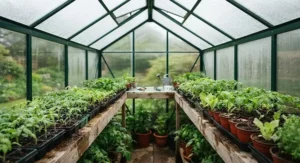
Real-World Scenarios: Matching Glazing to Your Garden and Growing Style
If you’re a first-time grower with a small suburban garden and a modest budget, a 6×4 polycarbonate model like the Palram Canopia Mythos 6×4 makes the most sense — low cost, low risk, and forgiving of the inevitable early mistakes everyone makes with their first greenhouse. If you’re an allotment veteran on an exposed, wind-battered plot who’s lost a structure to weather before, the Palram Canopia Rion EcoGrow 2 6×8 or a similarly wind-tested polycarbonate model is the pragmatic choice, since its tested wind and snow ratings directly address your specific pain point.
For a family with a decent-sized back garden who wants their greenhouse to double as a proper garden feature — somewhere that looks good from the kitchen window as much as it grows tomatoes — a glass structure like the Vitavia Venus 2500 6×4 or, budget allowing, the Elite Classique 12×10 delivers that display quality glass is known for. And for the gardener who’s finally ready to invest in a forever structure, unconcerned by upfront cost and drawn to craftsmanship over convenience, the Swallow Kingfisher 6×8 or Rhino Classic 8×12 both offer decades of use backed by serious guarantees — the difference between them mostly comes down to whether you prefer timber character or aluminium permanence.
How to Choose Between Polycarbonate and Glass
Working through these questions in order, roughly as a serious grower would, keeps the decision grounded in your actual garden rather than in marketing copy.
- How exposed is your site? Open, windy or coastal gardens favour polycarbonate’s impact resistance and lighter frame stress.
- Will you heat it through winter? Heated greenhouses benefit disproportionately from polycarbonate’s better insulation, cutting running costs.
- What’s actually growing in there? Seedlings and leafy crops often do better under diffused polycarbonate light; fruiting crops needing intense direct sun can favour glass.
- What’s your realistic budget, all-in? Include base, delivery and installation, not just the headline greenhouse price.
- Do you have kids or pets nearby? Polycarbonate’s shatter resistance is a genuine safety advantage in busy family gardens.
- How long do you want it to last? Glass never degrades under UV; polycarbonate typically needs panel replacement after a decade or so.
- How much does appearance matter to you? If the greenhouse needs to look the part as a garden feature, glass’s clarity is hard to beat.
Common Mistakes When Buying a Greenhouse
Even experienced gardeners trip over the same handful of errors when buying new. The most frequent is undersizing: nearly every retailer and reviewer we found repeats the same advice — buy one size larger than you think you need, because growing ambitions expand faster than most people expect. A close second is ignoring site exposure entirely, choosing a glazing type based on looks alone and then being surprised when a standard glass model struggles on a genuinely windy plot. Skipping proper anchoring to save a weekend’s effort is another classic false economy, since an unanchored structure risks catastrophic failure in the first serious storm.
Buyers also frequently underestimate ventilation needs, assuming a single roof vent will suffice on anything bigger than a 6×4 footprint, when larger structures generally need vents on both the roof and at least one side wall to avoid a stifling midsummer microclimate. Finally, many people compare only the headline price of polycarbonate versus glass models without accounting for base costs, staging, and installation — two greenhouses priced identically on the sticker can end up hundreds of pounds apart once genuinely comparable extras are included.
Polycarbonate vs Glass Greenhouse: The Full Head-to-Head
Stacking the two glazing types against each other across every practical dimension makes the trade-offs concrete rather than abstract. Polycarbonate wins decisively on impact resistance, weight (making DIY assembly easier), and insulation — genuinely useful if you heat your greenhouse or live somewhere exposed. Glass wins decisively on raw light transmission, long-term panel lifespan (it simply doesn’t degrade from UV the way plastic does), and visual clarity, which matters more than growers often admit when a greenhouse doubles as a garden feature.
Where it gets genuinely close is cost, once you look past headline prices. Small polycarbonate structures are cheaper than glass equivalents, but at 8x12ft and above, premium glass and premium polycarbonate models converge in price because frame quality and base preparation start to dominate the total cost rather than the glazing itself. Neither material is objectively superior — the right choice depends entirely on whether your priorities sit closer to resilience and running costs, or clarity and permanence.
Features That Actually Matter (And Those That Don’t)
Marketing copy loves to lean hard on numbers that sound impressive but rarely change your actual growing experience. Wall thickness in millimetres, for instance, gets quoted constantly, but going from 4mm to 6mm twin-wall polycarbonate matters far less for insulation than the number of internal air channels — a genuinely multi-wall panel with three or more chambers outperforms a thicker but simpler twin-wall design every time. Similarly, “UV-stabilised” sounds like a premium feature, but on cheaper polycarbonate it’s often a thin surface coating rather than a co-extruded protective layer, and the difference shows up as yellowing within a handful of years rather than a decade-plus.
What actually matters, based on the spec comparison across every model in this guide, is ventilation area relative to floor space, base anchoring provisions, and — for glass models specifically — whether toughened glazing extends beyond just the door. Automatic vent openers are a genuinely worthwhile upgrade almost regardless of glazing type, since they respond to temperature swings faster than any human checking a greenhouse once a day realistically can. Decorative extras like integrated planters or elaborate roof finials, on the other hand, rarely justify their price premium once you’re a season into actual growing.
Safety, Regulations and Planning Permission in the UK
The good news for most buyers: standard domestic greenhouses fall under permitted development rights in England, Wales and Scotland, meaning most gardens can have one installed without a separate planning application. The Planning Portal’s official guidance on outbuildings sets the key limits clearly — single storey, a maximum eaves height of 2.5 metres within 2 metres of a boundary, and total outbuilding coverage capped at 50% of your garden. Most 6×4 to 8×12 greenhouses sit comfortably within these limits, but larger structures, listed buildings, and conservation areas can all change the picture, so it’s worth a quick check with your local planning authority if anything feels borderline.
On the glazing safety side, UK building standards recommend toughened or laminated safety glass for doors and any panel below waist height, precisely because standard horticultural glass shatters into dangerous shards on impact — every glass model in this guide uses toughened glazing at least at those critical points. If you’re installing electrical heating, lighting or automated irrigation, that work typically does fall under building regulations and is worth having checked by a qualified electrician, regardless of whether the structure itself needed planning permission.
🔍 Compare Live Prices Before You Commit See today’s availability and pricing across all seven models featured here — stock and offers shift quickly, so it’s worth checking before you decide. Click through to view current listings and lock in the right greenhouse for your garden this season.
Frequently Asked Questions
❓ Is polycarbonate or glass better for a greenhouse in the UK?
❓ How much light does polycarbonate lose compared to glass?
❓ Do polycarbonate greenhouse panels yellow over time?
❓ Is toughened glass necessary for a greenhouse?
❓ Do I need planning permission for a greenhouse in the UK?
Conclusion
There’s no single correct answer buried in the polycarbonate vs glass greenhouse debate — only the right answer for your specific garden, budget and growing ambitions. Polycarbonate earns its keep through resilience: better insulation, far higher impact resistance, and a genuinely lower cost of entry, which is exactly why it dominates budget and mid-range options like the Palram Canopia Mythos 6×4 and the wind-rated Palram Canopia Rion EcoGrow 2 6×8. Glass earns its keep through clarity and permanence, delivering close to 90% light transmission and panels that simply never degrade under sunlight, which is where premium picks like the Rhino Classic 8×12 and the handmade Swallow Kingfisher 6×8 genuinely shine.
Work through your site exposure, your heating plans, and your budget honestly before you buy, and the right glazing type tends to become obvious rather than agonising. Whichever direction you land on, the difference between a greenhouse you love using for a decade and one you regret within a season usually comes down to matching the glazing to the garden — not to which one photographed better online.
✨ Don’t Miss These Exclusive Deals!
🔍 Take your greenhouse shopping to the next level with the models featured above. Click through on any highlighted product to check current pricing and availability before stock shifts. The right structure will help you grow healthier, happier plants your family will genuinely enjoy for years to come!
Recommended for You
- Best Polycarbonate Greenhouse UK: 7 Top Picks Tested for 2026
- Best 6×8 Greenhouse 2026: 7 Top Picks Gardeners Trust
- Best Lean To Greenhouse UK 2026: 7 Top Picks Reviewed
Disclaimer: This article contains affiliate links. As an Amazon Associate, I earn from qualifying purchases. If you purchase products through these links, we may earn a small commission at no additional cost to you.
✨ Found this helpful? Share it with your friends! 💬🤗
