
In This Article
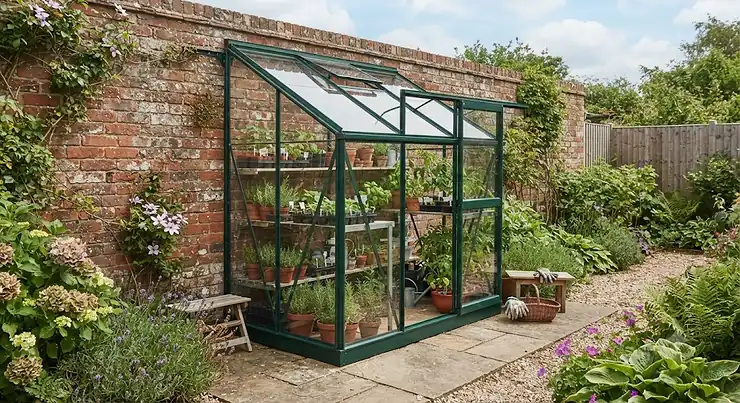
A lean to greenhouse is a greenhouse built with one side missing, on purpose, so it can be bolted flush against a house wall, garage or fence, sharing that wall’s stored warmth and needing roughly half the footprint of a freestanding equivalent. That’s the whole concept in a nutshell, and it’s precisely why so many UK gardeners with a modest patio or narrow side return end up here instead of browsing full-size glasshouses.
You’ve probably noticed the search results are a mess. Some listings show a £15 pop-up tent with “greenhouse” in the name; others show a £3,600 aluminium structure that could double as a spare room. Somewhere in between sits the best lean to greenhouse for your actual garden, and finding it means understanding what separates a flimsy PE-covered frame from a proper polycarbonate or glass structure that’ll still be standing in a decade. We’ve spent time digging through real product specs, manufacturer data and aggregated customer feedback to shortlist seven genuine options, from budget starter kits to premium glass wall gardens, so you can skip the guesswork.
Whether you’re chasing your first crop of tomatoes on a narrow side passage or finally giving your seedlings a proper south-facing home, this guide walks through the best lean to greenhouse options on the market, how they stack up against each other, and the practical fitting details — brackets, guttering, wall orientation — that most product listings conveniently leave out.
Quick Comparison Table
Before we go deep on all seven, here’s the snapshot. Sizes are approximate and vary by retailer variant; always check the specific listing you’re buying.
| Model | Glazing | Approx. Size | Price Range | Best For |
|---|---|---|---|---|
| Outsunny Walk-In Lean to Wall Greenhouse | PE plastic cover | 200 x 100 x 215cm | Around £130-£160 | Absolute beginners on a tight budget |
| Top Home Solutions Lean To Greenhouse | PE plastic cover | 213 x 106 x 190cm | Around £100-£140 | Maximum shelving for minimum spend |
| Palram Canopia 4×2 Lean-to | Twin-wall polycarbonate | 4ft x 2ft | £250-£320 range | Balconies and narrow side returns |
| Palram Canopia 8×4 Lean-to | Twin-wall polycarbonate | 8ft x 4ft | £550-£700 range | Serious growers wanting real headroom |
| Palram Canopia Rion Sun Room | Twin-wall polycarbonate | 8ft x 8ft (and larger) | £700-£1,100+ range | Buyers who want a garden-room feel |
| Halls Supreme Wall Garden | Toughened safety glass | 6ft x 2ft | £350-£480 range | Style-conscious patios and courtyards |
| Halls Silverline Lean-To | Horticultural or toughened glass | 6ft-8ft wide | £500-£750 range | Traditional growers who want glass and gutters |
Looking at the table, the split is pretty clear once you see it laid out: the two PE-covered models are seasonal starter kits rather than permanent structures, the three polycarbonate options from Palram Canopia cover almost every size from balcony to garden-room scale, and the two Halls models bring old-school glass elegance at a real price premium. If your budget stretches past £250, we’d steer most readers towards polycarbonate — it survives a UK winter far better than stretched PE sheeting, which is the single biggest complaint in budget lean-to reviews.
💬 Just one click — help others make better buying decisions too!😊
Top 7 Lean To Greenhouses: Expert Analysis
We’ve deliberately spread this list across budget, mid-range and premium price points, plus a mix of sizes, so there’s a genuine match here whatever your garden looks like.
1. Outsunny Walk-In Lean to Wall Greenhouse — cheapest way to start growing this weekend
The standout here is simple: this is one of the fastest, lowest-commitment ways into greenhouse gardening, with no tools and no base required. The Outsunny Walk-In Lean to Wall Greenhouse is built around a powder-coated steel tube frame with a PE (polyethylene) cover, measuring roughly 200 x 100 x 215cm, and it’s designed to lean directly against a house wall, fence or shed. Inside you get three tiers of wired shelving, which matters more than it sounds — wire mesh stops pots slipping when you brush past in a hurry, something flat shelving doesn’t manage nearly as well.
Based on the spec comparison against other PE-covered kits, this is a seasonal structure, not a year-round one: the cover is UV-treated but will degrade faster than polycarbonate under constant sun and frost cycling, so treat it as a two-to-four-year investment rather than a decade-long one. Reviewers consistently report that assembly is genuinely quick — most people are finished within an hour without instructions being a headache — though several also note the roll-up zip doors need tying back carefully in wind, or the whole cover can flap loose.
Pros:
- ✅ Assembles in under an hour, no tools needed
- ✅ Three-tier wired shelving included as standard
- ✅ Low upfront cost for testing the lean-to concept
Cons:
- ❌ PE cover won’t last as long as polycarbonate
- ❌ Needs weighting down properly in exposed, windy spots
At around £130-£160, this sits firmly in “try before you commit” territory — genuinely good value if you’re not yet sure a lean-to suits your growing habits, but budget for a polycarbonate upgrade once you know you’re hooked.
2. Top Home Solutions Lean To Greenhouse — most shelving per pound spent
What jumps out about the Top Home Solutions Lean To Greenhouse is the sheer shelf count: six wire-mesh shelves across the interior, each rated to hold around 10kg, which is unusually generous for a plastic-covered budget model. The frame is grey powder-coated iron tubing rather than the thinner steel tube you’ll find on some rivals, and the cover is a white PE sheet that diffuses light rather than letting it blast straight through — useful for seedlings that scorch easily in a small, enclosed space.
Here’s what the spec sheet won’t spell out clearly: a white diffusing cover is genuinely better than a clear one for propagation, because it spreads light evenly across all six shelves instead of creating one bright shelf near the door and shaded ones behind it. This makes it a smart pick for anyone starting seeds in bulk trays rather than growing a handful of showpiece plants. The roll-up zipped door ties back neatly for ventilation and watering access, which reviewers flag as more convenient day-to-day than a fixed panel door.
Pros:
- ✅ Six shelves rated to 10kg each — genuinely useful capacity
- ✅ Diffusing white cover spreads light evenly across shelves
- ✅ Roll-up zip door simplifies daily watering and ventilation
Cons:
- ❌ Iron frame needs checking for rust after wet winters
- ❌ Not rigid enough for permanent, multi-year siting
Priced in a similar £100-£140 range to the Outsunny model, this is the better choice specifically for propagation-heavy growers; the Outsunny edges ahead on build speed and brand support instead.
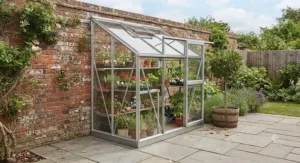
3. Palram Canopia 4×2 Lean-to — smallest footprint that still feels like a proper greenhouse
This is the entry point into rigid, permanent lean-to greenhouses, and the standout feature is fitting a genuinely shatterproof structure into a space barely wider than a wheelie bin. The Palram Canopia 4×2 Lean-to uses crystal-clear twin-wall polycarbonate glazing rated at around 90% light transmission, held in an aluminium frame with a galvanised steel base that adds roughly 125mm of height and includes a built-in gutter channel.
What most buyers overlook about this size is that it’s genuinely designed for balconies and narrow passages, not as a compromise version of a bigger greenhouse — the opening roof vent and sliding door are proportioned for one person working comfortably in a tight footprint, rather than feeling cramped. Reviewers on the wider Palram range consistently note that the polycarbonate resists yellowing far better than cheaper unbranded panels, which matters over a five-plus year lifespan since UV degradation is what usually kills budget glazing first. The trade-off is obvious: at 4ft by 2ft, you’re limited to a few grow bags or a single tier of trays rather than a real crop rotation.
Pros:
- ✅ Shatterproof polycarbonate suits gardens with children or pets
- ✅ Fits balconies and narrow side returns other models can’t
- ✅ Aluminium frame needs zero rust maintenance
Cons:
- ❌ Very limited growing space for anything beyond a few pots
- ❌ Roof vent alone may not be enough airflow in summer
Sitting around £250-£320, it’s a jump up from the PE-covered kits, but for gardeners who genuinely have no more room, it’s arguably the only sensible rigid option on this list.
4. Palram Canopia 8×4 Lean-to — best balance of space and shatterproof safety
If the 4×2 is the compromise size, the Palram Canopia 8×4 Lean-to is the one most UK reviewers actually recommend once space allows it. The standout advantage is real growing capacity without sacrificing the shatterproof safety polycarbonate is known for. It shares the same crystal-clear side glazing and twin-wall polycarbonate roof as its smaller sibling, but the extra floor area — roughly the size of a small garden shed — means you can realistically run staging down both the back wall and one end.
Based on the spec comparison, the opening roof vent plus sliding hinged door gives noticeably better cross-ventilation than the 4×2’s single vent, which matters enormously in a UK summer when polycarbonate lean-tos can trap heat against a warm brick wall. The built-in gutter channel along the aluminium base plinth is a small detail that pays off during autumn downpours, directing water away from the wall junction rather than letting it pool and eventually damage pointing. A common theme in aggregated feedback for this size is that assembly, while described as tool-free, genuinely benefits from a second pair of hands when fitting the larger polycarbonate panels — solo builds are possible but slower and fiddlier than the marketing suggests.
Pros:
- ✅ Roomy enough for proper staging and crop rotation
- ✅ Better ventilation than smaller Palram lean-to models
- ✅ Integrated gutter channel protects the adjoining wall
Cons:
- ❌ Solo assembly is slow; a second person helps a lot
- ❌ Needs a genuinely level, solid base to perform well
At £550-£700, this is the sweet spot many reviewers land on for “the best lean to greenhouse for an average UK garden,” combining rigid, shatterproof glazing with space that actually supports serious growing.
5. Palram Canopia Rion Sun Room — closest thing to a garden room
The Palram Canopia Rion Sun Room stands out because it blurs the line between greenhouse and garden room, available in sizes stretching from 8ft x 8ft right up to 8ft x 18ft depending on the variant. It uses the same high-impact, 100% UV-blocking polycarbonate as other Canopia models, reinforced with laser-cut, powder-coated galvanised steel rods, and the wide hinged side door is proportioned for people, not just plant trays — this is as much a place to sit with a coffee among the tomatoes as it is a pure production space.
Here’s the honest trade-off: at these dimensions, you’re not choosing this purely for plant yield per square foot, you’re choosing it because the structure needs to function as a usable outdoor room too. Palram Canopia’s build quality earned recognition in a 2020 German TÜV-style consumer accreditation survey assessing durability and functionality across thousands of outdoor brands, which does at least back up the “built to last” positioning with independent evaluation rather than just marketing copy. Reviewers on the wider Rion Sun Room range flag the sliding panel assembly system as genuinely easier than traditional bolt-together kits, though the sheer number of panels on the larger sizes means a full day’s work is realistic, not an afternoon.
Pros:
- ✅ Doubles as a usable outdoor room, not just a growing space
- ✅ Independently recognised build quality across the Canopia range
- ✅ Sliding panel assembly is simpler than bolt-together kits
Cons:
- ❌ Larger sizes need a genuinely big, flat wall to lean against
- ❌ Full-day assembly realistic on the bigger variants
Prices climb steeply with size, typically from around £700 up past £1,100 for the largest variants, so this only earns its place if you actually want that hybrid greenhouse-slash-sunroom lifestyle rather than pure crop space.
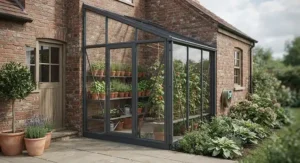
6. Halls Supreme Wall Garden — prettiest curved-eave design on this list
Where the Palram range leans practical, the Halls Supreme Wall Garden leans decorative, and that curved acrylic eave is the reason. Measuring 6ft x 2ft and standing on a steel base plinth, it uses toughened safety glass rather than polycarbonate — the same type of glass used in car windscreens, which breaks into small, blunt pebbles rather than dangerous shards if it’s ever struck.
What most buyers overlook about toughened glass is the weight advantage in exposed, windy gardens: it’s heavier than polycarbonate panelling, which actually makes the whole structure more stable in gusty conditions rather than being a downside, and it won’t discolour the way some plastics can after years of UV exposure. Aggregated customer feedback for this model repeatedly mentions the fun of building it as a shared weekend project and the “almost tropical” feel once it’s planted up with tomatoes, chillies and herbs — a nice contrast to the purely functional tone of most budget reviews. The single opening roof vent with an optional automatic vent arm is a sensible upgrade if you’re often away during the working week, since unvented glass structures can overheat dramatically on a sunny afternoon.
Pros:
- ✅ Toughened glass adds stability in windy, exposed gardens
- ✅ Curved eave design is genuinely more attractive than boxy rivals
- ✅ Steel base plinth included as standard
Cons:
- ❌ Narrower 2ft depth limits what you can grow at the back
- ❌ Glass costs more to replace than polycarbonate if damaged
At £350-£480, it’s priced for gardeners who want a lean-to that looks intentional on a visible patio, not just functional round the back of the shed.
7. Halls Silverline Lean-To — built-in guttering that actually works
The final pick on this list, the Halls Silverline Lean-To, earns its spot for one specific reason most competitors get wrong: proper integral guttering connected straight to a downpipe, rather than a channel that just directs water and hopes for the best. Available in 4ft and 6ft widths with either milled silver or powder-coated green aluminium framing, it uses long-pane glass glazing with an opening roof vent, and the door can be fitted at either end depending on your wall layout.
Based on the spec comparison with the Halls Supreme, the Silverline trades the curved decorative eave for a straightforward flat-eave design, but gains real practical width for growing along the back wall, plus the option to add automatic vents, staging and shelving as accessories later. What most reviewers highlight is the frame guarantee — Halls backs this range with a lengthy multi-year frame warranty, which is a meaningful signal of confidence given aluminium framing is genuinely the part least likely to fail; it’s the glazing and seals that usually need attention first in a lean-to’s lifespan. The trade-off for that guttering and glass quality is a heavier structure that benefits from professional installation if you’re not confident drilling into brickwork.
Pros:
- ✅ Genuine integral guttering connected to a downpipe
- ✅ Long multi-year frame guarantee backs the build quality
- ✅ Door position is flexible to suit your wall layout
Cons:
- ❌ Heavier glass structure benefits from professional fitting
- ❌ Flat-eave look is less striking than the Supreme’s curved design
Priced around £500-£750 depending on width and glazing choice, this is the pick for traditionalists who want glass, guttering and a long guarantee over the lighter, cheaper feel of polycarbonate.
Practical Usage Guide: Setting Up Your Lean To Greenhouse Right
Getting the best lean to greenhouse for your garden is only half the job — how you site and set it up in the first thirty days decides whether it thrives or becomes a slightly resentful storage shed. Start with the base: even PE-covered kits perform dramatically better on a level, firm surface like paving slabs or compacted hardcore than directly on soil, which shifts with frost and leaves doors hanging crooked within a season.
Next, check your wall. Brick and render both hold heat well and release it slowly overnight, which is exactly the thermal benefit a lean-to design is built to exploit — but a north-facing wall in permanent shade will squander that advantage almost entirely, so orientation genuinely matters more than the greenhouse model you choose. During the first month, resist the urge to pack it full immediately; overcrowded shelving blocks airflow and is one of the most common causes of early fungal problems in enclosed lean-to structures. Ventilate aggressively on warm days even in early spring, since a glazed lean-to against a sun-warmed wall can spike well above outdoor temperature by mid-morning. Finally, check door seals and roof vent mechanisms weekly for the first month; most manufacturing niggles show up in that early period, while they’re still easily covered under warranty.
Real-World Scenarios: Which Lean To Greenhouse Suits You?
The courtyard beginner: You’ve got a small paved courtyard, no gardening experience, and want to test the water before spending big. A budget PE model like the Outsunny Walk-In Lean to Wall Greenhouse lets you learn what you actually use a greenhouse for — seed starting, overwintering a few pots — without committing serious money to a structure you might outgrow or abandon.
The narrow side-return grower: Your only available space is a metre-wide gap between the house and the fence. Here, footprint beats everything else, which is exactly why the Palram Canopia 4×2 Lean-to earns its place: it’s rigid, shatterproof and genuinely fits where nothing bigger will.
The serious hobbyist with a proper garden wall: You’ve got a decent south-facing wall, some gardening experience, and want to grow tomatoes, chillies and cucumbers at scale rather than a token pot or two. This is where the Palram Canopia 8×4 Lean-to or the glass Halls Silverline Lean-To genuinely earn their higher price tags, offering the space and ventilation that smaller models simply can’t provide.
How to Choose the Best Lean To Greenhouse
Cutting through the marketing, here’s the decision process that actually matters, step by step:
- Measure your wall space first, not the greenhouse you like. A structure that’s 15cm too wide for your available run against the wall isn’t an option, however good the reviews.
- Decide glass or polycarbonate before browsing models. Glass gives the clearest light transmission and a classic look; polycarbonate is lighter, shatterproof and generally more forgiving of imperfect DIY assembly.
- Check the eaves height, not just the footprint. Anything under around 1.5m at the eaves will feel cramped fast, especially once staging and pots are in place.
- Confirm ventilation options before you buy, not after. A single roof vent is workable for a small model; anything over 6ft wide really benefits from opening side vents too.
- Factor in the base separately. Few lean-to greenhouses include a proper hardstanding base in the price, and a wobbly, unlevel base undermines even the best-built frame.
- Read the warranty terms on the frame specifically. Frame guarantees of several years signal genuine manufacturer confidence; glazing is rarely covered to the same extent, so don’t assume otherwise.
- Budget for guttering or drainage separately if it’s not built in. Water running straight off a lean-to roof onto a wall junction causes damp problems that cost far more to fix than the greenhouse itself.
Lean To Greenhouse for a Small Garden
If your entire growing space is a lean to greenhouse for small garden setups — think patios, tiny courtyards, or a metre of side return — the calculus changes from “how much can I grow” to “how efficiently can I use every centimetre.” Vertical shelving matters more here than in a larger structure, because floor space is so limited that most of your actual growing happens at shelf height rather than in beds or grow bags on the ground.
The Palram Canopia 4×2 Lean-to is arguably the standout choice in this exact scenario, precisely because it doesn’t try to be a scaled-down version of a bigger greenhouse — it’s genuinely designed around a tight footprint from the ground up, right down to the proportions of its sliding door. For anyone weighing up whether a lean-to justifies the investment at all in a small space, Which?’s independent guide on choosing a greenhouse is a genuinely useful starting point on sizing, materials and what’s actually worth paying for before you commit.
Fitting a Lean To Greenhouse Against a Wall: Brackets, Fixings & South-Facing Walls
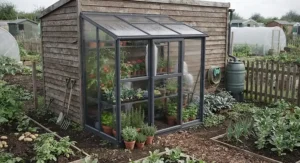
Choosing to site a lean to greenhouse against wall structures is the entire point of the design, but the fitting details are where most first-timers come unstuck. Most rigid models rely on a mix of ground anchors at the base and wall fixing brackets along the rear frame, screwed directly into masonry rather than simply resting the frame against the brickwork. A proper wall-mounted greenhouse bracket setup — usually galvanised steel L-brackets or strap fixings supplied or sold as an accessory — does two jobs at once: it stops the structure racking sideways in wind, and it takes some of the lateral load off the ground anchors alone, which matters enormously given how exposed a tall glazed panel can be in a gale.
Wall material matters here. Solid brick or block takes standard masonry fixings well; rendered or older lime-mortar walls sometimes need longer fixings or resin anchors to get a secure hold, so it’s worth checking your wall type before ordering brackets. On orientation, a south-facing wall greenhouse setup is generally considered the gold standard for a reason: it captures direct sun for the longest stretch of the day and benefits most from the wall’s stored heat overnight, which the RHS’s own guidance on siting greenhouses backs up, advising an east-west ridge orientation to extend winter light and a north-south orientation for summer crops depending on what you’re growing. An east or west-facing wall still works reasonably well; a north-facing wall in permanent shade is the one orientation worth avoiding if you have any choice in the matter at all.
Greenhouse Guttering Systems: Why They Matter
It’s easy to overlook, but a greenhouse guttering system is one of the most underrated features on this entire list, and it’s precisely why the Halls Silverline Lean-To earns a spot here despite costing more than similarly sized rivals. Without proper guttering, rainwater sheeting off a lean-to roof lands directly at the base of the adjoining wall, which over several winters can contribute to rising damp, eroded pointing, or a permanently soggy bed of soil right where you’d otherwise want to grow.
A well-designed system channels water into a downpipe, and from there either into a water butt — genuinely useful for keeping a rain-fed reserve for watering, since tap water can be harder for some plants — or safely away into existing drainage. If your chosen model doesn’t include integral guttering, aftermarket kits are widely available and generally straightforward to retrofit onto an aluminium eaves bar, so it’s not a dealbreaker on its own, just something to budget for if it’s missing. BBC Gardeners’ World Magazine’s guide to siting a greenhouse also flags avoiding overhanging trees for exactly this drainage-related reason — falling debris and honeydew residue clog guttering fast, undoing whatever careful drainage planning you’ve done.
Lean To Greenhouse vs Freestanding Greenhouse
| Factor | Lean To Greenhouse | Freestanding Greenhouse |
|---|---|---|
| Footprint required | Small — uses one existing wall | Larger — needs clearance on all sides |
| Heat retention | Better, thanks to stored wall warmth | Loses heat faster on all exposed sides |
| Access | One side, sometimes two | All-round access for maintenance |
| Typical cost for equivalent space | Generally lower | Generally higher for the same growing area |
| Utility access (power, water) | Often easier, closer to the house | May need longer cable/hose runs |
The wall-warmth advantage is the single biggest reason a lean-to consistently outperforms a similarly priced freestanding model through a UK winter — that stored heat measurably reduces overnight temperature drops, which matters enormously for overwintering tender plants. Freestanding models win on flexibility and all-round access, which matters more if you’re doing serious crop rotation or need to walk fully around large plants like climbing tomatoes. For most gardens with a spare wall and a genuine space constraint, though, the lean-to format simply makes more practical sense than shoehorning in a freestanding structure that needs clearance it doesn’t have.
✨ Don’t Miss These Exclusive Deals!
🔍 Take your greenhouse growing to the next level with these carefully selected picks. Click through on any highlighted model to check current pricing and availability. The right lean-to could mean home-grown tomatoes, herbs and salad crops your family will genuinely look forward to.
Common Mistakes When Buying a Lean To Greenhouse
The most frequent mistake, by a wide margin, is buying on footprint alone without checking eaves height — a wide but low structure feels claustrophobic within weeks, however generous the floor space looks on paper. Close behind is skipping the base: setting a rigid aluminium frame directly onto uneven soil is asking for doors that stick, gaps that let in draughts, and a structure that slowly racks out of square over a season or two.
Buyers also regularly underestimate ventilation needs, assuming a single roof vent will cope with a sun-facing glass or polycarbonate structure through a full UK summer — it generally won’t, and overheating is one of the most commonly cited frustrations in aggregated review sentiment across budget and mid-range models alike. Finally, plenty of people order without measuring their actual wall run, only to find the model they wanted overhangs a drainpipe, window sill or boundary by a few frustrating centimetres.
Long-Term Cost & Maintenance
The purchase price is only the opening cost. Polycarbonate models need almost nothing beyond an occasional wash with mild soapy water to keep panels clear and light transmission high, while aluminium frames genuinely don’t rust, making Palram-style structures close to maintenance-free over a ten-year span. Glass models like the Halls range need slightly more care around seals and putty-style glazing clips, which can loosen over time and need periodic re-tightening, but the glass itself rarely degrades the way plastics can under UV exposure.
Budget PE-covered kits sit at the opposite end: expect to replace the cover itself every two to four years depending on sun exposure, which meaningfully changes the total cost of ownership over a decade compared with the higher upfront price of a rigid model. Run the maths properly — a £140 PE kit replaced twice over ten years costs roughly the same as a mid-range polycarbonate model bought once, minus the hassle of re-covering and the growing time lost during each changeover.
What Real Lean To Greenhouse Reviews Reveal
Reading through lean to greenhouse reviews across multiple retailers and models, a few patterns come up again and again regardless of brand or price point. Assembly quality is consistently the most divisive topic: reviewers who take time to check panels are square before tightening bolts report far fewer long-term issues than those who rush the build, which suggests a genuine amount of the “poor quality” feedback online is actually assembly-related rather than a manufacturing defect. Ventilation complaints cluster heavily around single-vent models used in full-sun, south-facing positions — exactly the siting this guide recommends for growing performance, so it’s worth planning for supplementary vents or shade netting if you go that route.
On the positive side, aggregated sentiment across the polycarbonate and glass models featured here consistently praises how much warmer these structures stay overnight compared with freestanding equivalents the same reviewers had previously owned — solid evidence that the wall-warmth benefit isn’t just theoretical. If you can’t verify individual review authenticity on a specific retailer’s site, treat star ratings as a general signal rather than gospel, and weight recurring, specific complaints (like “vent mechanism seized after one winter”) far more heavily than generic five-star praise with no detail behind it.
Safety, Planning Permission & Regulations Guide
Good news for most buyers: a lean-to greenhouse almost always falls under permitted development in England, meaning you generally won’t need formal planning permission, provided it meets standard conditions. According to the Planning Portal’s official guidance on outbuildings, outbuildings — which explicitly includes greenhouses — must sit at single-storey height with a maximum eaves height of 2.5 metres if within two metres of a boundary, must not be positioned forward of the wall forming the principal elevation of the house, and combined with any existing extensions or outbuildings must not cover more than half the total land around the “original house.”
These rules shift if you live in a conservation area, National Park, Area of Outstanding Natural Beauty or near a listed building, where restrictions tighten considerably, so it’s genuinely worth a quick check with your local planning authority before ordering anything larger than a small starter model if you’re in one of these designated areas. Beyond planning, basic safety still applies: always anchor the base properly regardless of size, since an unanchored lean-to is a genuine wind-lift risk, and choose toughened glass or polycarbonate over standard horticultural glass if children or pets regularly use the garden.
Features That Actually Matter (And Those That Don’t)
Cutting through the marketing language, eaves height, ventilation area and frame material are the three features worth prioritising on any budget. A taller eaves height genuinely changes how usable the space feels day to day, adequate ventilation prevents the overheating that kills more seedlings than cold ever does, and aluminium framing removes an entire category of long-term maintenance that timber or steel frames introduce.
What matters far less than the marketing suggests: decorative eave shapes (nice, but purely aesthetic), branded shelving kits you can easily source cheaper aftermarket, and headline light transmission percentages beyond the low-to-mid 80s — the difference between 83% and 90% transmission is measurable on paper but rarely noticeable to the naked eye or to most common vegetable crops.
Frequently Asked Questions
❓ What is the best lean to greenhouse for a small UK garden?
❓ Do I need planning permission for a lean to greenhouse?
❓ Is polycarbonate or glass better for a lean to greenhouse?
❓ Which wall orientation is best for a lean to greenhouse?
❓ How do I stop water damage where a lean to greenhouse meets the wall?
Conclusion
Choosing the best lean to greenhouse ultimately comes down to matching structure to space, budget and how seriously you plan to grow. Beginners testing the water are well served by an affordable PE-covered kit like the Outsunny Walk-In Lean to Wall Greenhouse, narrow gardens are best matched to the compact Palram Canopia 4×2 Lean-to, and gardeners with a proper wall and genuine growing ambitions get the most out of larger polycarbonate or glass options like the Palram Canopia 8×4 Lean-to or Halls Silverline Lean-To.
Whichever size or glazing you land on, the fitting details covered here — a level base, proper wall brackets, south-facing orientation where possible, and functioning guttering — matter just as much as the model itself. Get those right, and even a budget structure will outperform an expensive one that’s been badly sited. Get them wrong, and no amount of premium glazing will save a lean-to greenhouse propped wonkily against a shaded north wall.
Recommended for You
- 4 Tier Mini Greenhouse: 7 Best Picks for UK Gardens in 2026
- Best Mini Greenhouse UK 2026: 7 Tiered & Wind-Resistant Picks
- Greenhouse for Beginners: 7 Brilliant Picks to Try in 2026
Affiliate disclosure: This article contains affiliate links. As an Amazon Associate, I earn from qualifying purchases. If you purchase products through these links, we may earn a small commission at no additional cost to you.
✨ Found this helpful? Share it with your friends! 💬🤗
