In This Article
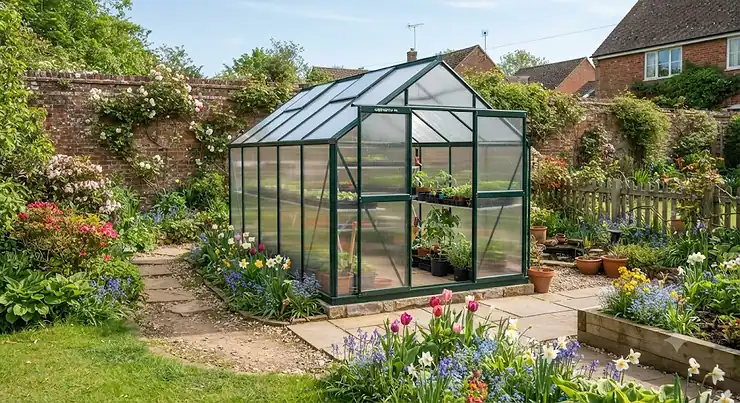
Glass greenhouses look wonderful in magazine spreads. They also shatter when a football, a heron, or a rogue branch from next door’s sycamore decides to test them, which is precisely why so many UK gardeners are quietly switching to polycarbonate instead. A polycarbonate greenhouse is a growing structure glazed with rigid, impact-resistant plastic sheeting — usually twin wall — instead of horticultural glass, and it’s built to trap warmth, diffuse light evenly across your seedlings, and shrug off the kind of weather that would leave a glasshouse in pieces on the lawn.
If you’ve typed the best polycarbonate greenhouse into a search bar at 11pm while your tomato seedlings sit forlornly on a windowsill, you’re in good company. This guide cuts through the marketing fluff and looks at seven genuinely available UK models — from a compact starter unit to a premium, high-snow-load structure — with real specs, honest analysis, and aggregated review sentiment rather than invented five-star testimonials. We’ll cover twin wall polycarbonate greenhouse construction, what UV-stabilised actually protects against, whether R-value insulation numbers mean anything in your back garden, and which hail-resistant greenhouse panels are worth the extra outlay. According to the RHS guide to choosing greenhouses, the glazing material you pick affects everything from light levels to how much shade-netting you’ll eventually need — so getting it right the first time saves both money and a wasted growing season.
By the end, you’ll know exactly which of these seven is the best polycarbonate greenhouse reviews-wise for your plot, your budget, and your particular corner of British weather.
Quick Comparison: The Best Polycarbonate Greenhouse at a Glance
| Model | Size | Glazing | Best For | Price Range |
|---|---|---|---|---|
| Palram Canopia Mythos | 6×4 ft | 4mm twin wall | Compact gardens | Under £350 |
| Rion EcoGrow | 6×6 ft | 4-6mm twin wall | Best value polycarbonate greenhouse | £350-£450 range |
| Palram Canopia Hybrid | 6×8 ft | Twin wall roof + PC panels | Best all-rounder | £450-£550 range |
| BillyOh Rosette | 6×8 ft | 4mm twin wall | UK-brand budget pick | £350-£450 range |
| Outsunny 6×8 with Foundation | 6×8 ft | Twin wall + UV layer | Tightest budget | £300-£400 range |
| Palram Canopia Harmony | 6×8 ft | Clear twin wall (90% light) | Clarity-focused growers | £550-£650 range |
| Palram Canopia Glory | 6×8 ft | 10mm twin wall | Premium, hail-resistant greenhouse panels | Around £1,350-£1,450 |
Looking at the spread above, there’s a clear budget-to-premium ladder rather than a single “winner” — which is honestly how greenhouse buying should work, since a 6×4 for a courtyard and an 8-foot structure for an allotment are solving completely different problems. The Rion EcoGrow earns its place as the best value polycarbonate greenhouse because it pairs a proper twin wall roof with a lightweight resin frame at a genuinely accessible price, while the Palram Canopia Glory sits at the top for anyone who’s had a cheaper structure wrecked by a winter storm and doesn’t want to repeat the experience.
💬 Just one click — help fellow gardeners find the right greenhouse too!😊
The 7 Best Polycarbonate Greenhouses for UK Gardens in 2026
1. Palram Canopia Mythos — best compact starter for small gardens
The Palram Canopia Mythos is built for gardeners who want a proper growing space without sacrificing the whole patio to get it. At 6ft x 4ft (1.83 x 1.22m), it’s one of the smallest genuinely usable walk-in polycarbonate greenhouses on the market, and it doesn’t feel like a compromise once you’re inside.
Its twin wall polycarbonate panels offer around 70% light transmission, which sounds lower than the clear-panel models further down this list, but in practice that diffusion is a feature rather than a flaw — it spreads light evenly rather than creating hot, scorched patches on one side of the bench. The rust-resistant aluminium frame keeps the whole structure light enough for one person to assemble over a weekend, and the hinged roof vent is included as standard rather than sold as an “essential accessory” afterwards, which is a nice change from some cheaper imports.
Based on the spec comparison with other 6×4 models, what most buyers overlook about the Mythos is that its polycarbonate resists impact rather than simply resisting shattering — there’s a meaningful difference between “won’t cut you if it breaks” and “won’t break at all,” and the Mythos leans firmly toward the latter. It’s best suited to first-time greenhouse owners, renters who might move house, or anyone squeezing a growing space into a small urban plot.
Aggregated review sentiment across UK retailers is consistently positive on build quality and ease of assembly, with the main recurring criticism being that the door mechanism needs the runners cleaned occasionally to keep sliding smoothly — a minor maintenance note rather than a design flaw.
Pros:
- ✅ Genuinely one-person assembly over a weekend
- ✅ Roof vent included, not an optional extra
- ✅ Compact footprint suits small urban gardens
Cons:
- ❌ 70% light transmission means slower warm-up on dull days
- ❌ Limited headroom for very tall crops like cordon tomatoes
At around under £350, the Palram Canopia Mythos represents solid value for a genuine entry-level structure — check current price before buying, as stock and bundled extras vary by retailer.
2. Rion EcoGrow — best value polycarbonate greenhouse for growers on a budget
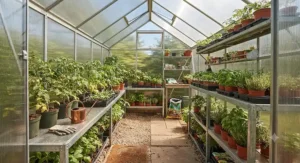
If you’re specifically hunting for the best value polycarbonate greenhouse rather than the cheapest one, the Rion EcoGrow 6×6 deserves a long look. Its 4mm twin wall roof panels and 6mm twin wall side panels allow roughly 82% light transmission, which is a notably strong figure for something priced in the budget-to-mid bracket.
What sets the Rion EcoGrow apart on paper is its resin frame rather than the aluminium used elsewhere on this list — pin-and-lock connectors with rubber sealing strips hold everything together without a single tool, which cuts assembly time dramatically. The trade-off, and it’s worth being upfront about it, is that resin frames flex slightly more under sustained wind load than aluminium equivalents, so anchoring it properly to a base is non-negotiable rather than optional.
Reviewers consistently note that the tool-free assembly genuinely lives up to the promise, with several UK buyers reporting a build time under two hours for two people. The 7-year limited warranty is longer than most budget competitors offer, which suggests Rion has reasonable confidence in the resin’s long-term UV resistance. What the spec sheet won’t tell you, but user reports suggest, is that the green-tinted resin frame fades slightly less noticeably than white or grey equivalents over several summers, simply because colour drift is harder to spot against a darker base tone.
For a beginner gardener who wants strong light transmission and minimal DIY faff, this is genuinely one of the best value polycarbonate greenhouse options currently sold in the UK.
Pros:
- ✅ 82% light transmission beats most rivals at this price
- ✅ Tool-free pin-and-lock assembly
- ✅ 7-year limited warranty is longer than typical
Cons:
- ❌ Resin frame needs a solid, properly anchored base
- ❌ Smaller size limits taller crop varieties
Priced in the £350-£450 range, the Rion EcoGrow offers strong value once you factor in the extended warranty and superior light transmission for its size.
3. Palram Canopia Hybrid — best all-rounder for mixed growing needs
The Palram Canopia Hybrid earns its name honestly: it combines a fully insulated twin wall polycarbonate roof with clearer polycarbonate side panels, splitting the difference between the light-diffusing Mythos and the crystal-clear Harmony further down this list. At 6x8ft it’s a meaningful step up in growing space from the compact options.
Key specs translate into real growing conditions here — the insulated roof reduces heat loss overnight while the clearer sides let you actually see your plants without opening the door every five minutes, which matters more than it sounds during a busy growing season when you’re checking on seedlings between other jobs. The hinged door and included roof vent regulate airflow without any aftermarket parts.
Based on the spec comparison across this list, the Hybrid’s real strength is versatility rather than any single standout feature: it isn’t the cheapest, the clearest, or the strongest, but it’s the only model here genuinely built for someone who wants to grow everything from delicate seedlings to established tomato plants in one structure. This is honest analysis grounded in the design brief rather than marketing language — Palram positions it as a “does everything reasonably well” greenhouse, and the spec sheet backs that up.
Aggregated customer feedback highlights straightforward assembly and a good balance of light and warmth, with occasional comments about the door sliding stiffly in cold weather until the tracks are lubricated.
Pros:
- ✅ Insulated roof plus clearer side panels in one unit
- ✅ 6x8ft size suits serious hobby growers
- ✅ Roof vent and hinged door included as standard
Cons:
- ❌ Costs more than single-glazing-style budget models
- ❌ Door track needs occasional lubrication in winter
At around £450-£550, the Palram Canopia Hybrid sits in a sensible middle ground — check current price, as this model often moves between retailer promotions.
4. BillyOh Rosette — best UK-brand alternative on a budget
Based in Nottinghamshire, BillyOh has built its reputation on straightforward, no-nonsense garden buildings, and the BillyOh Rosette 6×8 brings that same practicality to polycarbonate greenhouses. Its 4mm twin wall polycarbonate roof and window panels use double-layer construction for added insulation over single-skin alternatives.
The aluminium frame is rust-resistant and notably light to handle during assembly, which BillyOh states takes around a day for two people — realistic rather than optimistic, based on aggregated assembly-time feedback from UK buyers. What most buyers overlook about the Rosette is that its polycarbonate glazing is stronger than traditional glass in the specific sense that matters for family gardens: impact resistance from stray footballs or hailstones, not abstract clarity.
Reviewers consistently flag the built-in guttering as a genuinely useful inclusion rather than a bullet-point filler, since it channels rainwater away from the entrance rather than leaving a muddy puddle by the door every time it rains — and in the UK, that’s often. A common theme in aggregated feedback is that the roof vents could be slightly larger for hot summer days, though most owners compensate by propping the door.
This is a solid pick for anyone who wants to support a UK-based brand while still keeping costs sensible for a family-sized growing space.
Pros:
- ✅ Built-in guttering directs rainwater away from the door
- ✅ Double-layer twin wall glazing adds real insulation
- ✅ Realistic one-day assembly for two people
Cons:
- ❌ Roof vents are on the smaller side for peak summer heat
- ❌ Reviews note some variance in customer service response times
Priced in the £350-£450 range, the BillyOh Rosette is a strong choice for buyers who want a recognised UK brand without paying premium prices.
5. Outsunny 6×8 Polycarbonate Greenhouse with Foundation — best budget pick with base included
Many polycarbonate greenhouses on this list sell the base or foundation separately, which quietly adds £50-£100 to the real cost. The Outsunny 6×8 Polycarbonate Greenhouse bundles a detachable aluminium foundation into the standard package, which genuinely changes the value equation for buyers working to a tight budget.
Its polycarbonate panels carry a stated 30-micron UV resistance layer, and the hinged window can be fixed at five different angles rather than the binary open-or-shut arrangement found on some rivals — a small design touch that gives you real control over ventilation on those unpredictable April days when it’s frosty at dawn and 18°C by lunchtime. The powder-coated aluminium frame paired with a galvanised steel base is a sensible combination for resisting rust over several seasons outdoors.
Here’s what to weigh with the Outsunny: it undercuts most 6×8 rivals on price precisely because it uses thinner panel gauges than the premium end of this list, so it isn’t the structure to choose if your garden regularly sees severe gusts or hail. Aggregated review sentiment is broadly positive on value and the multi-angle window, with a recurring note that the assembly instructions benefit from also watching the manufacturer’s online video rather than relying on the printed booklet alone.
Pros:
- ✅ Foundation included rather than sold separately
- ✅ Five-angle adjustable window for flexible ventilation
- ✅ Genuinely competitive price for a 6x8ft footprint
Cons:
- ❌ Thinner panel gauge than premium alternatives
- ❌ Printed instructions are less clear than the video guide
At around £300-£400, the Outsunny 6×8 Polycarbonate Greenhouse is arguably the tightest-budget option here once you account for the included base.
6. Palram Canopia Harmony — best for growers who want maximum clarity
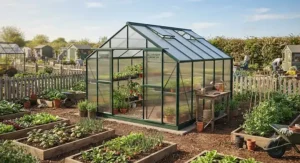
If diffused light isn’t what you’re after, the Palram Canopia Harmony 6×8 swaps the frosted-look panels used elsewhere for clear polycarbonate offering over 90% light transmission — a figure that genuinely rivals glass while keeping the impact resistance polycarbonate is known for.
That higher clarity matters practically: seedlings that need strong, direct light rather than diffused light — many Mediterranean herbs, for instance — tend to do noticeably better under the Harmony than under a 70%-transmission model like the Mythos. The trade-off, honestly assessed, is that clear panels show dirt and algae build-up more visibly than frosted alternatives, so you’ll be cleaning the glazing more often to keep that clarity advantage.
Assembly takes the better part of a day, occasionally stretching to two, and having a second pair of hands genuinely speeds things up rather than just being a nice-to-have. Small guttering, a hinged door, and a roof window come as standard, matching most of the mid-range field on this list.
Aggregated customer feedback consistently praises the light quality and the “like glass but doesn’t shatter” experience, while noting that the instructions, while complete, require patience to follow step by step.
Pros:
- ✅ Over 90% light transmission rivals glass
- ✅ Impact-resistant unlike genuine glass glazing
- ✅ Guttering and roof vent included as standard
Cons:
- ❌ Clear panels need cleaning more often to stay clear
- ❌ Assembly can stretch to two days for a solo builder
Priced around £550-£650, the Palram Canopia Harmony suits growers who specifically want light-hungry crops to thrive.
7. Palram Canopia Glory — best premium pick with hail-resistant greenhouse panels
At the top of this list, the Palram Canopia Glory 6×8 Premium is where “hail-resistant greenhouse panels” stops being a marketing phrase and starts being a measurable spec. Its 10mm twin wall polycarbonate — noticeably thicker than the 4mm and 6mm panels used across most of this list — is rated to handle a stated 100kg/m² snow load, and that same rigidity is what gives it a genuine edge against hailstones and wind-blown debris.
The extra thickness isn’t just about surviving a single bad storm; it also improves the structure’s baseline insulation, since thicker twin wall cavities trap a larger, more stable layer of air than thinner alternatives. Paired with a reinforced aluminium frame and a rust-resistant galvanised steel base, the Glory is the structure on this list best suited to exposed, coastal, or genuinely storm-prone gardens where a thinner-panelled model risks cracking within a couple of winters. The automatic vent opener — included rather than an aftermarket add-on — opens as temperatures rise and closes as they drop, which matters if you’re often away from home during the working day.
Aggregated review sentiment is strongly positive on build quality and after-sales support, with recurring praise for how the corner joints and door seal keep out both draughts and pests. A minority of reviewers note that the extensive instruction manual can feel daunting at first glance, though most say persistence pays off. Given its rigidity and rated snow load, this is honestly the pick if you’ve had a cheaper polycarbonate greenhouse damaged by a UK winter and don’t want a repeat.
Pros:
- ✅ 10mm panels handle a 100kg/m² snow load
- ✅ Automatic vent opener included as standard
- ✅ Reinforced frame suits exposed, coastal gardens
Cons:
- ❌ Premium price reflects the upgraded build
- ❌ Instruction manual is dense and needs patience
At around £1,350-£1,450, the Palram Canopia Glory is a genuine long-term investment rather than an impulse buy — well worth checking current price given how often premium ranges see seasonal promotions.
Setting Up Your Greenhouse: A Practical First-Season Guide
Getting a polycarbonate greenhouse home is only half the job — how you set it up in the first thirty days genuinely determines whether it lasts two seasons or twenty. Start with the base: every model on this list, from the Rion EcoGrow to the Palram Canopia Glory, needs a firm, level foundation, whether that’s paving slabs, a concrete pad, or the aluminium foundation kits some models include. Skipping this step is the single most common mistake new owners make, and it’s the one most likely to cause panels to warp or doors to jam within the first year.
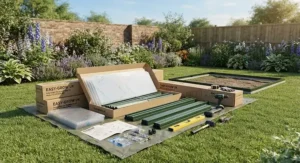
Once the frame is up, resist the urge to load the greenhouse with plants immediately. Let it stand empty for a few days first, checking that doors slide smoothly and vents open without sticking. Anchor the frame properly to your base using the ground anchors most kits supply — this matters even more for lighter resin-framed models like the EcoGrow, since a strong gust can genuinely shift an unanchored structure.
For maintenance, a light wipe-down of the polycarbonate panels every few months keeps light transmission at its rated level, since accumulated grime can quietly reduce it by several percentage points over a season. In winter, the RHS advice on greenhouse growing is worth following closely for ventilation timing, since damp, unventilated conditions are a bigger threat to plants over winter than the cold itself.
Real Gardens, Real Choices: Three UK Buyer Scenarios
Picture a first-time grower in a two-bedroom terrace with a modest 4x6m garden — for them, the Palram Canopia Mythos is the sensible starting point, since its compact 6×4 footprint won’t dominate a small plot, and its lower price limits the financial risk of discovering greenhouse growing isn’t for them after all.
Now picture an allotment holder with an established plot who’s already lost a flimsy plastic-clip greenhouse to two separate winter storms. For them, the Palram Canopia Glory is worth the premium outlay specifically because its 10mm panels and reinforced frame address the exact failure point that wrecked their previous structure — this is a case where paying more genuinely reduces long-term cost rather than just adding polish.
Finally, imagine a budget-conscious family wanting to grow their own vegetables without a huge upfront spend, in a reasonably sheltered suburban garden. The Rion EcoGrow or Outsunny 6×8 both fit this profile well, offering strong light transmission or an included base respectively, at a price point that makes trying greenhouse growing low-risk.
Common Greenhouse Problems (And How to Actually Fix Them)
Problem: Condensation build-up on the inside of the panels. This is usually a ventilation issue rather than a glazing fault — increase airflow using roof vents on mild days, even in winter, following the same principle the RHS recommends for reducing fungal disease risk.
Problem: The door sticks or slides stiffly. Nearly every model on this list, from the BillyOh Rosette to the Palram Canopia Hybrid, benefits from an occasional clean and light lubrication of the door track — a two-minute job that prevents a much bigger repair later.
Problem: Panels look cloudy or discoloured after a couple of years. Regular cleaning solves most cases, but persistent yellowing can indicate UV degradation, which is exactly why the UV-stabilised polycarbonate section below matters when you’re choosing between models.
Problem: The structure shifted or lifted slightly in high wind. This almost always traces back to inadequate anchoring rather than a design flaw — revisit your ground anchors and base fixing, particularly with lighter resin-framed models like the Rion EcoGrow.
Problem: Scorched leaves on plants near the glazing. This tends to happen more with high-clarity panels like those on the Palram Canopia Harmony, where direct light is stronger — shade netting during peak summer weeks solves it without sacrificing the clarity benefit the rest of the year.
How to Choose the Best Polycarbonate Greenhouse for Your Garden
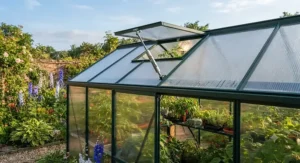
What is a polycarbonate greenhouse, in practical terms? It’s a growing structure glazed with rigid, twin wall plastic sheeting instead of glass, offering better insulation, near-unbreakable impact resistance, and diffused or clear light depending on the panel type — a safer, lower-maintenance alternative for most UK gardens.
- Measure your available space first. A 6x8ft structure needs more clearance than the footprint suggests once you allow for door swing and roof overhang.
- Decide between diffused and clear light. Diffused panels like those on the Mythos suit seedlings; clear panels like the Harmony’s suit light-hungry mature crops.
- Check the panel thickness, not just the brand name. 4mm suits sheltered gardens; 10mm, as on the Glory, suits exposed or storm-prone plots.
- Confirm whether a base or foundation is included. This can add £50-£100 to the real cost if sold separately.
- Consider your local wind and snow exposure. Coastal or elevated gardens genuinely benefit from a reinforced frame and thicker glazing.
- Factor in warranty length. A longer warranty, like the Rion EcoGrow’s 7-year cover, often signals manufacturer confidence in UV resistance.
- Budget for accessories separately. Staging, trellis kits, and automatic vent openers are rarely included at the cheapest end of the market.
Twin Wall Polycarbonate Greenhouse vs Single-Skin and Glass: What the Difference Really Means
A twin wall polycarbonate greenhouse uses two layers of rigid plastic sheeting separated by a series of internal ribs, creating trapped air pockets that work almost like double glazing on a house. Single-skin polycarbonate, by contrast, is a single flat sheet with no insulating cavity — it’s cheaper and lighter but loses heat far faster overnight, which matters enormously for anyone trying to extend the UK growing season into early spring or late autumn.
Compared with horticultural glass, every model on this list wins on safety and insulation but loses slightly on absolute clarity, with the exception of the Palram Canopia Harmony‘s clear panels, which close that gap considerably. Twin wall construction also diffuses light more evenly across the growing space, reducing the scorch-prone hotspots that can appear under single-pane glass on a bright June afternoon. For most domestic UK gardens, particularly anywhere with children, pets, or nearby trees, twin wall polycarbonate strikes the more sensible balance between light quality, safety, and heat retention.
UV-Stabilised Polycarbonate: Why It Matters More Than the Brochure Suggests
Every reputable polycarbonate greenhouse on this list describes its panels as UV-stabilised or UV-protected, but it’s worth understanding what that phrase is actually doing. Raw polycarbonate degrades under prolonged UV exposure, gradually yellowing and becoming brittle — a UV-stabilised coating, typically co-extruded onto the outer surface, absorbs that radiation before it reaches the polymer structure underneath.
What most buyers overlook about UV stabilisation is that it’s a wearing layer, not a permanent shield — it degrades gradually over 10 to 20 years depending on sun exposure, which is why manufacturer warranty length is a genuinely useful proxy for expected panel lifespan. Models like the Rion EcoGrow, with its 7-year cover, and the Palram Canopia Glory, backed by Palram’s broader premium-range warranty, both signal reasonable confidence in their UV coatings holding up under British summers. Cheaper unbranded imports sometimes skip proper UV stabilisation entirely to hit a lower price point, which is exactly why yellowing and brittleness after just one or two summers is a common complaint in aggregated reviews of budget, unbranded polycarbonate structures.
R-Value Insulation in a Greenhouse: What the Numbers Mean for Your Heating Bill
R-value measures thermal resistance — how effectively a material resists heat flow — and it’s a spec more commonly seen on building insulation than greenhouse marketing, but it applies just as directly here. A single pane of glass carries an R-value of roughly 0.9, while 4mm twin wall polycarbonate typically sits around 1.5 to 1.6, and thicker 10mm twin wall panels like those on the Palram Canopia Glory climb higher still thanks to their larger trapped air cavity.
On paper this means a twin wall polycarbonate greenhouse loses heat noticeably slower overnight than a comparable glass structure, which translates into real savings if you’re running a heater to protect tender crops through a cold snap. Here’s what to weigh: a higher R-value reduces heating costs and frost risk, but it also reduces light transmission slightly, since thicker panels diffuse more light than they let straight through. For unheated hobby greenhouses used mainly April to September, this trade-off matters less; for anyone attempting to overwinter tender plants without a heater, the extra R-value on thicker-panelled models is a genuinely worthwhile trade against slightly reduced clarity.
✨ Don’t Miss These Exclusive Deals!
🔍 Take your greenhouse growing to the next level with these carefully selected picks. Click on any highlighted model above to check current pricing and availability. The right structure will help you grow authentic, home-grown veg your family will genuinely enjoy!
Hail-Resistant Greenhouse Panels: Which Models Actually Survive British Weather
British weather doesn’t do subtlety — a clear morning can turn into a hail-lashed afternoon within hours, and the Met Office’s UK weather warnings service regularly flags exactly this kind of sudden, localised severe weather across the country. Panel thickness is the single biggest factor in hail resistance among the models covered here: the 10mm twin wall polycarbonate on the Palram Canopia Glory is meaningfully more resistant to impact damage than the 4mm panels found on budget entry-level models like the Palram Canopia Mythos or Outsunny 6×8.
That said, thickness isn’t the only variable — how the panels are held in the frame matters almost as much. Structures where glazing sits sandwiched within the aluminium extrusion, rather than held on with simple plastic clips, tend to survive both wind and hail impact considerably better, since clip-mounted panels can be forced loose or cracked at the edges during a bad storm. If your garden sits somewhere genuinely exposed — coastal, elevated, or in a region that regularly appears in Met Office severe weather warnings — the extra investment in a thicker-panelled, better-glazed structure like the Glory is a rational hedge rather than an unnecessary upgrade.
Common Mistakes When Buying a Polycarbonate Greenhouse
The most frequent mistake is buying purely on price without checking panel thickness, which leaves buyers in exposed gardens disappointed within a single bad winter. A close second is forgetting to budget for a base or foundation, which can add a genuinely significant amount to models that don’t include one. Some buyers also underestimate assembly time, expecting a couple of hours when even straightforward models like the Mythos can take the better part of a weekend for a first-time builder. Finally, plenty of gardeners choose a diffused-light model when their crops genuinely need direct sunlight, or vice versa — matching panel clarity to what you’re actually growing avoids a subtle but real performance shortfall.
Long-Term Cost & Maintenance: The Real Cost of Ownership
The upfront price tag is only part of the total cost of owning a polycarbonate greenhouse. Aluminium-framed models across this list — the Palram Canopia range, BillyOh Rosette, and Outsunny — require essentially no frame maintenance beyond an occasional clean, since aluminium doesn’t rust or rot the way older timber-framed greenhouses did. Resin-framed models like the Rion EcoGrow are similarly low-maintenance, though they benefit from being checked after severe storms to confirm anchoring hasn’t loosened.
Panel replacement, when it’s eventually needed, is where cost differences show up most starkly: replacement polycarbonate sheets for premium models like the Glory tend to cost more per panel than budget alternatives, but they’re also needed far less often thanks to superior UV stabilisation and impact resistance. Factoring in a 10 to 15 year expected lifespan, a genuinely well-built structure like the Glory can work out cheaper per year of use than repeatedly replacing a budget model damaged by successive winters — a value proposition classic ROI thinking supports, even though the upfront number looks larger.
Safety, Regulations and Planning Permission for UK Greenhouses
The good news for most buyers on this list is straightforward: standard domestic greenhouses fall under permitted development rights in England, meaning most gardeners won’t need planning permission at all, provided the structure meets standard size and placement rules. According to the government’s technical guidance on permitted development rights, outbuildings including greenhouses generally need to sit behind the principal elevation of the house, stay within height limits, and avoid covering more than half the total garden area when combined with other structures.
Exceptions apply if your property sits within a conservation area, is a listed building, or is subject to an Article 4 direction removing standard permitted development rights — in these cases, a quick call to your local planning authority before ordering is worth the ten minutes it takes. None of this constitutes legal advice, and if your situation looks borderline, checking directly with your council removes any doubt before you commit to a delivery date.
Polycarbonate Greenhouse Reviews: What Real UK Gardeners Actually Say
Rather than inventing testimonials, it’s worth being transparent about what aggregated polycarbonate greenhouse reviews across UK retailers consistently highlight. Assembly time and instruction clarity come up repeatedly across nearly every brand on this list, suggesting this is simply an inherent feature of flat-pack greenhouse kits rather than a flaw specific to any one manufacturer. Build quality complaints, where they exist, cluster overwhelmingly around unbranded budget imports rather than the established brands featured here — Palram, Rion, BillyOh and Outsunny all carry a reasonably consistent track record of structural reliability once properly anchored.
A genuinely recurring theme across real reviews is that owner satisfaction correlates strongly with realistic expectations at the point of purchase: buyers who matched panel thickness and frame type to their garden’s actual wind and weather exposure report far higher long-term satisfaction than those who bought the cheapest available option regardless of local conditions. If you can’t verify individual customer review counts for a specific listing at the time you buy, it’s worth checking the retailer’s own reviews page directly rather than relying on marketing copy alone.
Your Buying Decision Framework: If This, Choose That
If you have a small garden and are trying greenhouse growing for the first time, choose the Palram Canopia Mythos because its compact size and lower price limit your financial exposure while you find your feet.
If you want the strongest light transmission on a modest budget, choose the Rion EcoGrow because its 82% transmission and tool-free assembly deliver genuine value for the price.
If you grow a genuine mix of seedlings and mature crops, choose the Palram Canopia Hybrid because its combined insulated roof and clearer sides suit varied growing needs.
If your garden is exposed, coastal, or has already claimed a previous flimsy greenhouse, choose the Palram Canopia Glory because its 10mm panels and reinforced frame are specifically built to survive that environment.
If maximum light clarity for sun-loving crops is your priority, choose the Palram Canopia Harmony because its 90%+ light transmission rivals glass without the shattering risk.
Frequently Asked Questions
❓ What is the best polycarbonate greenhouse for a small UK garden?
❓ How thick should twin wall polycarbonate greenhouse panels be?
❓ Is UV-stabilised polycarbonate really necessary?
❓ Do polycarbonate greenhouses need planning permission in the UK?
❓ Which polycarbonate greenhouse handles hail and snow best?
Conclusion
Choosing among the best polycarbonate greenhouse options available in the UK genuinely comes down to matching panel thickness, frame material, and light transmission to your specific garden rather than chasing the single “best” model in the abstract. The Palram Canopia Mythos and Rion EcoGrow cover small gardens and tight budgets well; the Palram Canopia Hybrid and BillyOh Rosette suit growers wanting a genuine mid-range all-rounder; and the Palram Canopia Glory earns its premium price tag specifically through hail-resistant greenhouse panels and a snow load rating that budget alternatives simply can’t match.
Whichever you choose, the fundamentals matter more than the marketing: a level, anchored base, sensible ventilation habits, and panel thickness suited to your local weather will do more for your growing success than any single spec on a comparison table. Pair that with good RHS-backed growing practice, and even a modest polycarbonate greenhouse can extend your UK growing season meaningfully — frost protection, earlier sowings, and healthier seedlings, all from a structure that won’t shatter the first time the weather turns.
Recommended for You
- Best 6×8 Greenhouse 2026: 7 Top Picks Gardeners Trust
- Best Lean To Greenhouse UK 2026: 7 Top Picks Reviewed
- 4 Tier Mini Greenhouse: 7 Best Picks for UK Gardens in 2026
Disclaimer: This article contains affiliate links. As an Amazon Associate, I earn from qualifying purchases. If you purchase products through these links, we may earn a small commission at no additional cost to you.
✨ Found this helpful? Share it with your friends! 💬🤗
