
In This Article
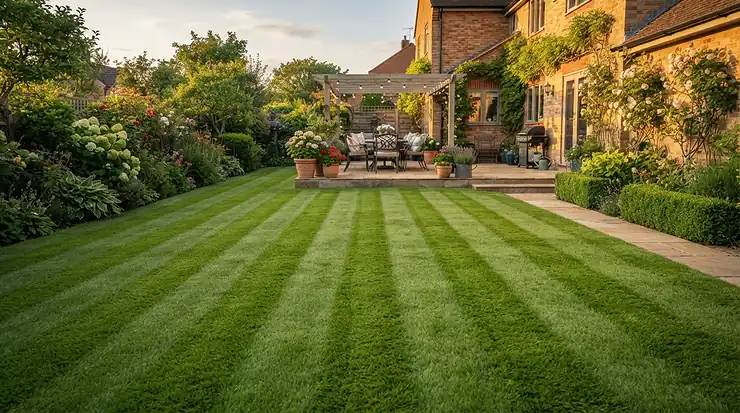
Somewhere between “cottage garden with a postage-stamp lawn” and “field you need a tractor for” sits the plot most of us actually own — and finding the right mower for average garden use turns out to be trickier than the marketing suggests. Manufacturers love to shout about mowers built for “any lawn,” which usually means the machine is either hopelessly underpowered for a proper British summer flush or a 30kg beast that spends eleven months a year wedged behind the shed door.
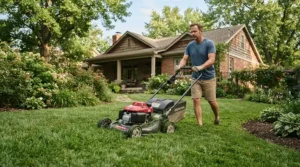
According to industry figures from the Horticultural Trades Association, the typical UK garden works out at roughly 14.3 metres square, which is about 207 square metres, while separate analysis of Ordnance Survey data puts the national median closer to 188 square metres. Either way, we’re talking about a lawn you can mow in twenty to forty minutes with the right kit — not a postage stamp, not a paddock. That distinction matters more than most buying guides let on, because a mower sized for a 60m² courtyard will leave you stopping every five minutes on a 200m² plot, while a machine built for half an acre is needlessly heavy, expensive and awkward to store in a typical UK shed.
This guide covers seven real, currently available machines spanning corded electric, cordless battery and self-propelled petrol, with honest analysis of where each one earns its keep — and where it doesn’t.
Quick Comparison Table
| Mower | Power Type | Cutting Width | Weight | Best For |
|---|---|---|---|---|
| Flymo EasiStore 300R | Corded electric | 30cm | 8.4kg | Small-to-average lawns near a socket |
| Worx WG779E.2 | Cordless (40V) | 34cm | 11.1kg | Average gardens, edge-cutting |
| Stihl RMA 235 | Cordless (36V) | 33cm | 14kg | Quiet, low-maintenance average plots |
| Bosch Rotak 43 LI Ergoflex | Cordless (36V) | 43cm | 13.9kg | Average-to-larger average gardens |
| Einhell GE-CM 36/43 Li M | Cordless (36V) | 43cm | 21.3kg | Average gardens with thicker grass |
| Mountfield SP555V | Self-propelled petrol | 53cm | 44kg | Larger average or sloped gardens |
| Ego LM2236E-SP | Self-propelled cordless | 55cm | 31kg | Power-hungry average-to-large plots |
Looking at the spread, cutting width climbs steadily from the Flymo EasiStore 300R‘s compact 30cm to the Ego LM2236E-SP‘s 55cm deck, and that’s really the story of this whole category — width buys you speed, at the cost of weight and storage space. Self-propulsion only shows up twice here, on the Mountfield SP555V and the Ego LM2236E-SP, which tells you something important: most average UK gardens genuinely don’t need it, however tempting the idea of a mower that walks itself sounds after a long week.
💬 Just one click — help others make better buying decisions too!😊
Top 7 Mowers for an Average UK Garden: Expert Analysis
1. Flymo EasiStore 300R — best budget pick for compact-to-average plots
The Flymo EasiStore 300R is the mower equivalent of a reliable hatchback — nothing flashy, does exactly what’s asked of it, and won’t bankrupt you doing it. Its standout feature is the fold-flat vertical storage system, which genuinely matters if your “shed” is actually a narrow gap behind the wheelie bins.
Powered by a 1,200W corded motor with a 30cm cutting width and a 10-metre cable, this mower is built around the assumption that you have a nearby socket and a lawn that doesn’t wander too far from it. The three-position height adjustment (20-60mm) covers most ordinary domestic lawn needs, and the 30-litre grass box means you’re not emptying it every ten paces. At 8.4kg it’s genuinely light — anyone who’s wrestled a heavier mower up garden steps will appreciate that.
This is squarely a beginner and budget-conscious buyer’s machine. If your garden sits under roughly 300m² and isn’t oddly shaped, the cable is manageable rather than a menace, and the low running cost (a handful of pence in electricity per cut) makes it painless to justify.
Reviewers consistently praise the close edge-cutting performance and manoeuvrability, though a detailed independent test noted the rear roller’s striping effect was barely noticeable in practice — worth knowing if stripes are the whole point for you.
Pros:
- ✅ Genuinely lightweight at 8.4kg, easy to carry indoors
- ✅ Close edge-cutting reduces separate strimming work
- ✅ Cheapest realistic option for an average small garden
Cons:
- ❌ 10m cable limits reach on longer, narrower plots
- ❌ Rear roller stripe effect underwhelms in real use
Expect to pay somewhere in the £70-£90 range depending on retailer promotions. For a mower this size and price, that’s honestly good value — just budget separately for an extension lead if your lawn stretches beyond the cable’s comfortable reach.

2. Worx WG779E.2 — best cordless value pick for average gardens
The Worx WG779E.2 punches well above its price point, and its standout feature is the “cut-to-edge” deck design that lets the blade run almost flush with the right-hand side of the mower, dramatically cutting down on manual trimming around borders.
Powered by twin 20V (40V combined) 2.0Ah PowerShare batteries, the mower is rated for lawns up to 400m² on a charge, with a 34cm cutting width, 30-litre grass bag, and six cutting heights from 20-70mm. At 11.1kg it sits in a comfortable middle ground — heavier than the corded Flymo but nowhere near the bulk of a petrol machine. IntelliCut technology automatically ramps up motor power when it senses thicker grass, which in practice means fewer stalls in the overgrown corners everyone has.
This is a strong pick for anyone upgrading from corded electric who wants freedom of movement without committing to petrol maintenance. What most buyers overlook about the PowerShare system is its cross-compatibility: if you already own Worx drills, saws or hedge trimmers, the same batteries slot straight in, which quietly adds long-term value the sticker price doesn’t reflect.
A hands-on review by Real Homes rated the battery life and edge-to-edge cutting highly, though it flagged that the maximum cutting height might sit slightly too low for anyone wanting a longer, wilder lawn look.
Pros:
- ✅ Cut-to-edge design cuts down on separate trimming
- ✅ Battery shared across the wider Worx tool ecosystem
- ✅ Six height settings suit most average lawn styles
Cons:
- ❌ Maximum cutting height may feel short for longer lawns
- ❌ 400m² coverage means recharging on bigger average plots
Typical pricing sits around £180-£220 for the mower with two batteries and a charger included, which for a cordless option with this feature set represents some of the strongest value going.
3. Stihl RMA 235 — best for quiet, low-fuss average-garden mowing
The Stihl RMA 235‘s standout feature is how little fuss it makes — literally, at a measured 76 dB(A), it’s one of the quietest mowers here, which matters more than people expect once next door starts complaining about Sunday morning mowing sessions.
This is a 36V cordless mower with a 33cm cutting width, five-position central height adjustment (25-65mm), a 30-litre folding grass box, and a genuinely low 14kg weight. The AK System battery is sold separately in most kits, which is a point worth flagging honestly — Stihl’s ecosystem approach means the headline unit price rarely tells the whole story, and buyers should budget for a battery and charger on top if buying the “shell only” version.
Based on the spec comparison with rivals in this guide, the RMA 235 isn’t the widest-cutting or most powerful machine on this list, but its low weight and quiet operation make it the standout choice for anyone mowing in a terraced house row where neighbours share fences and patience. STIHL’s battery system also plays nicely with their trimmers and blowers, echoing the cross-compatibility argument made for the Worx above.
Owner reviews on retailer sites repeatedly highlight the build quality and manoeuvrability, with the recurring caveat that the recommended AK 20 battery covers a modest 300m² per charge — fine for an average garden, but worth pairing with the larger AK 30 battery if your lawn runs on the bigger side of average.
Pros:
- ✅ Genuinely quiet at 76 dB(A), good for close neighbours
- ✅ Lightweight 14kg build, easy to manoeuvre and store
- ✅ Premium build quality backed by a five-year domestic warranty
Cons:
- ❌ Battery and charger often sold separately, adding to total cost
- ❌ 33cm width is narrower than most rivals at this price
A complete kit with battery and charger typically runs from around £380 up to £420, though shell-only units (for existing AK System owners) sit much lower, around £150-£170.
4. Bosch Rotak 43 LI Ergoflex — best all-rounder for average-to-larger plots
The Bosch Rotak 43 LI Ergoflex‘s standout feature is its 43cm cutting width paired with genuinely sensible ergonomics — the Ergoflex handle system and QuickClick tool-free adjustments make this one of the more pleasant mowers here to actually push around for half an hour.
Under the bonnet sits a 36V, 4.0Ah lithium-ion battery delivering up to roughly 90 minutes of runtime, which comfortably covers gardens rated up to 600m². The mower weighs 13.9kg, includes a 50-litre grass box, and offers six cutting heights from 20-70mm via a single central lever. Hardened steel blades and Bosch’s airflow-optimised deck are designed to pull clippings up and into the box rather than leaving them scattered — a small detail that saves a genuine amount of raking afterwards.
Here’s what to weigh with the Rotak 43: it’s not the cheapest cordless option on this list, but the combination of wider cutting width and a well-known service network (Bosch dealers are common on UK high streets) makes it a sensible middle-ground pick for buyers who want brand reassurance without stepping up to petrol.
Reviewers on DIY retail sites frequently praise the cutting performance and grass comb edge-cutting, with the main recurring complaint being that the model has occasionally sold at a noticeable discount versus its RRP — worth shopping around rather than paying full price on impulse.
Pros:
- ✅ Wide 43cm cutting width speeds up average-lawn mowing
- ✅ Ergoflex handles genuinely reduce arm and back strain
- ✅ Well-established brand with wide UK service availability
Cons:
- ❌ Heavier than the narrower cordless options on this list
- ❌ Price fluctuates significantly between retailers and promotions
Prices vary noticeably by retailer and promotion, typically ranging from around £370 up to £500 at full RRP — a case where checking current price across a couple of stockists genuinely pays off.
5. Einhell GE-CM 36/43 Li M — best for thicker grass on an average lawn
The Einhell GE-CM 36/43 Li M‘s standout feature is its brushless motor paired with a genuinely large 63-litre grass box — noticeably bigger than most rivals here, which means fewer trips to the compost heap mid-mow.
This is another 36V cordless machine, supplied with two 18V 4.0Ah Power X-Change batteries, offering a 43cm cutting width and six-stage central height adjustment from 25-75mm. At 21.3kg it’s the heaviest cordless mower on this list — noticeably chunkier than the Bosch at the same cutting width — but that extra mass comes with genuinely large “highwheeler” wheels that handle uneven average-garden turf without much drama. A mulching wedge is included as standard, letting you skip the grass box entirely and return nutrients to the lawn instead.
What most buyers overlook about the Power X-Change system is its scale: with over 200 tools sharing the same battery platform, this is arguably the widest cross-compatible cordless ecosystem on the UK market, which matters if you’re likely to add a strimmer or hedge trimmer down the line.
Aggregated retailer reviews consistently highlight strong cutting performance in thicker or slightly overgrown grass — a fair reflection of the higher-capacity batteries — while the extra weight is the most commonly repeated drawback among owners comparing it to lighter cordless rivals.
Pros:
- ✅ Large 63L grass box means fewer emptying stops
- ✅ Handles thicker, longer grass better than lighter rivals
- ✅ Part of Einhell’s extensive Power X-Change battery family
Cons:
- ❌ Noticeably heavier than comparable 43cm cordless mowers
- ❌ Bulkier footprint makes storage slightly more demanding
Typical pricing for the full kit with two batteries and chargers sits around £340-£390, which is competitive given the larger collection box and thicker-grass performance on offer.

6. Mountfield SP555V — best self-propelled petrol pick for larger average gardens
The Mountfield SP555V‘s standout feature is its Twinclip blade system — four cutting edges instead of the usual two — which delivers a noticeably finer finish than most rotary mowers manage, closer to what you’d expect from a cylinder mower.
Power comes from a Honda GCVx170 Autochoke petrol engine (167cc, 3.3kW), driving a 53cm steel cutting deck through a variable-speed self-propelled transmission. Seven cutting heights span 25-77mm, and the 70-litre canvas collector is sized for the extra ground this mower covers in a single pass. At 44kg it’s substantially heavier than anything cordless on this list, but that weight buys genuine traction on the kind of gentle slopes that make lighter mowers feel like hard work.
On paper this means the SP555V is overkill for a tidy 150m² rectangle — but for gardens pushing toward the upper end of “average” (think 250-400m², or anything with a meaningful incline), self-propulsion stops being a luxury and starts saving your knees. The trade-off is the ongoing petrol-mower reality: fuel, oil changes, and an engine that needs occasional servicing rather than just a charge.
Owner feedback repeatedly praises the Honda engine’s reliability and the Twinclip finish quality, with the most common criticism centring on noise levels — at 98 dB(A), this is comfortably the loudest machine in this guide, which the RHS’s own mowing guidance is worth bearing in mind if you’ve got close neighbours and prefer to mow outside prime hours.
Pros:
- ✅ Self-propelled drive genuinely helps on slopes and larger plots
- ✅ Twinclip blade system delivers a notably fine finish
- ✅ Reliable Honda engine backed by a five-year warranty
Cons:
- ❌ Considerably heavier and louder than any cordless option here
- ❌ Ongoing petrol, oil and servicing costs add up over time
Expect to pay somewhere around £600-£650 depending on retailer and any seasonal promotions — a genuine step up in price, but one that buys real self-propelled muscle.
7. Ego LM2236E-SP — best premium pick for power-hungry average-to-large gardens
The Ego LM2236E-SP‘s standout feature is raw battery muscle: a 56V 10Ah battery — described by independent reviewers as one of the most powerful lawn mower batteries currently available — giving this cordless machine torque that genuinely rivals a petrol engine.
The spec sheet reads like a wish list: 55cm cutting width, self-propelled variable-speed drive, an 85-litre grass box, and cutting heights from 25-105mm. Bosch and Einhell buyers looking at 40-43cm decks will find the extra 12-15cm here noticeably shortens mowing time on anything approaching the larger end of “average.” At 31.2kg it’s heavy for a cordless mower, but self-propulsion means you’re steering rather than pushing, which changes the physical experience considerably.
Here’s what the spec sheet won’t tell you outright: independent testing found this mower could cover roughly 2,000m² on a single charge, with the battery fully recharging in about an hour — genuinely petrol-rivalling stamina for a cordless machine. That capability is arguably wasted on a true 150-200m² average garden, but for anyone whose “average” plot creeps toward the larger end, or who simply values never having to think about fuel again, it’s a compelling case.
Reviewers are consistently enthusiastic about the cutting torque and incline handling, describing it as wieldy even on bumps and slopes despite the weight — though the price, driven substantially by the premium battery, is the recurring sticking point in every review.
Pros:
- ✅ Petrol-rivalling torque from a genuinely powerful battery
- ✅ Self-propelled and stable even on bumps and inclines
- ✅ Fast one-hour recharge keeps downtime to a minimum
Cons:
- ❌ Premium price, largely driven by the battery cost alone
- ❌ Heavy for a cordless mower, though self-propulsion offsets this
This is the most expensive mower in this guide, typically landing somewhere in the £700-£900+ range depending on the battery and charger bundle chosen — a genuine investment, but one aimed squarely at buyers who want the best cordless mower currently made rather than the most cost-effective one.
Garden Size Guide: Matching Your Mower to Your Plot
Before falling for a spec sheet, it’s worth pacing out your actual lawn — because the single biggest mistake buyers make is sizing their mower to their aspirations rather than their grass.
If your garden sits under 150m², a corded electric like the Flymo EasiStore 300R or a compact cordless model does the job without unnecessary weight or expense; you’ll finish mowing before a bigger machine has even warmed up. Between roughly 150-300m² — the genuine sweet spot for a typical UK plot — mid-power cordless mowers like the Worx WG779E.2, Stihl RMA 235, Bosch Rotak 43 LI Ergoflex or Einhell GE-CM 36/43 Li M hit the balance of coverage, weight and runtime most people actually need. Push past 300-400m², add a slope, or factor in thicker grass that hasn’t seen a mower in a fortnight, and self-propulsion starts earning its keep — which is where the Mountfield SP555V and Ego LM2236E-SP come in.
Shape matters almost as much as area. A long, narrow garden favours a wider cutting deck (43cm-plus) to minimise the number of passes, while an oddly shaped plot with lots of borders rewards the tighter turning circle of a lighter, narrower mower. If in doubt, measure your longest uninterrupted stretch of lawn — that tells you more about which machine will suit than the total square metreage alone.

Practical Usage Guide: Your Mower’s First 30 Days
Getting a new mower home is only half the job — how you treat it in the first month sets the tone for years of easy mowing or years of frustration.
Start by setting the cutting height generously high for the first few cuts, even if the grass looks manageable. The RHS’s own guidance is blunt on this point: never remove more than a third of the grass height in one session, and scalping a lawn on its first outing with a new mower is one of the most common — and most avoidable — mistakes buyers make. Gradually lower the setting over subsequent cuts as the lawn adjusts.
For cordless models, fully charge the battery before first use and let it run down close to empty at least once early on to help the battery management system calibrate properly. Check the blade bolt for tightness after the first two or three cuts — vibration during transit and initial use can loosen fixings slightly. Petrol owners on the Mountfield SP555V should check oil levels before the very first start, since some machines ship with oil separately for transit safety.
Finally, get into a rinse-and-dry habit: hosing the underside of the deck after cutting damp grass (with the mower unplugged or the battery removed) prevents the caked-on clippings that quietly blunt blades and clog airflow over a season.
How to Choose a Mower for an Average Garden
Choosing the right mower for average garden use comes down to matching a handful of practical factors to your actual lawn, rather than chasing the most powerful spec sheet on the shelf. Here’s the shortlist that matters most:
- Measure your lawn first. Pace it out or check a property listing — don’t guess. This single step rules out half the wrong purchases before you even start browsing.
- Match cutting width to shape. Wider decks (40cm+) suit open, regular lawns; narrower mowers (30-34cm) manoeuvre better around borders and awkward corners.
- Decide on power source honestly. Corded electric is cheapest and lightest but tethered; cordless battery suits most average gardens; petrol self-propelled earns its cost on slopes or larger plots.
- Check the collection capacity. A 30-litre box on a 300m² lawn means constant emptying trips — bigger boxes save real time on bigger average gardens.
- Consider your storage space. A 44kg petrol mower needs proper shed space; a fold-flat corded model can live in a cupboard.
- Factor in battery ecosystem, if going cordless. Sharing batteries across a trimmer, hedge cutter and mower adds genuine long-term value beyond the mower alone.
- Weigh noise against neighbours. Petrol models regularly exceed 95 dB(A); cordless mowers typically sit 15-20 dB(A) quieter, which matters more than people expect in terraced streets.
Mower Blade Width Explained: Why It Matters More Than Power Ratings
Mower blade width gets far less attention than battery voltage or engine size, yet it’s arguably the single spec that most directly determines how long mowing actually takes. A wider blade covers more ground per pass — simple as that — but the relationship isn’t purely linear, and there’s real nuance worth understanding before you fixate on the biggest number available.
On paper, the difference between the Flymo EasiStore 300R‘s 30cm deck and the Ego LM2236E-SP‘s 55cm deck looks modest — 25cm — but across a 200m² lawn, that translates to roughly 40% fewer passes back and forth, which adds up to genuine minutes saved every single cut. What most buyers overlook about blade width is that it interacts directly with manoeuvrability: a wider deck is objectively better at covering open lawn quickly, but noticeably clumsier navigating tight borders, flower bed edges, or a garden broken up by paths and features. The Worx WG779E.2 and Stihl RMA 235, both sitting in the 33-34cm range, represent a genuine middle ground — wide enough to make reasonable progress, narrow enough to still thread between obstacles without constant three-point turns.
Blade width also affects power draw. A wider blade needs more torque to keep spinning at a consistent speed through resistance, which is exactly why the Bosch Rotak 43 LI and Einhell GE-CM 36/43 Li M — both 43cm — pair their decks with stronger 36V battery systems rather than the smaller batteries found on narrower mowers. Reviewers consistently note that mowers with mismatched blade width and motor power tend to bog down in thicker grass, so the two specs should always be read together, never in isolation.
For a genuinely average UK garden, somewhere between 33cm and 43cm hits the practical sweet spot — wide enough to make real progress, narrow enough to remain easy to store, lift and manoeuvre around typical garden clutter.
Self-Propelled Mowers vs Push Mowers: Which Suits an Average UK Garden?
This is the question that splits opinion most sharply among UK gardeners, and honestly, the right answer depends heavily on your specific plot rather than any universal rule.
Push mowers — which cover five of the seven machines in this guide — rely entirely on your own effort to move forward, with the motor or engine powering only the blade. For a flat, average-sized lawn under roughly 250-300m², this genuinely isn’t much of a workout, and the lighter weight of push models (typically 8-22kg here) makes them easier to lift over thresholds, store upright, and manoeuvre around tight corners.
Self-propelled mowers — represented here by the Mountfield SP555V and Ego LM2236E-SP — add a drive system to the wheels, so the mower pulls itself forward and you’re steering rather than pushing. What most buyers overlook about self-propulsion is that it isn’t really about laziness; it’s about traction. On any meaningful slope, or on a larger average lawn where fatigue sets in halfway through, self-propulsion maintains a consistent cutting speed that a tired arm pushing a heavy mower simply can’t match, which in turn produces a more even cut.
The honest trade-off: self-propelled mowers cost more, weigh more, and are markedly harder to manoeuvre in tight, obstacle-heavy gardens, since disengaging the drive to turn sharply takes a moment’s thought rather than being instinctive. For the genuinely average flat UK garden — the 150-250m² rectangle most of us actually have — a good push mower does the job without the added bulk. Once your plot pushes past 300m², slopes appear, or grass regularly gets away from you between cuts, self-propulsion moves from nice-to-have to genuinely worth the extra outlay.
Top-Rated Lawn Mowers: What UK Reviewers Actually Praise (And Complain About)
Trawling through independent reviews and owner feedback across this category reveals some consistent patterns worth knowing before you commit to any of these seven machines.
Among top-rated lawn mowers in the cordless category, battery life and edge-cutting performance dominate the praise columns — both the Worx WG779E.2 and Bosch Rotak 43 LI Ergoflex score consistently well here, with owners specifically calling out how little uncut grass is left along fences and borders. On the flip side, the most repeated criticism across nearly every cordless model, including the Stihl RMA 235 and Einhell GE-CM 36/43 Li M, concerns the true cost of complete kits once batteries and chargers are factored in — headline prices for “shell only” units can be misleading if you don’t already own compatible batteries.
For self-propelled machines, the Mountfield SP555V earns consistent praise for its Twinclip finish quality and Honda engine reliability, while the Ego LM2236E-SP is repeatedly singled out by reviewers as delivering genuinely petrol-rivalling torque from a battery — a claim that, refreshingly, seems to hold up in independent hands-on testing rather than just marketing copy.
What most buyers overlook when reading “top rated” lists is that ratings are context-dependent: a mower rated highly for a 600m² garden with slopes may be rated only “fine” by someone with a flat 150m² rectangle, simply because they’re paying for capability they don’t use. Reading reviews with your own specific garden size in mind — rather than chasing the single highest star rating — consistently produces better purchase decisions than following aggregate scores alone.
Common Mistakes When Buying a Mower for an Average Garden
Even careful buyers fall into a handful of predictable traps when shopping this category, so it’s worth naming them directly.
The most common mistake is buying based on garage-adjacent aspiration rather than actual lawn size — choosing the Ego LM2236E-SP‘s 55cm deck for a 120m² courtyard, say, simply because it looks impressive, then struggling to store or manoeuvre it. Equally common is underestimating collection capacity needs; a 30-litre box that seemed fine in the shop becomes a genuine chore on a 300m² lawn in peak summer growth. Buyers also frequently overlook total cost on cordless “shell only” kits, forgetting that batteries and chargers can add £100-£200 to the sticker price.
Safety and compliance deserve a brief, honest mention too. All seven mowers in this guide carry CE or UKCA marking, confirming they meet UK and EU safety standards for domestic garden machinery — always check for this marking on any mower you’re considering, alongside a genuine UK distributor for warranty and parts support. Basic operating precautions apply across every power type: the the greatest risk of injury comes from contact with a machine’s moving blades, so keeping hands and feet well clear during operation and maintenance, and never leaving a running mower unattended, remains sound advice regardless of how sophisticated the safety cut-outs on modern mowers have become.
Long-Term Cost & Maintenance: The Real Price of Mowing
The sticker price is only the opening chapter of a mower’s total cost of ownership, and it’s worth running the numbers honestly before committing.
Corded electric machines like the Flymo EasiStore 300R have the lowest running costs by far — a handful of pence per cut in electricity — but zero flexibility if you’re not near a socket. Cordless models sit in the middle: no fuel costs, but batteries do eventually degrade, typically holding meaningful capacity for 3-5 years of regular use before performance noticeably drops, at which point a replacement battery pack can cost a genuine chunk of the original mower price. Petrol mowers like the Mountfield SP555V carry the highest ongoing costs — fuel, annual oil changes, spark plugs, and blade sharpening or replacement — but also tend to have the longest realistic lifespan when properly serviced, often outlasting several generations of cordless battery packs.
| Mower Type | Approx. Annual Running Cost | Typical Lifespan |
|---|---|---|
| Corded electric | Under £10 in electricity | 8-10+ years |
| Cordless battery | Minimal, plus eventual battery replacement | 6-8 years (mower); 3-5 years (battery) |
| Self-propelled petrol | £40-£80 in fuel, oil, servicing | 10-15+ years with maintenance |
Interpreting this table honestly: corded and cordless mowers win comfortably on running costs, but petrol machines like the Mountfield SP555V can work out cheaper per year over a long enough ownership period, simply by lasting so much longer between replacements. For most average-garden buyers, though, the lower upfront cost and near-zero maintenance of a cordless model like the Bosch Rotak 43 LI Ergoflex or Einhell GE-CM 36/43 Li M represents the more sensible long-term bet.
When a battery or the mower itself finally reaches the end of its life, never bin it with general household waste — anything with a plug, battery or cable can be recycled through dedicated collection points, which also keeps hazardous lithium-ion cells out of general waste streams where they pose a genuine fire risk.
✨ Don’t Miss These Exclusive Deals!
🔍 Take your average-garden mowing routine to the next level with these carefully selected products. Click on any highlighted item to check current pricing and availability. These tools will help you create a genuinely tidy, striped UK lawn your family will actually enjoy!
FAQ
❓ What size mower do I need for an average UK garden?
❓ Is a self-propelled mower worth it for an average garden?
❓ How often should I mow an average-sized lawn?
❓ Cordless or petrol mower for a medium garden?
❓ How wide should a mower blade be for a small-to-average lawn?
Conclusion
There’s no single best mower for average garden use — only the best mower for your specific patch of grass, and hopefully this guide has made that patch easier to picture against seven genuinely different machines. If your lawn is a tidy 150-200m² rectangle near a plug socket, the Flymo EasiStore 300R or Worx WG779E.2 will do everything you need without fuss or expense. Push toward the larger end of average, add a slope, or simply want the reassurance of a well-known brand’s service network, and the Bosch Rotak 43 LI Ergoflex, Einhell GE-CM 36/43 Li M or Stihl RMA 235 each make a strong, honest case.
For anyone whose garden genuinely stretches beyond typical “average” territory, or who’s simply decided that self-propulsion is worth paying for, the Mountfield SP555V and Ego LM2236E-SP represent the top end of this guide — one leaning on proven Honda petrol reliability, the other on genuinely impressive cordless battery muscle. Whichever you choose, matching blade width and power source honestly to your actual lawn size will save more frustration than any single spec on a shiny box ever could.
Recommended for You
- Lawn Mower Under £300: 7 Best UK Picks For Every Garden (2026)
- Cloche Tunnel For Vegetables: 7 Best Picks For UK Plots (2026)
- Frost Protection Cover For Plants: 7 Proven UK Picks (2026)
Disclaimer: This article contains affiliate links. As an Amazon Associate, I earn from qualifying purchases. If you purchase products through these links, we may earn a small commission at no additional cost to you.
✨ Found this helpful? Share it with your friends! 💬🤗
