
In This Article
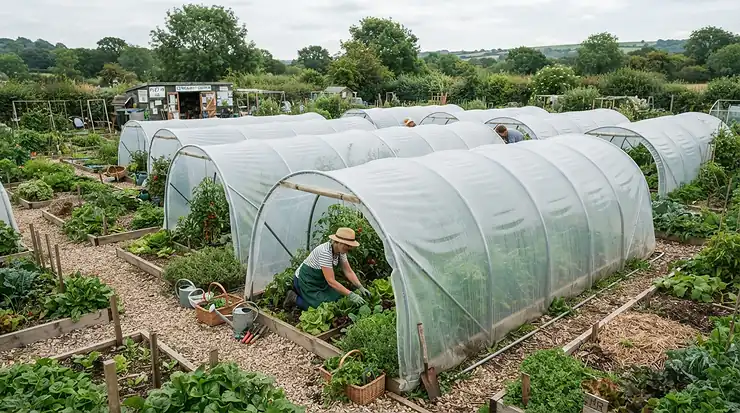
A cloche tunnel for vegetables is a low, hooped cover of polythene, fleece or fine mesh that sits over a bed or row. It traps warmth, breaks the wind and keeps pests out. That means warmer soil for early sowing, sheltered seedlings, and harvests that start sooner and finish later than open ground allows.

British weather is the reason these things exist. April can deliver sunshine on Monday and sleet on Tuesday, and a windy allotment can shred a row of seedlings overnight. The RHS guidance on cloches says a cloche can lift local soil temperature by as much as 10°C and speed up germination. That kind of gain is why growers with a cloche tunnel for vegetables often sow weeks before their neighbours.
This guide covers seven real products across the range. There are polythene tunnels, a mini cloche, pest exclusion netting, windbreak netting and fleece row covers. One transparency note first: I haven’t handled any of these products. What follows is analysis of published specifications, RHS and BBC growing guidance, and the review themes I could verify. Where I couldn’t verify reviews for a listing, I say so.
By the end you’ll know which cloche tunnel for vegetables suits your soil, exposure and crops, and where a separate net or fleece does the job better.
Quick Comparison: Cloche Tunnel for Vegetables at a Glance
| Product | Format | Approx. size | Price band* | Best For |
|---|---|---|---|---|
| Christow Small Grow Tunnel | Framed PE tunnel with zip-style doors | 1.3m–2.6m long, ~50cm high | £20–£40 | Raised beds, all-round use |
| Haxnicks Giant Easy Poly Tunnel | One-piece poly cloche | 300 x 60 x 45cm | £20–£35 | Long rows, early sowing |
| Haxnicks Easy Seedling Tunnels (3-pack) | Mini fold-out poly cloches | 80 x 18 x 12cm each | Under £15 | Tiny seedlings, soil warming |
| Haxnicks Easy Tunnel Micromesh | Ultra-fine mesh tunnel | 300 x 45 x 30cm | £20–£30 | Flea beetle and aphid pressure |
| Veggiemesh Insect Mesh Netting | Cut-to-length insect mesh | 1.8m wide, per metre | Low single pounds per metre | Brassicas, carrots, onions |
| True Products Green 35% Windbreak Netting | Knitted windbreak mesh | 1m x 10m | Under £15 | Exposed allotment edges |
| Feizeisun 30gsm Garden Fleece | Horticultural fleece | 2m x 10m | Under £15 | Frost cover and budget row covers |
*Indicative bands only, based on research at the time of writing. Prices vary, so check current price before buying.
Read the table as a toolkit rather than a league table. Only three of the seven are true tunnels; the mesh, windbreak and fleece are partners that fix the problems a tunnel can’t. If you can only buy one thing, the Haxnicks Giant Easy Poly Tunnel or Christow Small Grow Tunnel gives the widest coverage. If pests are your main headache, the Haxnicks Easy Tunnel Micromesh or Veggiemesh Insect Mesh Netting will do more for you than any poly cover.
💬 Just one click — help others make better buying decisions too!😊
Top 7 Cloche Tunnel for Vegetables Options: Expert Analysis
1. Christow Small Grow Tunnel — sturdy framed all-rounder for raised beds
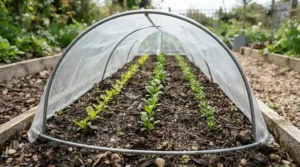
The standout here is the framing. Steel poles slot into plastic connectors, so the cover holds its shape rather than sagging like a hoop-and-sheet arrangement. It comes in 2 to 4 sections; the Amazon listing offers 1.3m, 1.95m and 2.6m lengths.
The cover is polyethylene with a white internal reinforcing grid. Christow says the white grid blocks less light than green ones, which matters when you’re coaxing lettuce through March. At roughly 50cm high, it suits lettuce, beetroot, spinach, strawberries and young brassicas, but not tall crops.
The clever bit is a door on each section. You can vent one section on a warm afternoon while the rest stays sealed, which single-door designs can’t do. On paper, that makes it the most forgiving option here for anyone who forgets to open things up.
Reviewers on the Amazon listing and Christow’s own site mention easy assembly and a good fit over raised beds. The recurring caution is wind. Several report reinforcing it with steel rods, cable or a wooden base, and one described it blowing away on a stormy night. A recent third-party roundup also credits it with over 900 reviews and an Amazon’s Choice badge, though that status can change.
Pros:
- ✅ Individual doors let you vent section by section
- ✅ Rigid frame holds shape and keeps foliage off the cover
- ✅ Pegging points help deter birds crawling underneath
Cons:
- ❌ Needs extra anchoring on exposed sites
- ❌ Too low for tall or staked crops
Price: around £20–£40 depending on length. Good value if you anchor it properly.
2. Haxnicks Giant Easy Poly Tunnel — long, quick-deploy poly cloche for early rows
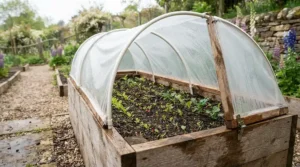
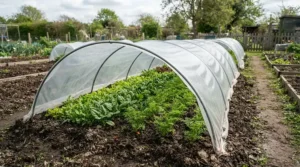
This is the classic. It’s a one-piece polythene tunnel measuring 300 x 60 x 45cm, with galvanised steel hoops you push straight into the soil. It opens like an accordion and folds away for storage.
The cover is 150-micron UV-stabilised polyethylene with drawstring ends. Thick, UV-stabilised poly typically lasts more seasons than thin film, and the drawstrings give basic ventilation and access. What the spec sheet won’t tell you is that you can’t vent the middle. On a sunny March day, a fully sealed 3m tunnel can overheat seedlings, so open both ends or lift the sides slightly with pegs.
At 60cm wide it covers a bed of two or three rows, and 45cm of headroom suits early potatoes, peas, spring onions and salad crops. It’s excellent for pre-warming soil ahead of early sowing. Because it isn’t rigid, it’s also lighter and quicker to move than a framed tunnel.
I couldn’t verify a solid aggregate of Amazon reviews for this exact listing. One UK retailer review reports a previous unit lasting nine years on a windy east coast, but that’s a single anecdote. Treat durability as manufacturer-stated.
Pros:
- ✅ Genuinely quick to deploy and move
- ✅ Thick UV-stabilised poly with long stated life
- ✅ Folds flat for tidy storage
Cons:
- ❌ Ventilation limited to the two ends
- ❌ Condensation and overheating possible in sun
Price: around £20–£35. A strong value pick for long rows.
3. Haxnicks Easy Seedling Tunnels (3-pack) — best mini cloche for seedlings on a shoestring
If you’re hunting for the best mini cloche for seedlings, the appeal here is pure practicality. You get three fold-out poly tunnels, each 80cm long, 18cm wide and 12cm high, that warm the soil before planting and shelter tender plants.
Twelve centimetres is the number that matters. These suit newly germinated direct-sown crops such as radish, lettuce, rocket, spring onions and baby beetroot. They won’t shelter transplants for long, because a leggy seedling will be pressing on the roof within a fortnight. Think of them as soil warmers and germination boosters first, and seedling shelters second.
Being narrow, each covers a single short row, so three tunnels can be laid end to end or sited across separate beds. For a small raised bed or a tricky corner, that modularity is handy. Overheating is the main risk, so check them on sunny days.
I found no verifiable aggregated review data for this listing, so I can’t tell you what buyers think. Judge it on the spec: a low-cost, low-commitment way to try the approach.
Pros:
- ✅ Three units for very little outlay
- ✅ Light, foldable and easy to reposition
- ✅ Ideal for warming soil before early sowing
Cons:
- ❌ Too short for anything beyond tiny seedlings
- ❌ Little room to vent, so cooking is possible
Price: under £15 (indicative). Good value as a starter set.
4. Haxnicks Easy Tunnel Micromesh — ultra-fine mesh tunnel for tiny pests
This is a pest exclusion netting tunnel rather than a warmth-trapper. It measures 300 x 45 x 30cm and uses ultra-fine 0.6mm polyethylene mesh on galvanised hoops. The listing targets aphids and blackfly.
The RHS puts ultrafine mesh at 0.3–0.6mm, and says the finer grades exclude very small insects that standard mesh lets through. That makes this the one product here aimed squarely at flea beetle-sized invaders. If your radishes, rocket or pak choi look like they’ve been shot with a tiny shotgun, this is the relevant fix.
At 30cm high it suits low leafy crops and brassica seedlings. The trade-off is airflow. Finer mesh slows wind and can hold a little warmth, but it won’t protect against frost the way fleece or poly does. Swap in a poly or fleece cover on frosty nights.
There’s no verifiable review data for this specific listing, so I’d rely on the mesh spec. It’s the most targeted option for a specific pest problem.
Pros:
- ✅ Ultra-fine mesh aimed at tiny insects
- ✅ Same easy fold-out design as other Haxnicks tunnels
- ✅ Lets rain through, so no hand-watering routine
Cons:
- ❌ Minimal frost protection
- ❌ Only 30cm high, so unsuitable for taller crops
Price: around £20–£30. Worth it if flea beetle is your nemesis.
5. Veggiemesh Insect Mesh Netting — flexible cut-to-length pest exclusion netting
You buy this by the metre at 1.8m wide, which makes it the most adaptable option. Lay it over hoops, cages or directly on crops, and cut it to fit any bed.
The seller says it keeps out cabbage root fly, carrot fly, cabbage white butterfly, pea moth and onion fly while letting light, rain and air through. That matches the RHS description of standard 1.3–1.4mm mesh, which is good for those pests. The RHS also warns that standard mesh is unreliable against aphids, flea beetle and leek moth. The seller even suggests an ultra-fine version for flea beetle and whitefly. Check the mesh size on the listing so you buy what your problem actually needs.
The practical catch is edge sealing. Netting only works if there are no gaps, so bury the edges or pin them down firmly. Carrot fly and cabbage root fly are opportunists that find the smallest opening.
I couldn’t verify aggregated Amazon review data for this listing. Judge it on mesh size, width and the sealing job you’re prepared to do.
Pros:
- ✅ Buy exactly the length you need
- ✅ Wide 1.8m roll covers beds and hoops easily
- ✅ Water and feed straight through the mesh
Cons:
- ❌ Offers no frost protection
- ❌ Standard grade won’t stop the tiniest pests
Price: low single pounds per metre. Strong value for brassica and carrot growers.
6. True Products Green 35% Windbreak Netting — budget shelter for exposed allotment edges
This is a knitted polypropylene monofilament windbreak, 1m x 10m, 50gsm, with eyelets every 5–10cm along the top and bottom. The manufacturer estimates 35% wind reduction and 45% shade, with a UV additive for longer life.
A 35% figure surprises people. Windbreak netting isn’t a wall. It filters the wind, and that’s the point, because a solid barrier creates turbulence on its lee side. As a rule of thumb, sheltered distance is limited to a few times the barrier’s height, so a 1m net protects a modest strip. Use it to shelter the windward side of a bed or tunnel rather than a whole plot.
The eyelets make fixing simple. Cable-tie it to stakes or a fence, and keep it taut. Heavier 50% windbreak nettings exist on Amazon UK if your site is truly exposed, but this lighter grade is easier on the wallet.
I found no verifiable Amazon review data for this listing. On other windbreak nettings, buyers at a UK retailer report some sagging after storms, so plan for tensioned fixings.
Pros:
- ✅ Frequent eyelets make fixing straightforward
- ✅ Doubles as light shade in summer
- ✅ Low cost per metre of shelter
Cons:
- ❌ Wind reduction is modest at 35%
- ❌ 1m height limits sheltered distance
Price: under £15 (indicative). A sensible pairing for any cloche tunnel for vegetables on a windy site.
7. Feizeisun 30gsm Garden Fleece — cheap fleece row covers for frost nights
Fleece is the humble hero of row covers. This is 30gsm non-woven fleece in a 2m x 10m roll. The listing says it can be laid over crops or floated on hoops.
The RHS says heavier fleece gives about 2°C of frost protection. That’s modest but decisive for a late frost hitting emerging seedlings. The same guidance points out that fleece is usually used without hoops, and that edges must be weighed down with bricks or tucked into the soil, or it blows around and loses its warming effect. Laid over hoops, it also stops the fabric resting on foliage.
Its real value is layering. Under a poly tunnel it adds a few degrees on the coldest nights. Over a micromesh tunnel it turns pest cover into frost cover. And because you cut it to size, one roll serves many beds.
I couldn’t verify a robust review aggregate for this listing, so treat quality as unconfirmed. Fleece is a commodity product, and thickness (gsm) matters more than brand.
Pros:
- ✅ Very low cost for a large area
- ✅ Cuts to fit any bed or crop
- ✅ Adds frost protection under other covers
Cons:
- ❌ Only about 2°C of frost protection
- ❌ Needs secure edges or it blows off
Price: under £15 (indicative). Essential extra kit for early sowing.
How to Set Up a Cloche Tunnel for Vegetables: The First 30 Days
Setup decides whether a cloche tunnel for vegetables feels like a superpower or a nuisance. Follow this sequence.
Days 1–3: prepare the ground. Clear weeds, rake the soil level, and make sure it’s damp. Covers stop rain, so dry soil under a tunnel stays dry. Adding organic matter helps the soil hold heat.
Days 3–7: position and pre-warm. Put the tunnel in place well ahead of sowing. Gardeners’ World advises two to three weeks before sowing, and the RHS guidance on pre-warming soil suggests at least four to six weeks if you’re covering in winter. On heavy clay, this drying-and-warming step is worth doing properly.
Days 7–14: anchor everything. Peg down poly and mesh edges, use extra stakes on exposed plots, and put fleece edges under bricks or soil.
Days 14–21: sow. When soil reaches about 7°C, most seeds will germinate, and under a tunnel that point arrives weeks before the last frost.
Days 21–30: manage ventilation and water. Open the ends or doors on sunny days and close them before evening. Water by hand, or lay a perforated hose under the cover before you seal it.
The common mistake in the first month is forgetting that a tunnel is a small oven on a sunny afternoon. Ventilation is a daily job, not a one-off. Pair that with a checked-and-adjusted anchoring routine after each windy spell.

Common Problems and Their Solutions
Problem: the tunnel keeps lifting in the wind. Use extra pegs or long steel rods, and place a windbreak on the windward side. Some Christow buyers report reinforcing with a wooden base and cable ties, and the True Products Green 35% Windbreak Netting is a cheap way to take the edge off gusts.
Problem: condensation and scorching. Vent from mid-morning on sunny days. A framed design like the Christow Small Grow Tunnel helps because you can open one section at a time.
Problem: slugs thriving under the cover. Warm, sheltered soil suits slugs as much as seedlings. Check under the edges in the evening and keep the bed free of debris.
Problem: crops won’t set fruit under mesh. Remove pest exclusion netting when flowers open on crops that need insect pollination, such as courgettes and beans.
Problem: seedlings stall after a frost. Add a fleece layer. The Feizeisun 30gsm Garden Fleece costs very little and gives a few extra degrees when it counts.
Real-World Scenarios: Matching Kit to Your Plot
Scenario 1: the exposed allotment on heavy clay. You visit twice a week, the site catches every gust, and the soil stays cold and wet until April. A budget of £50–£80 makes sense. Pair the Haxnicks Giant Easy Poly Tunnel with True Products Green 35% Windbreak Netting on the windward side. Cover the bed several weeks early to dry and warm the soil, then sow hardy crops.
Scenario 2: the beginner with a single raised bed. You’re in the garden daily and want an easy start on a budget of about £30. The Haxnicks Easy Seedling Tunnels (3-pack) cover direct-sown salad rows, while a short Christow Small Grow Tunnel covers slightly bigger plants. Daily visits make ventilation manageable.
Scenario 3: the brassica grower fighting butterflies and beetles. Your kale and cabbages get shredded every summer, and you can spend £30–£50. Use Veggiemesh Insect Mesh Netting over hoops for the big brassicas and a Haxnicks Easy Tunnel Micromesh for rocket and radish rows. Seal the edges, and remove the covers only for weeding.
How to Choose a Cloche Tunnel for Vegetables
- Match height to crop. Measure your tallest crop at maturity. A 12cm mini cloche suits germinating radish; a 45–50cm tunnel suits lettuce and early potatoes.
- Pick a cover for your main problem. Polythene for warmth and rain shelter, fleece for frost, mesh for pests. No single cover does all three.
- Check ventilation. Doors or roll-up sides are worth paying for if you can’t visit daily. Drawstring ends only vent from the ends.
- Consider exposure. On windy plots, choose a design with pegging points and plan on a windbreak.
- Think about length and width. Match the tunnel to your bed, not the other way round. Most run about 3m.
- Check mesh size. For pest exclusion netting, the RHS says 1.3–1.4mm suits root flies and butterflies, and finer grades are needed for flea beetle.
- Plan for storage. Fold-out designs pack flat; framed tunnels need a shed shelf.
Row Covers vs Cloche Tunnel for Vegetables
Row covers are low, floating or hooped covers, most often fleece or mesh. A cloche tunnel for vegetables is usually a poly cover with its own hoops. Both do similar jobs, but they differ in what they’re best at.
| Feature | Poly tunnel cloche | Fleece row covers | Mesh row covers |
|---|---|---|---|
| Frost protection | Good | Modest (about 2°C for heavier fleece) | Minimal |
| Soil warming | Strong | Moderate | Weak |
| Rain shelter | Yes (needs hand-watering) | No, water passes through | No, water passes through |
| Pest exclusion | Yes, if sealed | Partial | Strong |
| Best For | Early sowing, wet or cold plots | Cheap frost cover | Pest-prone crops |
The table shows why the answer is rarely either/or. Poly beats fleece and mesh when you need dry, warm soil. Mesh row covers win on pests, and fleece is the cheapest way to add frost insurance. Serious growers layer them: a Haxnicks Giant Easy Poly Tunnel in late winter, a Feizeisun 30gsm Garden Fleece layer for frost snaps, then Veggiemesh Insect Mesh Netting as spring turns to summer.
Pest Exclusion Netting: Why Mesh Size Matters
Pest exclusion netting works by physics. If the holes are smaller than the insect, it can’t get through. Most disappointments happen when the mesh is too coarse for the pest you have.
| Mesh grade | Aperture | Good against |
|---|---|---|
| Standard | 1.3–1.4mm | Cabbage root fly, onion fly, bean seed fly, carrot fly, butterflies and moths |
| Fine | 0.8mm | Flea beetle, cabbage whitefly, leaf miners, greenfly, blackfly, plus all of the above |
| Ultrafine | 0.3–0.6mm | Smallest insects and most other pests |
Details come from the RHS advice on insect-proof mesh. The RHS notes that standard mesh is unreliable against aphids, flea beetle, allium leaf miner and leek moth.
That means Veggiemesh Insect Mesh Netting in a standard grade is ideal for carrot fly and cabbage root fly, while the Haxnicks Easy Tunnel Micromesh at 0.6mm is the better match for flea beetle. Whichever you choose, cover crops at sowing or planting, before the pests arrive, and keep every edge sealed.
Best Windbreak Netting for Allotment Plots: What to Expect
Choosing the best windbreak netting for allotment use is really about realistic expectations. Netting slows the wind rather than stopping it, so choose based on how exposed your site is.
Lighter grades, such as the True Products Green 35% Windbreak Netting, suit sheltered-ish plots and low crop protection. Heavier grades marketed as 50% windbreak suit exposed sites, but they put more load on posts and fixings, so they need proper stakes and tensioning.
Height is the second factor. A 1m net shelters a small strip, and a 2m net shelters a bigger one. Put the net on the windward side, and leave a small gap at the base if you can, since the gap helps stop turbulence pooling.
Finally, check your allotment rules. Many associations permit temporary screens, but height limits and fixings vary, so ask your site secretary. Pair windbreak netting with a tunnel and you’ll usually find you need fewer pegs and fewer repairs.
Best Mini Cloche for Seedlings: What to Look For
The best mini cloche for seedlings is the one that solves your specific problem. Three features matter most.
Ventilation. Tiny volumes heat up fast. Look for vents, drawstrings or the ability to lift a corner. The Haxnicks Easy Seedling Tunnels (3-pack) rely on their fold-out design and end openings, so check them on sunny days.
Height and width. A 12cm cover suits germinating seed but limits growth. If you’re covering seedlings you plan to leave for weeks, choose something taller, like the 30cm Haxnicks Easy Tunnel Micromesh or the 50cm Christow Small Grow Tunnel.
Anchoring. Small covers blow away fastest. Use pegs or stones at each corner.
Use mini cloches for the earliest phase: warming soil, germinating seed and protecting the first true leaves. Then move to a taller tunnel before seedlings outgrow the space.
Early Sowing: Turning a Cloche Tunnel for Vegetables Into a Head Start
Early sowing is where a tunnel earns its keep. The Gardeners’ World guide to warming soil explains that cloches trap warm air, which gradually passes into the soil surface. That’s why putting them out two to three weeks before sowing pays off.
What to sow first? Hardy crops that tolerate cool conditions, such as lettuce, spinach, radish, spring onions, carrots, beetroot and early peas, respond best to early sowing under cover. Tender crops such as courgettes and tomatoes need much more warmth and are best started indoors.
A useful sequence is to warm the soil, sow, then keep fleece to hand for frost warnings. Check germination every few days, and vent as soon as seedlings emerge. If the forecast turns very cold, add a layer of Feizeisun 30gsm Garden Fleece over a poly tunnel. Sowing a fortnight or so earlier than usual is a realistic aim on many plots, though results depend on soil and region.
Long-Term Cost & Maintenance
| Item | Price band | Expected lifespan | Value verdict |
|---|---|---|---|
| Christow Small Grow Tunnel | £20–£40 | Several seasons if anchored | Best framed value |
| Haxnicks Giant Easy Poly Tunnel | £20–£35 | Manufacturer states long UV life | Best for long rows |
| Haxnicks Easy Seedling Tunnels (3-pack) | Under £15 | Shorter, lightweight poly | Cheap trial |
| Feizeisun 30gsm Garden Fleece | Under £15 | Reusable while intact | Best cost per bed |
Cost per season tells the real story. A tunnel that lasts several years, used from February to May, costs pennies per week of protection. The false economy is a flimsy cover that tears in its first gale.
Maintenance is light. Wipe algae off poly at season’s end, dry everything before folding, and store covers away from sunlight. Check hoops for rust and cracks. Fleece and mesh last longer if you avoid dragging them over sharp edges, and mesh is worth rinsing and drying before storage.
Common Mistakes When Buying
Buying by price alone. Cheap poly can crack in a season, and cheap mesh can be too coarse for your pest.
Ignoring wind. More tunnels are lost to gales than to frost. Budget for pegs, rods and perhaps a windbreak.
Forgetting ventilation. Overheating kills more seedlings under cover than cold does.
Choosing the wrong height. Check the mature height of your crop before buying, especially with mini cloches.
Assuming mesh stops everything. Match mesh size to the pest, and seal the edges.
Skipping watering. Poly excludes rain, so plan for hand-watering or a perforated hose under the cover.
FAQ
❓ Can you use a cloche tunnel for vegetables in summer?
❓ Do I need to water under a cloche tunnel for vegetables?
❓ Does pest exclusion netting need removing for pollination?
❓ Are row covers enough for early sowing on their own?
❓ Can I put windbreak netting up on an allotment?
Conclusion
A well-chosen cloche tunnel for vegetables is one of the cheapest ways to gain weeks on the British growing season. Match the cover to your problem. Polythene is for warmth and rain, fleece for frost, mesh for pests and windbreak for gusts.
For most growers, the Haxnicks Giant Easy Poly Tunnel is the value pick for long early rows. The Christow Small Grow Tunnel suits raised beds where ventilation control matters. The Haxnicks Easy Seedling Tunnels (3-pack) are the low-cost way to try the approach. Add Veggiemesh Insect Mesh Netting or the Haxnicks Easy Tunnel Micromesh for pests, True Products Green 35% Windbreak Netting for exposed edges and Feizeisun 30gsm Garden Fleece for cold snaps.
Whatever you choose, remember the basics from the RHS and Gardeners’ World: warm the soil early, anchor everything, ventilate on sunny days and seal your mesh edges. Do those four things and even a modest tunnel will outperform an expensive one that’s left unattended.
✨ Ready to stretch your growing season?
🌱 Choose the tunnel, mesh or fleece that fits your plot, then click any highlighted product name to check current pricing and availability. A little cover now can mean a much earlier and longer harvest!
Recommended for You
- Frost Protection Cover For Plants: 7 Proven UK Picks (2026)
- Shade Netting for Greenhouse: 7 Best Picks to Beat Scorch (2026)
- Best Horticultural Fleece: 7 Top Rated Picks for UK Gardens (2026)
Disclaimer: This article contains affiliate links. As an Amazon Associate, I earn from qualifying purchases. If you purchase products through these links, we may earn a small commission at no additional cost to you.
✨ Found this helpful? Share it with your friends! 💬🤗
