
In This Article
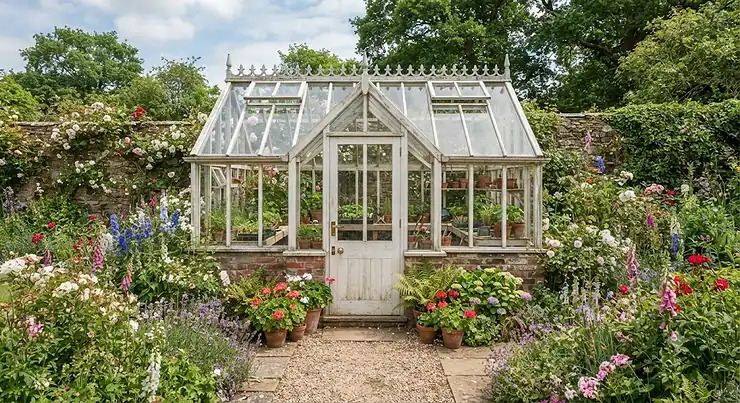
There’s something almost stubborn about a traditional glass greenhouse. While polycarbonate panels have crept into most garden centres, the glasshouse — panes gleaming, frame catching the winter sun — refuses to go quietly. A traditional glass greenhouse is a garden structure glazed with horticultural or toughened glass rather than plastic sheeting, designed to trap solar warmth and let close to 90% of available light reach your plants. That single fact — light transmission most polycarbonate simply can’t match — is why serious tomato growers and orchid fanatics keep coming back to glass.
But “buy a greenhouse” is easier said than done once you actually start browsing. Aluminium or cedar? Horticultural or toughened panes? Do you need a louvre window vent, and will a garden heater even work once winter bites? This guide walks through seven real, currently available models spanning budget aluminium kits to handcrafted cedar glasshouses, then digs into the practical stuff nobody tells you at the till: heater compatibility, ventilation, planning rules, and the classic greenhouse design details that separate a lovely garden feature from a wobbly eyesore. Whether you’re growing salad on an allotment or restoring a Victorian-style corner of the garden, there’s a glass house here that fits.
Quick Comparison Table
| Model | Frame | Glazing | Approx. Price Range | Best For |
|---|---|---|---|---|
| Halls Popular 6×8 | Aluminium | 3mm horticultural or toughened (upgrade) | under £550 | First-time buyers on a tight budget |
| Elite Craftsman 8×6 | Aluminium | 3mm toughened | £600-£900 | Families wanting safer glazing |
| Vitavia Venus 5000 6×8 | Anodised aluminium | Toughened, louvre-ready | £700-£1,000 range | Gardeners who want upgradeable ventilation |
| Rhino Premium 6×8 | Aluminium | 4mm toughened | £1,600-£2,000 range | Long-term, low-maintenance growing |
| Elite Titan 800 6×8 | Core-Vect box-section aluminium | 4mm toughened | £1,400-£1,600 range | Exposed, windy, or coastal gardens |
| Robinsons Renaissance 8×6 | Box-section aluminium | Toughened, large pane | £1,800-£2,500 range | Classic looks with reinforced strength |
| Gabriel Ash Essential 6×8 | Western red cedar + aluminium capping | Toughened, BS6206 | £3,500 and up | A showpiece cedar glasshouse |
Looking across the table, the price gap between an entry-level Halls Popular 6×8 and a handmade Gabriel Ash Essential 6×8 isn’t really about size — it’s about materials, longevity, and finish. Aluminium models dominate the budget-to-premium middle ground because they’re light, low-maintenance, and quick to erect, while cedar-framed houses like the Gabriel Ash Essential 6×8 trade faster assembly for a warmer look and genuinely different thermal behaviour, since timber doesn’t conduct cold the way metal glazing bars do. If your garden is exposed to strong winds, the storm-rated Core-Vect frame on the Elite Titan 800 6×8 is worth the premium over a standard aluminium kit.
💬 Found a model you like already? Bookmark it now — good glazing options sell out before the spring rush!😊
Top 7 Traditional Glass Greenhouses: Expert Analysis
1. Halls Popular 6×8 — best budget entry point for new growers
The Halls Popular 6×8 is the greenhouse most UK gardeners cut their teeth on, and there’s a reason it’s stayed a bestseller for decades. Standard glazing is 3mm horticultural glass, with an upgrade path to 3mm long-pane toughened safety glass or 4mm twinwall polycarbonate if you’d rather not gamble on shatter-prone panes near children or pets. The base area comes to roughly 5.0m², with a 1.22m eaves height and 1.96m ridge — enough headroom for tomatoes and cordon-trained fruit without feeling boxed in. Based on the spec comparison with other budget aluminium kits, what most buyers overlook is that the smooth sliding door and integral guttering, both included as standard, are usually extras on similarly priced competitors. Reviewers consistently note that the horticultural glass upgrade to toughened is worth the modest extra outlay, since standard 3mm horticultural glass shatters into shards rather than granulating safely. This is squarely a beginner’s or budget-conscious buyer’s greenhouse, not a windswept-coastal-garden choice.
Pros:
- ✅ Genuinely low starting price for a full-size glasshouse
- ✅ Integral guttering and sliding door included as standard
- ✅ Straightforward glazing upgrade path to toughened glass
Cons:
- ❌ Standard horticultural glass isn’t safety glass
- ❌ Single roof vent limits ventilation on hot days
Prices for the Halls Popular 6×8 typically sit under £550 depending on glazing choice, and always check current price before ordering, since glazing upgrades shift the total noticeably. For sheer value per square metre, this remains one of the most sensible starting points on the market.
2. Elite Craftsman 8×6 — best for families prioritising safer glass
Where the Halls Popular 6×8 leans budget-first, the Elite Craftsman 8×6 leans safety-first while staying close in price. It ships with 3mm toughened glazing as standard rather than an upgrade, meaning if a stray football or an errant rake connects with a pane, it granulates into small, largely harmless pieces instead of jagged shards. The single sliding door has an integral catch to stop it rattling in gusty weather, and the low threshold base makes wheelbarrow access painless — a detail that’s easy to dismiss until you’re hauling compost bags through a raised sill for the tenth time. What most buyers overlook about this model is that the powder-coated aluminium finish carries a stated 25-year-plus life expectancy against corrosion and UV fading, which matters more than it sounds once you’ve watched a cheaper frame chalk and dull within a few UK winters. Aggregated review sentiment across garden retailers repeatedly flags the door lock and handle, added as a security update, as a small but appreciated touch.
Pros:
- ✅ Toughened glass included as standard, not an upgrade
- ✅ Low threshold base, easy for wheelbarrows and wheelchairs
- ✅ Long-life powder coating resists UV fading and rust
Cons:
- ❌ Only a single sliding door limits airflow in summer
- ❌ Assembly instructions assume some DIY confidence
Expect to pay in the £600-£900 range depending on colour finish, with powder-coated options taking longer to arrive than plain aluminium. For a family garden where safety matters as much as growing space, the Elite Craftsman 8×6 earns its keep.
3. Vitavia Venus 5000 6×8 — best for upgradeable ventilation
The Vitavia Venus 5000 6×8 sits in genuinely mid-range territory, and its standout feature is how easily it accepts a louvre window vent — a five-blade, toughened-glass vent that replaces a single side panel to pull cooler air through at low level. Straight out of the box you get a roof vent, sliding door positionable on either side, and anodised aluminium framing that resists tarnishing better than basic mill-finish aluminium. Here’s what to weigh: the louvre upgrade is only compatible with toughened glazing, not horticultural glass, so if you’re eyeing that ventilation boost later, spec toughened glass from day one rather than retrofitting. Reviewers consistently report that the roof bracing noticeably stiffens the structure compared with entry-level kits, which matters in a garden that catches crosswinds. This is a sensible pick for gardeners who know they’ll want to expand ventilation as their growing ambitions do.
Pros:
- ✅ Purpose-built for an optional louvre window vent
- ✅ Anodised aluminium frame resists tarnish over time
- ✅ Roof bracing adds structural stiffness versus base models
Cons:
- ❌ Louvre vent isn’t compatible with horticultural glazing
- ❌ Auto-opener for louvre sold as a separate accessory
Pricing generally falls in the £700-£1,000 range once you’ve picked frame colour and glazing. If ventilation flexibility matters to you more than raw budget, the Vitavia Venus 5000 6×8 is a smart middle step up from entry-level kits.
4. Rhino Premium 6×8 — best for long-term, low-maintenance growing
Manufactured in the UK and fitted throughout with 4mm toughened safety glass rather than the 3mm found on cheaper kits, the Rhino Premium 6×8 is built around durability. The frame includes an integral aluminium base as standard, two hanging basket rails, and full-length integral gutters with downpipes feeding straight into a water butt — genuinely useful when you’re trying to keep mains water use down over a dry summer. On paper this means less faffing with separate base kits and guttering add-ons that competitors often charge for separately. The 25-year manufacturer warranty on frame and finish is one of the longer guarantees in this category, and aggregated customer feedback on retailer sites repeatedly mentions the unique glazing system holding panels secure through storms that have loosened clips on older greenhouses nearby. What the spec sheet won’t tell you, but reviewers note, is that the low threshold doorway makes a genuine difference if you’re moving trays and grow bags in and out daily rather than occasionally.
Pros:
- ✅ 4mm toughened glass throughout, thicker than most rivals
- ✅ 25-year warranty on frame and finish
- ✅ Integral guttering feeds directly to a water butt
Cons:
- ❌ Sits well above entry-level budgets
- ❌ Two-person assembly is strongly recommended
Typical pricing for the 6×8 model runs in the £1,600-£2,000 range in the UK market, so it’s a considered purchase rather than an impulse buy — but the thicker glass and long warranty go some way to justifying it for gardeners who plan to keep the same greenhouse for decades.
5. Elite Titan 800 6×8 — best for exposed or coastal gardens
If your garden regularly gets battered by wind off open fields or the coast, the Elite Titan 800 6×8 is built specifically for that scenario. Its Core-Vect frame uses heavier box-section aluminium rated to withstand gusts over 90mph, paired with 4mm toughened safety glass and full bar capping that clamps panes more securely than clip-on systems. Based on the spec comparison with lighter-framed models, the extra aluminium content genuinely earns its keep here rather than being marketing padding — over 40% of this range’s sales reportedly go to buyers within two miles of the coast, which tells its own story about where it performs. The double sliding doors sit in the gable end for a spacious feel despite the modest 6×8 footprint, and a 10-blade louvre vent comes fitted as standard rather than as an accessory. Reviewers consistently flag the 20-year frame warranty and the noticeably heavier feel of every glazing bar compared with a standard Elite kit.
Pros:
- ✅ Storm-rated frame built for exposed, windy sites
- ✅ 4mm toughened glass with secure bar-capping system
- ✅ 10-blade louvre vent included as standard, not optional
Cons:
- ❌ Heavier frame means longer, more demanding assembly
- ❌ Premium pricing versus a standard aluminium greenhouse
Budget in the region of £1,400-£1,600 for the 6ft-wide model, with professional installation available as a paid extra if you’d rather not spend a weekend levelling a base to the fine tolerance this frame needs. For coastal or hilltop gardens, this is arguably the most sensible glass greenhouse on this list.
6. Robinsons Renaissance 8×6 — best for classic looks with reinforced strength
The Robinsons Renaissance 8×6 leans hard into the classic greenhouse design that first made glasshouses a garden centrepiece rather than a purely functional shed. Large-pane toughened glazing runs throughout, mounted in a box-section aluminium frame that Robinsons position as noticeably stronger and taller than entry-level greenhouses, with genuine eaves height that lets you stand comfortably near the sides rather than stooping. What most buyers overlook is the PVC bar capping, a small detail that gives a tidier, more finished appearance than exposed glazing clips while also sealing panes more weathertight. Optional ornate ridge crests and built-in aluminium staging let you lean further into a period-correct look if that’s the aesthetic you’re after. Aggregated review sentiment across retailer sites consistently praises the low-threshold, lockable doors, though buyers should note this is a premium price bracket reflecting the reinforced frame and finishing touches.
Pros:
- ✅ Large-pane toughened glass for a classic, uninterrupted look
- ✅ Reinforced box-section frame taller than basic models
- ✅ Optional ornate ridge crests for period-correct styling
Cons:
- ❌ Among the pricier aluminium options on this list
- ❌ Ornate accessories add further cost on top
Expect a price range of roughly £1,800-£2,500 depending on chosen finials, staging, and colour. If classic proportions matter as much as strength, the Robinsons Renaissance 8×6 blends the two convincingly.
7. Gabriel Ash Essential 6×8 — best handcrafted cedar showpiece
Handmade in England from PEFC-certified Western red cedar, the Gabriel Ash Essential 6×8 sits in a different category entirely from the aluminium kits above it. Cedar’s naturally occurring oils resist rot and weathering without chemical treatment, ageing to a soft silvery grey if left untouched, or accepting a stain if you’d rather preserve the honey-brown finish. Toughened safety glass to BS6206 standard is fitted throughout and secured with capping rather than plastic clips, and — genuinely distinctive among the greenhouses here — there’s a full-length automatic roof ridge ventilation system that opens and closes with temperature changes, removing the need to buy separate roof vents or auto-openers. On paper this means one less accessory purchase and one less thing to forget to close on a hot day. Reviewers and horticultural retailers alike note the excellent heat retention timber frames offer versus conductive aluminium bars, which can meaningfully reduce heating demand on cold nights. This is squarely aimed at buyers treating the greenhouse as a garden feature as much as a growing space.
Pros:
- ✅ Automatic ridge ventilation, no separate vent purchase needed
- ✅ Cedar frame retains heat better than aluminium glazing bars
- ✅ Toughened glass secured with capping, not plastic clips
Cons:
- ❌ Significantly more expensive than any aluminium kit here
- ❌ Longer lead times as each unit is handmade to order
Realistically budget from around £3,500 upward once you factor in size and finish, and always check current price and lead time directly with the retailer, since cedar models are made to order rather than held in stock. For gardeners who want a genuine showpiece glasshouse, the Gabriel Ash Essential 6×8 is as close to heirloom as this category gets.
Practical Usage Guide: Getting the Most From Your Greenhouse
Setting up a traditional glass greenhouse properly in the first month matters more than most first-time buyers expect. Start with the base: every model above performs best on a genuinely level foundation, whether that’s paving slabs, a concrete pad, or the manufacturer’s own steel or aluminium base kit — an out-of-level base is the single most common cause of doors that stick and glazing bars that twist under load. During assembly, fit glass panes from the bottom row upward so each pane locks the one below it in place, and never over-tighten glazing clips, which can crack toughened glass at the edges under thermal expansion.
In the first 30 days, resist the urge to pack the greenhouse full immediately. Let the structure settle and re-check bolts after the first fortnight, since aluminium frames can shift slightly as fixings bed in. A common early mistake is leaving the door and vents shut on the first genuinely hot day — glass greenhouses heat up fast, and young seedlings can scorch within hours. For ongoing maintenance, clean glazing twice a year with a soft brush and mild detergent to keep light transmission high, since algae and grime measurably cut the light reaching your plants. Check guttering each autumn before leaf-fall clogs the downpipes, and lubricate sliding door runners with a dry PTFE spray rather than oil, which attracts grit.
Real-World Scenarios: Which Greenhouse Suits Your Situation?
Picture three very different gardeners. First, a first-time grower in a modest suburban plot with a tight £500 budget and no particular exposure to wind: the Halls Popular 6×8, upgraded to toughened glass, covers the basics without overreaching financially, and its compact footprint suits a standard UK garden. Second, a family with young children and a dog who want a genuinely safe greenhouse without spending a fortune: the Elite Craftsman 8×6, with toughened glazing as standard and a low, trip-free threshold, matches that brief closely. Third, a retired allotment holder on an exposed hilltop plot who’s tired of replacing wind-damaged kits every few years: the Elite Titan 800 6×8, with its storm-rated Core-Vect frame, is built precisely for that environment and should outlast several cheaper replacements bought instead.
A fourth scenario worth naming: someone renovating a period cottage garden who wants the greenhouse to look intentional rather than functional-only. Here, either the Robinsons Renaissance 8×6 or the cedar-framed Gabriel Ash Essential 6×8 earns its higher price simply because the visual payoff is the point, not an afterthought.
Buyer’s Decision Framework
If budget is your primary constraint, choose an aluminium kit with a toughened-glass upgrade, because the frame material barely affects growing performance while glazing safety genuinely does. If your garden sits in an exposed or coastal spot, choose a storm-rated frame like the Elite Titan 800 6×8, because standard kits are more prone to glazing bar flex and clip failure in sustained high winds. If you want to expand ventilation later without buying a whole new structure, choose a model explicitly designed for a louvre window vent, such as the Vitavia Venus 5000 6×8. If aesthetics and longevity matter more than upfront cost, choose a cedar-framed house like the Gabriel Ash Essential 6×8, because timber’s thermal and visual qualities can’t be replicated by aluminium at any price point. And if you’re simply unsure, a mid-range toughened-glass aluminium kit in the £700-£1,600 bracket balances all four concerns reasonably well.
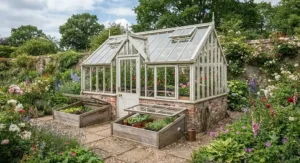
How to Choose a Traditional Glass Greenhouse
Choosing the right traditional glass greenhouse comes down to seven practical criteria, weighed against your garden and growing goals.
- Glazing type — horticultural glass is cheapest but shatters into shards; toughened glass costs more but granulates safely and resists impact far better.
- Frame material — aluminium is light, low-maintenance, and quick to assemble; cedar and other timbers insulate better and look more traditional but need occasional treatment.
- Size versus garden space — measure your plot including a clearance margin for door swing and guttering overhang before falling for a model that won’t actually fit.
- Wind exposure — an exposed or coastal garden genuinely needs a storm-rated frame, not just a heavier-sounding description.
- Ventilation — check whether roof vents alone will suffice, or whether you’ll want a louvre window vent for cross-flow airflow later.
- Base and foundation — decide whether you need an integral base kit included, or whether you’re building your own level foundation.
- Warranty and support — frame warranties genuinely vary from a handful of years to 25 years, and it’s worth weighing that against purchase price.
Traditional Glass Greenhouse vs Polycarbonate Alternatives
Glass and polycarbonate solve the same basic problem — trapping warmth and light for plants — in fundamentally different ways, and the choice affects your garden for years. Glass transmits close to 90% of available light, noticeably more than the 70-83% typical of twin-wall polycarbonate, which matters most during dim British winters when every bit of light helps seedlings avoid leggy, weak growth. Research from the University of Lincoln’s study on horticultural glass found that specialist glazing increased measured crop yield by more than a third compared with standard glass, underlining how much light transmission genuinely matters to plant performance rather than being a marketing footnote.
Polycarbonate, on the other hand, insulates considerably better thanks to its cellular air-gap structure, and it’s virtually impossible to shatter — a real advantage where children, pets, or a garden backing onto a cricket pitch are concerns. It’s also lighter, meaning it can sit on a less robust frame, which is part of why polycarbonate kits tend to undercut glass models on price.
| Factor | Traditional Glass | Polycarbonate |
|---|---|---|
| Light transmission | ~90% | ~70-83% |
| Insulation | Lower (unless double-glazed) | Noticeably higher |
| Impact resistance | Toughened glass granulates safely; horticultural glass shatters | Virtually shatterproof |
| Typical lifespan | 40+ years | 10-25 years |
| Classic aesthetic | Strong, glasshouse look | More functional appearance |
The analysis here isn’t that one material simply beats the other — it’s about matching material to priority. If maximum light and a classic aesthetic top your list, glass wins convincingly; if impact resistance and lower heating losses matter more, polycarbonate makes a strong case, and several models on this list, including the Halls Popular 6×8, even offer a polycarbonate glazing option for buyers who want the same frame with different glazing trade-offs.
Greenhouse Heater Compatibility: What Actually Works
Heater compatibility trips up more new greenhouse owners than almost anything else on this list, largely because the “right” heater depends entirely on your greenhouse size, glazing, and access to mains power. According to the RHS’s guidance on heating greenhouses efficiently, keeping a greenhouse frost-free at around 4°C is usually enough to overwinter a wider range of tender plants, and tube heaters are recommended as a lower-energy option that provides steady background warmth rather than the on-off blast of a fan heater.
For any of the aluminium kits here — the Halls Popular 6×8 through to the Elite Titan 800 6×8 — a 2kW electric heater with a built-in thermostat comfortably holds frost off a 6×4 to 8×6 footprint, provided the electrical supply is professionally installed on an RCD-protected outdoor circuit rather than run off a trailing extension lead. Larger structures, or glass-to-ground models with less insulating mass at the base, generally need 3kW or more to hold the same temperature. Where mains power isn’t practical — an allotment plot being the classic example — paraffin heaters remain a genuinely useful fallback, capable of keeping a greenhouse under 8ft frost-free provided outside temperatures don’t fall much below -6°C, though they release water vapour as they burn, so ventilation still matters even in winter. Reviewers consistently note that whichever fuel type you choose, a heater with a proper thermostat rather than a crude dial saves considerably more on running costs than the fuel type itself does.
For cedar-framed models like the Gabriel Ash Essential 6×8, timber’s lower thermal conductivity means a given heater output goes slightly further than in an all-aluminium structure, since less heat escapes directly through the glazing bars themselves.
Louvre Window Vents Explained
A louvre window vent is a set of adjustable, angled glass or polycarbonate blades set into a side or rear panel, designed to give low-level ventilation that complements a standard roof vent rather than replacing it. Positioned opposite the door or on the back wall, a louvre pulls a gentle through-flow of cooler air across the greenhouse floor, which is particularly useful for controlling humidity during warm, muggy spells when fungal problems like botrytis take hold fastest.
Compatibility matters more than buyers expect. Models like the Vitavia Venus 5000 6×8 are purpose-built to accept a five-blade louvre vent, but that vent typically requires toughened glazing throughout — it isn’t rated for use alongside horticultural glass, so retrofitting one to a budget kit glazed in standard 3mm horticultural panes usually isn’t straightforward. Once fitted, a louvre can be paired with an automatic wax-cylinder opener that starts opening blades around 15°C and reaches full travel by roughly 25°C without needing any electrical connection, which suits gardeners who can’t check the greenhouse daily. As a rule of thumb, a toughened-glass louvre vent needs an opener rated for around 7kg of lift, while lighter polycarbonate or aluminium-bladed vents run comfortably on a 5kg unit — matching opener strength to blade weight avoids the sagging, half-open vents that plague mismatched setups on cold nights.
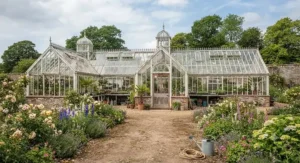
Classic Greenhouse Design Through the Decades
The classic greenhouse design most people picture — pitched glass roof, low dwarf wall or full-height glazing, a central ridge and often a decorative finial — traces back to Victorian glasshouses, when advances in cast iron and plate glass first made large freestanding structures practical rather than purely experimental. According to Wikipedia’s overview of greenhouse history and terminology, the term “glasshouse” specifically describes this traditional glass-paned form, distinct from the polythene tunnels and polycarbonate structures that emerged much later as cheaper, lighter alternatives.
Modern manufacturers keep that classic silhouette alive in different ways. The Robinsons Renaissance 8×6 leans into period detailing with optional ornate ridge crests and large, uninterrupted glass panes that echo Victorian glazing proportions, while the Gabriel Ash Essential 6×8 goes further still, pairing genuine cedar joinery with the mortise-and-tenon construction techniques period glasshouses were originally built with. Even budget aluminium kits like the Halls Popular 6×8 retain the recognisable pitched-roof, sliding-door silhouette that’s changed remarkably little in over a century, even as the materials underneath have modernised considerably. What most buyers overlook is that this classic proportion — roughly a 45-degree roof pitch with generous eaves height — isn’t just decorative; it’s genuinely functional, shedding rain and snow efficiently while maximising internal headroom for tall crops like tomatoes and climbing beans.
Common Mistakes When Buying a Traditional Glass Greenhouse
Several avoidable mistakes come up again and again among first-time buyers. The first is underestimating base preparation, assuming any reasonably flat patch of lawn will do — uneven ground is the leading cause of sticking doors and stressed glazing bars within the first year. The second is choosing horticultural glass purely to save money without weighing the safety trade-off, particularly where children or pets use the garden regularly. The third is ignoring wind exposure entirely, buying a standard-weight aluminium frame for a genuinely exposed plot and then replacing bent glazing bars within a couple of winters. The fourth is overlooking ventilation needs until midsummer, when a single roof vent proves nowhere near enough and a louvre retrofit turns out to be incompatible with the glazing already fitted. The fifth is skipping the manufacturer’s stated assembly time estimate, then rushing a two-person job alone and ending up with a door that never quite runs true.
Safety, Regulations and Planning Permission
Most domestic greenhouses fall under permitted development rights in the UK, meaning formal planning permission usually isn’t required — but the exemption has real limits worth checking before you order. According to the Planning Portal’s official guidance on outbuildings, the rules governing sheds, garages, and other ancillary garden structures apply equally to greenhouses, and buyers should confirm their specific plans with their local planning authority if there’s any doubt, particularly regarding proximity to boundaries, overall garden coverage, and whether the property sits in a conservation area or is a listed building, since permitted development rights can be more restricted or withdrawn entirely in those circumstances.
On glazing safety specifically, toughened glass conforming to British Standard BS6206 is the recognised safety standard referenced by several manufacturers featured here, including the Robinsons Renaissance 8×6 and Gabriel Ash Essential 6×8, and it’s worth asking any retailer to confirm compliance before ordering if it isn’t already stated clearly on the product page. Beyond glazing, always anchor a greenhouse securely to its base or foundation — an unanchored structure is a genuine wind-lift hazard in UK storm conditions, not just a theoretical one.
Long-Term Cost & Maintenance
Total cost of ownership for a traditional glass greenhouse extends well beyond the purchase price. Budget aluminium kits like the Halls Popular 6×8 carry the lowest upfront cost but may need glazing clips or individual panes replaced within a decade of typical UK weather exposure, particularly if fitted with standard horticultural rather than toughened glass. Mid-to-premium aluminium models such as the Rhino Premium 6×8 and Elite Titan 800 6×8 cost considerably more initially but their longer frame warranties — 25 years and 20 years respectively — reflect genuine confidence in reduced long-term replacement costs. Cedar-framed houses like the Gabriel Ash Essential 6×8 sit at the top of the price scale but typically need only periodic staining or oiling rather than structural replacement, and cedar’s natural rot resistance means a well-maintained timber frame can outlast several cheaper aluminium replacements bought consecutively.
Running costs matter too. Heating a well-insulated cedar structure to frost-free levels typically costs less over a winter than heating an equivalent aluminium glasshouse to the same temperature, simply because less heat escapes directly through the frame. Factor in glazing cleaning twice yearly, occasional gutter clearing, and door-runner lubrication, and realistic annual maintenance costs across most models here remain modest compared with the purchase price itself.
Frequently Asked Questions
❓ Is a traditional glass greenhouse better than a polycarbonate one?
❓ What size traditional glass greenhouse do I need for a small garden?
❓ Do I need planning permission for a glass greenhouse in the UK?
❓ How do I know if a greenhouse heater is compatible with my model?
❓ Can I add a louvre window vent to any greenhouse later?
Conclusion
A traditional glass greenhouse is still, for many British gardeners, the structure that makes a garden feel complete — and as this comparison shows, there’s real variety within that category, from the budget-friendly Halls Popular 6×8 through to the handcrafted Gabriel Ash Essential 6×8. The right choice comes down to matching frame and glazing to your actual conditions: wind exposure, ventilation ambitions, budget, and how much the classic aesthetic matters to you personally. Toughened glass is worth the modest extra cost in almost every scenario, storm-rated frames earn their premium on exposed sites, and louvre vents are worth planning for early rather than retrofitting later. Whichever of these seven models fits your garden, checking current prices and availability before you commit will save any last-minute disappointment — and then it’s simply a matter of levelling that base and getting growing.
✨ Don’t Miss These Exclusive Deals!
🔍 Take your greenhouse shopping to the next level with these carefully selected models. Click on any highlighted item to check current pricing and availability. These structures will help you create a genuinely productive growing space your family will enjoy for years!
Recommended for You
- Best Glass Greenhouse UK 2026: 7 Top Picks Tested & Compared
- Polycarbonate vs Glass Greenhouse: 7 Top UK Picks for 2026
- Best Polycarbonate Greenhouse UK: 7 Top Picks Tested for 2026
Disclaimer: This article contains affiliate links. As an Amazon Associate, I earn from qualifying purchases. If you purchase products through these links, we may earn a small commission at no additional cost to you.
✨ Found this helpful? Share it with your friends! 💬🤗
