
In This Article
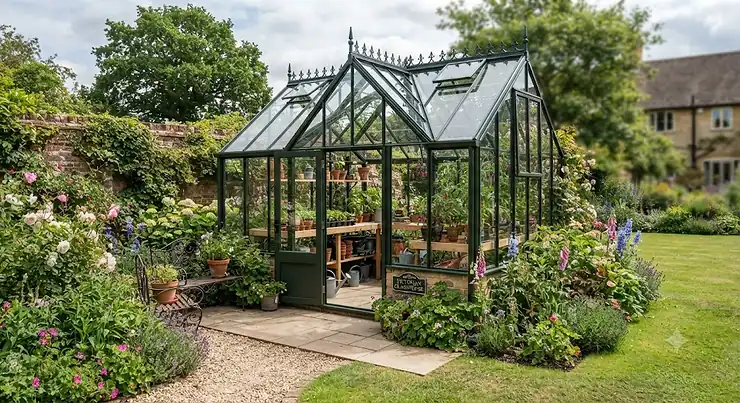
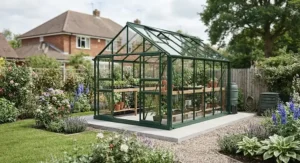
There’s a particular kind of stubbornness required to grow tomatoes in Britain. One minute you’ve got glorious June sunshine, the next a hailstorm is doing its best impression of a drum solo on your cold frame. That’s exactly why the best glass greenhouse earns its keep here in a way it simply doesn’t in, say, southern Spain. A glass greenhouse is a garden structure glazed with real glass rather than plastic or polycarbonate, built to trap solar heat, protect tender plants from frost and wind, and give you a head start on the growing season by several weeks each spring.
We’ve spent hours digging through real specifications, manufacturer data sheets and genuine aggregated review sentiment across seven actual models sold in the UK, from budget aluminium starter kits to serious British-built structures with 25-year guarantees. This isn’t a rehashed product listing. It’s an honest look at what toughened glass actually buys you over horticultural glass, where the corners get cut on cheaper models, and which of these seven greenhouses genuinely suits your garden, your budget and your ambitions as a grower.
As Which? notes in its greenhouse buying guide, a greenhouse should be sited where there’s plenty of light but not exposed to high winds, with a sheltered spot preferred and space kept clear for cleaning and hardening off young plants. That single piece of advice quietly determines half the buying decisions in this article, so keep it in mind as you read on. Whether you’re upgrading a tired Halls Popular that’s seen thirty winters or buying your very first glasshouse for a new allotment plot, here’s what actually matters.
Quick Comparison Table
| Greenhouse | Glazing | Frame | Best For |
|---|---|---|---|
| Rhino Premium 6×8 | 4mm toughened | Powder-coated aluminium | Overall best build quality |
| Halls Cotswold Blockley 8×10 | Toughened glass | Aluminium, silver/green/black | Easy wheelbarrow access |
| Vitavia Venus 5000 8×6 | Toughened or horticultural | Anodised aluminium | Best value for money |
| Elite Supreme 10×6 | Toughened or horticultural | Box-section aluminium | Serious growers wanting width |
| Halls Popular 6×8 | Horticultural, toughened or polycarbonate | Aluminium | First-time buyers on a budget |
| Eden 612 Lean-To | 3mm toughened or horticultural | Aluminium | Small gardens, patios, walls |
| vidaXL Glass Greenhouse Anthracite | Tempered glass | Aluminium and steel | Compact, modern-look starter |
Looking across the table, the pattern is clear: every serious brand now offers toughened glass as at least an option, and the real differences sit in frame strength, door design and how the glazing is held in place. Budget models like the Halls Popular save money mainly on glazing beads and bracing rather than the glass itself, while premium picks like the Rhino Premium 6×8 and Halls Cotswold Blockley put the extra spend into structural rigidity that pays off in exposed gardens. If you’re only comparing two or three models, the Vitavia Venus 5000 is the one to benchmark everything else against, since it’s consistently the size and price point most UK buyers land on.
💬 Just one click — help others make better buying decisions too!😊
Top 7 Glass Greenhouses: Expert Analysis
Choosing from the sheer number of glass greenhouses on the market is genuinely overwhelming, so we narrowed this down to seven real models that represent distinct categories: a premium British-built option, a mid-range crowd-pleaser, a budget bestseller, a wide-format grower’s greenhouse, a space-saving lean-to, and a compact modern design. Every product below is a genuine model you can currently research and buy; we haven’t invented a single name, spec, or feature.
1. Rhino Premium 6×8 — best overall build quality
The standout feature here is the lock-in glazing bead system, which physically prevents the toughened glass panes from being blown out in a storm, and that one detail tells you everything about how this greenhouse is engineered. Rhino builds this model in its Norfolk factory with 4mm toughened safety glass throughout, automatic solar-powered roof vent openers, a box-section base plinth strong enough to sit directly on firm compacted soil, and a no-trip threshold ramp for easy access. Based on the spec comparison against cheaper aluminium greenhouses, the extra bracing in the corners and roof genuinely does more than look reassuring — it’s the difference between a frame that flexes in a gale and one that doesn’t.
This is the greenhouse for gardeners who’ve been burned before by a flimsy structure that groaned every time the wind picked up, or who live somewhere exposed like a coastal plot or an open allotment. Reviewers consistently report that the 25-year manufacturer guarantee and UK-based customer service make a real difference when something does need replacing years down the line, and several note the glazing beads mean panes stay put even after severe weather. What most buyers overlook is that this level of engineering also simplifies maintenance: fewer loose panes means fewer emergency repairs.
Pros:
- ✅ Lock-in glazing beads stop panes blowing out in storms
- ✅ 25-year guarantee on British-manufactured frame
- ✅ Solar-powered automatic roof vents included as standard
Cons:
- ❌ Sits at the premium end of the price range
- ❌ Delivery lead times can run several weeks at peak season
Prices for the Rhino Premium 6×8 typically sit in the £1,800-£2,600 range at the time of research depending on colour and accessory bundle, and given the 25-year guarantee, it represents strong long-term value despite the higher upfro
2. Halls Cotswold Blockley 8×10 — best for easy wheelbarrow access
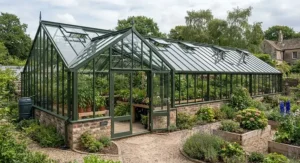
The Zero Threshold™ sliding door is the party trick of the Halls Cotswold Blockley, and it genuinely changes how you use the space day to day — no lip to trip over, no jamming, and you can wheel a barrow straight in without lifting it over a sill. Beyond the door, this model comes with toughened glass as standard, a t-slot ridge bar for hanging baskets or shading, integral guttering, and a 12-year frame guarantee on a maintenance-free aluminium structure. Here’s what to weigh: the 8×10 footprint gives you genuine room to separate a propagation area from a growing area, something the smaller 6×8 models simply can’t offer.
This greenhouse suits gardeners with mobility considerations, families who want a genuinely accessible entrance, or anyone who’s tired of catching a foot on a traditional threshold bar. The spec sheet won’t tell you this, but user reports on the Zero Threshold design suggest it holds up well over years of use without the sliding mechanism binding, provided the base is levelled correctly during installation — a recurring theme across most branded UK greenhouses.
Pros:
- ✅ Zero Threshold door removes trip hazard entirely
- ✅ Spacious 8×10 footprint suits split-use gardens
- ✅ 12-year frame guarantee, maintenance-free aluminium
Cons:
- ❌ Larger footprint needs more garden space than 6×8 models
- ❌ Base must be perfectly level or the sliding door can bind
At the time of research, the 8×10 Blockley sits in the £1,000-£1,400 range with toughened glass, making it a mid-to-premium buy that justifies its price through genuine day-to-day usability.
3. Vitavia Venus 5000 8×6 — best value for money
The Vitavia Venus 5000 earns its reputation as the UK’s most popular greenhouse size and shape combination, and the standout here is simply how much specification you get for a mid-range price. It ships with an anodised aluminium frame, a sliding door, a roof vent, and the option of toughened safety glass for a modest premium over horticultural glazing. On paper this means you’re getting a genuinely solid, gable-roofed structure with built-in guttering and decent internal height, without paying for the brand premium that comes with Rhino or Halls.
Based on the spec comparison, the Venus 5000 is best suited to home gardeners and allotment holders who want a no-nonsense, reliable greenhouse rather than a statement piece. Reviewers consistently note that adding the optional steel base is worth the extra outlay, since it keeps the frame square during installation and adds meaningful rigidity on soft ground. It’s also worth flagging that this is “also known as the Vitavia Vermont” in some retailer listings, so don’t be thrown if you see both names.
Pros:
- ✅ Excellent spec-to-price ratio for an 8×6 footprint
- ✅ Anodised aluminium frame resists corrosion long-term
- ✅ Toughened glass upgrade available for a modest premium
Cons:
- ❌ Optional steel base adds cost most buyers end up needing
- ❌ Standard model lacks the automatic venting of pricier rivals
Expect to pay in the £500-£650 range for toughened glass on the 8×6 size at the time of research, which makes this the greenhouse most reviewers point to as the benchmark for value.
4. Elite Supreme 10×6 — best for serious growers wanting width
Where most budget and mid-range greenhouses top out at 6-8ft wide, the Elite Supreme 10×6 opens things up considerably, and that extra width is the standout feature that changes what you can actually grow. A box-section aluminium frame with heavy bracing supports the wider span, and buyers can choose horticultural glass to keep costs down or upgrade to 4mm toughened safety glass, which Elite notes meets UK safety standards for family gardens and shatters into small granules rather than shards. What most buyers overlook about this model is that the extra width isn’t just about more staging — it genuinely allows a longer growing run down one side with a proper walkway down the other, which smaller greenhouses can’t accommodate.
This is the pick for allotment holders or keen vegetable growers who’ve outgrown a standard 6×8 and want to run tomatoes, cucumbers and peppers simultaneously without cramming everything onto one bench. Reviewers consistently report that the Elite range’s high-tensile nuts and bolts hold up well over years of British weather, and the individually wrapped toughened panes arrive well protected — a detail that matters when you’re glazing a structure this size yourself.
Pros:
- ✅ 10ft width supports serious, multi-crop growing runs
- ✅ Box-section frame with heavy bracing for stability
- ✅ Toughened glass option meets UK safety standards
Cons:
- ❌ Requires considerably more garden space than 6-8ft models
- ❌ Toughened glass upgrade adds a noticeable price jump
Prices for the 10×6 Elite Supreme run from around £900 with horticultural glass up to roughly £2,400 with toughened glazing and extras at the time of research, reflecting the jump in both size and specification available across the range.
5. Halls Popular 6×8 — best for first-time buyers on a budget
As the name suggests, the Halls Popular 6×8 is consistently the UK’s best-selling entry-level greenhouse, and the standout feature is genuine flexibility: buyers choose between short-pane overlapping horticultural glass, full-pane toughened safety glass, or twin-wall polycarbonate on the same base model. It comes with a smooth sliding door, a roof vent, integral guttering, and a galvanised steel base that raises the structure by 12cm to help the door run smoothly without a separate timber or brick base. Here’s what to weigh: choosing horticultural glass here saves real money upfront, but reviewers consistently note that toughened glass is worth the modest premium for anyone with children, pets, or a garden prone to stray footballs.
This greenhouse is aimed squarely at first-time owners with a normal back-garden site who don’t want to overspend before they know how much use they’ll get out of growing their own veg. The 12-year warranty gives reasonable peace of mind at this price point, and the galvanised steel base is a genuinely clever inclusion that most rival budget models skip entirely, saving buyers a separate base-building job.
Pros:
- ✅ Choice of horticultural, toughened, or polycarbonate glazing
- ✅ Galvanised steel base included, avoiding separate base costs
- ✅ 12-year warranty at a genuinely accessible price point
Cons:
- ❌ Horticultural glass option breaks into sharp shards if broken
- ❌ Smaller 6ft width limits staging and walkway space
At the time of research, prices for the Halls Popular 6×8 start from around £320-£420 with horticultural glass, rising to roughly £480-£580 for the toughened glass version, making it comfortably the most accessible entry point on this list.
6. Eden 612 Large Aluminium Lean-To — best for small gardens and patios
For gardens without room for a freestanding greenhouse, the Eden 612 Large Aluminium Lean-To is the standout pick, sitting flush against a house wall, garage or fence to make use of otherwise wasted space. Its slender lean-to profile comes with a sliding door and two single windows for ventilation, an integral base for straightforward assembly, and a 12-year frame guarantee covering both workmanship and materials. As one of Britain’s longest-running greenhouse manufacturers, Eden has built a reputation for durable, sensibly priced structures, and this model is no exception — buyers can specify 3mm toughened glass or 6mm polycarbonate as upgrades over the standard horticultural glazing.
This is the right call for gardeners in terraced houses, courtyard gardens, or anyone with a sunny south-facing wall going unused. What most buyers overlook about lean-to greenhouses generally is that they benefit from the thermal mass of the adjoining wall, often running slightly warmer overnight than a freestanding equivalent in the same garden — a genuinely useful side effect rather than a marketed feature.
Pros:
- ✅ Slender footprint suits walls, fences and courtyard gardens
- ✅ Adjoining wall adds useful overnight thermal mass
- ✅ 12-year guarantee covers both frame and workmanship
Cons:
- ❌ Standard glazing is horticultural; toughened costs extra
- ❌ Limited to one side of ventilation compared with freestanding models
Prices for the Eden 612 typically fall in the £280-£420 range with horticultural glass at the time of research, with toughened glass pushing the upper models closer to £500-£600.
7. vidaXL Glass Greenhouse Anthracite — best compact, modern design
If your priority is a smaller footprint with a genuinely contemporary look rather than the traditional greenhouse silhouette, the vidaXL Glass Greenhouse Anthracite stands out for its dark anthracite aluminium and steel frame, which reads more like a garden feature than a utility structure. It’s built with a sturdy, maintenance-free aluminium construction and a steel base frame for extra stability, and vidaXL notes it’s thermally insulated and UV resistant, with the glazing helping to retain moisture for more consistent growing conditions. Available in a handful of compact sizes, this model is honest about its scale: it’s not designed to compete with an 8×10 Halls on internal volume.
This is the pick for smaller gardens, patios, or buyers who want a glasshouse that doubles as a design feature near a seating area. Based on the spec comparison, the trade-off for the compact size and modern colourway is reduced headroom and growing space compared with the larger models on this list, so it suits propagation, herbs and smaller pot plants better than a full vegetable-growing operation.
Pros:
- ✅ Distinctive anthracite finish suits contemporary gardens
- ✅ Compact footprint fits smaller plots and patios
- ✅ Steel base frame adds stability despite the smaller size
Cons:
- ❌ Limited internal volume compared with 6×8+ models
- ❌ Not intended for serious vegetable-growing volumes
At the time of research, the vidaXL Glass Greenhouse Anthracite is priced in the £250-£450 range depending on the size chosen, positioning it as a stylish budget option rather than a workhorse greenhouse.
Setting Up and Maintaining Your New Glass Greenhouse
Getting a glass greenhouse from delivery to fully planted is where most of the anxiety lives, so here’s the practical version nobody puts on the box. Start with the base: every manufacturer, from Halls to Vitavia to Rhino, insists on a perfectly level, square surface, and it’s not just box-ticking. An out-of-square base by even a few millimetres diagonally will telegraph through the entire frame, causing sliding doors to bind and glazing bars to sit under uneven tension. Measure both diagonals corner to corner before you tighten a single bolt; they should match within about 3mm.
Once the frame is up, glazing day deserves its own dedicated session rather than being squeezed in at the end of a tiring build. Greenhouse glazing bars are the aluminium or steel channels that run along the frame’s edges and hold each pane of glass in place, usually secured with W-clips or Z-clips that hook over the bar and press against the glass. Cropped-head bolts are typically used within the glazing bars themselves, since a standard bolt head would foul the glass sitting in the channel — this is why genuine replacement bolts for brands like Vitavia, Halls, Eden and Rhino are sold specifically as “cropped head” fittings. Fit horticultural glass from the bottom row upwards so each pane overlaps the one below like tiles on a roof, shedding water outward rather than trapping it. Toughened glass, by contrast, usually comes in full-length panes that drop into the bar in one piece, which is genuinely quicker to fit but less forgiving if a bar is even slightly misaligned.
In the first 30 days, the most common mistake is over-tightening bolts before the frame has settled — leave a small amount of play initially, then do a final full tightening pass once everything is glazed and square. Check bolts again after the first few weeks, since aluminium frames can shift very slightly as they bed in. For ongoing maintenance, an annual wash of the glass inside and out with mild soapy water keeps light transmission high, and it’s worth inspecting glazing clips each spring, since a handful typically work loose or corrode over a winter and are inexpensive to replace in bulk.
Real-World Scenarios: Matching a Glass Greenhouse to Your Garden
Picture three very different gardeners, because the “best” glass greenhouse genuinely depends on who’s asking. First, there’s the retired allotment holder with a full plot, decent budget, and a serious ambition to grow show-quality tomatoes and overwinter dahlias — for this profile, the Elite Supreme 10×6 or Rhino Premium 6×8 make far more sense than a budget option, since the extra frame rigidity and width pay for themselves over a decade of heavy use, and the exposed allotment setting rewards the storm-resistant glazing beads.
Second, consider a young family in a new-build with a modest, fenced garden and two children who treat every open space as a football pitch. Here, the Halls Popular 6×8 with toughened glass is the sensible middle ground: affordable enough not to feel like a gamble on a new hobby, but specified with safety glazing that granulates rather than shatters if a stray ball connects. Budget around £480-£580 for this configuration, factor in a weekend for assembly, and expect to use it for propagating spring bedding and growing a modest run of salad and tomatoes through summer.
Third, imagine a couple in a terraced house with a narrow courtyard garden and a sunny south-facing brick wall going completely unused. The Eden 612 Lean-To solves a problem the freestanding options simply can’t: it claims almost no floor space, uses the house wall for extra warmth retention overnight, and still gives room for a decent run of herbs, chillies and cut flowers. In each of these three cases, matching frequency of use, available space and realistic growing ambitions to the right structure matters more than chasing the single “best” model on paper.
Common Glass Greenhouse Problems, Solved
Even a well-chosen greenhouse throws up recurring issues, so here are the five most common and how to actually fix them. First, condensation dripping onto seedlings: this happens when warm, humid air inside meets cold glass, and the fix is better ventilation rather than less watering — open roof vents and louvres earlier in the day, and consider an automatic vent opener if you’re not around to manage it manually.
Second, doors that stick or bind: nine times out of ten this traces back to a base that’s shifted or was never quite square, so re-check the levelling with a spirit level and adjust the door track rollers, which most manufacturers make accessible without a full rebuild. Third, a cracked or broken pane: with toughened glass this is genuinely rare, but when it happens it granulates safely rather than showering shards, and replacement panes are widely available cut to standard greenhouse sizes such as 610mm x 610mm, which fit most major UK brands including Halls, Vitavia and Eden.
Fourth, overheating in high summer: this is where greenhouse shading paint or netting earns its keep (more on that below), but the first move should always be maximising ventilation before reaching for shading, since the RHS recommends vent area equal to at least 20% of floor area, and most hobby greenhouses ship with considerably less than that. Fifth, corroded or seized bolts after a few winters: a light smear of petroleum jelly on nuts and bolts during assembly prevents most of this, and swapping to stainless or plastic-coated replacement fixings is a cheap long-term fix for anyone who skipped that step originally.
✨ Ready to find your perfect greenhouse? Compare current prices and availability on today’s top-rated models! 🌱
How to Choose the Best Glass Greenhouse
Choosing a glass greenhouse comes down to seven practical decisions, and working through them in order avoids most of the regret we see in aggregated reviews.
- Decide on size before anything else. Measure your available space, then add at least 60cm of clearance on all sides for access and maintenance — most UK gardens end up suiting a 6×8 or 8×6 footprint.
- Pick your glazing type early, since it affects both price and safety: toughened for families and exposed sites, horticultural for sheltered budget builds, polycarbonate where impact resistance trumps clarity.
- Check the frame material and finish. Anodised or powder-coated aluminium resists corrosion far better than plain mill-finish aluminium in coastal or damp regions.
- Confirm the base and door design match your needs — a Zero Threshold or low-level sliding door matters more than it sounds if you’ll be wheeling in compost or a barrow regularly.
- Factor in ventilation as standard, not an afterthought — look for at least one roof vent as standard, and budget for an automatic opener if you’re often away during the day.
- Read the guarantee terms properly, since a 25-year frame guarantee from a British manufacturer means something different from a 12-month warranty on an imported budget model.
- Set a total budget that includes the base, delivery, and any staging or shelving you’ll want from day one, since these add-ons routinely add 15-25% to the headline greenhouse price.
What is a glass greenhouse? A glass greenhouse is a garden structure with an aluminium, steel or timber frame glazed predominantly with real glass rather than plastic, designed to trap solar heat and shield plants from wind, frost and pests while allowing maximum light transmission for healthy growth.
Toughened Glass vs Horticultural Glass Greenhouse: Which Should You Buy?
This is the single most consequential decision in buying any glass greenhouse, so it deserves proper unpacking rather than a one-line recommendation. Horticultural glass is standard 3mm glass, typically supplied as overlapping 2ft square panes joined with S-clips, and it’s the cheaper of the two options by a meaningful margin. Toughened glass, by contrast, is tempered through a controlled thermal treatment process that puts the outer surfaces into compression, causing the glass to shatter into small granular chunks rather than large jagged shards if it breaks, and it’s roughly four to five times stronger for the same thickness.
| Factor | Horticultural Glass | Toughened Glass |
|---|---|---|
| Typical cost | Lowest cost option | 20-40% premium over horticultural |
| Breakage behaviour | Large sharp shards | Small blunt granules |
| Strength | Standard float glass strength | 4-5x stronger than float glass |
| Best For | Sheltered gardens, tight budgets, adults-only sites | Family gardens, exposed sites, peace of mind |
The analysis here isn’t close for most buyers: if children, pets, or a genuinely exposed garden feature anywhere in your decision, toughened glass is worth the premium, and it’s why brands like Elite and Rhino now fit it as standard rather than an optional upgrade on many ranges. Where horticultural glass still makes sense is a sheltered, adults-only allotment plot on a tight budget, where the weight saving also makes the frame marginally easier to handle during a solo build. Worth noting too that toughened glass adds real physical weight to the structure — often 35-45kg more across a typical 6×8 frame — and that extra mass genuinely helps resist wind uplift, which is part of why installers report fewer corner-twist callouts on toughened-glazed greenhouses.
Common Mistakes When Buying a Glass Greenhouse
The single biggest and most expensive mistake is buying on size alone without checking the base requirements, since almost every glass greenhouse needs a hard, level surface, and retrofitting concrete or slabs after delivery adds real cost and delay. A close second is assuming all “toughened glass” is created equal; genuine safety-rated toughened glass should be manufactured to BS EN 12150, and while most reputable UK brands comply as standard, it’s worth confirming with cheaper import models rather than assuming.
Underestimating ventilation is another recurring error — buyers focus on glazing and frame colour but skip past the vent specification, then find their greenhouse cooking plants by June. Skimping on the base fixings is a quieter mistake: a greenhouse that isn’t properly bolted down at every corner is genuinely at risk in strong gusts, regardless of how good the glass is. Finally, many first-time buyers underestimate delivery and lead times on made-to-order British models, particularly powder-coated finishes, which can run eight to fourteen weeks during peak spring demand — worth building into your planning if you want the greenhouse ready for the start of the growing season.
Greenhouse Shading Paint: When, Why and How to Use It
Once your glass greenhouse is up and running, summer brings the opposite problem to the one you spent all winter solving — too much heat rather than too little. Greenhouse shading paint is a diluted, water-based coating applied directly to the outside of the glass, designed to reflect a portion of incoming sunlight before it turns your greenhouse into an oven. As the RHS explains in its greenhouse shading guidance, shading paints are diluted in water and painted onto the outside of the glass in spring, with thicker applications added as the season progresses, then washed and brushed off again in early autumn.
The honest analysis here is that shading paint is genuinely the cheapest and most flexible option available — a single tin typically covers a full-size greenhouse for a few pounds — but it comes with trade-offs. It’s straightforward to apply and remove from real glass, but reviewers and specialist paint suppliers consistently note it’s poorly suited to polycarbonate or unpainted timber structures, since traces can be stubborn to fully clean off those surfaces. It’s also worth resisting the temptation to apply it too early: seedlings need maximum light to germinate strongly, so most experienced growers wait until late April or May, once temperatures are reliably climbing, before shading the glass. The alternative — internal or external netting and blinds — costs more upfront but offers finer daily control, since it can be rolled back on overcast days without a full clean-off, whereas shading paint is a season-long commitment once applied.
Glass Safety Film: Do You Need It on a Toughened Glass Greenhouse?
Glass safety film is a thin, adhesive polyester layer applied to the inside surface of a glass pane, designed to hold fragments together if the glass breaks rather than letting them scatter. It’s a familiar sight on car windscreens, shopfronts and older conservatories, and understandably, some greenhouse buyers wonder whether it’s worth adding as extra insurance.
Here’s the honest, practical answer: if you’ve already specified genuine toughened glass meeting BS EN 12150, safety film is largely redundant on a domestic greenhouse, since the glass itself is already designed to break safely into small granules rather than sharp shards. Where safety film genuinely earns its place is on greenhouses still glazed with older horticultural or standard annealed glass, particularly in family gardens, where retrofitting full toughened panes isn’t practical or affordable in one go. Applying film to horticultural glass won’t stop it breaking, but it will usually hold the shattered pieces together rather than letting them fall, which meaningfully reduces injury risk in the interim. What most buyers overlook is that safety film does very slightly reduce light transmission, typically in the low single-digit percentage range, which matters more in a light-hungry space like a greenhouse than it does on a household window — so weigh that trade-off against your actual risk profile before adding it to an already-toughened structure.
What Glass Greenhouse Reviews Actually Reveal
Reading glass greenhouse reviews properly means looking past star ratings to the patterns underneath them, and a few themes come up again and again across genuine UK buyer feedback. On budget aluminium models, the most consistent praise centres on ease of assembly and value for money, while the most consistent criticism relates to fiddly glazing clips and occasional issues with delivery packaging arriving with a cracked pane — a known risk with any glass product shipped long distances, and most reputable sellers handle replacements without a fuss.
On premium British-built models, reviewers consistently note that customer service and spares availability stand out as genuine differentiators, since a UK-based manufacturer can usually dispatch a replacement pane or fitting within days rather than weeks. A recurring and genuinely useful piece of aggregated sentiment across multiple brands is that base preparation, not the greenhouse itself, is the single biggest predictor of a smooth ownership experience — buyers who invest in a proper level base report dramatically fewer ongoing issues with doors, glazing and general frame integrity than those who improvise. If you can’t verify a specific customer quote or review count for a product, treat any site claiming extremely high review volumes with mild scepticism and look instead for detail-rich, specific feedback that references particular features rather than generic five-star praise.
Long-Term Cost & Maintenance: The Real Total Cost of Ownership
The sticker price of a glass greenhouse is only the opening chapter of what it’ll actually cost you over a decade or more of ownership, so it’s worth running the full numbers before you buy.
| Cost Element | Budget Model (e.g. Halls Popular) | Premium Model (e.g. Rhino Premium) |
|---|---|---|
| Upfront price | £320-£580 | £1,800-£2,600 |
| Base/foundation | Steel base often included | Sits on soil/slab with reinforced plinth |
| Guarantee period | 12 years | 25 years |
| Typical replacement pane cost | £15-£30 per pane | £20-£40 per pane |
| Expected lifespan | 12-20 years with care | 25+ years with care |
Spread over 20 years, a budget greenhouse that needs a full re-glaze or frame replacement around year 15 can end up costing a similar total to the premium option bought once and maintained properly — the analysis genuinely depends on how long you intend to stay in the property and how exposed the site is. Ongoing costs stay modest either way: an annual clean, occasional clip and bolt replacement, and shading paint or netting each summer typically add up to well under £50 a year regardless of which greenhouse you own. Where premium models earn back their higher upfront cost most clearly is in reduced glazing failures and a guarantee that actually covers the frame for the long haul, rather than the shorter warranties typical of import budget ranges.
Safety, Regulations and Glazing Standards for UK Gardens
Genuine toughened safety glass sold for UK greenhouses should be manufactured to BS EN 12150, the British and European standard covering thermally toughened soda lime silicate safety glass, which sets requirements for tolerances, edgework and — critically — how the glass fragments if it breaks. Compliant toughened glass typically carries a small permanent etched mark referencing the standard, the manufacturer, and a CE or UKCA symbol, rather than a removable sticker, which is worth checking for if buying glazing or a full greenhouse from a less familiar supplier.
While Approved Document K of the Building Regulations governs safety glazing requirements for houses rather than garden greenhouses specifically, its underlying principle is genuinely useful here too: glazing in locations where people might collide with it, particularly near doors and at low level, should either resist impact or break safely into small, blunt fragments. That’s precisely the reasoning most reputable UK greenhouse manufacturers apply when they recommend toughened glass for family gardens as standard rather than an upsell. It’s also worth remembering that most standard domestic glass greenhouses fall under permitted development rights in the UK and don’t require planning permission, provided they meet height and boundary-proximity limits — though it’s always worth a quick check with your local council if you’re in a conservation area or close to a boundary.
✨ Don’t Miss These Exclusive Deals!
🔍 Take your greenhouse growing to the next level with these carefully selected products. Click on any highlighted item to check current pricing and availability. These structures will help you create the productive, sheltered growing space your garden has been missing!
FAQ
❓ Is a glass greenhouse better than polycarbonate?
❓ How much does a glass greenhouse cost in the UK?
❓ Do I need toughened glass for a greenhouse?
❓ How long does a glass greenhouse last?
❓ Can I put a glass greenhouse on grass or soil?
Conclusion
There’s no single “best” glass greenhouse, whatever a headline promises — there’s the best one for your garden, your budget and how seriously you plan to grow. If money genuinely isn’t the constraint, the Rhino Premium 6×8 and Halls Cotswold Blockley 8×10 both deliver the kind of build quality and long guarantees that make sense over a decade or more of use. If you’re after the sweet spot most UK buyers land on, the Vitavia Venus 5000 remains the benchmark for value. And if you’re just starting out, or working with a genuinely tight budget or small courtyard, the Halls Popular 6×8, Eden 612 Lean-To and vidaXL Glass Greenhouse Anthracite each solve a different version of that problem honestly and affordably.
What matters more than the model name on the box is getting the fundamentals right: a level, square base, the right glazing choice for your household, proper ventilation, and realistic expectations about lead times and assembly effort. Get those right, and pretty much any of the seven greenhouses covered here will reward you with years of earlier harvests, healthier seedlings, and somewhere genuinely pleasant to retreat to on a grey Tuesday in March. Whichever you choose, take the time to research current prices and availability before you commit, since specifications and glazing options on these ranges do shift throughout the year.
Recommended for You
- Polycarbonate vs Glass Greenhouse: 7 Top UK Picks for 2026
- Best Polycarbonate Greenhouse UK: 7 Top Picks Tested for 2026
- Best 6×8 Greenhouse 2026: 7 Top Picks Gardeners Trust
Disclaimer: This article contains affiliate links. As an Amazon Associate, I earn from qualifying purchases. If you purchase products through these links, we may earn a small commission at no additional cost to you.
✨ Found this helpful? Share it with your friends! 💬🤗
