
In This Article
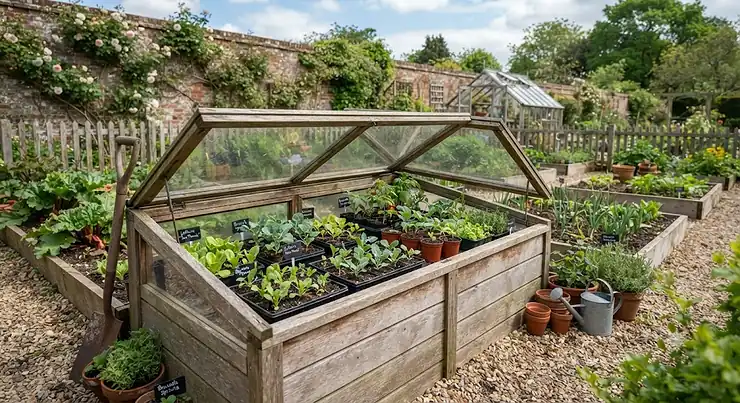
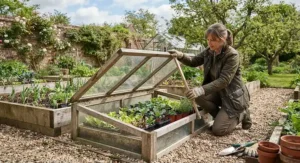
There’s a particular kind of heartbreak reserved for gardeners in late April. You’ve nursed a tray of tomato seedlings since February, fussed over them like anxious new parents, and then one overconfident afternoon you plant them straight into the border. By morning they’re flat, papery, and beyond saving — done in by a stiff wind and a few degrees of night chill they were never given the chance to get used to. A cold frame for hardening off seedlings exists precisely to stop that scene from happening. It’s a bottomless, glazed box that sits low to the ground and acts as a halfway house between your warm windowsill and the genuinely unpredictable British outdoors, letting plants toughen up gradually instead of all at once. Cold frames are glazed, box-like structures made from brick or wood with a hinged or removable, sloping lid, and according to RHS guidance on hardening off tender plants, after around two weeks in cooler conditions plants should move into a well-ventilated one as the next stage of hardening off. Think of it as plant boot camp, minus the shouting.
This guide does the legwork you don’t have time for. We’ve researched seven genuinely available cold frames sold in the UK — spanning stained timber to architectural aluminium, £70 starter kits to £250 aluminium-and-glass builds — and paired that with honest analysis of who each one actually suits. You’ll get a straight comparison, real specification breakdowns, and a proper look at the practical questions that decide whether hardening off goes smoothly or ends in mush: how a cold frame differs from a hotbed, whether it beats a humble cloche, and how to manage the tray-by-tray transition without losing a single seedling to a surprise frost.
Quick Comparison Table
Before the deep dive, here’s the shape of the market at a glance. All seven products below are genuinely sold in the UK, and prices are given as ranges because Amazon pricing shifts constantly — always check the current price before buying.
| Cold Frame | Material | Size (approx.) | Price Range | Best For |
|---|---|---|---|---|
| Selections Wooden Framed Polycarbonate Cold Frame | Stained wood + twin-wall polycarbonate | 100 x 65 x 40cm | £70-£100 | Budget starters, small gardens |
| Outsunny Wooden Cold Frame Greenhouse | FSC timber + polycarbonate | 100 x 60 x 46cm | £75-£110 | Value-driven allotment beginners |
| Palram Cold Frame Single | Aluminium + polycarbonate | 107 x 104 x 51cm | £70-£95 | Reliable, low-maintenance frames |
| Palram Cold Frame Double | Aluminium + polycarbonate | 107 x 104 x 51cm (twin lid) | £90-£130 | Bigger batches of seedlings |
| Access Mini Aluminium Cold Frame 4×4 | Powder-coated aluminium + glass/polycarbonate | 121 x 121 x 82cm | £180-£260 | Serious growers wanting longevity |
| Elite Min-E-Lite 4×2 Cold Frame | Aluminium + toughened glass | 122 x 61cm | £220-£260 | Wall-mounted, space-tight gardens |
| Rowlinson Hardwood Cold Frame with Shelving | FSC hardwood + twin-wall polycarbonate | 100 x 60 x 60cm | £140-£190 | Tiered growing, mixed seedling sizes |
Looking at the spread here, the split isn’t really budget-versus-premium — it’s timber-versus-metal, and that choice matters more than most buyers realise. Wooden frames like the Selections Wooden Framed Polycarbonate Cold Frame and Outsunny Wooden Cold Frame Greenhouse hold heat more evenly overnight because timber is a natural insulator, which is genuinely useful during a cold snap in March. Aluminium options such as the Access Mini Aluminium Cold Frame 4×4 and Elite Min-E-Lite 4×2 Cold Frame cost more upfront but shrug off decades of British damp without rotting, warping, or needing a repaint. If you’re only hardening off a couple of trays a year, that longevity premium is harder to justify than it is for someone running a full allotment.
💬 Just one click — help others make better buying decisions too!😊
Top 7 Cold Frames for Hardening Off Seedlings: Expert Analysis
We picked these seven specifically to cover the real range of what UK gardeners buy: compact wooden starter frames, mid-range aluminium-and-polycarbonate builds, and glass-glazed premium options for people who treat their plot seriously. Every product below reflects genuine current specifications gathered from manufacturer listings and retailer pages, alongside aggregated review sentiment — never invented quotes or star ratings.
1. Selections Wooden Framed Polycarbonate Cold Frame — best true budget entry point
The Selections Wooden Framed Polycarbonate Cold Frame is the sort of unfussy, does-what-it-says structure that’s ideal if you’ve never used a cold frame before and aren’t ready to commit serious money to the idea. It’s a wooden-framed polycarbonate cold frame that protects plants from frost, has easy assembly with a hinged top for convenient access, and measures 100cm wide and 40cm high. The stained timber frame gives a bit of natural insulation, and because polycarbonate is much tougher than glass and won’t shatter if accidentally knocked, it’s a sensible choice for gardens with kids, cats, or the occasional wayward football. It arrives flat-packed, which keeps shipping costs and the price down but does mean setting aside twenty minutes with a screwdriver before your first seedlings go in. Based on the spec sheet, this is squarely aimed at hobbyists hardening off a modest number of trays rather than production growers — the 65cm depth is enough for two to three standard trays side by side, not a full raised bed’s worth. Reviewers consistently note that assembly is straightforward for one person, though a few mention the polycarbonate panels flex slightly in strong wind unless the frame is weighted or pegged down, which is worth planning for if your garden is exposed. Given it’s from a small business seller rather than a big-box brand, stock levels can be tighter than for mass-market alternatives, so it’s worth checking availability before you commit your sowing schedule around it.
Pros:
- ✅ Genuinely low price point for a first cold frame
- ✅ Shatterproof polycarbonate is safer around children and pets
- ✅ Hinged lid design makes daily venting quick
Cons:
- ❌ Flat-pack assembly required, roughly 20-30 minutes
- ❌ Smaller footprint limits it to modest seedling batches
At the time of research, prices sit in the £70-£100 range. For anyone testing whether hardening off with a cold frame suits their routine before spending more, this is a low-risk way to find out.
2. Outsunny Wooden Cold Frame Greenhouse — best all-rounder for allotment beginners
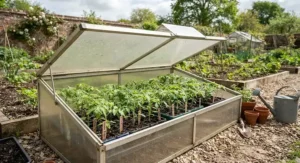
Outsunny has built a reputation on affordable, cheerfully practical garden kit, and their Outsunny Wooden Cold Frame Greenhouse fits that mould exactly. It uses an FSC-certified timber frame with polycarbonate glazing, giving you the warmth-retaining benefits of wood without the weight or price of hardwood alternatives. What most buyers overlook about this model is that the timber frame actually does double duty: it’s both the structural support and a passive heat buffer, absorbing daytime warmth and releasing it slowly overnight, which matters more than people expect during a cold April week. The hinged lid opens fully for access and can typically be propped at an angle for partial ventilation, letting you fine-tune airflow as your seedlings toughen up rather than choosing between fully open or fully shut. Based on the spec comparison against the Selections frame above, the Outsunny model tends to run slightly deeper and taller, giving a touch more headroom for leggier seedlings like tomatoes or courgettes that have already put on some growth indoors. Aggregated review sentiment across UK garden retailers is generally positive for ease of assembly and value, with the most common criticism being that the polycarbonate panels can look slightly hazy compared with glass, which marginally reduces light transmission on already-dull days.
Pros:
- ✅ FSC-certified timber supports sustainable sourcing
- ✅ Deeper interior suits taller or leggy seedlings
- ✅ Adjustable lid angle for graduated ventilation
Cons:
- ❌ Polycarbonate haze slightly reduces light on overcast days
- ❌ Untreated edges need occasional wood preservative
Expect a price in the £75-£110 range depending on retailer promotions. This is a genuinely solid middle-of-the-road choice for anyone starting out on an allotment.
3. Palram Cold Frame Single — best low-maintenance aluminium frame
Palram (sold under the Canopia brand family) makes some of the most widely stocked polycarbonate garden structures in the UK, and the Palram Cold Frame Single brings that same engineering to a compact scale. It features high-impact, UV-protected polycarbonate panels with a rust-resistant aluminium frame, a virtually unbreakable crystal-clear lid for maximum light transmission, and a sloping design that lets sunlight and rain run off. That sloping lid is a small detail with outsized real-world impact — flat-topped cold frames pool rainwater, which adds weight, can crack cheaper plastics, and occasionally floods the vents right when you need them clear. Here, aluminium means no rot, no warping, and no annual repaint, which appeals to anyone who’s already tired of maintaining a wooden greenhouse elsewhere in the garden. The hinged arch lid gives easy access for watering and checking on seedlings without lifting the whole roof off, and UV stabilisation means the polycarbonate won’t yellow the way cheap acrylic does after a couple of summers. Customer reviews sit at 3.7 out of 5 stars across 23 ratings at the time of research — respectable rather than glowing, and worth weighing against the fact that a lightweight aluminium-and-polycarbonate structure will always trade some ultimate sturdiness for its low weight and easy handling.
Pros:
- ✅ Rust-resistant aluminium needs no repainting or treatment
- ✅ Sloped lid sheds rain instead of pooling it
- ✅ UV-stabilised polycarbonate resists yellowing over time
Cons:
- ❌ Lighter build feels less substantial than timber frames
- ❌ Single lid limits access compared with the Double version
Prices generally fall in the £70-£95 range. If low-maintenance matters more to you than heat retention, this is a genuinely sensible pick.
4. Palram Cold Frame Double — best for larger seedling batches
Take everything from the Single above and effectively double the growing space, and you’ve got the Palram Cold Frame Double. It’s rust- and corrosion-resistant, UV-protected, and weatherproof, using the same polycarbonate panels and aluminium frame construction as the rest of the Palram cold frame range. The headline feature is two hinged arch lids for easier access and improved ventilation — practically, that means you can vent one half on a mild day while keeping the other closed for slower-hardening seedlings, or simply split access so you’re not lifting one enormous panel every time you want to check on a single tray. For anyone growing enough seedlings to fill a full allotment bed — say, a couple of dozen brassicas alongside a tray of squash and a run of sweet peas — this dual-lid layout genuinely changes the day-to-day usability rather than just adding floor space. What the spec sheet won’t tell you, but the design implies, is that having two independently operable lids also gives you a rudimentary way to zone temperatures: keep one side propped for tougher, nearly-hardened plants and the other shut for tender new arrivals, all within a single structure. It’s a clever bit of lateral thinking dressed up as a basic feature.
Pros:
- ✅ Twin lids allow independent ventilation zones
- ✅ Doubled floor space suits full allotment-scale sowing
- ✅ Same durable, low-maintenance materials as the Single
Cons:
- ❌ Takes up meaningfully more ground space
- ❌ Costs noticeably more than the Single model
Expect to pay in the £90-£130 range at the time of research. For serious allotment growers, the extra outlay buys real day-to-day flexibility.
5. Access Mini Aluminium Cold Frame 4×4 — best for long-term durability
Access Garden Products builds specifically for the UK climate, and it shows in the Access Mini Aluminium Cold Frame 4×4. All Access cold frames are manufactured in the UK using architectural-grade aluminium for greater strength and corrosion resistance, and are fitted with 3mm horticultural safety glass which, unlike plastic sheeting, will not bend or bow, even in the strongest winds. That’s a meaningfully different proposition to the polycarbonate frames above: glass transmits more light than twin-wall polycarbonate, which translates into slightly stockier, less etiolated seedlings if your garden already struggles for sun. Sliding roof and side panels provide ventilation and easy access, letting you fine-tune airflow far more precisely than a simple hinged lid, which matters a great deal during the fiddly middle stretch of hardening off when you’re gradually increasing exposure day by day rather than flipping a switch. Based on the spec comparison with the timber and polycarbonate options above, this is the frame built for people who’ll still be using it in a decade, not just this growing season — architectural-grade aluminium doesn’t degrade the way stained softwood eventually does. The trade-off is straightforward: glass is heavier and, if broken, more hazardous than polycarbonate, so this suits a settled, permanent spot rather than a frame you plan to move around the garden each year.
Pros:
- ✅ UK-manufactured aluminium resists corrosion long-term
- ✅ Toughened glass gives maximum light for stockier growth
- ✅ Sliding panels allow precise, gradual ventilation control
Cons:
- ❌ Heavier and less portable than polycarbonate frames
- ❌ Glass carries breakage risk in high-traffic areas
At the time of research, this model typically sits in the £180-£260 range. Given the manufacturer’s UK-focused build quality, it’s a genuine long-term investment rather than a disposable season’s purchase.
6. Elite Min-E-Lite 4×2 Cold Frame — best space-saving wall-mounted option
If your garden is more courtyard than country plot, the Elite Min-E-Lite 4×2 Cold Frame solves a specific problem: it’s a compact aluminium option with toughened glass that tucks against a wall without wasting space. The wall-hugging profile is the whole point here — positioning any cold frame against a south-facing wall lets brick or render absorb heat through the day and radiate it back overnight, effectively giving you a few free degrees of warmth without spending a penny on insulation. Toughened glass glazing means better light transmission than polycarbonate for seedlings that are already a little leggy from indoor growing, and the aluminium frame keeps the whole unit lightweight enough to reposition if you rethink your garden layout later. Reviewers and retailers alike frame this as a frame for people who are tight on ground space but not willing to compromise on build quality — it isn’t the cheapest option here, but it’s also not competing on price; it’s competing on making a narrow side return or patio edge genuinely productive. One honest caveat worth flagging: toughened glass, while far safer than ordinary glass, still adds weight and requires more careful handling during assembly than the polycarbonate alternatives on this list.
Pros:
- ✅ Narrow footprint suits patios, courtyards and side returns
- ✅ Toughened glass maximises light for leggy seedlings
- ✅ Wall-mounting captures free residual heat overnight
Cons:
- ❌ Premium price relative to floor area provided
- ❌ Glass glazing needs careful, unhurried assembly
Prices tend to run £220-£260 at the time of research, with a wider 6×2 version available for roughly £299 if you need more room. For space-starved gardens, the premium buys you usable growing area you simply wouldn’t otherwise have.
7. Rowlinson Hardwood Cold Frame with Shelving — best for staggered, multi-height growing
Rowlinson is a long-established British name in garden timber, and their hardwood cold frame brings something the other six products here don’t: internal shelving. It features twin-walled polycarbonate glazing and two storage shelves, offering extra room for young plants to thrive, with access, care and ventilation provided through either the front opening door or the lid. That tiered layout is genuinely clever for hardening off in practice, because seedlings rarely all reach transplant-readiness on the same day — the shelves let you keep nearly-hardened trays up top, closer to the glazing and full light, while younger, more tender sowings sit lower down in the slightly more sheltered zone. The front-opening door is a small but meaningful upgrade over lid-only access, since you’re not disturbing every tray in the frame just to reach the bottom shelf. Hardwood construction, unlike the softer stained timber used in budget frames, resists rot and warping for considerably longer without annual treatment, which justifies a chunk of the price premium here. Based on the spec comparison against the Access and Elite options above, this sits in an interesting middle ground: not as ruthlessly durable as powder-coated aluminium, but noticeably better ventilated and organised than a basic single-tier box, which matters if you’re running several sowings through their hardening-off period at staggered intervals across a busy spring.
Pros:
- ✅ Internal shelving suits multiple growth stages at once
- ✅ Front door access avoids disturbing every tray
- ✅ Hardwood frame resists rot better than softwood options
Cons:
- ❌ Bulkier footprint than single-tier alternatives
- ❌ Assembly is more involved given the shelving structure
Expect a price range of roughly £140-£190 at the time of research. For gardeners juggling several seedling batches at different readiness stages, the shelving genuinely earns its keep.
Top 7 Products: Detailed Spec Comparison
| Cold Frame | Glazing | Ventilation Style | Assembly | Best For |
|---|---|---|---|---|
| Selections Wooden Framed Polycarbonate Cold Frame | Twin-wall polycarbonate | Single hinged lid | Flat-pack, ~20-30 min | First-time buyers |
| Outsunny Wooden Cold Frame Greenhouse | Polycarbonate | Angled hinged lid | Flat-pack | Allotment beginners |
| Palram Cold Frame Single | UV-stabilised polycarbonate | Single arch lid | Light assembly | Low-maintenance frames |
| Palram Cold Frame Double | UV-stabilised polycarbonate | Twin arch lids | Light assembly | Larger seedling batches |
| Access Mini Aluminium Cold Frame 4×4 | 3mm toughened glass | Sliding roof + side panels | Moderate, glass care needed | Long-term durability |
| Elite Min-E-Lite 4×2 Cold Frame | Toughened glass | Hinged lid | Moderate | Wall-mounted, tight spaces |
| Rowlinson Hardwood Cold Frame with Shelving | Twin-wall polycarbonate | Door + lid | More involved, shelving | Staggered, multi-height growing |
Interpreting this table, the ventilation style is arguably more important day-to-day than the glazing material once you’ve settled on a budget. Sliding panels, as on the Access Mini Aluminium Cold Frame 4×4, let you open a cold frame by a precise few centimetres — ideal for the gradual, incremental exposure that hardening off actually demands — whereas a single hinged lid is closer to an on-off switch. If you’re the sort of gardener who checks the frame morning and evening without fail, a hinged lid on the Palram Cold Frame Single or Selections Wooden Framed Polycarbonate Cold Frame is perfectly adequate; if you can only get out there once a day, finer ventilation control from sliding panels or a propped angle reduces the risk of cooking your seedlings on an unexpectedly warm afternoon.
Practical Usage Guide: Setting Up and Running Your Cold Frame
Getting a cold frame is the easy part — using it correctly through a full hardening-off cycle is where most of the actual skill lives. Start with positioning: place the frame against a south-facing wall or fence for maximum sun exposure and wind protection, since the wall absorbs heat during the day and radiates it back overnight, keeping the interior a few degrees warmer. Avoid siting it under trees, where overhanging branches block light and drip water onto the glass, encouraging fungal disease inside, and steer clear of any dip or hollow where cold air pools on still nights — these frost pockets cancel out the warming benefit the frame is meant to provide.
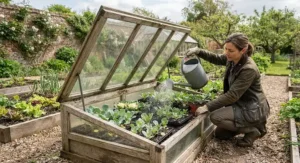
Once it’s sited, the daily routine matters more than the structure itself. In the first few days, place seedlings into a shaded cold frame on a cloudy day for just a few hours, then close the frame, gradually increasing the amount of sunlight and the length of time the frame stays open each day. A common first-30-days mistake is over-venting too early — cracking the lid fully on day one instead of easing into it — which exposes tender growth to a temperature swing it hasn’t earned yet. Equally common is under-venting on a bright day, which can send the interior soaring well past what any seedling wants; on a sunny March afternoon a closed cold frame can heat up shockingly fast, so check it at midday, not just morning and evening. As a rough maintenance schedule: wipe down glazing monthly to keep light transmission high, check hinges and seals for wear each season, and, on wooden frames, apply a coat of preservative annually to keep rot at bay. One optimisation trick that rarely makes it onto product listings: line the base of the frame with black plastic sheeting or dark mulch on the coldest nights, since dark surfaces absorb and hold more daytime heat than bare soil, giving you a couple of extra degrees of overnight insulation for free.
Cold Frame for Allotment: Space, Rules and Real Plot Scenarios
Using a cold frame for allotment growing is a slightly different proposition to a back-garden setup, mostly because you’re sharing a site and answering to a committee rather than just yourself. Structures on allotments generally fall under fairly generous size thresholds — small structures such as sheds or greenhouses usually do not require planning permission provided they stay within certain size limits, typically no taller than 4 metres or under 200 cubic metres in volume — but a cold frame is so much smaller than either that this is rarely the binding constraint. The real limiting factor is usually your individual site’s tenancy agreement and committee goodwill, and the National Allotment Society’s guidance on sheds and structures is a genuinely useful starting point if you’re unsure what your own site permits, since most allotment associations expect structures not to overshadow neighbouring plots or block shared paths. It’s also worth taking material choice seriously here: on a shared site, glass used for cloches and cold frames must not be left lying around, since it’s a hazardous material and you could be liable if someone is injured by glass on or from your plot — a genuinely good reason to lean towards the polycarbonate options on this list, like the Palram Cold Frame Double or Outsunny Wooden Cold Frame Greenhouse, if your allotment sees a lot of foot traffic from other plot holders.
Picture three realistic allotment scenarios. First, the weekend grower with a half-plot and a single raised bed of brassicas and salad — for them, a compact single-lid frame like the Selections Wooden Framed Polycarbonate Cold Frame covers their needs without eating into growing space they can’t spare. Second, the committed grower running a full plot with successive sowings of tomatoes, courgettes, squash and sweet peas through spring — here the Palram Cold Frame Double or Rowlinson Hardwood Cold Frame with Shelving earns its larger footprint by handling several batches at different hardening stages simultaneously. Third, the plot holder who’s just taken on an allotment for the first time and wants to test the waters before investing heavily — starting with the cheapest genuinely functional option and upgrading once you know your own growing rhythm is not a false economy; it’s just sensible sequencing.
Common Hardening-Off Mistakes and How to Fix Them
Even with a decent cold frame, hardening off goes wrong in fairly predictable ways — and each one has a specific, fixable cause.
Problem: seedlings wilt or scorch within a day of going into the frame. This is almost always too much direct sun too soon. Solution: start with the frame partly shaded, or place it against a wall that gets morning sun and afternoon shade for the first few days, only moving to full sun exposure once plants show they’re coping.
Problem: seedlings look fine by day but collapse after a cold night. This points to insufficient overnight protection. Solution: if severe frosts are forecast, insulate the frame with bubble wrap or an old blanket thrown over the lid, and consider a frame with better heat retention, like the timber-framed Outsunny Wooden Cold Frame Greenhouse, over an unshielded polycarbonate box.
Problem: leggy, pale growth even inside the frame. Usually a light problem, not a temperature one. Solution: check glazing hasn’t hazed or grown algae, and consider that toughened-glass frames like the Access Mini Aluminium Cold Frame 4×4 transmit meaningfully more light than twin-wall polycarbonate.
Problem: fungal spotting or mould on leaves. This is a ventilation and drainage issue, almost without exception. Solution: increase daytime venting incrementally and check the frame’s siting for overhead drip from trees or gutters, since damp, still air inside a sealed box is the perfect breeding ground for grey mould.
Problem: seedlings are ready before all your trays are, and space runs out. Solution: stagger sowing dates deliberately next season, or invest in a shelved model like the Rowlinson Hardwood Cold Frame with Shelving that can hold multiple readiness stages at once.
How to Choose a Cold Frame for Hardening Off Seedlings
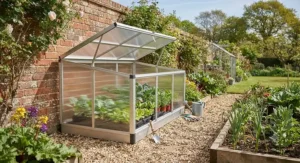
Picking the right cold frame comes down to a handful of genuinely decisive factors, in roughly this order of importance. It helps to keep the basic definition in mind throughout: a cold frame is a transparent-roofed enclosure built low to the ground, used to protect plants from cold and admit sunlight while preventing heat loss overnight — everything below is really just variations on that one idea.
- Available ground space. Measure the actual spot before shopping — a frame that’s technically “compact” can still dominate a small courtyard. The Elite Min-E-Lite 4×2 Cold Frame exists specifically for narrow spots.
- Glazing material. Glass gives better light transmission but weighs more and carries breakage risk; polycarbonate is lighter, safer, and insulates slightly better, at a small cost to clarity.
- Ventilation mechanism. Sliding panels offer finer control than a single hinged lid, which matters most during the gradual middle stage of hardening off rather than the first or last days.
- Volume of seedlings you actually grow. Be honest about this — a Double or shelved frame is wasted space if you only ever sow two trays of tomatoes a year.
- Site exposure. A wall-adjacent, sheltered spot can make do with a lighter, cheaper structure; an exposed, windy plot benefits from a heavier, more securely anchored frame.
- Longevity expectations. If you want a frame that outlasts a decade of British winters without maintenance, aluminium justifies its higher upfront cost; if you’re testing the idea first, timber or basic polycarbonate is the sensible entry point.
- Allotment or shared-site rules. Check your tenancy agreement or committee guidance before buying, particularly around glass structures and overall footprint.
Hotbed vs Cold Frame: Which Suits Your Seedlings?
This is one of the most common points of confusion for new growers, and it’s worth clearing up properly. A cold frame, as covered throughout this guide, relies entirely on passive solar heat trapped under a glazed lid — no external heat source, just sunlight and insulation. A hotbed is a related but distinct structure: traditionally, it’s a cold frame built over a layer of fresh manure or a similar heat-generating organic material, or in modern versions, one fitted with an electric heating cable buried in the growing medium. An electric heating cable, available for this purpose, can be placed in the soil to provide additional heat — turning what would otherwise be a passive structure into an actively warmed one.
In practice, the choice depends on timing and ambition. A cold frame is entirely adequate, and arguably the more appropriate tool, for the specific job this article is about: hardening off seedlings that were already raised indoors or under glass and just need gradual acclimatisation to outdoor conditions. A hotbed earns its extra complexity and cost when you’re trying to germinate or grow on considerably earlier in the season than passive warmth alone would allow — starting tender crops like chillies or aubergines from seed in February, for instance, rather than simply toughening up plants that already exist. For most home gardeners and allotment holders whose main goal is a smooth transition from windowsill to open ground, any of the seven cold frames covered here will outperform a hotbed on cost, simplicity, and maintenance, without sacrificing anything relevant to the hardening-off job itself.
Cloche Alternative: Why a Cold Frame Beats a Cloche for Hardening Off
Cloches are the other structure gardeners commonly reach for, and if you’re weighing up a cloche alternative specifically for hardening off, the cold frame usually wins on a few concrete points. Glass cloches, alongside newspaper cones, baskets, and various bits of plastic, function as temporary frost protection that’s pulled on and off each day when frost is likely overnight. That “pulled on and off” detail is the crux of the difference: a cloche is typically a single, unventilated cover you physically remove and replace, whereas a cold frame’s hinged or sliding lid lets you fine-tune airflow without moving the whole structure or exposing the plants completely.
For the graduated, day-by-day process that proper hardening off requires — a little more light and airflow each day, rather than an all-or-nothing swap between covered and uncovered — that finer control genuinely matters. A cloche is better suited to protecting direct-sown crops or established plants from an unexpected late frost; a cold frame is purpose-built for the acclimatisation process itself, because you can leave seedlings inside it continuously for the full one-to-two-week hardening period while adjusting ventilation incrementally, rather than physically relocating trays outdoors and back in each day. That said, cloches remain cheaper, more portable, and genuinely useful as a backup during a cold frame’s own early stage — throwing a cloche or fleece over a partly-open cold frame on an unexpectedly sharp night is a sensible belt-and-braces approach many experienced growers use.
Seed Tray Transition Guide: Moving Seedlings From Windowsill to Cold Frame
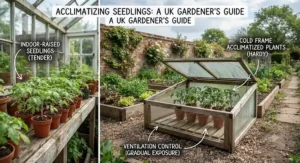
The move from indoor windowsill to outdoor cold frame shouldn’t happen in one jump, and a proper seed tray transition guide breaks it into stages rather than a single leap. Plants raised in heated glasshouses or on windowsills should first go into a cold, unheated glasshouse if one’s available, ideally moved there on an overcast, dull day to help reduce wilting. If you don’t have a cold greenhouse, going straight to a cold frame is the standard alternative, and it works nearly as well provided you’re patient with the ventilation schedule.
Once seed trays are in the frame, the transition follows a broadly consistent pattern across expert advice: begin with the lid slightly open for a few hours in the shade, then close the frame at night, insulating with a blanket if needed for the first few nights. Gradually increase both the light exposure and the length of time the lid stays open across the following week to ten days. After around 10-12 days, most seedlings should cope with the frame left open in mostly full sun for most of the day, closing again only overnight until the risk of frost has genuinely passed. Throughout this process, keep a simple daily log — even a scrap of paper taped to the frame works — noting whether the lid was open, cracked, or closed, and any visible stress like wilting or leaf curl. It sounds excessive for something as small as a seed tray, but that log is what tells you, tray by tray, exactly when each batch is genuinely ready for open ground rather than guessing based on the calendar alone.
✨ Don’t Miss These Exclusive Deals!
🔍 Take your seedling-raising to the next level with a genuinely useful cold frame. Click on any highlighted product above to check current pricing and availability. The right frame turns a stressful spring transition into a routine you barely think about.
What to Expect: Real-World Performance in a British Spring
Specs on a listing page rarely tell you what a cold frame actually feels like to live with through March and April, so here’s the translation. Soil temperature inside a cold frame typically runs 5-10°C warmer than open ground, which sounds modest until you realise that’s often the difference between a seedling surviving a cold snap and not. On a genuinely bright, still day, even an unheated frame can climb surprisingly fast — expect interior temperatures to spike well above ambient by late morning if the lid’s shut, which is exactly why daily monitoring matters more than a fixed weekly schedule. Used properly, a cold frame can extend the growing season by roughly 4-8 weeks at each end of the year, meaning UK gardeners can typically start hardening off seedlings appreciably earlier than they’d otherwise dare risk open ground.
Day-to-day, the polycarbonate frames in this guide feel noticeably lighter and quicker to check on — flip a lid, glance in, done. The glass-glazed options, like the Access Mini Aluminium Cold Frame 4×4 and Elite Min-E-Lite 4×2 Cold Frame, reward a bit more deliberate handling but pay it back with visibly stockier, less drawn-out seedling growth by the time plants are ready for the ground, since the extra light transmission through clear glass genuinely shows in stem thickness and leaf colour after a couple of weeks.
Long-Term Cost & Maintenance
Thinking purely in cost-per-season terms undersells what a cold frame actually offers, because the honest comparison is cost-per-year over its working life. A £75 polycarbonate frame that lasts five seasons before the panels haze and the timber needs replacing works out to roughly £15 a year. A £220 aluminium-and-glass frame that lasts fifteen years with only the occasional pane replacement works out closer to £15 a year too, once you factor in a broken pane here and there — the numbers converge more than the sticker prices suggest. Where the maths tips clearly in favour of the pricier option is in avoided losses: a single tray of seedlings lost to a badly-timed frost or an under-built frame collapsing in wind can represent weeks of growing time and, if you’d bought plug plants instead of raising from seed, a genuinely meaningful sum of money.
Maintenance costs stay modest either way. Wooden frames need an annual coat of preservative, roughly £10-£15 a year in materials. Aluminium frames need essentially nothing beyond an occasional wipe-down. Glass panes, if broken, typically cost a few pounds each to replace from a garden centre rather than requiring a whole new structure — a detail that makes the upfront premium on glass-glazed options like the Access Mini Aluminium Cold Frame 4×4 considerably less daunting over a decade of use.
Safety, Materials and Buying Considerations
Cold frames with glass panes are often the most expensive and fragile, carrying a real risk of breakage if care isn’t taken, while polycarbonate panes are cheaper, last longer, and don’t allow in quite as much light. Wooden-framed cold frames are strong and sturdy and tend to hold warmer, more regular temperatures, though the frame itself needs maintenance to prolong its life, while aluminium frames are increasingly popular for being light and long-lasting, if generally pricier. BBC Gardeners’ World’s own roundup of cold frames makes a similar point about weighing material trade-offs against your own garden conditions before buying. That trade-off triangle — light transmission, durability, and heat retention — genuinely can’t be fully optimised in one structure, which is exactly why this guide covers seven different combinations rather than crowning a single winner.
On the regulatory side, garden structures like these don’t carry the same formal UKCA or CE marking requirements as, say, electrical garden tools, since they’re unpowered and static. The practical safety considerations instead sit with the buyer: securing lightweight polycarbonate frames against wind so they don’t become projectiles, handling glass glazing carefully during assembly and disposal, and, per allotment guidance cited earlier, never leaving broken glass lying around a shared site. If you’re buying secondhand or inheriting an old cold frame with an allotment plot, it’s worth checking the glazing for chips or cracks before your first season with it — a small flaw in toughened glass rarely spreads the way it would in ordinary glass, but it’s still worth a proper inspection.
Frequently Asked Questions
❓ What is a cold frame for hardening off seedlings?
❓ How long should seedlings stay in a cold frame before planting out?
❓ Can I use a cold frame instead of a greenhouse for hardening off?
❓ Do cold frames work on an allotment as well as a garden?
❓ What size cold frame do I need for hardening off seedlings?
Conclusion
A cold frame for hardening off seedlings isn’t a glamorous purchase, but it’s one of those quietly transformative bits of garden kit that earns its keep every single spring. Whether you go for the unfussy Selections Wooden Framed Polycarbonate Cold Frame as a first attempt, the flexible Palram Cold Frame Double for a busy allotment, or the long-haul Access Mini Aluminium Cold Frame 4×4 for a permanent, well-used spot, the underlying job stays the same: give your seedlings a gentle, gradual introduction to the world outside, rather than a sudden and often fatal shock. Match the frame to your actual space, your actual seedling volume, and how much maintenance you’re honestly willing to do, and the rest tends to sort itself out. Get the basics right — good positioning, patient ventilation, and a bit of attention on cold nights — and you’ll find far fewer collapsed seedlings and a noticeably steadier start to your growing season.
Recommended for You
- Green Aluminium Greenhouse: 7 Best UK Picks for 2026
- Best Aluminium Greenhouse UK 2026: 7 Rust-Proof Picks Reviewed
- Traditional Glass Greenhouse: 7 Brilliant UK Buys for 2026
Disclaimer: This article contains affiliate links. As an Amazon Associate, I earn from qualifying purchases. If you purchase products through these links, we may earn a small commission at no additional cost to you.
✨ Found this helpful? Share it with your friends! 💬🤗
