
In This Article
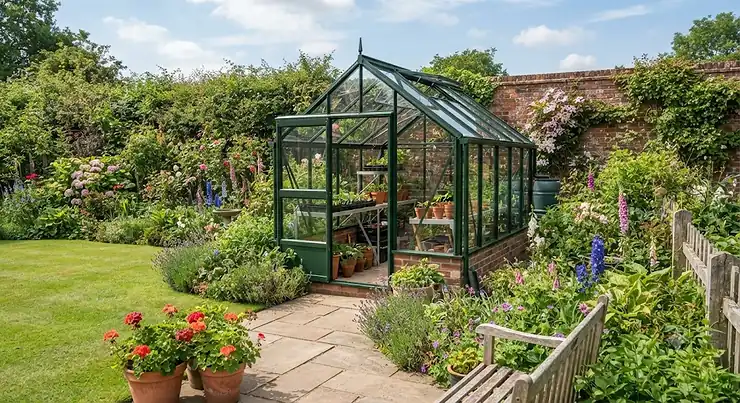
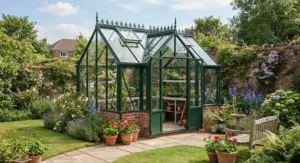
There’s a particular kind of stubbornness that comes with British gardening. We grow tomatoes in a country that gets, on a generous year, about four properly warm months — and a green aluminium greenhouse is the quiet compromise that makes that stubbornness pay off. It sits at the bottom of the garden, doesn’t shout for attention the way a white or silver frame can against a hedge, and just gets on with extending your season by a good six to eight weeks either side of summer.
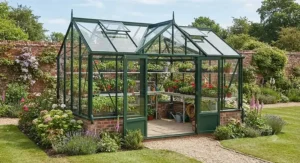
This guide exists because “just buy a greenhouse” is genuinely bad advice. Frame colour, glazing type, and build quality all interact in ways that Amazon listing pages rarely explain. A green aluminium greenhouse isn’t simply a silver one with a different powder coat — the finish affects everything from perceived garden aesthetic to long-term frame finish durability, and the colour choice you make now is one you’ll live with for a decade or more.
So, what is a green aluminium greenhouse? It’s a garden structure with a powder-coated or painted aluminium frame — usually forest or “British racing” green — combined with glass or polycarbonate glazing, designed to blend into planting rather than stand out against it, while keeping the rust-free, low-maintenance benefits aluminium is known for.
Below, you’ll find seven real models currently sold in the UK, honest analysis of where each earns its keep, a proper look at silver aluminium greenhouse alternatives, and practical guidance on siting, maintenance, and buying mistakes to dodge. As with all our garden buying guides, this article contains affiliate links, and we may earn a small commission if you buy through them — more on that at the end.
Quick Comparison Table
Before the deep dive, here’s the shape of the market. These five entries represent the spread you’ll actually encounter when shopping — not every listed spec, just the decision points that matter.
| Model | Frame Colour | Size | Price Range | Best For |
|---|---|---|---|---|
| Palram Canopia Mythos 6×6 | Green | 6x6ft | around £300-£380 | Small gardens, first-time buyers |
| Kingfisher Premium 6×8 | Green | 6x8ft | around £350-£450 | Traditional look, storage space |
| Halls Popular 8×6 | Green or Silver | 6x8ft | around £450-£600 | Serious hobby growers |
| Halls Magnum 12×8 | Green or Silver | 8x12ft | around £1,000-£1,400 | Large plots, avid growers |
| Outsunny 6×8 Walk-In | Dark Green | 6x8ft | around £180-£260 | Tight budgets, quick setup |
Reading this table left to right, the pattern is fairly clear: the jump in price tracks glazing quality and steel base inclusion far more than it tracks frame colour itself, and Halls Magnum justifies its premium mostly through toughened glass and thicker profiles rather than paint. Budget-conscious buyers shouldn’t assume the cheapest option is a false economy — the Outsunny range genuinely holds its own for a first season, provided expectations about wind resistance are realistic. If you’re torn between similarly sized green and silver models, note that colour rarely moves the price by more than 10-15%, which is worth knowing before you let aesthetics decide your budget for you.
💬 Found a favourite already? Compare prices below before you commit — deals shift daily.
Top 7 Green Aluminium Greenhouses: Expert Analysis
We’ve picked across budget, mid-range and premium tiers, plus a genuine silver alternative and a space-saving lean-to, because “best” depends entirely on your garden and your patience for assembly.
1. Palram Canopia Mythos 6×6 — best compact green pick for small gardens
The Palram Canopia Mythos 6×6 solves the most common British greenhouse problem: not having much garden. Its 6x6ft footprint fits against a fence line that would swallow a shed, without sacrificing headroom.
The UV-protected polycarbonate roof panels are the headline spec, and they matter more than they sound — polycarbonate diffuses light rather than focusing it, which reduces leaf scorch on seedlings sat close to the roof, something single-pane glass can’t do. The aluminium frame comes with an included base frame, which most competitors charge for separately, and that alone can offset £40-60 of the sticker price.
Based on the spec comparison with similarly sized rivals, this model is best suited to beginners and renters who might relocate it, rather than growers wanting a permanent glasshouse. Reviewers of the wider Rion/Canopia range consistently report straightforward, tool-light assembly for two people in under a day, though a recurring theme in feedback is double-checking the parts inventory against the manual before starting, since missing components (quickly replaced by Palram) come up more than once in aggregated feedback.
Pros:
- ✅ Included base frame saves a separate purchase
- ✅ Diffused polycarbonate glazing reduces scorch risk
- ✅ Compact footprint suits small or awkward gardens
Cons:
- ❌ Limited headroom compared with 8ft-wide models
- ❌ Polycarbonate ages less gracefully than glass over 10+ years
At around £300-£380, the Palram Canopia Mythos 6×6 is solid value for a first greenhouse — check current price for the exact colour and size variant you want, since Palram runs several near-identical SKUs.
2. Kingfisher Premium 6×8 — best traditional look with generous storage
Kingfisher built the Kingfisher Premium 6×8 specifically around the classic look — a powder-coated aluminium base and frame painted green “to give it a traditional look”, in the manufacturer’s own words, which is really just confirming what your eye already tells you: this reads as a heritage greenhouse, not a modern polycarbonate box.
The 6ft by 8ft footprint gives noticeably more storage and growing depth than the 6×6 models, and it arrives in three separate boxes (frame, polycarbonate sheeting, base) — a detail that matters practically, because it means smaller, more manageable deliveries rather than one unwieldy crate blocking your drive for a week.
What most buyers overlook about this model is that “will not rust or fade as it is aluminium” is doing real work in that description — the frame material, not just the paint, is what protects long-term colour retention, since a painted steel frame would eventually show rust bleeding through green paint within a few winters. This makes it a sensible pick for anyone who wants the traditional aesthetic without the traditional maintenance headache of wooden or steel-framed greenhouses.
Pros:
- ✅ Genuine traditional aesthetic, not just marketing language
- ✅ 6x8ft size adds real growing and storage depth
- ✅ Smooth sliding door for easy day-to-day access
Cons:
- ❌ Three-box delivery means more unpacking and sorting
- ❌ No steel base included as standard — budget for one separately
The Kingfisher Premium 6×8 typically sits in the £350-£450 range — always check current price, as Kingfisher periodically bundles the base frame as a package deal.
3. Halls Popular 8×6 — best all-round choice for serious hobby growers
The Halls Popular 8×6 is, by sales volume, one of the UK’s most common greenhouses, and that popularity is earned rather than accidental. It uses die-cast zinc alloy ridge and gutter joints rather than plastic clips, which sounds like a minor detail until you’ve watched a cheaper joint crack in a February frost.
Here’s what to weigh: this model ships with 3mm horticultural glass as standard, which offers better long-term clarity and heat retention than polycarbonate, at the cost of being heavier and less forgiving if a hailstone or a mis-thrown football finds it. The full guttering system and 600mm sliding door are genuinely useful additions — the guttering alone can be redirected into a water butt, which matters more than it sounds for anyone metering their water usage in a dry summer.
Crucially for this guide, it’s available in both silver and green frame finishes from the same product page, which makes it a useful reference point when weighing green aluminium greenhouse vs silver aluminium greenhouse decisions later on — the underlying structure is identical, so the choice really does come down to garden aesthetic.
Pros:
- ✅ Die-cast zinc alloy joints outlast plastic fittings
- ✅ 3mm horticultural glass gives better long-term clarity
- ✅ Full guttering system doubles as rainwater harvesting
Cons:
- ❌ Glass glazing means more careful handling during assembly
- ❌ Green powder-coated version often costs more and takes longer to arrive than silver
Expect the Halls Popular 8×6 to land in the £450-£600 range depending on glazing choice — the green powder-coated frame usually carries a premium over standard silver, so check current price for both before deciding.
4. Outsunny 6x8ft Walk-In — best budget option for quick, low-cost growing space
If your priority is simply “get growing this weekend without spending big,” the Outsunny 6x8ft Walk-In in dark green is the sensible budget anchor of this list. It pairs a powder-coated aluminium frame with a galvanised base and foundation, and the walk-in design genuinely does give full standing room rather than the crouch-and-shuffle experience of some cheap grow tents.
On paper this means you’re trading some structural robustness for price — and that trade is real. Reviewers across the wider Outsunny greenhouse range note that these kits handle still or lightly breezy conditions well, but benefit from additional ground anchoring in exposed gardens; the included ground stakes are a good start but not always sufficient on their own in coastal or hilltop locations. What the spec sheet won’t tell you, but aggregated feedback suggests, is that the sliding door mechanism needs the track kept clear of soil and debris to run smoothly long-term.
For students, renters, or anyone testing whether greenhouse growing suits their gardening style before committing to a premium model, this is a genuinely useful, low-risk entry point.
Pros:
- ✅ Full walk-in headroom at a genuinely low price
- ✅ Galvanised base adds structural support underfoot
- ✅ Fast, tool-light assembly reported across the range
Cons:
- ❌ Benefits from extra anchoring in windy or exposed gardens
- ❌ Polycarbonate panels feel noticeably lighter-duty than glass models
At around £180-£260, the Outsunny 6x8ft Walk-In is the value pick of this whole list — check current price, as Outsunny frequently runs seasonal promotions through spring.
5. Palram Canopia Mythos 6×8 Silver — best silver alternative for a brighter, modern look
Not every garden suits green. The Palram Canopia Mythos 6×8 Silver is effectively the sibling model to our first pick, scaled up and finished in the natural mill-silver aluminium look rather than powder-coated colour — and it’s worth including here precisely because comparing it directly against green options clarifies what frame colour actually changes (mostly aesthetics) versus what it doesn’t (structural performance).
The twin-wall polycarbonate glazing and included base frame carry over from the smaller Mythos, giving the same UV protection and diffused-light benefits, just with more floor space. Based on the spec comparison, silver aluminium reflects more ambient light than green powder coat, which some growers report gives a marginally brighter interior on overcast days — though the practical difference is modest at best and shouldn’t be a deciding factor on its own.
Reviewers consistently note the ease of the SmartLock-style connector system shared across the Canopia range, meaning assembly time and difficulty are essentially identical to the green Mythos — so this genuinely comes down to which finish suits your fence panels, your shed, and your own taste.
Pros:
- ✅ Larger 6x8ft footprint than the compact green Mythos
- ✅ Natural silver finish suits modern, minimalist gardens
- ✅ Same easy-assembly connector system as the green model
Cons:
- ❌ Silver shows dirt and water spotting more visibly than green
- ❌ Less camouflaged against dense planting or hedging
Pricing runs around £350-£420 — check current price, since silver and green variants of the same Mythos size are often listed as separate SKUs with slightly different availability.
6. Halls Magnum 12×8 — best premium option for avid, large-scale growers
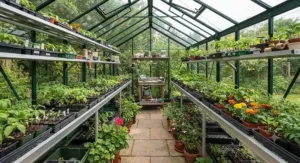
The Halls Magnum 12×8 is where this list moves from “greenhouse” to genuine growing infrastructure. Double sliding doors and four large roof vents aren’t just nice extras — for a structure this size, ventilation volume is what prevents a humid microclimate turning into a fungal disease problem by midsummer.
What most buyers overlook about premium models like this is that the frame itself is meaningfully thicker-gauge aluminium than entry-level ranges, with deeper guttering — Halls’ own comparison notes the Magnum costs 40-60% more than their Popular range for an equivalent size, and that premium buys structural stiffness you notice specifically when you’re the one bolting it together in a stiff breeze. The choice between 3mm toughened safety glass, long-pane horticultural glass, or 6mm twin-wall polycarbonate lets serious growers match glazing to their actual crop needs — toughened glass for family gardens with footballs in play, polycarbonate for maximum heat retention through a cold snap.
Available in mill silver or green powder-coated finishes, and backed by a 12-year structural warranty, this is the pick for anyone who’s already outgrown a smaller greenhouse and knows exactly what they want from the next one.
Pros:
- ✅ Four roof vents give genuinely serious airflow control
- ✅ Thicker aluminium profiles noticeably stiffer in assembly
- ✅ 12-year warranty reflects real manufacturer confidence
Cons:
- ❌ Significant price jump over mid-range 8ft-wide models
- ❌ Powder-coated green finish adds several weeks to delivery lead time
Budget around £1,000-£1,400 for the Halls Magnum 12×8 depending on glazing — always check current price, as toughened glass and twin-wall polycarbonate versions are priced quite differently.
7. Outsunny 8x4ft Walk-In Lean-To — best space-saving alternative for tight plots
Not every garden has room for a freestanding structure, and the Outsunny 8x4ft Walk-In Lean-To in silver solves that by using an existing wall — house, garage, or shed — as one side of the greenhouse. The aluminium frame keeps the whole thing durable without adding the weight a lean-to against brickwork would otherwise need to support.
The UV-resistant polycarbonate panels and single sliding door keep the design simple, and the rooftop vent is a sensible inclusion given lean-to designs can trap more heat than freestanding models, since one wall provides no cross-ventilation. Here’s what to weigh: positioning against a south or west-facing wall maximises the thermal benefit of the brickwork behind it, effectively giving you a passive heat store overnight that a freestanding greenhouse can’t replicate.
This is squarely aimed at gardeners with a narrow side return, a courtyard, or a small urban plot where every square foot of open lawn matters more than greenhouse floor space.
Pros:
- ✅ Uses existing wall space, ideal for narrow gardens
- ✅ Wall thermal mass helps retain overnight warmth
- ✅ Simple single-door design, quick to assemble
Cons:
- ❌ No cross-ventilation without the rooftop vent working well
- ❌ Requires a sound, weatherproof wall to fix against
Expect to pay around £220-£300 for the Outsunny 8x4ft Walk-In Lean-To — check current price, and confirm your wall material is suitable for the fixing bolts before ordering.
Real-World Scenarios: Which Greenhouse Suits Which Gardener?
Specs only mean something once you match them to an actual life. Here are three common profiles.
The first-time grower with a small back garden and a genuine fear of “wasting money on a hobby I might drop” should look at the Outsunny 6x8ft Walk-In or the Palram Canopia Mythos 6×6. Both keep upfront investment low while still offering the core benefit — an extended growing season — without locking in a decade-long commitment to a premium structure.
The established allotment holder or serious vegetable grower, someone already starting seeds indoors every February and running out of windowsill space, is the natural buyer for the Halls Popular 8×6 or, budget allowing, the Halls Magnum 12×8. The glass glazing options and stronger frames on both models suit the higher plant density and longer daily use these growers put their structures through.
The urban gardener with a courtyard, narrow side passage, or small paved garden — common across British terraced housing — is best served by the Outsunny 8x4ft Walk-In Lean-To. It sacrifices very little growing capability for a dramatically smaller footprint, and using the house wall as thermal mass is a genuinely clever workaround for limited space.
Practical Usage Guide: Setup, First 30 Days, and Ongoing Maintenance
Getting a green aluminium greenhouse up and actually working well involves more than following the instruction booklet. Site it on level, well-drained ground with at least six hours of direct sun daily — east-west orientation of the ridge line generally gives more even light distribution across the growing season than a north-south alignment. A proper base, whether concrete, paving slabs, or a manufacturer’s steel base kit, isn’t optional if you want the sliding door to run true after the first year; unsupported soil settles unevenly and door tracks are the first thing to suffer.
In the first 30 days, resist the urge to fill every shelf immediately. A common mistake is overcrowding plants before checking how heat and humidity behave in your specific greenhouse and garden microclimate — leave it partially stocked for a fortnight and watch how quickly it heats on a sunny March afternoon before committing tender seedlings to it. Check bolts and frame joints after the first fortnight, since aluminium frames can settle slightly as they bed in, and a loose joint caught early is a five-minute fix rather than a structural issue later.
Ongoing maintenance is genuinely light with aluminium versus timber or steel frames — an annual wipe-down with mild soapy water in spring and autumn keeps glazing at maximum light transmission and discourages algae building up in guttering channels. Unlike painted steel, a scratch in aluminium’s powder coat won’t immediately rust, though touching it up with a matching aerosol is still worth doing for green frames specifically, since bare aluminium showing through green paint is far more visually obvious than the same scratch on a silver frame.
How to Choose a Green Aluminium Greenhouse
Cutting through marketing noise, here’s the actual decision sequence worth following:
- Measure your space first, not last. Walk the proposed site with a tape measure and mark corners with canes — most buyers underestimate how much clearance a sliding door needs to fully open.
- Pick glazing before frame colour. Glass, polycarbonate, or hybrid glazing affects heat retention and light diffusion far more than paint does, and should drive your model choice.
- Decide your base solution upfront. Whether that’s a manufacturer steel base, a poured slab, or paving, this should be budgeted alongside the greenhouse itself, not as an afterthought.
- Match size to your actual growing ambition, generously. Almost every experienced grower we’ve referenced above eventually says they wish they’d bought one size larger.
- Check the warranty terms, not just the length. A 12-year warranty on the frame with a 5-year warranty on glazing is common — know which parts are actually covered.
- Confirm delivery lead time if colour matters to you. Powder-coated green and black finishes routinely take longer to arrive than standard silver, sometimes by several weeks.
- Read aggregated review themes, not star ratings alone. A 4.2-star average with a recurring “missing parts on arrival” theme tells you more than the number itself.
Green Aluminium Greenhouse vs Silver Aluminium Greenhouse
This is the comparison most buyers actually need to make, and it’s less about performance than people assume. Structurally, a green aluminium greenhouse and a silver aluminium greenhouse from the same manufacturer and range are usually identical — same gauge frame, same glazing options, same assembly system. The Halls Popular 8×6, offered in both finishes from a single product listing, makes this point plainly: you’re choosing a colour, not a different product.
| Factor | Green Frame | Silver Frame | Best For |
|---|---|---|---|
| Garden aesthetic | Blends into planting, hedges, lawns | Modern, visible, reflective | Garden aesthetic priority: green |
| Delivery lead time | Often longer (powder-coating process) | Usually fastest, standard stock | Time-sensitive buyers: silver |
| Visible dirt/marking | Hides grime and algae better | Shows water spots and dust more | Low-maintenance appearance: green |
| Typical price | Slightly higher on average | Standard baseline pricing | Tight budgets: silver |
| Resale/kerb appeal | Traditional, “established garden” look | Contemporary, minimalist look | Period properties: green |
Reading the table, the honest takeaway is that green earns its modest price premium and longer wait through garden aesthetic and lower visible grime — not through any structural advantage. If you’re renovating a period cottage garden, the Kingfisher Premium 6×8 or a green Halls Popular 8×6 will sit far more naturally against established borders than a silver frame ever could. Conversely, if you want the greenhouse this month rather than next, or you’re working with a contemporary garden design, the Palram Canopia Mythos 6×8 Silver removes both the wait and the aesthetic mismatch.
✨ Ready to compare? See current stock and prices for the models above — availability shifts fast in spring.
Greenhouse Frame Colour Matching for Garden Aesthetic
Colour matching a greenhouse to its surroundings is a genuinely underrated piece of garden design. Forest green frames work best set against lawn, box hedging, or dense planting, where the colour essentially disappears into the background — this is precisely why, as one supplier notes, green is “by far the most popular colour, because it blends in with natural surroundings.” Against exposed brick, gravel, or a contemporary hard-landscaped patio, the same green can look slightly dated or heavy, and a silver or even anthracite grey frame reads as more intentional.
A trick worth knowing: match your greenhouse frame roughly to your existing shed, fence stain, or garden furniture rather than to the house itself, since the greenhouse typically sits closer to those elements visually. If your garden already runs a mix of natural timber and dark green trellis, a green aluminium greenhouse pulls the whole scheme together; if you’ve gone modern with grey composite decking and steel planters, silver or black-framed models integrate far more naturally.
Frame Finish Durability: What Actually Lasts
Powder coating and paint aren’t the same thing, and this distinction matters for long-term frame finish durability. Genuine powder-coated aluminium frames, like those on the Kingfisher Premium 6×8 and both Halls models, bond an electrostatically applied polymer coating that’s baked on, giving far better UV and scratch resistance than a wet-sprayed paint finish. What the spec sheet won’t tell you, but industry sourcing pages note, is that this is exactly why powder-coated colour options generally cost more and take longer to produce than standard mill-finish silver — the process itself is a separate manufacturing stage.
Reviewers and long-term greenhouse owners consistently note that aluminium’s core durability advantage over steel or timber is corrosion resistance at the base metal level, meaning even a chipped or scratched green frame won’t rust the way a scratched steel frame would — it may show a small patch of bare aluminium, which oxidises to a dull grey rather than spreading rust. For genuinely maximum longevity, buyers should prioritise manufacturers offering separate frame and glazing warranties (the Halls Magnum’s 12-year structural cover is a strong benchmark) over marketing claims about “weatherproof” finishes with no stated warranty length behind them.
Common Mistakes When Buying an Aluminium Greenhouse
Buying too small is the single most repeated regret across every source referenced in this guide — almost universally, growers wish they’d sized up. A close second is skipping the base: setting a greenhouse directly on soil or unlevelled lawn, which leads to subsidence, door misalignment, and cracked glazing within a season. Choosing glazing on price alone rather than climate suitability is another common trap — polycarbonate suits colder, more exposed sites needing heat retention, while glass suits milder, sheltered gardens prioritising clarity and light transmission.
Underestimating delivery and, where relevant, planning considerations is a fourth mistake. Powder-coated green and black finishes can add several weeks to lead time compared with standard silver stock, which catches out buyers hoping to have a greenhouse ready for spring sowing. Finally, ignoring aggregated review themes in favour of a single star rating means missing recurring issues — like the “double-check parts on arrival” pattern reported across several ranges in this guide — that a five-minute read of recent reviews would flag in advance.
Long-Term Cost & Maintenance
The purchase price is only part of total cost of ownership. A base (£50-150 for a steel kit, more for a poured concrete pad), occasional glazing clips or seals, and the very occasional replacement pane after a storm or a stray football all add up over a decade. Set against that, aluminium’s near-zero annual maintenance cost — no repainting, no rot treatment, none of the recurring spend a timber greenhouse demands — means the total cost of ownership curve is genuinely flatter over ten-plus years than the higher upfront price of premium models like the Halls Magnum 12×8 might initially suggest.
Cost-per-use is worth thinking about too: a keen grower using their greenhouse nine months of the year extracts vastly more value per pound spent than someone using it for six weeks of tomato-growing and then leaving it empty. If you’re in the latter camp, the budget-tier Outsunny models make far more financial sense than stretching to premium glazing you’ll rarely benefit from.
Safety, Regulations and Planning Permission
Most domestic greenhouses in England fall under permitted development rights and don’t need planning permission, but the conditions are specific rather than automatic. According to the Planning Portal’s official outbuildings guidance, rules governing outbuildings apply to sheds, greenhouses and garages alike, and structures must generally sit behind the principal elevation of the house, stay within set height limits near boundaries, and avoid pushing total garden coverage past the usual outbuilding threshold. Listed buildings, conservation areas, and National Parks can all remove these permitted rights entirely, so it’s genuinely worth a quick call to your local planning authority if your plot is anything other than a standard suburban garden.
Beyond planning, basic siting safety matters more than people expect: keep glazing clear of low-hanging branches that could crack a pane in a storm, secure freestanding models with ground anchors in exposed or coastal gardens, and, per the RHS’s guidance on greenhouse ventilation and shading, make sure roof vents and doors can genuinely be left open on hot days, since inadequate ventilation is one of the most common causes of scorched or bolted crops in a UK summer.
Frequently Asked Questions
❓ Does a green aluminium greenhouse cost more than a silver one?
❓ Can I paint my aluminium greenhouse frame a different colour?
❓ How long does an aluminium greenhouse frame actually last?
❓ Do I need planning permission for a greenhouse in my back garden?
❓ Is polycarbonate or glass better for a green aluminium greenhouse?
Conclusion
A green aluminium greenhouse earns its keep less through any single standout feature and more through a quiet combination of rust-free longevity, genuine garden aesthetic, and — provided you buy the right size the first time — years of extended growing season without repainting or rot to worry about. Whether that’s the compact, budget-friendly Palram Canopia Mythos 6×6, the traditional Kingfisher Premium 6×8, the workhorse Halls Popular 8×6, or the serious grower’s Halls Magnum 12×8, the underlying decision tree is the same: measure your space honestly, pick glazing before colour, and budget for a proper base from day one.
If green doesn’t suit your garden’s existing palette, the silver alternatives covered here — particularly the Palram Canopia Mythos 6×8 Silver — offer identical structural performance with a different visual finish, and the Outsunny 8x4ft Walk-In Lean-To proves you don’t need a large plot to get real growing benefit from an aluminium frame. Whichever size and finish you land on, the fundamentals in this guide — base, glazing, ventilation, and honest sizing — will serve you regardless of which model ends up at the bottom of your garden.
✨ Don’t Miss These Exclusive Deals!
🔍 Take your greenhouse search to the next level with the models compared above. Click through to check current pricing and availability, and give your garden the growing space it deserves this season!
Recommended for You
- Best Aluminium Greenhouse UK 2026: 7 Rust-Proof Picks Reviewed
- Traditional Glass Greenhouse: 7 Brilliant UK Buys for 2026
- Best Glass Greenhouse UK 2026: 7 Top Picks Tested & Compared
Disclaimer: This article contains affiliate links. As an Amazon Associate, I earn from qualifying purchases. If you purchase products through these links, we may earn a small commission at no additional cost to you.
✨ Found this helpful? Share it with your friends! 💬🤗
