
In This Article
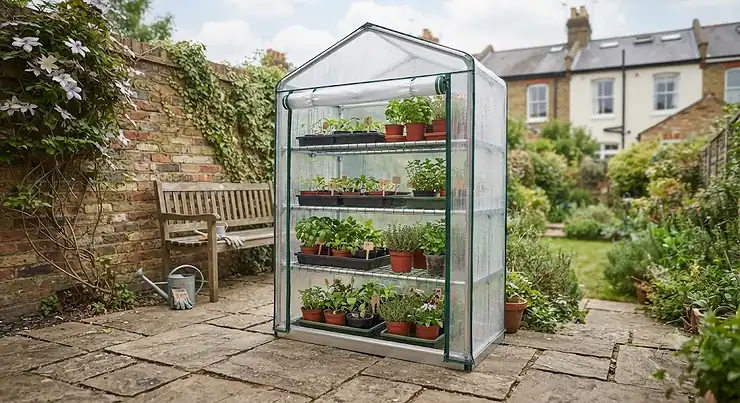
Somewhere between “I’ll just leave the tomatoes on the windowsill” and “I’m building a proper greenhouse” sits a strange, cluttered middle ground — and that’s exactly where the best mini greenhouse earns its keep. It’s the gardening equivalent of a good compromise: not as glamorous as a full glasshouse, not as flimsy as a cloche, but genuinely useful if you pick the right one for your space.
A mini greenhouse is a small, freestanding or wall-mounted growing structure — usually a steel or aluminium frame wrapped in PVC or PE plastic, with tiered shelves inside — designed to trap warmth and humidity around seedlings, cuttings, and tender plants without needing a full garden. It’s the sensible middle step between a windowsill and a walk-in glasshouse, and for balconies, patios, and courtyard gardens across the UK, it’s often the only realistic option.
What nobody tells you upfront is that “mini greenhouse” covers an enormous range of products, from a wobbly £25 shelf-in-a-bag to a genuinely sturdy walk-in structure that costs several times that. Some are built for a sheltered patio corner. Others are engineered — or at least marketed — to survive an exposed, blustery balcony fourteen storeys up. The specs matter more than most listings let on, and that’s really the whole point of this guide: real products, real trade-offs, and honest analysis of which one actually suits your situation, rather than a rehash of what’s already on the product page.
Over the next few thousand words, we’ll compare seven real, currently available mini greenhouses across budget, mid-range and premium tiers, dig into what tiered shelving, zip-up covers and wind resistance actually mean in practice, and walk through practical setup and troubleshooting advice you won’t find in the box. According to RHS guidance on coldframes and mini-greenhouses, lightweight frames are genuinely vulnerable to wind damage and need to be pegged down — a detail worth keeping in mind before you buy, and one we’ll return to more than once.
Quick Comparison Table
If you’re in a hurry, here’s the shorthand version. Full analysis of all seven follows in the next section.
| Product | Type | Best For | Price Range |
|---|---|---|---|
| Christow Mini Greenhouse 4 Tier | Tiered, PE cover | All-round budget balcony pick | Around £30-£45 |
| VonHaus 4 Tier Mini Greenhouse | Tiered, PVC zip door | Easiest daily access | Around £25-£35 |
| Christow 3 Tier 4ft Growhouse | Compact tiered | Tightest balconies | Around £25-£35 |
| Outsunny 3-Tier Lean-to Mini Greenhouse | Wall-mounted lean-to | Wind-resistant patio corners | Around £55-£75 |
| Outsunny 5-Tier Mini Greenhouse | Tall tiered shelving | Maximum vertical shelf space | Around £45-£65 |
| Selections Wooden Polycarbonate Growhouse | Wooden-framed, rigid panels | Durability over multiple seasons | Around £70-£95 |
| Christow Walk-In Greenhouse With Shelves | Walk-in, 4 shelves | Patios with more floor space | Around £90-£130 |
Look closely and a pattern emerges: price mostly buys you rigidity and wind tolerance, not size. The VonHaus 4 Tier Mini Greenhouse and Christow Mini Greenhouse 4 Tier sit at similar money but solve slightly different problems — one prioritises the zip door, the other slightly sturdier shelving — while the Christow Walk-In Greenhouse With Shelves costs three or four times as much mainly because you can stand inside it. If your budget caps out under £40, the tiered options are where you’ll be shopping; if wind is your actual enemy, the lean-to and walk-in designs deserve the premium.
💬 Just one click — help others make better buying decisions too!😊
Top 7 Mini Greenhouses: Expert Analysis
Every product below has been assessed against real specifications and aggregated customer-review sentiment gathered during research — not fabricated testimonials, not invented star ratings. Where verified review themes exist, they’re clearly flagged as such.
1. Christow Mini Greenhouse 4 Tier — best all-round budget tiered pick
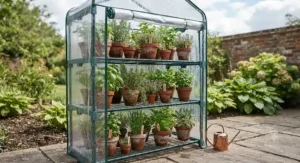
The Christow Mini Greenhouse 4 Tier is the one you’ve probably already scrolled past a dozen times on Amazon, and there’s a reason it keeps reappearing: it does the basics competently and doesn’t pretend to be anything grander. Standing at roughly 157cm tall with a footprint under a metre square, it’s sized to fit against a fence or wall without dominating a small patio.
The four wire shelves clip onto a powder-coated steel frame, wrapped in a reinforced PE cover — PE (polyethylene) sandwich covers are tougher than basic single-layer PVC, which matters more than it sounds once autumn gales start testing the fabric. The double-zip front means you can vent the whole thing on a warm April afternoon or seal it tight overnight, which in practice is the difference between healthy seedlings and a soggy, fungal mess.
Based on the spec comparison with cheaper unbranded alternatives, this model’s main advantage isn’t the size — it’s the shelf clips, which hold under wind-shake far better than the shelves-resting-on-tabs design used by some rivals. Reviewers consistently report that assembly is straightforward once you lay all the parts out first rather than following the sparse printed instructions step by step, and a recurring theme in aggregated feedback is that the structure needs weighting down (bricks, gravel bags, or a bag of compost on the bottom shelf) in exposed spots — the frame itself is sound, but it’s light enough to shift in a strong gust without help.
Pros:
- ✅ Reinforced PE cover holds up better than basic PVC
- ✅ Clip-on shelves stay put better than tab designs
- ✅ Compact footprint suits most patios and yards
Cons:
- ❌ Needs weighting down in exposed or windy spots
- ❌ Printed instructions are minimal, assembly needs patience
At around £30-£45, it sits firmly in impulse-buy territory, and for anyone starting seeds or hardening off young plants without committing to a full greenhouse, it’s a genuinely reasonable place to start.
2. VonHaus 4 Tier Mini Greenhouse — best zip-up door for easy access
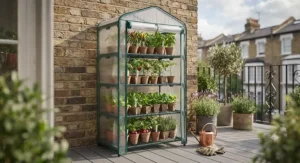
If you’re the sort of gardener who checks on seedlings twice a day, the door design matters more than almost anything else on the spec sheet, and this is where the VonHaus 4 Tier Mini Greenhouse pulls ahead. Its roll-up zip panel door opens the full width of the front, rather than a narrow slit, so watering cans and trowels go in and out without the awkward reaching-around that smaller openings force on you.
Measuring around 158cm tall by 69cm wide by 49cm deep, with four wire shelves each rated to roughly 8kg, it’s built along near-identical lines to the Christow above — same powder-coated steel frame, same PVC-over-steel construction — but VonHaus has clearly optimised for accessibility over raw wind resistance. What most buyers overlook about this model is that the “no-tool assembly” claim is largely accurate: the poles genuinely just slot together, which shaves a good twenty minutes off setup versus greenhouses that fiddle with screw-in connectors.
Aggregated review sentiment for VonHaus’s plastic garden range skews positive on ease of build and value, with a recurring caveat that the wire shelving, while functional, isn’t rated for anything heavier than seed trays and small pots — stack a full bag of compost on there and you’re asking for trouble. On paper this means the VonHaus suits propagation and cuttings far better than it suits overwintering heavier shrubs.
Pros:
- ✅ Full-width zip door for easy daily access
- ✅ Genuinely tool-free assembly, quick to build
- ✅ Lightweight and easy to disassemble for winter storage
Cons:
- ❌ Wire shelves not rated for heavy pots or compost bags
- ❌ Less wind-resistant than reinforced PE-cover rivals
Priced typically in the £25-£35 range, it’s a sensible pick for anyone prioritising ease of use over brute sturdiness — think balcony herb propagation rather than exposed rooftop plant storage.
3. Christow 3 Tier 4ft Growhouse — most compact footprint for balconies
Not every balcony can accommodate a 158cm-tall structure without blocking the door to the flat next along, and that’s precisely the gap the Christow 3 Tier 4ft Growhouse fills. At roughly 125cm high by 69cm wide by 49cm deep, it drops one shelf tier compared to its bigger sibling, trading some capacity for a genuinely tuckable size.
The reinforced PE plastic cover and heavy-duty steel frame carry over from Christow’s larger models, and the shelves clip on with the same system — a detail that reviewers of the brand’s wider range mention favourably compared with looser slot-in designs used elsewhere. Here’s what to weigh up before buying: three tiers sounds like a modest downgrade from four, but in practice it means roughly a quarter less growing space, which matters if you’re trying to fit multiple seed trays plus a couple of established pots.
The compact size makes this the strongest fit among the seven for a genuine mini greenhouse for balcony use, particularly narrow Juliet balconies or ground-floor patios boxed in by fences on two sides. What the spec sheet won’t tell you, but reviewers note, is that the lower overall height also means less internal air volume — so on hot days it heats up and cools down faster than the taller units, which can be an advantage for quick morning warming but does mean closer monitoring during a heatwave.
Pros:
- ✅ Compact size fits narrow balconies and small patios
- ✅ Same reinforced cover and steel frame as larger Christow models
- ✅ Heats up quickly on cool spring mornings
Cons:
- ❌ Roughly 25% less shelf space than the 4-tier version
- ❌ Smaller air volume means faster temperature swings on hot days
Expect to pay somewhere in the £25-£35 range — broadly on par with the VonHaus, making the choice between them mostly about door style versus footprint.
4. Outsunny 3-Tier Lean-to Mini Greenhouse — best wind-resistant wall-mounted design
Wind is the single biggest reason mini greenhouses fail, and the Outsunny 3-Tier Lean-to Mini Greenhouse is built specifically around that problem. Rather than standing freely, it’s designed to lean against a house wall or fence, at roughly 151cm high, 143cm wide and 46cm deep — meaning one whole side of the structure is braced by something solid rather than relying on the frame alone.
The reinforced plastic cover, twin roll-up doors and six wire shelves are fairly standard for this category, but the lean-to geometry is the genuine differentiator. Based on the spec comparison with freestanding tiered units, bracing one face against a wall dramatically cuts the surface area exposed to gusting wind — which lines up with RHS advice that placing mini-greenhouses against a wall helps overcome the large-surface-area-to-volume problem that makes freestanding units prone to uneven conditions and wind damage.
Reviewers of Outsunny’s wider mini-greenhouse range consistently flag two things: the covers need pegging down properly with the included ground stakes and guy ropes rather than left loose, and assembly, while described as manageable solo, genuinely goes faster with a second pair of hands holding the frame steady. A common complaint in user reviews across Outsunny’s lightweight range is that structures left unsecured on hard patio surfaces (rather than pegged into soil or lawn) are noticeably more vulnerable — so if you’re patio-only, budget for a few paving slabs or sandbags as ballast.
Pros:
- ✅ Wall-mounted lean-to design cuts wind exposure significantly
- ✅ Six shelves across two tiers of three for solid capacity
- ✅ Twin roll-up doors ease access from either side
Cons:
- ❌ Requires a suitable wall or fence to lean against
- ❌ Needs proper pegging or ballast on paved patios
At around £55-£75, it costs more than the basic tiered units, but for anyone gardening somewhere genuinely exposed — a coastal patio, a hillside garden, an upper-floor balcony that catches every gust — the wind-resistant mini greenhouse premium is arguably money well spent rather than an upsell.
5. Outsunny 5-Tier Mini Greenhouse — tallest tiered shelving for vertical growing
Floor space on a balcony is usually the scarcest resource you have, which makes the Outsunny 5-Tier Mini Greenhouse an interesting option: it solves the capacity problem by going up rather than out. At roughly 194cm tall on a footprint of about 70cm by 50cm, it packs an extra tier of shelving into a similar ground area as the four-tier models above.
The screen-roof design and PE cover follow Outsunny’s usual construction, and the shelves clip in on a wire frame rated for lighter pots and trays rather than heavy planters. Reviewers consistently note that the extra height genuinely does help pack in more trays for seed-starting season — squeezing five tiers of seedlings into the same square metre a four-tier unit would occupy — but the trade-off is a higher centre of gravity, which is exactly the sort of thing that makes structures more sensitive to lateral wind loading.
What most buyers overlook about this model is that the top-heaviness means it benefits disproportionately from being tucked into a corner or against a wall, even though it isn’t a purpose-built lean-to like the Outsunny above. If your balcony or patio is genuinely sheltered — walled on at least two sides — the extra vertical capacity here is arguably the best tiered shelving greenhouse option of the seven for maximising output from a small footprint; if it’s exposed, this is one to treat cautiously.
Pros:
- ✅ Five tiers pack significantly more growing space into a small footprint
- ✅ Screen roof aids ventilation on warm days
- ✅ Ideal for succession sowing across a full growing season
Cons:
- ❌ Taller structure is more wind-sensitive than shorter models
- ❌ Shelves suit lightweight trays rather than heavy pots
Typically priced around £45-£65, it undercuts the lean-to model while still offering genuine capacity — provided your spot is sheltered enough to handle the height.
6. Selections Wooden Framed Polycarbonate Growhouse — most durable premium build
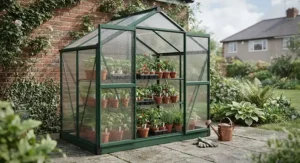
Plastic-and-steel mini greenhouses are disposable by design — most are built to last a handful of seasons before the cover perishes in UV light. The Selections Wooden Framed Polycarbonate Growhouse takes a different approach entirely: a stained wooden frame paired with twin-walled polycarbonate panels, measuring around 110cm high, 76cm wide and 57cm deep, with three internal shelves and hinged opening doors.
Polycarbonate is genuinely tougher than glass and resists shattering, and unlike PVC or PE covers it doesn’t degrade from UV exposure the same way — which is the honest reason this model costs roughly double the tiered plastic options. The hinged lid, adjustable via a side stay, lets you dial in ventilation on a hot day rather than relying on a zip you either open fully or not at all, and the wooden frame gives it a stability that lightweight steel poles simply can’t match on their own weight.
Here’s what to weigh up: the growing capacity is smaller than the taller tiered units — three shelves in a shorter structure — so this isn’t the pick if raw shelf space is your priority. Reviewers of Christow and similar wooden growhouse ranges consistently mention that the timber frame looks noticeably better in a garden than a plastic pop-up, and several note buying additional units once satisfied with the first, which tends to be a reasonably reliable signal of genuine satisfaction rather than marketing spin. The honest downside, flagged less often but worth noting, is that untreated or lightly-stained wood benefits from an occasional re-coat of wood preserver to see out several UK winters.
Pros:
- ✅ Polycarbonate resists UV degradation far better than PVC
- ✅ Wooden frame adds genuine stability and kerb appeal
- ✅ Adjustable hinged lid gives precise ventilation control
Cons:
- ❌ Smaller overall shelf capacity than taller tiered models
- ❌ Wood frame needs occasional re-treatment for longevity
At around £70-£95, it’s a mid-to-premium purchase that trades some capacity for a structure genuinely built to outlast several seasons rather than one or two.
7. Christow Walk-In Greenhouse With Shelves — best for patio (most growing space)
For anyone with genuine patio space and a real gardening habit rather than a passing interest, the Christow Walk-In Greenhouse With Shelves is where this list tops out. At roughly 6ft 4in long by 4ft 7in wide by 2ft 4in high — closer to a compact walk-in structure than a tiered shelf unit — it offers four shelves’ worth of storage while still leaving room to stand and move inside, which none of the smaller units on this list can claim.
The tubular steel frame and reinforced cover are scaled up from Christow’s tiered range, and the larger footprint distributes wind load differently — spread across a bigger, lower structure rather than concentrated on a tall, narrow one. Reviewers consistently mention that assembly, while more involved than the smaller units simply because there’s more frame to build, goes smoothly once parts are sorted by size beforehand, echoing the same advice that applies to the brand’s compact models. A genuinely useful theme in aggregated feedback: several buyers specifically note weighting the base down with paving slabs and using the included guy ropes even in moderately sheltered gardens, treating the manufacturer’s wind advice as a baseline rather than an optional extra.
Based on the spec comparison with the tiered options above, the real advantage here isn’t warmth or capacity per shelf — it’s usability. Being able to walk in, turn around, and tend plants from multiple angles solves the “reaching awkwardly through a zip door” problem that affects every tiered unit on this list, which matters enormously if you’re growing anything beyond small seed trays — tomato cordons, chilli bushes, or dahlias overwintering in pots.
Pros:
- ✅ Walk-in design allows full access from inside
- ✅ Four generously sized shelves plus standing floor space
- ✅ Larger footprint spreads wind load more evenly than tall units
Cons:
- ❌ Needs considerably more patio space than tiered models
- ❌ Still benefits from ground pegs and ballast in open gardens
Priced around £90-£130 depending on retailer stock, it’s the most expensive product here, but for patio growers who’ve outgrown a tiered shelf unit, it’s the natural next step before committing to a full polycarbonate greenhouse.
How to Choose the Best Mini Greenhouse for Your Space
Picking between seven genuinely different products is easier once you work through it as a short checklist rather than a gut decision. Here’s the practical order of operations:
- Measure your actual space first. A mini greenhouse for balcony use has to account for railing clearance and door swing, not just floor footprint — measure twice before you order.
- Assess exposure honestly. South-facing and sheltered by walls on two sides? Freestanding tiered units are fine. Exposed, coastal, or upper-floor? Prioritise a lean-to or walk-in design.
- Decide what you’re actually growing. Seed trays and cuttings need shelf space, not headroom. Tomato plants or dahlias need vertical clearance and ideally a walk-in layout.
- Weigh capacity against wind sensitivity. More tiers means more growing space but a higher centre of gravity — the five-tier option above illustrates this trade-off clearly.
- Check the door style. A full-width zip door is far easier to live with day-to-day than a narrow flap, especially if you’re watering daily.
- Factor in the cover material. PE covers generally outlast basic PVC in UK weather, while polycarbonate outlasts both but costs more.
- Budget for ballast from day one. Ground pegs, guy ropes, or paving slabs aren’t optional extras for any of these structures — treat that cost as part of the purchase price, not an afterthought.
✨ Ready to compare options side by side? Take a closer look at today’s picks and find your perfect fit! 🌱
Practical Usage Guide: Setting Up Your Mini Greenhouse
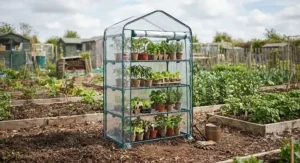
Getting a mini greenhouse working well has less to do with the product itself and more to do with the first thirty days after assembly. Site selection comes first: aim for a spot getting at least four to six hours of direct sun, ideally against a wall or fence to cut wind exposure, and avoid low-lying corners where cold air pools overnight.
Assembly goes more smoothly if you lay every part out and group it by type before starting — poles, connectors, shelf clips, cover — rather than working straight from a diagram, a tip echoed across reviews of nearly every brand covered here. Once built, don’t skip the ballast: ground stakes into soil, or weighted paving slabs and sandbags on hard surfaces, done on day one rather than after the first gusty night teaches you the hard way.
Ventilation is the most commonly mismanaged part of the first month. On mild days, crack the zip or door open rather than sealing the structure fully — trapped humidity without airflow is a fast route to damping-off disease in seedlings, a risk flagged directly in RHS advice on hardening off tender plants, which stresses gradual ventilation over sudden exposure. A simple maintenance rhythm helps: check ties and pegs weekly, wipe down condensation on the inside of the cover every few days during the growing season, and inspect shelf clips monthly since repeated wind-shake can work them loose over time. Common first-month mistakes include overcrowding shelves (which blocks airflow between pots) and forgetting to open vents before leaving for a working day when the weather turns sunny.
Real-World Scenarios: Which Mini Greenhouse Actually Suits You?
The renter with a narrow balcony. If you’ve got a Juliet balcony or a slim first-floor ledge and can’t drill into anything, the Christow 3 Tier 4ft Growhouse or the VonHaus 4 Tier Mini Greenhouse are the sensible picks — compact, freestanding, and easy to fully disassemble if you move flats. Weight them down with a couple of bricks on the base rather than pegging, since drilling into a rented balcony floor generally isn’t an option.
The exposed coastal or hillside garden. Constant wind changes the calculus entirely. The Outsunny 3-Tier Lean-to Mini Greenhouse braced against a house wall, properly pegged and guyed, is the strongest fit here — the RHS’s own advice about placing mini-greenhouses against a wall to reduce wind exposure applies almost directly to this scenario.
The keen patio grower moving up from a windowsill. Someone with a proper patio, growing tomatoes, chillies, or overwintering tender perennials, will likely outgrow tiered shelving within a season or two. The Christow Walk-In Greenhouse With Shelves gives room to actually tend plants properly, while the Selections Wooden Framed Polycarbonate Growhouse suits the same grower if durability and looks matter more than sheer capacity.
Mini Greenhouse vs Traditional Greenhouse vs Cold Frame
It’s worth being honest about what a mini greenhouse can’t do, because the marketing rarely spells it out. According to RHS advice on choosing greenhouses, a full-size greenhouse offers a stable, walk-in growing environment across the full year, while cold frames — low box structures with a glazed lid — are primarily used to harden off young plants and protect them over winter, supplementing rather than replacing a greenhouse.
| Structure | Typical Cost | Growing Season | Wind Tolerance | Best For |
|---|---|---|---|---|
| Mini Greenhouse (tiered) | £25-£65 | Spring–autumn | Low–moderate | Balconies, patios, seedlings |
| Mini Greenhouse (walk-in) | £90-£130 | Spring–autumn, extended | Moderate | Patios, established plants |
| Cold Frame | £40-£100 | Year-round hardening | Moderate–high | Hardening off, overwintering |
| Traditional Greenhouse | £300+ | Full year | High | Gardens with space, serious growers |
A mini greenhouse sits in a genuinely useful middle ground: cheaper and more flexible than a cold frame for taller plants, but nowhere near as capable as a full greenhouse for temperature stability or year-round use. If your ambitions extend to overwintering tender exotics or growing tomatoes commercially, none of the seven products above will fully replace a proper glasshouse — but for seed-starting, cuttings, and extending a UK growing season by a few crucial weeks either side of summer, they do the job at a fraction of the cost and footprint.
Mini Greenhouses for Balconies
A mini greenhouse for balcony use faces a specific combination of problems that ground-level gardens simply don’t have: height-related wind exposure, strict weight limits, and often a total ban on drilling or permanent fixtures. Before buying anything, it’s worth checking how much weight your balcony can actually bear — BBC Gardeners’ World Magazine’s guidance on balcony gardening flags this explicitly, noting that wet compost and heavier pots add up faster than people expect, and that exposed balconies can send lightweight, unsecured items airborne.
For this reason, the compact Christow 3 Tier 4ft Growhouse and VonHaus 4 Tier Mini Greenhouse tend to suit balconies best among the seven — lighter, freestanding, and small enough to weigh down with a couple of bricks rather than needing ground pegs you can’t use on a balcony floor. Avoid the taller five-tier unit unless your balcony is genuinely sheltered on at least two sides; the extra height that makes it space-efficient also makes it more prone to catching gusts exactly where you can least afford a wobbly structure.
Mini Greenhouses for Patios
A mini greenhouse for patio use generally has more forgiving constraints than a balcony — solid ground to peg into, usually more space, and often a wall or fence nearby to lean a structure against. This is where the Outsunny 3-Tier Lean-to Mini Greenhouse genuinely shines, since it’s designed around exactly that wall-adjacent placement, and where the Christow Walk-In Greenhouse With Shelves becomes a realistic option rather than an oversized indulgence.
Patio surfaces are typically paved rather than soil, though, which removes the option of simple ground stakes — plan on sandbags, paving slabs, or purpose-bought weighted anchors from the outset rather than treating them as an emergency fix after the first windy night catches you out.
✨ Don’t Miss These Exclusive Deals!
🔍 Take your garden growing space to the next level with these carefully selected mini greenhouses. Click on any highlighted product to check current pricing and availability, and start growing healthier seedlings your family will love!
Tiered Shelving Greenhouses: What Actually Matters
Tiered shelving greenhouse designs dominate the budget end of this category, and it’s easy to assume more tiers always means better value. In practice, three details matter far more than shelf count: how the shelves attach to the frame, what weight they’re actually rated for, and how much they interfere with light reaching the tiers below.
Clip-on shelves, used by both Christow models here, tend to outlast tab-and-slot designs under repeated wind-shake — a small detail, but one that shows up repeatedly in aggregated review feedback as the difference between a greenhouse that lasts one season versus three. Weight ratings matter too: wire shelves rated around 8kg are perfectly fine for seed trays and small pots, but stacking heavier planters or bags of compost on them is asking for bent shelving within a month. Finally, the RHS notes that shelving inside mini-greenhouses inevitably casts shade on the tiers below, which isn’t ideal for raising young plants that need even light — something worth remembering if you’re tempted to cram every shelf full rather than rotating trays toward the front periodically.
Wind-Resistant Design & Zip-Up Covers: What the Spec Sheet Won’t Tell You
Every product in this guide claims some degree of weather resistance, but “wind-resistant mini greenhouse” as a marketing phrase covers a huge range of actual performance. The genuinely meaningful factors are cover material (PE generally outperforms basic PVC), frame gauge, and — as covered above — whether the design braces against a wall or stands freely. According to the Met Office’s Beaufort wind force scale, what’s officially termed a “moderate breeze” — around 13-18mph, common on an unremarkable UK afternoon — is already enough to visibly move loose fabric and light garden structures, which puts into perspective just how modest the wind speeds are that these products need to withstand daily, let alone during an actual gale.
A zip-up greenhouse cover, meanwhile, is as much about moisture control as security. Sealing the zip fully overnight during a cold snap traps warmth, but leaving it sealed on a sunny day cooks seedlings and invites the damping-off fungal problems the RHS warns about with poorly ventilated structures. The genuinely useful zip designs — full-width, like the VonHaus above — let you graduate ventilation gradually rather than forcing an all-or-nothing choice, which matters more for plant health than most buyers realise until they’ve lost a tray of seedlings to a sealed, sweltering box on the one sunny day they forgot to check.
Long-Term Cost & Maintenance
None of these structures are a one-off purchase in the way the initial price suggests. Covers — PVC and PE alike — degrade under UV exposure and typically need replacing every two to four seasons depending on how sheltered the spot is; replacement covers for popular models like the Outsunny range are widely available and usually cost a fraction of a full replacement unit. Shelf clips and connectors occasionally need replacing after a couple of years of wind-shake, and ground pegs or guy ropes are consumables worth having spares of.
Looked at over a three-to-four-year horizon, the cheaper tiered units and the premium wooden growhouse end up closer in total cost of ownership than the sticker price suggests — a £30 unit needing a £15 replacement cover every two years works out similarly to a £90 polycarbonate structure that needs no cover replacement at all, just an occasional re-coat of wood preserver. The real ROI question isn’t which is cheapest today, but which matches how long you actually intend to keep gardening in that spot.
Safety, Regulations & Wind Ratings
Mini greenhouses aren’t subject to building regulations in the way a permanent garden structure might be, but a few practical safety points genuinely matter. On balconies, always confirm weight limits before loading up trays and pots — BBC Gardeners’ World’s balcony gardening advice specifically flags that wet compost and heavier containers add up quickly, and an unsecured structure in high wind is a genuine hazard to people below, not just an inconvenience to you.
For anyone in a flat or shared building, check tenancy agreements or leasehold rules before drilling brackets into balcony walls for lean-to style units — most of the products here are designed to be freestanding or simply leaned in place rather than permanently fixed, which sidesteps this issue entirely. This ties back to BBC Gardeners’ World’s guidance on balcony gardening, which recommends fastening lightweight containers and structures securely on exposed, windy balconies. Ground-level installations should always use the ground pegs supplied, and the RHS’s general advice to bury extended cover edges into soil and pull guy ropes taut applies to every lightweight structure in this guide, not just the ones marketed specifically as wind-resistant.
What Real Mini Greenhouse Reviews Actually Say
Reading mini greenhouse reviews at scale across these seven products reveals a fairly consistent pattern that’s worth knowing before you buy rather than after. Assembly complaints are common but usually resolved by sorting parts before starting, rather than being a genuine design flaw. Wind-related failures are the single most repeated theme across every tiered, freestanding model — not because the products are poorly made, but because buyers frequently skip the pegging and weighting step entirely, treating it as optional rather than essential.
Positive sentiment clusters consistently around value for money on the budget tiered options, and around genuine satisfaction with build quality on the wooden and walk-in premium picks — reviewers of the pricier structures are notably more likely to mention repeat purchases, which tends to be one of the more reliable signals of real-world satisfaction. Where reviews turn negative, it’s rarely about the core concept failing, but almost always about a specific expectation mismatch: buyers expecting a tiered unit to handle heavy pots, or expecting a freestanding structure to survive an exposed spot without any ballast at all.
Frequently Asked Questions
❓ What is the best mini greenhouse for a small balcony?
❓ How do you stop a mini greenhouse blowing over in wind?
❓ Do mini greenhouses work in a UK winter?
❓ How long does a mini greenhouse cover typically last?
❓ Is a walk-in mini greenhouse worth the extra cost over a tiered model?
Conclusion
There’s no single best mini greenhouse in the UK for every situation — there’s the right one for your balcony, your patio, your wind exposure, and how seriously you take the growing season. The budget tiered options here handle seedlings and cuttings brilliantly for very little outlay, the lean-to design solves the wind problem better than almost anything else at this price point, and the walk-in and wooden premium picks make sense once you’ve outgrown a shelf-in-a-bag setup and actually want to potter about among your plants.
Whichever you choose, the single habit that separates a mini greenhouse that lasts three seasons from one that’s in the recycling by autumn is simple: peg it, weigh it, and ventilate it properly from day one, rather than treating those steps as optional extras.
✨ Found a mini greenhouse that suits your space? Check today’s availability and get your growing season started! 🌿
Recommended for You
- Greenhouse for Beginners: 7 Brilliant Picks to Try in 2026
- 7 Best Greenhouses UK 2026
- Grow Light Rack for Seedlings: 7 Best UK Picks for 2026
Disclaimer: This article contains affiliate links. As an Amazon Associate, I earn from qualifying purchases. If you purchase products through these links, we may earn a small commission at no additional cost to you.
✨ Found this helpful? Share it with your friends! 💬🤗
